LinkedIn is one of the most powerful advertising platforms for B2B marketers, but tracking which LinkedIn ads actually drive conversions can be surprisingly tricky. Between long sales cycles, multiple decision-makers, and leads that convert weeks or months after clicking an ad, many marketers struggle to connect their LinkedIn ad spend to real revenue.
Without accurate conversion tracking, you are essentially flying blind. You cannot tell which campaigns deserve more budget and which ones are quietly draining resources. You end up making decisions based on impressions and clicks rather than pipeline and revenue.
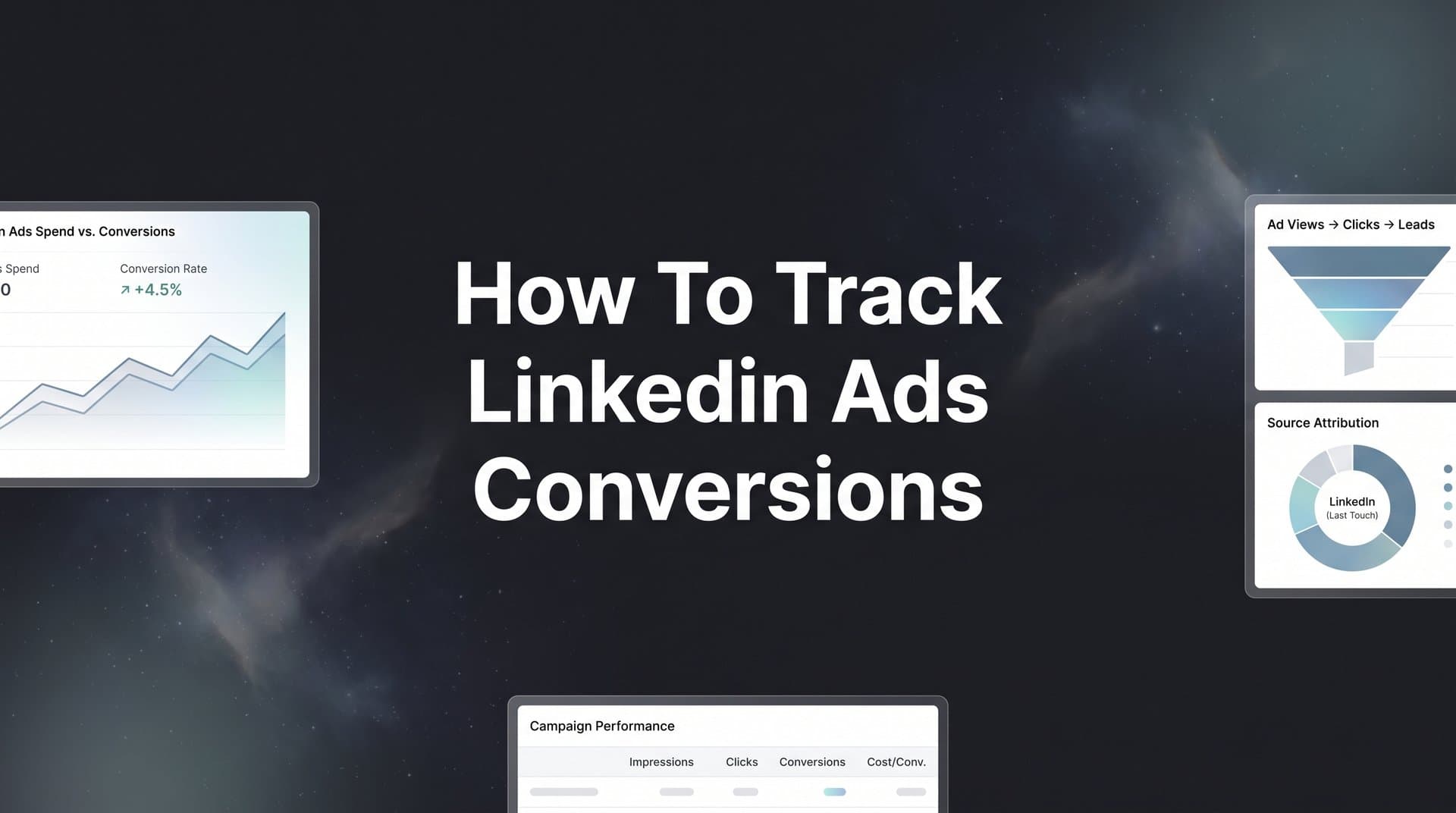
This guide walks you through the complete process of setting up LinkedIn ads conversion tracking, from installing the LinkedIn Insight Tag to building a multi-touch attribution system that captures the full customer journey. Whether you are just getting started or trying to fix gaps in your existing setup, these six steps will give you a clear, reliable system for measuring what your LinkedIn ads are actually producing.
By the end, you will be able to optimize with confidence, scale the campaigns that matter, and finally connect your LinkedIn spend to real business outcomes.
Step 1: Install and Verify the LinkedIn Insight Tag on Your Website
Everything starts here. The LinkedIn Insight Tag is a lightweight JavaScript snippet that tracks visitor activity on your website and connects it back to your LinkedIn campaigns. Without it, LinkedIn has no way to record conversions from your ads.
To find it, log into LinkedIn Campaign Manager and navigate to Account Assets > Insight Tag. LinkedIn will give you a small block of JavaScript code that is unique to your account. This is what you need to place on your website.
Installing directly in your site code: Paste the Insight Tag into the global header of your website so it fires on every page. Most website platforms like WordPress, Webflow, or Squarespace have a dedicated field for header scripts in their settings. This ensures the tag fires consistently across your entire site, not just on specific pages.
Installing through Google Tag Manager: If you use a tag manager, create a new tag in Google Tag Manager using the Custom HTML tag type, paste the Insight Tag code, and set the trigger to fire on all pages. This approach makes it easier to manage and update the tag without touching your site code directly.
Once installed, give it 24 to 48 hours and then return to Campaign Manager to check the status. Under the Insight Tag section, your website domain should appear as Active. If it shows as Unverified, the tag is not firing correctly. If you are running ads across multiple platforms, a dedicated LinkedIn ads tracking platform can help centralize your data and simplify verification.
A few common installation mistakes to watch for:
Partial installation: If the tag only lives on certain pages rather than globally, LinkedIn will miss a significant portion of visitor data. Always install it site-wide.
Consent banner conflicts: If your site uses a cookie consent banner, the Insight Tag may be blocked for users who decline tracking. Make sure your consent management platform is configured to fire the LinkedIn tag appropriately based on user consent choices.
Verifying with browser tools: Install the LinkedIn Insight Tag Helper browser extension or use the browser's developer console to confirm the tag is firing on page load. You should see a network request to snap.licdn.com when the tag is active.
Your success indicator: Campaign Manager shows your domain as Active and visitor data begins populating in your analytics. Once you see that green status, you are ready for the next step.
Step 2: Define Your Conversion Actions in LinkedIn Campaign Manager
Installing the Insight Tag tells LinkedIn to watch your website. Defining conversion actions tells LinkedIn what to watch for. This step is where you specify the exact behaviors that count as a conversion in your business.
Navigate to Account Assets > Conversions in Campaign Manager and click to create a new conversion action. LinkedIn will ask you to choose a conversion type, and the right choice depends on how your website is structured.
URL-based conversions: This is the simplest option. If visitors land on a specific page after completing an action, such as a thank-you page after a form submission, you can set that URL as your conversion trigger. LinkedIn will record a conversion whenever a visitor who came from a LinkedIn ad reaches that page.
Event-specific conversions: These are more flexible and track specific user interactions like button clicks, form submissions, or video plays. They require a bit more technical setup, which we will cover in Step 3.
Offline conversions: If you have sales that happen outside of your website, such as a sales rep closing a deal over the phone, you can upload offline conversion data directly into Campaign Manager to connect those outcomes to LinkedIn campaigns. Learn more about how to track offline conversions from online ads to ensure nothing falls through the cracks.
Beyond the conversion type, pay close attention to these configuration settings:
Conversion window: This defines how long after an ad interaction LinkedIn will credit a conversion. For B2B marketers with longer sales cycles, the default 30-day window often falls short. Consider using a 60-day or 90-day window to capture leads that take longer to move through your funnel before converting.
Attribution model: LinkedIn offers two options: Last Touch (the final LinkedIn ad interaction gets full credit) and Each Campaign (every LinkedIn campaign that touched the journey gets credit). Each Campaign is generally more useful for understanding how different campaigns contribute across a longer buying process.
Conversion value: If you know the average value of a lead or a closed deal, assign a dollar value here. This allows LinkedIn to report return on ad spend and helps you evaluate campaigns in revenue terms rather than just conversion counts.
Once your conversion actions are created, assign them to the relevant campaigns. LinkedIn will then begin attributing conversions to those campaigns based on the settings you configured. Your success indicator: conversion actions appear in your campaign reporting columns and begin showing data within a few days of setup.
Step 3: Set Up Event-Specific Tracking for Deeper Funnel Visibility
Page-based conversions are a solid starting point, but they only capture visitors who reach a specific URL. Many valuable interactions happen without a page change, such as clicking a CTA button, submitting an inline form, downloading a PDF, or watching a video. Event-specific tracking fills those gaps.
LinkedIn's event tracking uses a JavaScript function called lintrk. When a specific user action occurs, you fire this function with the conversion ID tied to that action. The syntax looks like this:
lintrk('track', { conversion_id: YOUR_CONVERSION_ID });
You find your conversion ID inside Campaign Manager after creating an event-based conversion action. Each conversion action has its own unique ID, so you will have a separate ID for each event you want to track.
Using Google Tag Manager to fire events: Rather than hardcoding event tracking into your site, Google Tag Manager makes it much easier to manage. Create a Custom HTML tag with the lintrk function, then set a trigger based on the specific user action you want to track. For example, you can trigger it when a user clicks a button with a specific CSS class, submits a form, or reaches a certain scroll depth. This approach lets your marketing team manage tracking without requiring developer involvement for every change.
Think about mapping your full funnel with events rather than just tracking the final conversion. Understanding why platforms sometimes show conversions that don't match actual results is critical — our guide on why ads show conversions but no sales explains common causes. A well-structured LinkedIn conversion setup might look like this:
Content download: A visitor downloads a whitepaper or guide. This is a top-of-funnel signal that someone is researching your space.
Demo request: A visitor submits a form to schedule a product demo. This is a high-intent mid-funnel action worth tracking separately from a general lead.
Free trial signup: If you offer a trial, this is a critical milestone that signals strong purchase intent.
Purchase or closed-won: The ultimate conversion, whether it happens on your site or is fed in as an offline conversion.
Tracking each of these separately gives you a much clearer picture of where LinkedIn ads are contributing across the funnel, not just at the bottom.
To verify your event tracking is working, open your browser's developer tools and navigate to the Network tab. Filter requests by snap.licdn.com and trigger the action you are tracking. You should see a network call fire in real time. LinkedIn's Campaign Manager also has a conversion tracking diagnostics section where you can confirm recent event activity.
Your success indicator: each conversion action in Campaign Manager shows recent activity, and the conversion counts align with what you see in your form submissions or CRM records.
Step 4: Connect LinkedIn Data to Your CRM for Revenue Attribution
LinkedIn's native reporting tells you how many conversions happened inside the platform. But it cannot tell you whether those leads became opportunities, how long they took to close, or what revenue they generated. To answer those questions, you need to connect LinkedIn data to your CRM.
The bridge between LinkedIn and your CRM is UTM parameters. Every LinkedIn ad URL should include UTM parameters so that when a visitor lands on your site, your analytics tool and CRM capture exactly which campaign, ad group, and ad drove that visit.
A consistent UTM structure for LinkedIn might look like this:
utm_source=linkedin identifies the traffic source as LinkedIn.
utm_medium=paid_social categorizes the channel type.
utm_campaign=[your campaign name] identifies the specific campaign.
utm_content=[ad name or creative] distinguishes between different ads within the same campaign.
Consistency is critical. If some campaigns use linkedin and others use LinkedIn or LinkedIn_Ads, your CRM data will be fragmented and harder to analyze. Establish a naming convention and enforce it across your team. For a broader framework on organizing this data, see our guide on how to track marketing campaigns with proper attribution and revenue measurement.
When a lead fills out a form on your site, most CRM systems will capture the UTM parameters from that session and store them on the lead record. This means when a sales rep closes a deal three months later, you can trace that revenue back to the specific LinkedIn ad that first brought the lead to your site.
Map your CRM pipeline stages to LinkedIn touchpoints so you can report on metrics that actually matter to your business. Rather than just counting leads, you want to know how many LinkedIn-sourced leads became qualified opportunities, how many opportunities closed, and what the average deal value looks like compared to leads from other channels. Having a reliable system to track sales leads from initial click through to closed revenue makes this analysis possible.
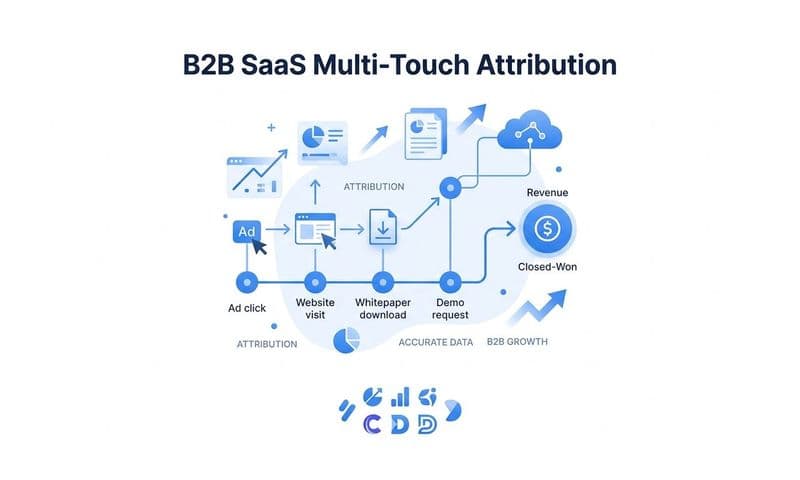
Here is where B2B tracking gets genuinely complex. A lead might click a LinkedIn ad, visit your site, leave without converting, come back a week later through a Google search, and then convert after receiving a follow-up email. If your CRM only records the last touchpoint before conversion, LinkedIn gets zero credit for that journey even though it started it.
This is exactly why UTM tracking alone is not enough for B2B attribution. You need a system that can stitch together all of those touchpoints and give each channel its fair share of credit. That is what we tackle in the next step.
Step 5: Layer in Multi-Touch Attribution to See the Full Journey
If you rely on last-click attribution for your LinkedIn ads, you are almost certainly undervaluing them. LinkedIn often plays a top-of-funnel or mid-funnel role in B2B buying journeys. It introduces your brand to a prospect, nurtures awareness over time, and plants the seed that eventually leads to a conversion, but the final click might come from a branded Google search or a direct visit. Under last-click attribution, LinkedIn gets no credit for that journey.
Understanding the different attribution models helps you choose the right one for your business:
First touch: Gives all credit to the very first interaction. This is useful for understanding which channels generate initial awareness, and it tends to favor LinkedIn since many B2B journeys start with a LinkedIn ad.
Last touch: Gives all credit to the final interaction before conversion. This tends to favor branded search and direct traffic, and it significantly undervalues channels like LinkedIn that warm up prospects early in the journey.
Linear: Distributes credit equally across all touchpoints in the journey. This is a more balanced view but does not differentiate between high-impact and low-impact interactions.
Time-decay: Gives more credit to touchpoints closer to the conversion. This can work well for shorter sales cycles but may still undervalue early-stage LinkedIn interactions in long B2B journeys.
Data-driven: Uses algorithmic modeling to assign credit based on which touchpoints actually correlate with conversion. This is the most sophisticated approach but requires sufficient conversion volume to be reliable.
Browser-based tracking has another significant limitation worth understanding. Ad blockers, browser privacy settings, and third-party cookie restrictions mean that a meaningful portion of touchpoints never get recorded at all. A prospect who clicks your LinkedIn ad on a browser with strict privacy settings may not appear in your analytics, making it look like certain campaigns produce fewer results than they actually do. Understanding how to track conversions without cookies is becoming essential as privacy restrictions continue to tighten.
Server-side tracking addresses this gap by moving data collection from the browser to your server, where it is far less susceptible to blocking. This results in more complete, more accurate data flowing into your attribution system.
This is where a platform like Cometly becomes genuinely valuable for LinkedIn advertisers. Cometly unifies LinkedIn ad data with every other channel you are running, your CRM events, and your revenue data into a single attribution view. Instead of toggling between LinkedIn Campaign Manager, Google Analytics, and your CRM to piece together a picture, you see the complete customer journey in one place.
Cometly's Conversion Sync feature goes a step further. It sends enriched conversion data back to LinkedIn's ad platform, giving LinkedIn's algorithm better signals about which types of users actually convert into revenue. When LinkedIn's algorithm has richer, more accurate conversion data to work with, it can optimize your campaigns toward higher-value audiences and outcomes rather than just surface-level actions.
The result is a feedback loop: better tracking leads to better data, better data leads to smarter optimization, and smarter optimization leads to better campaign performance over time.
Step 6: Analyze, Optimize, and Scale Based on Accurate Conversion Data
Once your tracking is in place and your attribution model is set up, you have something most LinkedIn advertisers lack: reliable data you can actually act on. Now the work shifts from setup to ongoing optimization.
Start by looking beyond basic conversion counts. The metrics that drive real business decisions are:
Cost per lead (CPL): How much are you spending to generate each lead from LinkedIn? Compare this across campaigns, audiences, and ad formats to identify where your budget is working hardest.
Cost per opportunity (CPO): Of the leads LinkedIn generates, how many become qualified sales opportunities? This metric separates high-quality lead sources from those that produce volume but not pipeline.
Cost per acquisition (CPA): How much does it cost to close a customer that originated from LinkedIn? This is the number that ultimately justifies or questions your LinkedIn investment.
Return on ad spend (ROAS): When you assign revenue values to conversions, you can calculate how much revenue each dollar of LinkedIn spend generates. This is the clearest signal of campaign efficiency.
Use this data to identify patterns. Which audiences convert at the highest rate? Which ad formats, such as sponsored content, message ads, or conversation ads, produce the lowest cost per opportunity? If you are running campaigns on multiple platforms simultaneously, learning how to track conversions across multiple ad platforms ensures you can compare LinkedIn performance against other channels accurately.
Budget reallocation becomes much more straightforward when you have this level of clarity. Rather than spreading budget evenly or making gut-based decisions, you can confidently shift spend toward the campaigns and audiences that consistently produce pipeline and revenue. Leveraging the right ad tracking tools can help you scale ads using the accurate data you have built through this process.
Build a reporting cadence that keeps you on top of performance without getting lost in daily noise. Weekly check-ins work well for monitoring spend efficiency and catching any sudden drops in conversion rates. Monthly deep dives are better suited for evaluating audience performance, testing new creative directions, and making strategic budget decisions.
Cometly's AI Ads Manager can accelerate this process significantly. Rather than manually sifting through campaign data across LinkedIn and other channels, the AI surfaces optimization opportunities and highlights which campaigns are ready to scale and which ones need attention. For teams managing campaigns across multiple platforms simultaneously, this kind of cross-channel intelligence saves considerable time and reduces the risk of missing important performance signals.
The goal is to create a continuous improvement loop: track accurately, analyze consistently, optimize deliberately, and scale what works.
Your LinkedIn Conversion Tracking Checklist
Here is a quick-reference summary of everything covered in this guide. Bookmark it and use it to audit your current setup or verify a new one.
Step 1 complete: LinkedIn Insight Tag is installed globally on your website and shows as Active in Campaign Manager.
Step 2 complete: Conversion actions are defined in Campaign Manager with appropriate conversion windows (30 to 90 days for B2B), attribution models, and conversion values assigned.
Step 3 complete: Event-specific tracking is set up for key funnel actions including content downloads, demo requests, trial signups, and purchases. Events are verified and firing correctly.
Step 4 complete: UTM parameters are consistently applied to all LinkedIn ad URLs, and CRM pipeline stages are mapped to LinkedIn touchpoints for revenue attribution.
Step 5 complete: Multi-touch attribution is in place to give LinkedIn proper credit across longer B2B journeys. Server-side tracking is capturing touchpoints that browser-based methods miss.
Step 6 complete: Regular reporting cadences are established. You are analyzing CPL, CPO, CPA, and ROAS at the campaign and ad level, and reallocating budget based on data.
One important reminder: accurate LinkedIn conversion tracking is not a one-time setup. Browser environments change, campaigns evolve, and your funnel shifts over time. Make it a habit to audit your tracking setup quarterly, verify that conversion data aligns with your CRM records, and refine your attribution model as your data volume grows.
LinkedIn's native reporting is a starting point, not the finish line. The marketers who get the most out of LinkedIn ads are the ones who move beyond in-platform metrics and build a complete, cross-channel view of what actually drives revenue.
If you are ready to connect your LinkedIn ads data to real revenue with multi-touch attribution, server-side tracking, and AI-powered optimization, Get your free demo of Cometly today and start capturing every touchpoint that matters.