Your ad dashboard shows 100 conversions. Your CRM shows 147 actual sales. That gap? It's not a tracking error—it's the reality of client-side tracking in 2026. Between iOS blocking third-party cookies, Safari's Intelligent Tracking Prevention stripping parameters, and Firefox's Enhanced Tracking Protection intercepting pixels, browsers are actively working against your ability to measure marketing performance. The platforms optimizing your ads are making decisions based on incomplete signals, which means they're scaling the wrong campaigns and missing your best-performing audiences.
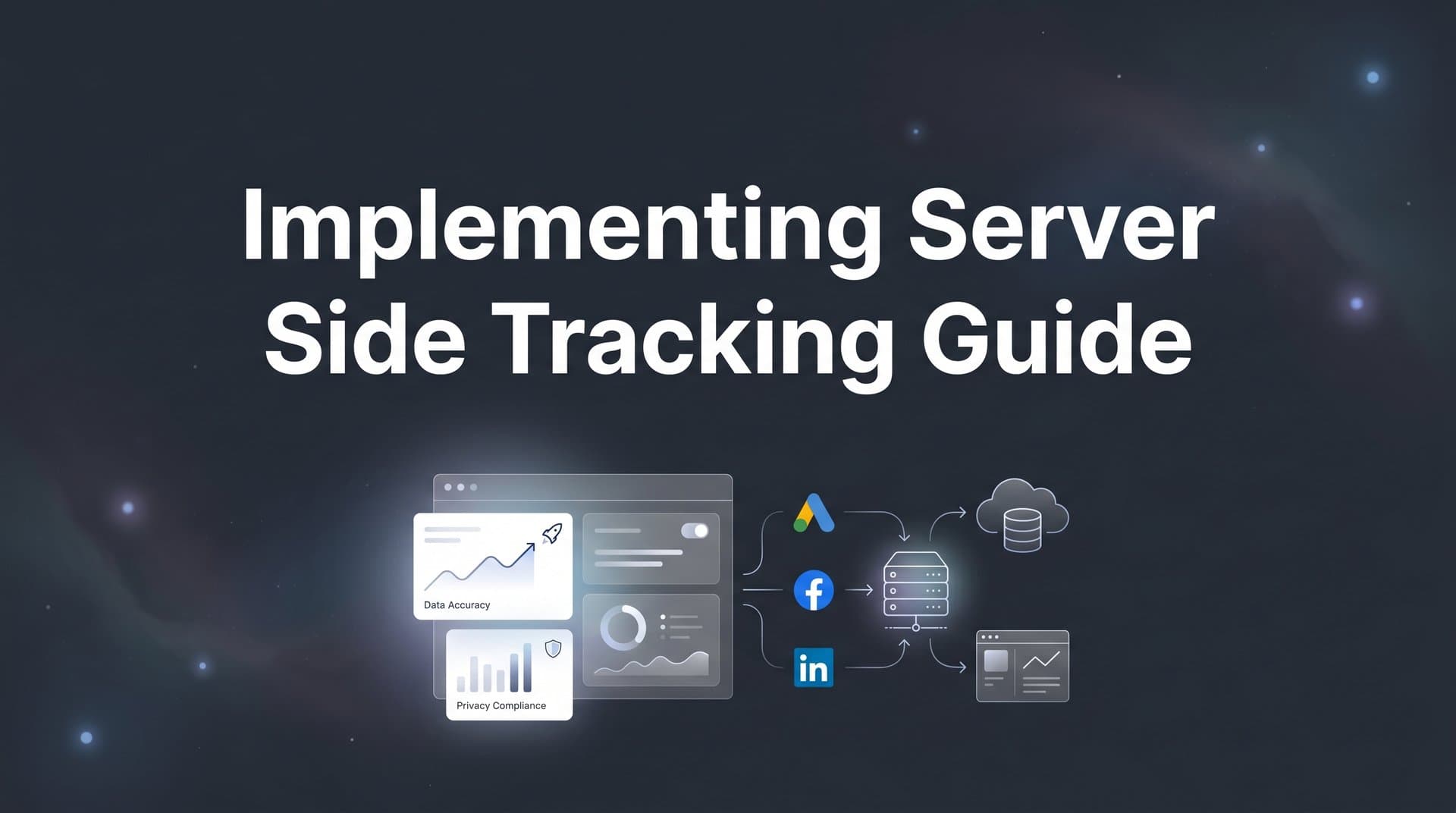
Server-side tracking fundamentally changes this dynamic. Instead of relying on browser-based pixels that users can block or browsers can restrict, you collect data on your own server and send it directly to ad platforms via their APIs. You control the data pipeline. You decide what gets sent, when, and how. The result is more complete conversion data, better match quality with platform user profiles, and optimization algorithms that actually know which ads drive revenue.
This guide walks through the complete implementation process, from auditing your current setup to validating that your server-side infrastructure is capturing and transmitting accurate data. You'll learn how to configure your server environment, connect Meta and Google's Conversion APIs, integrate your CRM for downstream revenue tracking, and ensure your data quality meets platform standards. By the end, you'll have tracking infrastructure built for accuracy and resilience, regardless of what privacy updates come next.
Step 1: Audit Your Current Tracking Setup and Identify Gaps
Before you build new infrastructure, you need to understand exactly what's broken in your current setup. Start by mapping every tracking pixel and tag currently deployed across your website. Check your tag manager, review your website code, and document which platforms are receiving data through client-side pixels versus other methods. Create a spreadsheet listing each conversion event you track, the platform it reports to, and how it's currently implemented.
Next, quantify your data loss. Pull conversion reports from each ad platform for the past 30 days, then compare those numbers against your actual CRM data and transaction records for the same period. The difference between what your ad platforms report and what actually happened represents your tracking gap. For many marketers, this gap has grown significantly as privacy restrictions have tightened—particularly for mobile traffic and Safari users. Understanding why server-side tracking is more accurate helps contextualize these discrepancies.
Break down your conversion data by device type, browser, and operating system. You'll likely find that iOS traffic shows dramatically lower conversion rates than Android, not because iOS users don't convert, but because your tracking can't see them. Safari users might show similar patterns. This device-level analysis helps you understand which segments are most affected by client-side limitations and where server-side tracking will have the biggest impact.
Document every conversion event you care about, from initial page views and form submissions to purchases and post-purchase actions. For each event, note what data you currently capture: user identifiers like email or phone, transaction values, product details, and any custom parameters. This becomes your event schema blueprint for server-side implementation.
Finally, establish baseline metrics. Record your current conversion counts by platform, your average cost per acquisition, your return on ad spend, and your event match quality scores in Meta and Google. These numbers give you a before-and-after comparison to measure improvement once server-side tracking is live. Without baselines, you can't prove the value of the work you're about to do.
Step 2: Choose Your Server-Side Tracking Architecture
You have three main paths for implementing server-side tracking, and choosing the wrong one can cost you months of development time or lock you into inflexible infrastructure. Understanding your options upfront saves headaches later. A detailed look at server-side vs client-side tracking can help clarify why this architectural decision matters so much.
The first approach is building a custom server solution. You set up your own server infrastructure, write code to receive tracking events from your website, process that data, and send it to ad platform APIs. This gives you maximum control and flexibility—you can customize everything to your exact specifications. The tradeoff? You need experienced developers, ongoing maintenance resources, and time to build and debug. If you have a technical team and unique requirements that off-the-shelf solutions can't handle, custom builds make sense. If you're a small team trying to move fast, they'll slow you down.
The second option is using tag management server containers, like Google Tag Manager Server-Side. These provide a middle-ground solution where you deploy a server container that receives events from your website and forwards them to various platforms using pre-built tags. You get more control than a fully managed solution but less complexity than building from scratch. You'll still need to manage server infrastructure and configure tags properly, but much of the heavy lifting is handled for you. This works well for teams with some technical capability who want flexibility without starting from zero.
The third path is using an attribution platform that includes server-side tracking as part of its infrastructure. Platforms like Cometly handle the server-side collection, processing, and transmission to ad platforms automatically. You implement their tracking once, and they manage the connections to Meta, Google, and other platforms through pre-built integrations. This approach gets you live fastest and requires minimal technical resources, but you're working within the platform's architecture rather than building your own.
When evaluating these options, consider your timeline, technical resources, and data requirements. If you need to be live in weeks rather than months, managed solutions win. If you have complex data residency requirements or need to process events in specific ways before sending to platforms, custom builds might be necessary. Most marketing teams find that attribution platforms or server containers offer the best balance of speed and capability. Reviewing the top server-side tracking platforms can help you evaluate your options.
Before you commit to any approach, plan your event schema. Define exactly what data you'll collect for each event type, how you'll structure it, and what identifiers you'll use for matching. This planning work applies regardless of which technical path you choose, and doing it upfront prevents rebuilding later when you realize you're missing critical data points.
Step 3: Set Up Your Server Environment and Event Collection
Your server environment is where the magic happens—it's the infrastructure that receives tracking events from your website and prepares them for transmission to ad platforms. Getting this foundation right is critical for everything that follows.
Start by configuring your server endpoint to receive POST requests from your website. This endpoint needs to accept event data in a structured format, typically JSON, and respond quickly to avoid slowing down your site. Whether you're using a cloud function, a dedicated server, or a managed container, the endpoint must be reliable and fast. Users don't wait for slow pages, and neither should your tracking. Many teams encounter common server-side tracking setup challenges during this phase.
Implement first-party data collection using your own domain. Instead of sending tracking data to third-party domains that browsers might block, set up a subdomain like tracking.yourdomain.com that points to your server infrastructure. This makes your tracking requests appear as first-party, which browsers treat more favorably. It also improves cookie persistence and data accuracy since you're not subject to third-party cookie restrictions.
Security matters. Set up proper authentication to prevent unauthorized access to your tracking endpoint. Use HTTPS for all data transmission to protect user information in transit. Implement rate limiting to prevent abuse and validate that incoming requests contain expected data formats before processing them. A compromised tracking endpoint can leak customer data or be exploited to send false conversion data to your ad platforms.
Build event validation into your server logic. Before accepting and forwarding an event, check that it contains required fields, that data types match expectations, and that values fall within reasonable ranges. If someone submits a purchase event with a negative price or a missing email address, your validation should catch it. Clean data going into your system means clean data going to your ad platforms, which means better optimization and more accurate reporting.
Test your endpoint thoroughly before connecting it to production traffic. Use tools like Postman or curl to send sample events and verify they're received correctly. Check that your server processes events as expected, that validation works, and that error handling catches problems gracefully. Monitor server response times to ensure you're not introducing latency. Once you're confident the infrastructure works, you can start routing real traffic through it.
Step 4: Connect Your Ad Platforms via Conversion APIs
With your server infrastructure ready, it's time to connect it to the platforms that will use your conversion data for optimization. This is where server-side tracking delivers its real value—sending accurate, complete conversion signals directly to Meta, Google, and other platforms.
Meta's Conversions API is your primary connection for Facebook and Instagram campaigns. To set it up, you'll need an access token from your Meta Business account and your pixel ID. Your server sends conversion events to Meta's API endpoint with specific parameters that help Meta match the event to a user profile. The critical matching parameters include email addresses, phone numbers, IP addresses, user agent strings, and click IDs from Meta ads. The more matching parameters you include, the higher your event match quality score—and higher match quality means better optimization.
Google Ads Enhanced Conversions works similarly but uses a different API structure. You'll configure your Google Ads account to accept server-side conversion data, then send events with customer information that Google uses to match conversions to ad clicks. Google particularly values email addresses and phone numbers for matching, so prioritize collecting these identifiers when users convert. Like Meta, Google provides match quality feedback that tells you how well your server events are connecting to user profiles. Understanding what server-side conversion tracking entails helps you maximize these platform connections.
Deduplication is essential when you're running both client-side pixels and server-side tracking simultaneously. Without it, you'll count the same conversion twice—once from the browser pixel and once from your server. Implement deduplication using event IDs that are identical between your client-side and server-side implementations. When Meta or Google receives two events with the same event ID and timestamp, they'll recognize them as duplicates and count them only once. Generate unique event IDs on your website when conversions happen, then include that same ID in both your pixel event and your server event.
Map your conversion events to platform-specific naming conventions and parameters. What you call a "purchase" event needs to match Meta's expected event name. Revenue values need to be formatted correctly. Product data needs to follow platform schemas. Each platform has documentation specifying exactly how events should be structured—follow these specifications precisely, or your events won't process correctly.
Configure event priority and match quality settings to optimize signal strength. In Meta, you can set whether server events should be prioritized over pixel events when both are received. As you gain confidence in your server-side data quality, you can shift more weight to server events. Monitor your event match quality scores weekly and troubleshoot when they drop—low match quality usually means you're missing key identifiers or formatting them incorrectly.
Step 5: Integrate Your CRM and Revenue Data
The real power of server-side tracking emerges when you connect it to your CRM and revenue systems. This integration lets you send downstream conversion events—like qualified leads, opportunities, and closed deals—back to ad platforms, giving them signals about which campaigns drive actual business outcomes, not just website actions.
Start by connecting your CRM to your server-side tracking infrastructure. Whether you're using Salesforce, HubSpot, or another system, you need a way to send events from your CRM to your tracking server when important milestones happen. This might be a webhook that fires when a lead is marked as qualified, an API integration that checks for new closed deals, or a scheduled job that syncs revenue data daily. The technical implementation varies by CRM, but the goal is consistent: capture events that happen after the initial website conversion.
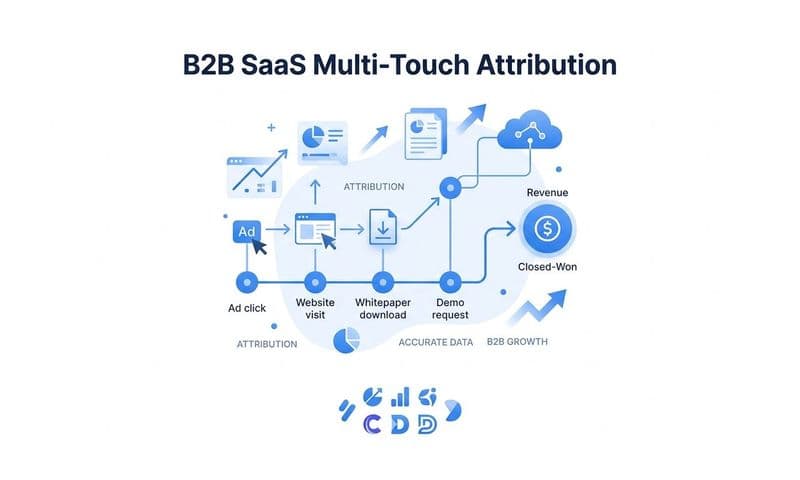
Map customer identifiers across all touchpoints to enable accurate attribution. When someone fills out a form on your website, you need to connect that web session to the lead record in your CRM and eventually to the customer record in your billing system. Email addresses typically serve as the primary identifier, but you might also use phone numbers, customer IDs, or other unique values. Without consistent identifiers, you can't connect a closed deal back to the ad that started the journey. The server-side tracking benefits for advertisers become most apparent when this CRM connection is properly established.
Set up revenue tracking to send actual purchase values back to ad platforms. When a deal closes in your CRM, send a conversion event to Meta and Google with the real revenue amount. This gives platform algorithms actual ROI data to optimize against, rather than estimated values from website purchases. For B2B companies, this is transformative—you can optimize for pipeline value and closed revenue instead of form fills. For e-commerce, it means including lifetime value and repeat purchases, not just initial transactions.
Configure offline conversion imports for sales that happen outside your website entirely. If customers call your sales team, visit a physical location, or close deals through channels you don't track digitally, you can still send those conversions back to ad platforms. Use click IDs or other identifiers captured when users clicked your ads to match offline conversions to the original ad interaction. This completes the picture of which campaigns drive revenue, even when the final conversion happens offline.
Build the data pipeline from CRM events to ad platform APIs with proper error handling and retry logic. CRM webhooks sometimes fail. API calls can timeout. Network issues happen. Your integration needs to handle these gracefully, queue failed events for retry, and alert you when problems persist. Monitor this pipeline closely in the first few weeks to catch and fix issues before they result in lost data.
Step 6: Validate, Test, and Launch Your Implementation
You've built the infrastructure, connected the platforms, and integrated your CRM. Now comes the critical phase: making sure everything actually works before you rely on this data for optimization decisions.
Use platform diagnostic tools to verify events are received and processed correctly. Meta's Events Manager shows incoming Conversions API events in real-time and flags errors or warnings. Google Ads provides conversion diagnostics that show whether your Enhanced Conversions are working. Send test events through your system and watch them appear in these diagnostic interfaces. If they don't show up within a few minutes, something in your implementation is broken.
Check event match quality scores and investigate when they're lower than expected. Meta provides a match quality score for each event based on how many customer information parameters you included and whether they matched to a user profile. Scores below 5 out of 10 suggest you're missing important identifiers or formatting them incorrectly. Common issues include hashing email addresses when they should be plain text (or vice versa), including country codes in phone numbers inconsistently, or sending IP addresses that don't match the user's actual location. Comparing server-side tracking tools can help you identify platforms with better diagnostic capabilities.
Run parallel tracking with your existing client-side pixels while you validate server-side accuracy. Keep your current pixels running and compare the conversion counts they report against your new server-side data. The numbers won't match exactly—server-side should capture more conversions—but they should be in the same ballpark. Massive discrepancies suggest implementation problems. Use this parallel period to build confidence that your server-side tracking is working correctly before making optimization decisions based on it.
Monitor for errors and set up alerting for tracking failures. Your server logs should show any events that fail to send to ad platforms. API responses from Meta and Google indicate when events are rejected or malformed. Create alerts that notify you immediately when error rates spike or when your tracking endpoint stops receiving events altogether. The faster you catch problems, the less data you lose.
Gradually shift attribution weight to server-side data as your confidence builds. In Meta, you can configure whether pixel events or Conversions API events take priority when both are received for the same conversion. Start with pixel priority while you validate accuracy, then shift to API priority once you're confident your server-side implementation is solid. In Google, you can control how much weight Enhanced Conversions receive in attribution models. This gradual transition reduces risk while you prove out the new infrastructure.
Your Path to Tracking That Actually Works
With server-side tracking implemented, you've built infrastructure that survives privacy updates, captures conversions browsers can't see, and feeds complete data to the platforms optimizing your campaigns. Your quick-reference checklist: audit completed with baseline metrics showing your previous data loss, architecture chosen and server environment configured to receive events securely, ad platform APIs connected with deduplication preventing double-counting, CRM integrated to track downstream revenue events, and validation confirming your data flows accurately to Meta and Google.
Monitor your event match quality scores weekly and compare your server-side conversion data against your CRM to ensure accuracy. As you scale, watch for patterns in which campaigns show the biggest improvement in reported conversions—these are the ones that were most affected by client-side tracking limitations. Use this data to reallocate budget toward channels that are actually performing better than client-side tracking suggested.
The technical work you've completed is foundational, but it's just the beginning. Server-side tracking gives you accurate data, but you still need to analyze it, identify patterns, and make optimization decisions. This is where attribution platforms like Cometly add value beyond just the tracking infrastructure—they provide AI-powered insights into which ads actually drive revenue, compare attribution models to show how different approaches change your understanding of performance, and automate much of the ongoing maintenance that custom implementations require.
The investment in server-side tracking pays dividends through better optimization signals, more accurate reporting, and marketing decisions based on complete data rather than estimates. You're no longer guessing which campaigns work based on partial information. You're seeing the full picture of how users interact with your marketing across devices and channels, then using that clarity to scale what actually drives business results. Ready to elevate your marketing game with precision and confidence? Discover how Cometly's AI-driven recommendations can transform your ad strategy—Get your free demo today and start capturing every touchpoint to maximize your conversions.