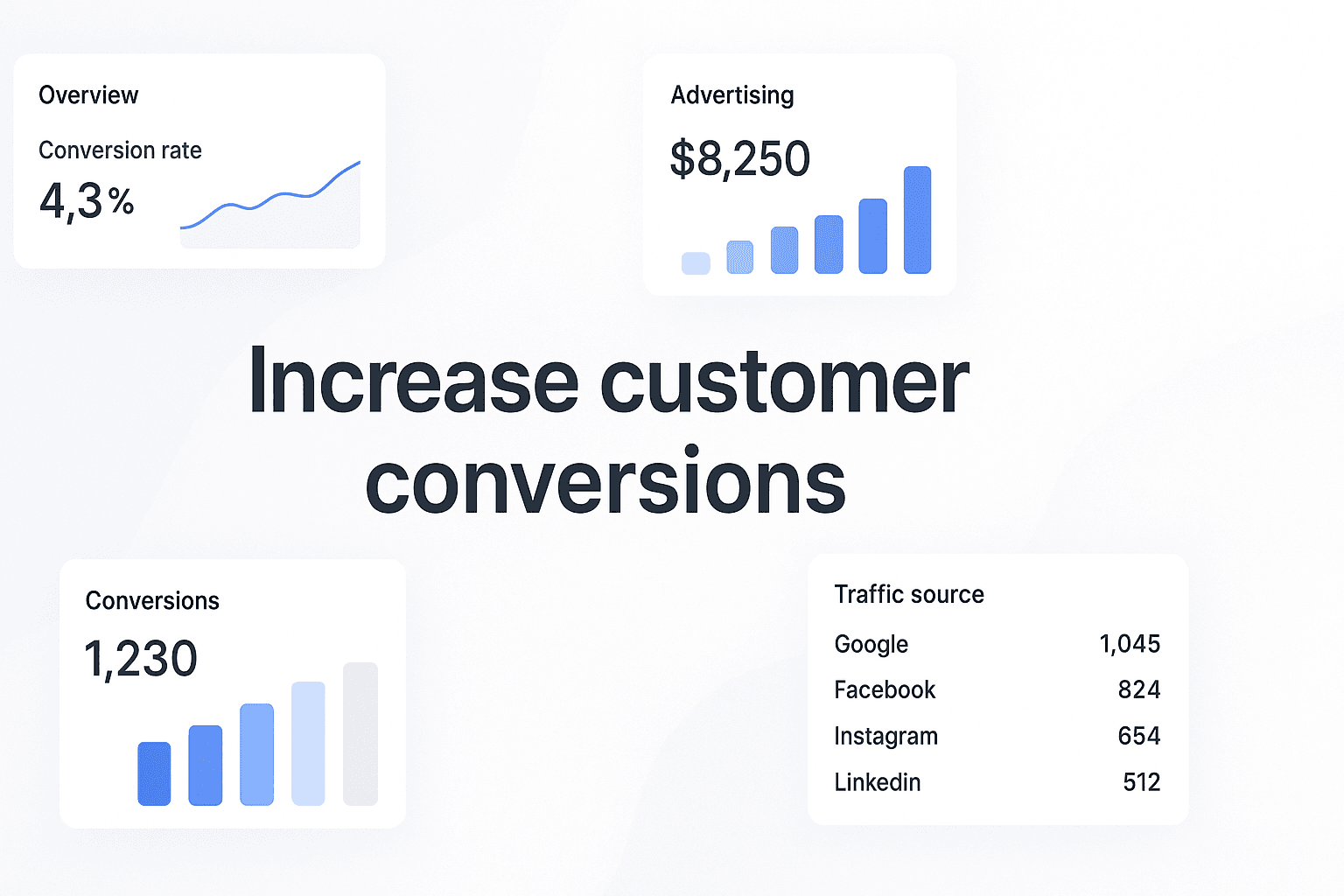
You're staring at your ad dashboard at 2 AM, and the numbers look great. Your Facebook campaigns show a 3.2% conversion rate. Google Ads reports strong performance. Your LinkedIn campaigns are "optimizing nicely" according to the platform.
Then you check your bank account.
The revenue doesn't match. Not even close. You're spending $50,000 a month on ads that platforms call "successful," but your actual customer acquisition costs are through the roof. Some campaigns you thought were winners are barely breaking even. Others you nearly paused last week? They're apparently driving your most valuable customers—you just couldn't see it.
This isn't a budgeting problem or a creative problem. It's an attribution problem.
Here's what's actually happening: Ad platforms measure success based on what they can see within their own ecosystems. Facebook celebrates when someone converts after clicking a Facebook ad. Google does the same. But your customers don't live in single-platform bubbles. They see your Facebook ad on Monday, search for you on Google Tuesday, read reviews Wednesday, and finally convert on Thursday after clicking an email link.
Which platform gets credit? In most setups, the email does—even though Facebook and Google did the heavy lifting. Your optimization decisions get made on incomplete data, and you end up scaling the wrong campaigns while starving the ones actually driving growth.
The cost of this attribution blindness compounds daily. Every dollar you reallocate based on platform-reported conversions potentially moves budget away from your true revenue drivers. Every campaign you pause based on "poor performance" might be eliminating a critical touchpoint in your highest-value customer journeys.
But here's the good news: Once you fix your conversion tracking foundation and implement proper attribution, the path to increasing customer conversions becomes remarkably clear. You'll see exactly which traffic sources drive real revenue, which conversion points have the highest optimization potential, and which campaigns deserve more budget versus which ones are just expensive vanity metrics.
This guide walks you through a systematic, five-step approach to increase customer conversions using complete attribution data rather than platform-reported guesswork. You'll learn how to audit your current tracking setup, analyze which sources actually convert, optimize your highest-impact conversion points, feed better data back to your ad platforms, and scale your winning strategies with confidence.
By the end, you'll have a repeatable framework for conversion optimization that's based on revenue reality, not platform fiction. Let's walk through how to do this step-by-step, starting with the tracking foundation that most businesses get completely wrong.
Step 1: Audit Your Current Conversion Tracking Foundation
Before you can optimize anything, you need to know what's actually happening with your conversions. Most businesses think they have tracking figured out because they see numbers in their ad platforms. But those numbers are often incomplete, inaccurate, or completely misleading.
Start by checking if your tracking captures the full customer journey. Log into your analytics and look at a recent conversion. Can you see every touchpoint that customer had before converting? If you only see the last click, you're missing 60-80% of the story. Your Facebook ad might have introduced the customer to your brand, your Google search ad might have brought them back when they were ready to research, and your email might have closed the deal—but if you only see the email, you'll make terrible optimization decisions.
Next, verify that your conversion tracking is actually firing correctly. The easiest way to do this is to complete a test conversion yourself. Go through your entire funnel—click an ad, browse your site, add something to cart, and complete a purchase. Then check if that conversion appears in all your tracking systems: your analytics platform, your ad platforms, and your CRM. If it doesn't show up everywhere within a few minutes, something's broken.
Pay special attention to how to track offline conversions if your business has phone calls, in-person sales, or any revenue that happens outside your website. These offline conversions often represent your highest-value customers, but they're also the easiest to lose in your tracking. If you're running ads that drive phone calls but only tracking website conversions, you're literally throwing money away on campaigns that look like failures but are actually winners.
Check your conversion values too. Are you tracking revenue, or just conversion counts? A campaign that drives 100 conversions at $50 each is worth far less than a campaign that drives 20 conversions at $500 each. But if you're only counting conversions, they look equally successful. Make sure every conversion in your tracking includes the actual dollar value, not just a binary "yes, they converted" signal.
Finally, audit your attribution window settings. Most ad platforms default to 7-day click and 1-day view attribution, but your actual sales cycle might be much longer. If you're selling high-ticket products or services, customers might take weeks or months to convert. Using a 7-day window means you're crediting conversions to the wrong campaigns—or not crediting them at all. Consider implementing conversion sync to ensure your conversion data flows accurately between your tracking systems and ad platforms.
The goal of this audit isn't to fix everything immediately. It's to identify the gaps in your current tracking so you know what data you can trust and what data you can't. Once you have this clarity, you can make informed decisions about where to focus your optimization efforts—and you'll know which performance metrics are real versus which ones are fiction.
Step 2: Identify Your Highest-Converting Traffic Sources
Now that you know your tracking is accurate, it's time to figure out which traffic sources actually drive conversions. This sounds simple, but most businesses get it completely wrong because they rely on last-click attribution.
Open your analytics and look at your conversion data with multi-touch attribution enabled. You want to see the full customer journey, not just the last click. A customer who converts after clicking an email might have originally discovered you through a Facebook ad, researched you via Google search, and engaged with your content on LinkedIn before that email finally closed the deal. If you only look at last-click data, you'd think email is your best channel and cut budget from Facebook, Google, and LinkedIn—even though they did most of the work.
Start by identifying your assisted conversions. These are the touchpoints that happened before the final conversion but played a crucial role in making it happen. In most businesses, you'll find that certain channels are excellent at introducing new customers (top of funnel) while others are better at closing deals (bottom of funnel). Facebook and YouTube often excel at awareness. Google Search and retargeting ads typically perform better at conversion. Neither is "better"—they serve different purposes in your customer journey.
Look at your conversion paths report to see the most common sequences customers take before converting. You might discover that your highest-value customers typically see 3-4 touchpoints over 2-3 weeks before converting, while your lowest-value customers convert immediately after one touchpoint. This insight is gold because it tells you that cutting your "slow" campaigns would actually eliminate your best customers.
For e-commerce businesses, understanding platform-specific conversion tracking is essential. If you're running WooCommerce, you'll want to properly setup woocommerce google conversion tracking to ensure accurate data flows between your store and advertising platforms.
Pay attention to your conversion rates by traffic source, but don't stop there. A traffic source with a 1% conversion rate might be more valuable than one with a 5% conversion rate if the 1% source drives customers who spend 10x more. Always look at revenue per visitor or customer lifetime value by source, not just conversion rate.
Check your time-to-conversion data too. Some traffic sources drive quick conversions while others take weeks or months. If you're testing new campaigns and judging them after just a few days, you might be killing winners before they have a chance to perform. When implementing new strategies, consider using ty guide accelerated testing strategy approaches to get reliable data faster without making premature decisions.
Create a simple spreadsheet that ranks your traffic sources by total revenue, average order value, conversion rate, and customer acquisition cost. This gives you a complete picture of which sources are actually valuable versus which ones just look good on surface-level metrics. You'll often find that your "best" traffic source by conversion rate is actually one of your worst by revenue, while a source you've been neglecting is quietly driving your most profitable customers.
The key insight here is that not all conversions are created equal, and not all traffic sources serve the same purpose. Your job isn't to find the "one best channel"—it's to understand how different channels work together to drive conversions, and then optimize each one for its specific role in your customer journey.
Step 3: Optimize Your Highest-Impact Conversion Points
You've identified which traffic sources drive conversions. Now it's time to optimize the conversion points themselves—the specific pages and moments where visitors become customers.
Start by identifying your conversion funnel stages. For most businesses, this includes: landing page → product/service page → checkout/signup → confirmation. Each stage has a conversion rate, and improving any one of them multiplies your overall results. A 10% improvement at each stage doesn't add up to 40% better results—it compounds to much more.
Look at your funnel drop-off rates to find your biggest opportunities. If 1,000 people visit your landing page, 500 click through to your product page, 100 add to cart, and 25 complete checkout, your biggest problem isn't your landing page (50% conversion rate is solid)—it's your checkout process (25% conversion rate is terrible). Focus your optimization efforts where you have the most room for improvement.
For your landing pages, test your headline and value proposition first. These have the biggest impact on conversion rates. Your headline should clearly communicate what you offer and why it matters to your specific audience. Vague headlines like "The Best Solution for Your Business" convert poorly. Specific headlines like "Cut Your Customer Acquisition Cost by 40% with Accurate Attribution Tracking" convert much better because they promise a concrete outcome.
Understanding the complete customer journey tracking process helps you identify exactly where prospects are dropping off and why. When you can see the full path from first touch to conversion, you can optimize each step based on real behavior data rather than assumptions.
Test your call-to-action buttons next. The difference between "Submit" and "Get My Free Analysis" can be 30-50% more conversions. Your CTA should be specific about what happens next and use action-oriented language. "Start Free Trial" outperforms "Sign Up." "Show Me How" outperforms "Learn More." The more specific and action-oriented, the better.
For product and service pages, focus on proof elements. Testimonials, case studies, and specific results build trust and overcome objections. But generic testimonials like "Great product!" don't work. You need specific testimonials that address the exact concerns your prospects have: "I was worried about the learning curve, but I was up and running in 15 minutes" or "We saw a 40% reduction in CAC within the first month."
If you're running Facebook campaigns, analyzing your facebook customer journey data reveals how users interact with your ads and content before converting, helping you optimize both your ad creative and landing page experience for this specific traffic source.
Optimize your checkout process by removing every unnecessary field and step. Each additional form field reduces conversions by 5-10%. If you're asking for information you don't absolutely need to complete the transaction, remove it. You can always collect additional data later, after they've converted and you've built trust.
Add trust signals throughout your funnel. Security badges, money-back guarantees, and clear privacy policies all increase conversion rates by reducing perceived risk. Place these elements near your CTAs where decision-making happens, not buried in your footer where nobody sees them.
Test your page load speed. Every second of load time reduces conversions by approximately 7%. If your landing page takes 5 seconds to load instead of 2 seconds, you're losing 21% of your potential conversions before visitors even see your content. Use Google Search Console to identify and fix speed issues.
Finally, implement exit-intent popups on your highest-traffic pages. When done right, these can recover 10-15% of abandoning visitors. The key is to offer something valuable—a discount, free resource, or compelling reason to stay—rather than just repeating your existing offer.
Step 4: Feed Better Data Back to Your Ad Platforms
Here's where most businesses leave massive money on the table: They fix their tracking and optimize their conversion points, but they never feed that improved data back to their ad platforms. Your ad platforms use conversion data to optimize who they show your ads to. If you're feeding them incomplete or inaccurate data, their algorithms are optimizing toward the wrong goals.
Start by implementing server-side conversion tracking. Browser-based tracking (like the Facebook Pixel or Google Tag) misses 20-40% of conversions due to ad blockers, iOS privacy features, and browser restrictions. Server-side tracking captures conversions directly from your server, bypassing these limitations. This gives your ad platforms more complete data to optimize with.
Set up conversion value optimization, not just conversion count optimization. If you tell Facebook to optimize for "purchases," it will drive as many purchases as possible—regardless of value. But if you tell it to optimize for "purchase value," it will actively seek out customers who spend more. This single change can increase your revenue per conversion by 30-50% without spending more on ads.
Implement proper conversion windows that match your actual sales cycle. If your customers typically take 14 days to convert, but you're using a 7-day attribution window, your ad platforms are only seeing half the picture. They'll optimize toward quick conversions and ignore the campaigns that drive your highest-value customers who take longer to decide.
Using a comprehensive attribution tool helps you collect accurate conversion data across all touchpoints and feed it back to your ad platforms in a format they can use for optimization, ensuring your campaigns target the right audiences based on complete information.
Send custom conversion events for your most valuable actions. Don't just track "purchase"—track "high-value purchase" (over $500), "repeat purchase," and "subscription signup" as separate events. This allows you to create campaigns specifically optimized for these high-value actions rather than treating all conversions as equal.
Implement offline conversion tracking if you have phone sales, in-person transactions, or any revenue that happens outside your website. Most businesses lose 30-50% of their conversion data because they never connect offline sales back to the ads that drove them. Your ad platforms can't optimize for conversions they can't see.
For Facebook campaigns specifically, leveraging detailed facebook marketing analytics allows you to understand which ad sets and audiences drive the most valuable conversions, enabling you to feed more precise optimization signals back to the platform.
Set up your conversion APIs correctly. Facebook's Conversions API, Google Ads Enhanced Conversions, and TikTok's Events API all allow you to send conversion data directly from your server to the ad platform. This improves data accuracy, increases the number of conversions attributed correctly, and helps ad platforms optimize more effectively.
Create custom audiences based on conversion value, not just conversion status. Instead of a single "purchasers" audience, create separate audiences for "customers who spent $0-100," "customers who spent $100-500," and "customers who spent $500+." Use these for different retargeting strategies and lookalike audiences. Your high-value customer lookalikes will perform dramatically better than generic purchaser lookalikes.
Finally, implement a regular data quality check. At least weekly, verify that your conversion data matches between your analytics, your ad platforms, and your actual revenue. Discrepancies mean something's broken in your tracking or data feed, and every day you don't fix it is a day your ad platforms are optimizing based on bad data.
Step 5: Scale Your Winning Campaigns with Confidence
Now that you have accurate tracking, optimized conversion points, and clean data feeding your ad platforms, you can finally scale with confidence. But scaling isn't just about increasing budgets—it's about systematically expanding what works while maintaining or improving your efficiency.
Start by identifying your true winning campaigns using your complete attribution data. A campaign might look mediocre in platform reporting but actually be driving 30% of your high-value customers when you look at multi-touch attribution. These are the campaigns you want to scale first, even if the ad platform itself doesn't recognize them as winners.
Scale gradually, not aggressively. When you find a winning campaign, resist the urge to triple the budget overnight. Increase budgets by 20-30% every 3-4 days. This gives the ad platform's algorithm time to adjust and find more of your ideal customers without shocking the system and destroying performance.
Expand your winning campaigns horizontally before scaling them vertically. Instead of just increasing the budget on one campaign, duplicate it with slight variations—different ad creative, different audience segments, different placements. This reduces your risk and often finds new pockets of high-performing traffic that your original campaign wasn't reaching.
Test new traffic sources using the same offers and landing pages that work in your existing channels. If a specific value proposition and landing page convert well from Facebook traffic, test it on Google, LinkedIn, TikTok, or YouTube. You'll often find that your winning formula works across multiple platforms—you just need to adapt the ad creative to match each platform's format and user behavior.
Implement a structured testing framework to continuously improve your results. Allocate 70% of your budget to proven winners, 20% to promising tests, and 10% to experimental new approaches. This balance allows you to scale what works while still discovering new opportunities.
Monitor your efficiency metrics as you scale. It's normal for your cost per acquisition to increase slightly as you scale—you're moving beyond your absolute best customers into a broader market. But if your CPA increases by more than 20-30%, you're scaling too fast or expanding into audiences that aren't a good fit.
Create campaign-specific landing pages as you scale into new audiences or traffic sources. The landing page that works for warm retargeting traffic won't work as well for cold prospecting traffic. The page that converts Facebook users might not resonate with LinkedIn's professional audience. Customize your conversion points to match the awareness level and context of each traffic source.
Build your retargeting infrastructure as you scale. As you drive more traffic, you'll have larger audiences to retarget. Create segmented retargeting campaigns based on behavior: people who visited but didn't convert, people who added to cart but didn't purchase, people who purchased once but haven't returned. Each segment needs different messaging and offers.
Finally, document everything that works. Create a playbook that captures your winning strategies, successful ad creative, high-converting landing pages, and effective audience segments. This allows you to scale systematically rather than relying on memory or gut feel. When you launch a new campaign or enter a new market, you can start with proven templates rather than guessing.
The goal of scaling isn't just to spend more money—it's to profitably acquire more customers while maintaining or improving your unit economics. With accurate attribution data, optimized conversion points, and clean data feeding your ad platforms, you can scale with confidence knowing that your decisions are based on reality, not platform-reported fiction.
Ready to elevate your marketing game with precision and confidence? Discover how Cometly's AI-driven recommendations can transform your ad strategy—**Get your free demo** today and start capturing every touchpoint to maximize your conversions.