If you've been running paid ads since before 2021, you remember a different world. Pixel fires, precise retargeting audiences, and platform dashboards that felt reliable. Then Apple flipped the switch, and suddenly your data started looking like Swiss cheese.
App Tracking Transparency arrived with iOS 14.5 in April 2021, and it wasn't a minor tweak. It was a structural overhaul of how mobile advertising data flows, and its effects have only deepened with every subsequent iOS update. Today, marketers running campaigns across Meta, Google, and TikTok are dealing with incomplete conversion data, shrinking custom audiences, and optimization algorithms that are essentially flying partially blind.
The frustration is real and understandable. You're looking at a dashboard that shows one number, your CRM shows another, and somewhere in the gap between those two figures is the actual truth about your campaign performance. Making budget decisions in that environment feels like guesswork dressed up as strategy.
But here's the thing: this is not a problem without solutions. The marketers who are thriving right now are not the ones waiting for Apple to reverse course. They're the ones who have rebuilt their measurement infrastructure around the new reality. This article breaks down exactly what changed, why it matters for your campaigns today, and the practical steps you can take to regain visibility and confidence in your data. Consider this your clear-headed, solutions-focused guide to navigating the post-ATT landscape in 2026.
How Apple Rewrote the Rules of Ad Tracking
Before iOS 14.5, the mobile advertising ecosystem ran on a relatively seamless flow of behavioral data. Apps could track user activity across other apps and websites using Apple's Identifier for Advertisers (IDFA), a device-level ID that ad platforms used to build audience profiles, measure conversions, and retarget users. Advertisers had grown accustomed to this level of visibility, and the entire optimization infrastructure of platforms like Meta was built on top of it.
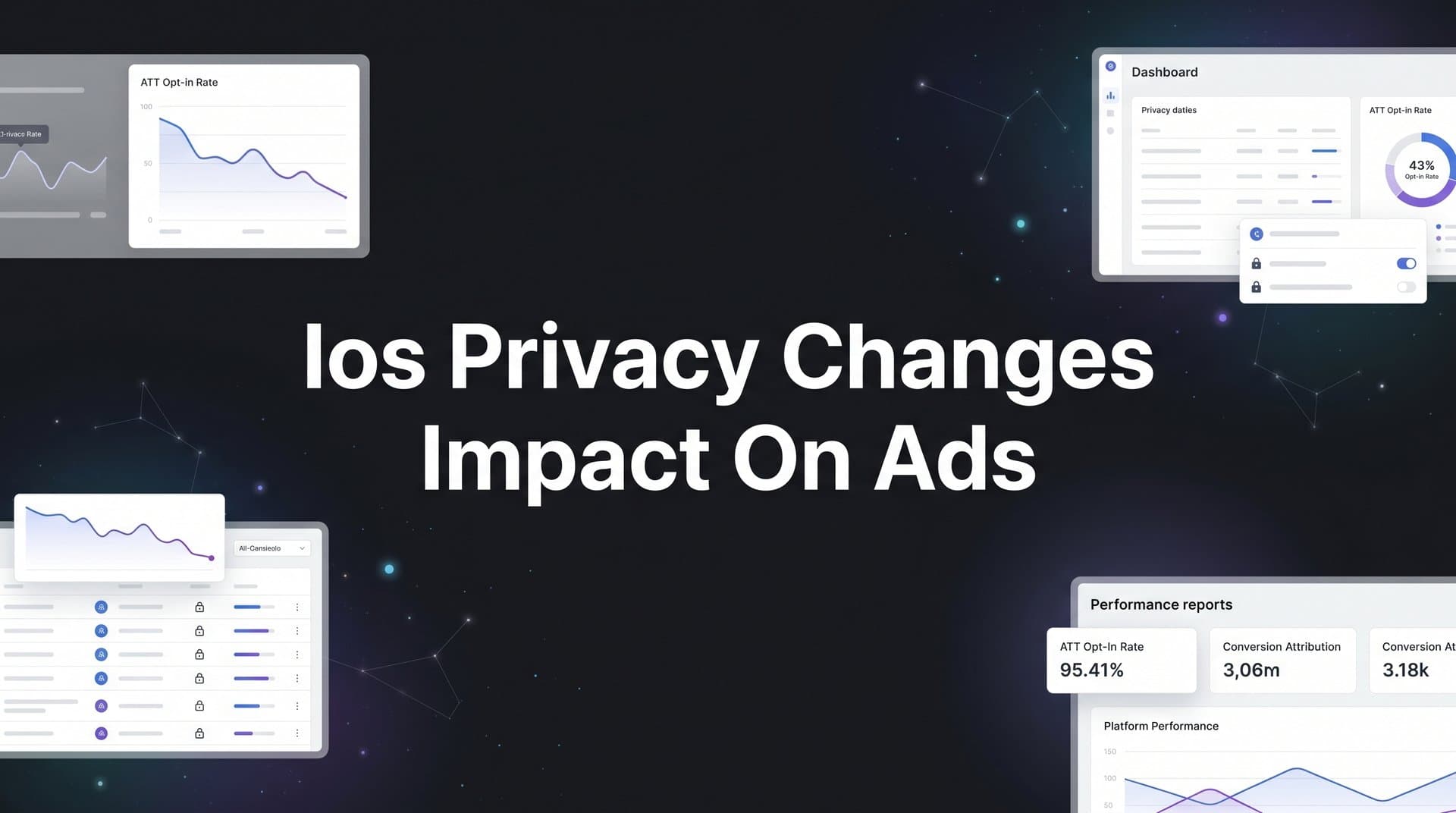
App Tracking Transparency changed the fundamental premise. Starting with iOS 14.5, every app was required to explicitly ask users for permission before accessing their IDFA for cross-app tracking. The prompt is blunt: it tells users an app wants to track their activity across other companies' apps and websites, and gives them a simple choice to allow or ask the app not to track.
The response from users was decisive. According to data from Flurry Analytics, a Verizon-owned mobile analytics company, the vast majority of U.S. iOS users opted out of tracking in the months following ATT's launch. When most of your iOS audience is invisible to cross-app tracking, the audience modeling that ad platforms depend on breaks down quickly. For a deeper look at how this disrupted the largest ad platform, see our breakdown of why Facebook Ads stopped working after iOS 14.
Apple didn't stop there. Subsequent iOS updates layered on additional privacy controls that further narrowed advertiser visibility. iCloud Private Relay, introduced with iOS 15, masks users' IP addresses and browsing activity in Safari, making IP-based audience building and attribution less reliable. Mail Privacy Protection prevents email senders from knowing when a message was opened or tracking the recipient's location, dealing a significant blow to email attribution signals that often fed back into ad platform audiences.
SKAdNetwork, Apple's privacy-preserving attribution framework, was positioned as the sanctioned replacement for IDFA-based measurement. It allows ad networks to receive aggregated, anonymized conversion data without exposing individual user identities. The catch is that it comes with significant constraints: conversion reporting is delayed, the number of trackable conversion events is limited, and the data lacks the granularity that marketers and platform algorithms need to optimize effectively.
The practical result is a broken tracking chain. Browser-based pixels lose signal when users browse in Safari with privacy protections enabled. Retargeting audiences that once contained millions of users shrink to a fraction of their former size because the matching mechanism no longer has reliable identifiers. Ad platforms receive conversion data that is incomplete, delayed, and aggregated to the point where granular optimization becomes difficult. Understanding the full scope of what iOS 14 changed about digital advertising is essential for building a path forward.
The Ripple Effect Across Your Ad Campaigns
Understanding why iOS privacy changes matter starts with understanding how modern ad platforms actually work. Meta, Google, TikTok, and similar platforms use machine learning models to decide who sees your ads. These models are trained on conversion signals: who clicked, who converted, what they bought, and how much it was worth. The more conversion data the algorithm receives, the better it becomes at finding users who are likely to take the action you care about.
When iOS privacy changes reduce the flow of conversion data, these algorithms have less fuel to run on. They're optimizing based on an incomplete picture of what's actually happening. The result is less efficient targeting, broader audience delivery that doesn't focus on your best prospects, and ultimately higher costs to acquire the same customer.
Meta publicly disclosed during their Q4 2021 earnings call that ATT changes were expected to cost them approximately $10 billion in ad revenue in 2022 due to reduced targeting and measurement capabilities. That figure reflects the scale of the disruption, not just for the platform but for every advertiser relying on Meta's optimization infrastructure. This is a key reason Facebook Ads conversions are dropping for so many advertisers.
The consequences show up in your daily campaign management in several concrete ways. You'll often see inflated cost-per-acquisition figures in your dashboard because the platform is reporting fewer conversions than actually occurred, making each conversion appear more expensive than it truly was. You'll see revenue misattributed between channels because the cross-platform tracking that used to connect a Facebook ad click to a Google search to a purchase no longer functions cleanly. And you'll see retargeting audiences that have shrunk significantly, limiting your ability to re-engage users who have already shown interest.
The most dangerous consequence is the compounding decision problem. When your data shows a campaign underperforming, the natural response is to reduce budget or pause it. But if that campaign is actually driving conversions that aren't being reported back to the platform, you're cutting something that works. Marketers who rely solely on platform-reported metrics are regularly making budget decisions based on incomplete information, and those decisions compound over time into meaningful revenue loss.
This is not a problem unique to small advertisers. Teams managing significant budgets face the same data gaps. The difference is that larger teams often have more resources to build independent measurement systems that surface the truth beneath the platform-reported numbers.
Why Traditional Attribution Models No Longer Cut It
Last-click attribution was always a simplification. Crediting the final touchpoint before a conversion with 100% of the value ignored everything that happened earlier in the customer journey: the awareness ad, the organic search, the retargeting impression that brought someone back. It was a useful shortcut when data was abundant, but it was never an accurate reflection of how customers actually make decisions.
iOS privacy changes didn't create this problem. They exposed it and amplified it. When tracking gaps mean entire touchpoints disappear from your data, last-click attribution doesn't just oversimplify the journey. It actively misrepresents it. You might be crediting a Google search click as the sole driver of a conversion when in reality a Meta video ad created the initial awareness that started the whole journey. The search click only happened because the Meta ad did its job first. This is why so many advertisers struggle with understanding which ads drive actual revenue.
Apple's SKAdNetwork was designed to provide a privacy-safe attribution path, but its limitations are significant for serious advertisers. The framework delivers aggregated conversion data with a 24 to 48 hour delay, which makes real-time optimization difficult. It caps the number of conversion value combinations you can track, forcing advertisers to choose which conversion events matter most and sacrifice visibility into others. And it provides no user-level data, meaning you cannot connect a conversion back to a specific creative, placement, or audience segment with any granularity.
Meta's Aggregated Event Measurement (AEM) was built to work within Apple's framework, but it comes with its own constraints. Advertisers are limited in the number of conversion events they can prioritize per domain, and the reporting windows are compressed in ways that can make longer sales cycles appear less effective than they actually are.
The growing gap between platform-reported attribution and what your CRM or payment system actually records is perhaps the clearest signal that something is broken. If your Meta Ads Manager claims responsibility for 150 conversions this month and your CRM shows 300 actual customers, you have a significant measurement problem. That discrepancy isn't just an accounting issue. It means every optimization decision you're making based on platform data is built on a partial view of reality. The issue of underreporting conversions in Facebook Ads is one of the most common symptoms of this breakdown. Building an independent measurement layer that connects your ad platforms, website, and CRM is no longer optional. It's the foundation of sound marketing strategy.
Server-Side Tracking: The Foundation for Accurate Data
Browser-based pixels work by executing JavaScript code in a user's browser when they visit your website or complete an action. That code fires a signal back to the ad platform, reporting the conversion. The problem is that this process is vulnerable to all the restrictions that iOS privacy changes have enabled: Safari's Intelligent Tracking Prevention, ad blockers, restricted cookies, and the general erosion of browser-level tracking signals.
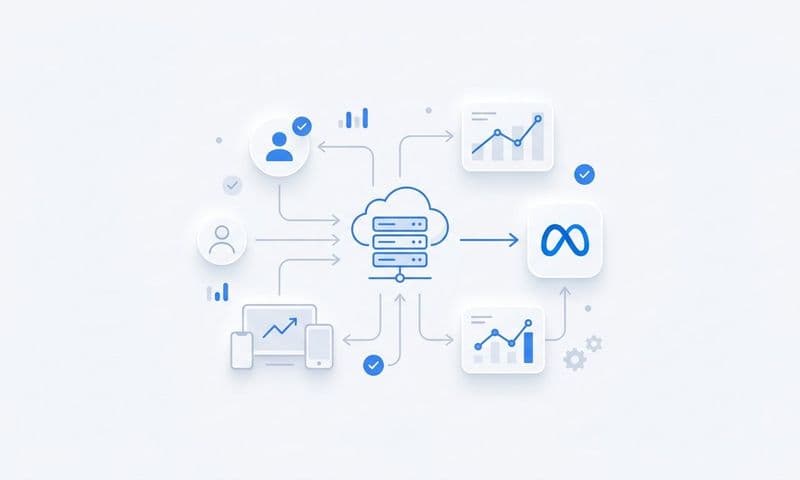
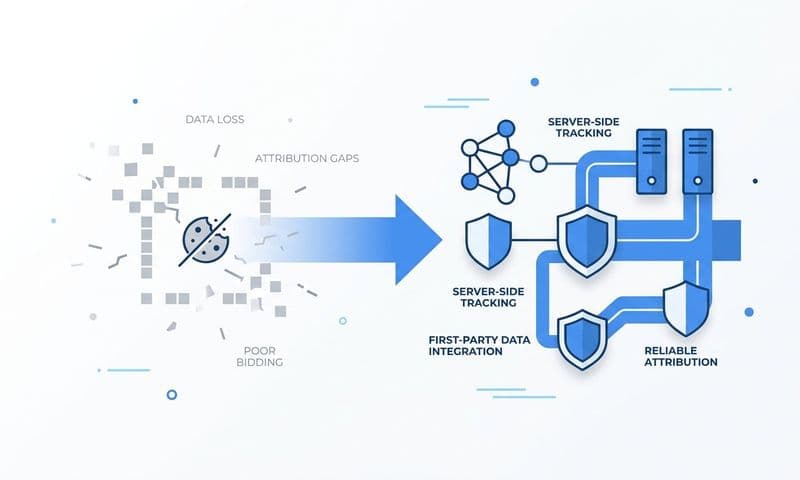
Server-side tracking takes a fundamentally different approach. Instead of relying on the user's browser to send conversion data, the signal travels from your server directly to the ad platform's API. The user's browser is no longer the intermediary, which means many of the iOS-related restrictions that block browser-based tracking simply don't apply in the same way. For a comprehensive overview, read our guide on what server-side tracking for ads is and why it matters.
Think of it like this: browser-side tracking is like trying to pass a message through a crowd where people keep dropping it or refusing to pass it along. Server-side tracking is a direct phone call. The message gets through reliably because it doesn't depend on the crowd at all.
The practical benefits go beyond simply recovering lost signal. Server-side tracking can capture events that browser-based pixels miss entirely. A form submission that happens after a page reload. A CRM stage change that occurs days after the initial click when a lead becomes a qualified opportunity. A subscription renewal that happens in your backend system without any browser interaction. These downstream conversion signals are often the most valuable ones for training ad platform algorithms, and they're the ones most likely to be invisible to traditional pixel-based tracking.
When you feed enriched, server-side conversion data back to platforms like Meta through the Conversions API or to Google through Enhanced Conversions, you're giving their machine learning models more accurate and complete information to work with. The algorithms can better identify which users are most likely to convert, which improves targeting efficiency and can lower your cost per acquisition over time. You're not just recovering lost measurement. You're actively improving the quality of the data that drives optimization.
This is precisely why server-side tracking has become a cornerstone of modern attribution strategy. It addresses the core problem that iOS privacy changes created: the broken connection between ad exposure and conversion data. By rebuilding that connection at the server level, you restore the signal that ad platforms need to optimize effectively. Marketers looking for the right tools should explore the top attribution tools for paid ads to find the best fit for their stack.
Building a Measurement Strategy That Doesn't Depend on Apple's Cooperation
Recovering from iOS privacy changes isn't about finding a single fix. It's about building a measurement system that is resilient by design, one that doesn't depend on third-party cookies, device-level identifiers, or any single platform's reporting to tell you what's working.
The framework starts with three interconnected components: multi-touch attribution, server-side tracking, and first-party data collection. Each one addresses a different dimension of the measurement problem, and together they create a picture of your customer journey that no single platform can provide on its own.
Multi-touch attribution distributes conversion credit across every touchpoint in the customer journey, giving you a more accurate view of which channels and campaigns are actually contributing to revenue. Instead of crediting the last click or accepting whatever platform-reported attribution tells you, multi-touch models let you see the full sequence from awareness to conversion and understand the role each interaction played. This approach is essential for understanding marketing channel impact across your entire funnel.
Server-side tracking ensures that the conversion data feeding your attribution models is complete and accurate. As discussed in the previous section, this means capturing events that browser-based pixels miss and sending that enriched data directly to ad platforms to improve their optimization.
First-party data collection builds an audience asset that you own and control, independent of any platform's tracking infrastructure. Email addresses, phone numbers, and CRM data collected through your own properties can be used to create custom audiences, match against platform user bases, and build lookalike audiences that don't depend on third-party behavioral tracking.
The critical connective tissue is a unified view that brings your ad platforms, website analytics, and CRM together in one place. When these systems are siloed, you're forced to reconcile data manually and accept the gaps and inconsistencies that come with it. When they're connected, you can track sales back to ads by tracing a customer from their first ad impression through every subsequent touchpoint to their eventual purchase, using data from your own systems rather than platform-reported metrics that have every incentive to overstate their own contribution.
AI-powered analytics adds another layer of capability to this framework. Even with reduced signal from iOS users, AI can identify patterns across your available data to surface which campaigns are driving the most valuable customers, which creative approaches are resonating, and where budget reallocation would have the greatest impact. This kind of analysis at scale is what gives marketers the confidence to make bold budget decisions rather than defaulting to caution because the data feels unreliable.
Cometly is built specifically for this architecture. It connects your ad platforms, CRM, and website into a unified attribution view, uses server-side tracking to capture the events that browser pixels miss, and syncs enriched conversion data back to Meta, Google, and other platforms to improve their algorithms. The AI layer then analyzes performance across all your channels to surface recommendations you can act on with confidence.
Turning Privacy Constraints Into a Competitive Edge
Here's a perspective shift worth sitting with: the marketers who adapt to privacy-first measurement often end up with more trustworthy data than they had before. The old world of abundant tracking data felt accurate, but it was filled with inflated platform metrics, double-counted conversions, and attribution models that flattered ad platforms rather than reflecting reality. Privacy changes forced a reckoning with those comfortable fictions.
When you build a measurement system grounded in server-side tracking and multi-touch attribution, you're not just compensating for what iOS took away. You're building something more honest. The conversions you see in your independent attribution system are the ones that actually happened. The revenue you attribute to a campaign is revenue you can verify in your CRM. That clarity is genuinely more valuable than the false confidence that came from platform-reported metrics.
The actionable path forward starts with an honest audit of your current setup. Look at the gap between what your ad platforms report and what your CRM or payment system records. That gap is your measurement problem quantified, and it tells you how much revenue visibility you're currently missing. Advertisers who have done this audit often discover they've been wasting money on underperforming ads that platform data made look effective.
From there, the priority steps are clear. Implement server-side tracking to recover conversion signal and feed better data to your ad platforms. Set up multi-touch attribution to understand the full customer journey rather than relying on last-click or platform-reported models. Connect your ad platforms, website, and CRM into a unified view so every budget decision is grounded in complete data. And use AI-powered analytics to identify what's actually working so you can scale your ads without losing money.
The marketers who make these investments now are building a durable advantage. While competitors are still making decisions based on degraded platform data, you'll be operating with a clear, complete picture of your marketing performance. That's not just better measurement. It's a strategic edge.
The Path Forward Is Already Clear
iOS privacy changes are not a temporary disruption waiting to be reversed. They represent a permanent shift in how digital advertising works, and subsequent platform updates have only reinforced that direction. Waiting for the old tracking infrastructure to come back is not a strategy. Building a measurement system that works within the new reality is.
The core takeaway is straightforward: the marketers who thrive in this environment are those who move beyond platform-reported metrics and build independent, server-side measurement systems that capture the full customer journey. They connect their ad platforms, websites, and CRMs into a unified view. They feed enriched conversion data back to ad platform algorithms to improve targeting. And they use AI-powered attribution to make confident decisions even when individual data points are limited.
Cometly is built precisely for this challenge. It gives you server-side tracking that captures the events browser pixels miss, multi-touch attribution that connects every touchpoint to actual revenue, and AI-driven recommendations that identify which campaigns to scale and which to adjust. It connects to your ad platforms, CRM, and website so you always have a complete, accurate picture of what's driving your results, and it syncs that data back to Meta, Google, and other platforms to make their algorithms work harder for you.
The gap between what ad platforms report and what's actually happening in your business is costing you money and confidence. You don't have to accept that gap as the cost of doing business in a privacy-first world. Get your free demo today and discover how Cometly helps you capture every touchpoint, understand what's really driving revenue, and make data-driven decisions you can trust.