
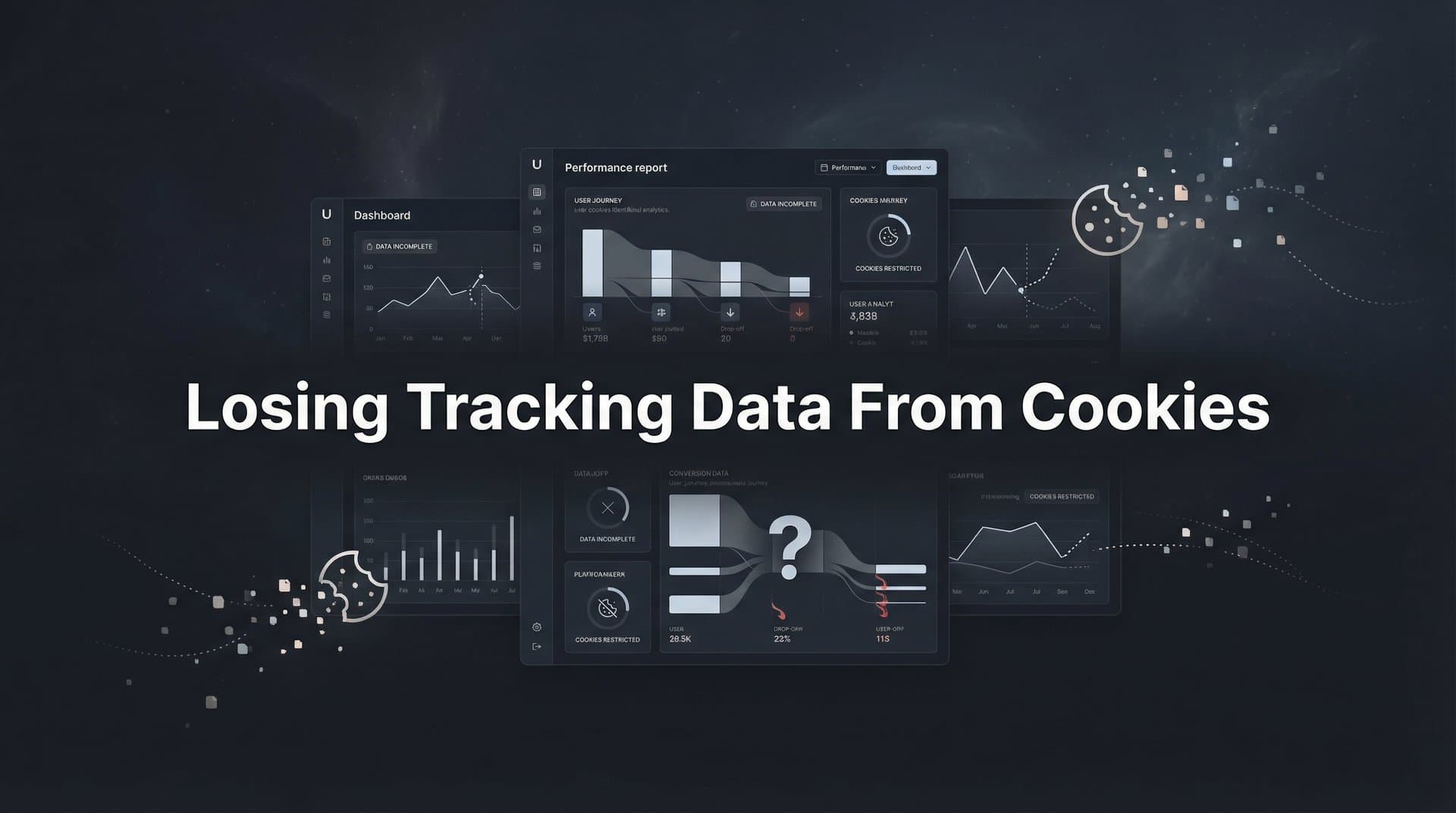
You're looking at your ad dashboard and everything looks good. Facebook says you drove 50 conversions yesterday. Google Analytics says 38. Your CRM shows 42 actual sales. Three different numbers for the same day's performance.
Which one is right? The frustrating answer: probably none of them.
This isn't a glitch in your setup. It's the new reality of digital marketing in 2026. Tracking data is disappearing at an alarming rate, and the cookies that marketers relied on for years are crumbling faster than anyone anticipated. Safari limits cookie lifespans to days or even hours. Firefox blocks tracking by default. Chrome continues rolling out privacy features that chip away at visibility. And your customers? They're bouncing between devices, using ad blockers, and rejecting cookie consent banners left and right.
The gap between what you need to track and what cookie-based systems can actually capture is widening every month. And it's costing you more than just clean reports—it's costing you accurate attribution, wasted ad spend, and the confidence to make smart scaling decisions.
The Cookie Crumble: Why Your Tracking Data Disappears
Let's start with the technical reality that's reshaping how marketing data flows through the internet.
Safari's Intelligent Tracking Prevention has become increasingly aggressive since its introduction. First-party cookies—the ones your own website sets—now expire after just seven days of inactivity. If a user clicks your ad, browses your site, then returns eight days later to convert, that original ad click? Gone. Safari has no memory of it. The conversion appears as direct traffic or gets misattributed to whatever touchpoint happened within that seven-day window.
But it gets worse. When users arrive at your site through certain types of links or tracking parameters, Safari shortens that cookie lifespan to just 24 hours. Think about that. If someone clicks your Facebook ad on Monday morning, considers your product throughout the week, and purchases Friday afternoon, Safari has already forgotten where they came from.
Firefox Enhanced Tracking Protection takes a different approach but creates similar problems. It blocks third-party cookies entirely by default and strips tracking parameters from URLs. The cross-site tracking that marketers once relied on to follow customer journeys across the web simply doesn't work anymore for Firefox users.
Chrome has been more gradual in its changes, but the direction is clear. Google's Privacy Sandbox initiative continues to phase out third-party cookies while introducing new mechanisms that give users more control over their data. For marketers, this means yet another tracking method that needs adaptation and workarounds.
Then there's the human factor that amplifies all these technical limitations.
Ad blocker adoption has reached significant levels, particularly among tech-savvy audiences and younger demographics. These tools don't just block ads—they block the tracking pixels and scripts that capture conversion data. When someone with an ad blocker converts on your site, you might see the sale in your CRM, but your ad platform never receives the conversion signal. Your attribution is incomplete before it even starts.
Private browsing modes create similar blind spots. Users in incognito mode don't accept cookies at all. Every session starts fresh with no memory of previous visits. If someone researches your product in private mode, then returns later in a normal browser session to purchase, you've lost the entire early-stage journey data.
Cookie consent requirements add another layer of data loss. GDPR and similar privacy regulations require explicit user consent before setting non-essential cookies. Many users click "reject all" or simply close the banner without choosing. Either way, you can't track their journey. In some regions, consent rejection rates exceed 50% of visitors. Understanding how privacy updates impact attribution data is essential for adapting your strategy.
The multi-device reality compounds everything. Your customer sees your Instagram ad on their phone during their morning commute. They research on their work laptop during lunch. They make the final purchase on their tablet at home that evening. Three devices, three separate cookie environments, zero connection between them. Cookie-based tracking sees this as three different people, not one customer journey.
Here's what makes this particularly painful: these factors don't exist in isolation. They multiply each other's impact. Even if only 30% of your audience uses Safari, 20% has ad blockers, and 15% rejects cookies, you're not losing 30% of your data. The overlap means you could be losing 50% or more of your tracking visibility. Small percentages create massive blind spots when they compound across your entire audience.
The Real Cost of Missing Data on Your Marketing Decisions
Missing tracking data isn't just an analytics headache. It's actively sabotaging your marketing decisions and bleeding budget from campaigns that could be profitable.
Start with the most direct impact: misattributed conversions lead to catastrophically bad budget decisions. When your tracking only captures 60% of actual conversions, you're making scaling decisions based on incomplete information. That Facebook campaign that looks like it's barely breaking even? It might actually be your best performer, but half its conversions are being misattributed to direct traffic or last-click Google searches.
The reverse is equally damaging. You see a campaign with strong reported numbers and increase its budget, only to discover the actual ROI doesn't justify the spend. The conversions you thought it was driving were actually coming from other touchpoints that happened within the shortened cookie window.
This misattribution creates a vicious cycle. You cut budgets on campaigns that are actually working because you can't see their full impact. You scale campaigns that look good in reports but deliver poor actual returns. Your overall marketing efficiency degrades month after month, and you can't figure out why your cost per acquisition keeps climbing despite "optimizing" your spend allocation.
Then there's the impact on ad platform optimization algorithms, which is where data loss really starts to hurt.
Meta's algorithm, Google's Smart Bidding, TikTok's optimization system—they all rely on conversion feedback to learn what works. When you run a campaign optimized for purchases, these platforms need to see which users converted after clicking your ads. That feedback teaches the algorithm what a likely converter looks like, so it can find more people like them.
But when tracking data disappears, the algorithm only receives partial feedback. It might optimize toward 50 conversions it can see while remaining blind to another 50 that actually happened. The algorithm learns from an incomplete dataset, which means its targeting gets progressively worse over time. You're essentially training it on bad data.
This degradation shows up in multiple ways. Your cost per result increases because the platform can't efficiently identify your best audiences. Your lookalike audiences become less effective because they're built from incomplete conversion data. Your retargeting campaigns miss huge segments of people who actually engaged with your brand but weren't properly tracked.
The retargeting problem deserves special attention because it represents pure waste. You're paying to show ads to people who already converted but weren't tracked, while simultaneously failing to retarget actual interested prospects whose engagement wasn't captured. You're building audiences on incomplete data, then spending money to reach those incomplete audiences.
There's also a hidden cost in opportunity loss that's harder to quantify but equally real. When you can't accurately measure which campaigns drive revenue, you become risk-averse. You stick with what you think is working, even when you're not sure. You avoid testing new channels or strategies because you don't trust your ability to measure results. Your competitors who solve the tracking problem can move faster, test more aggressively, and scale ads using accurate data while you're paralyzed by uncertainty.
The strategic impact extends beyond individual campaigns. When leadership asks for marketing ROI and you can't provide accurate numbers, marketing loses credibility as a growth driver. Budget discussions become political rather than data-driven. The CFO questions every marketing investment because the attribution doesn't match the bank account. Trust erodes, and marketing gets treated as a cost center instead of a revenue engine.
First-Party Data: Your Foundation for Accurate Tracking
The solution to disappearing cookie data isn't to track harder with the same broken tools. It's to fundamentally change how you collect and own your marketing data.
First-party data represents information you collect directly from your customers through your own properties—your website, your app, your CRM. Unlike third-party cookies that rely on external tracking networks, first-party data belongs to you. Browsers treat it more favorably. Privacy regulations give it more latitude. And most importantly, it creates a tracking foundation that doesn't disappear when Apple updates Safari or users reject cookie banners.
The shift from third-party to first-party data collection is the single most important change in marketing infrastructure since the rise of digital advertising. Third-party tracking is dying not because marketers don't want it, but because the entire ecosystem—browsers, regulators, and users—has decided it's no longer acceptable. Fighting that reality is futile. Adapting to it gives you a sustainable competitive advantage.
Here's why first-party data matters for longevity: it's resilient to most of the tracking challenges we just discussed. When you collect data directly on your own domain, you're not relying on cross-site cookies that browsers block. When you capture conversion events on your server rather than in the browser, ad blockers can't interfere. When you identify users through account creation or email capture, you can connect their journey across devices and sessions in ways cookies never could.
Server-side tracking is the technical backbone of a first-party data strategy, and understanding how it works changes everything about your tracking approach.
Traditional browser-based tracking puts a pixel on your website that fires when certain events happen—someone views a page, adds to cart, completes a purchase. That pixel sends data from the user's browser to the ad platform's servers. Simple, but vulnerable to every tracking limitation we've discussed. Browser privacy settings can block it. Ad blockers can stop it. Cookie restrictions can prevent it from identifying returning users.
Server-side tracking moves this entire process to your server. When a conversion happens, your server sends the event data directly to ad platforms through their APIs—Meta's Conversions API, Google's Enhanced Conversions, TikTok's Events API. The user's browser isn't involved. There's no pixel to block, no cookie to expire, no client-side script that ad blockers can intercept.
This approach captures conversions that browser tracking misses entirely. That customer who purchased using an ad blocker? Server-side tracking captures it. The conversion that happened after Safari's 7-day cookie window expired? Your server knows the original source because it's tracking the user through your own first-party identifiers. The multi-device journey where someone clicked an ad on mobile but purchased on desktop? Server-side tracking can connect those dots using email addresses or account IDs.
But server-side tracking is just the technical implementation. The strategy behind it is building a comprehensive first-party data foundation that captures touchpoints across the entire customer journey. Understanding what first-party data tracking entails is the first step toward implementation.
This starts with identifying users early and consistently. Email capture through lead magnets, account creation, newsletter signups—these create persistent identifiers that survive cookie deletions and device switches. When someone provides their email, you can track their journey across sessions, devices, and channels in ways cookie-based systems never could.
Then you connect all your data sources. Your website analytics, your CRM, your ad platforms, your email marketing tool—they all contain pieces of the customer journey puzzle. First-party data strategy means integrating these systems so you can see the complete picture. When someone clicks a Facebook ad, signs up for your email list, receives three nurture emails, then purchases two weeks later, you need to capture and connect all those touchpoints to understand what actually drove the conversion.
The goal is creating a unified customer profile that persists across the entire relationship. Not just tracking individual sessions, but building a complete record of how each customer discovered you, what they engaged with, and what ultimately convinced them to buy. This level of visibility is impossible with cookie-based tracking but achievable with a proper first-party data infrastructure.
Server-Side Tracking: The Technical Solution to Cookie Loss
Let's get more specific about how server-side tracking actually solves the data loss problem and why it's become the standard approach for serious marketing teams.
The fundamental difference is where the tracking happens and what can interfere with it. Browser-based pixels execute in the user's browser environment, which means they're subject to everything that browser does—privacy settings, extensions, cookie policies, JavaScript blockers. Server-side tracking executes on your server in an environment you control, where none of those client-side limitations apply.
When a conversion event occurs on your website, your server already knows about it. It processes the order, charges the credit card, updates inventory, sends a confirmation email. All of that happens server-side. Server-side tracking simply adds one more step: sending that conversion data to your ad platforms through their APIs. Since this happens on your server, there's no opportunity for browser privacy features or ad blockers to interfere.
The accuracy advantage is substantial and measurable. Marketing teams typically see a 20-40% increase in tracked conversions when they implement server-side tracking properly, not because they're getting more actual conversions, but because they're finally seeing conversions that were always happening but never being captured by browser pixels.
This improved data capture has a direct impact on campaign performance. When ad platforms receive more complete conversion data, their optimization algorithms can make better decisions. Meta's algorithm might have been optimizing based on 60 conversions it could see through browser tracking. With server-side tracking capturing 100 conversions, it has 67% more data to learn from. The algorithm identifies patterns more accurately, targets more precisely, and delivers better results at lower costs.
There's also a data enrichment advantage that's unique to server-side tracking. When you send conversion data from your server, you can include information that browser pixels can't access—customer lifetime value, product margins, subscription tier, order details. This enriched data helps ad platforms understand not just who converted, but who converted with high value. You can optimize for profitable customers instead of just conversion volume.
Server-side tracking also solves the attribution window problem that makes cookie-based tracking increasingly unreliable. When you track conversions server-side, you're not limited by cookie expiration. You can connect conversions back to ad clicks that happened weeks earlier by matching on email addresses, phone numbers, or other persistent identifiers. That customer who clicked your ad three weeks ago, researched extensively, then finally purchased? Server-side tracking can properly attribute that conversion even though the cookie expired long ago.
The technical implementation requires coordination between your website backend and ad platform APIs, but modern marketing attribution tools handle this complexity automatically. A proper first-party data tracking setup ensures your server captures the necessary user identifiers when someone clicks an ad, then passes those identifiers along when conversions occur so the ad platform can match the conversion back to the original click.
One critical aspect that marketers often overlook: server-side tracking isn't just about sending data to ad platforms. It's also about receiving data from them. When someone clicks your Facebook ad, Facebook knows information about that user that your website doesn't—their interests, demographics, behaviors. Server-side tracking infrastructure can capture and store this data on your end, enriching your customer profiles with insights that help you understand what's driving conversions.
Multi-Touch Attribution in a Privacy-First World
As cookie-based tracking deteriorates, single-touch attribution models become dangerously misleading. The last-click attribution that many marketers default to was always oversimplified, but in a world of incomplete tracking data, it's actively harmful to your decision-making.
Here's why single-touch models fail in the current environment: they assign 100% of conversion credit to whichever touchpoint happens to be visible within the tracking window. When that window is shrinking to seven days or less, you're not seeing the full journey. The Facebook ad that introduced someone to your brand three weeks ago gets zero credit. The email campaign that re-engaged them two weeks later gets zero credit. The Google search that brought them back yesterday gets 100% credit, even though it was just the final step in a much longer journey.
This distortion gets worse as cookie data degrades. The touchpoints that happen to survive cookie limitations get overvalued. The touchpoints that fall outside shortened attribution windows get ignored. You're not measuring marketing effectiveness—you're measuring which channels happen to work within arbitrary technical constraints.
Multi-touch attribution solves this by distributing credit across all the touchpoints that contributed to a conversion. Instead of asking "what was the last thing someone did before buying?" it asks "what combination of marketing touchpoints led to this purchase?" That's a fundamentally different question that produces fundamentally different insights.
In a privacy-first world, multi-touch attribution becomes possible through first-party data and CRM integration rather than through cookie tracking. When you capture email addresses early in the journey, you can track that person across multiple touchpoints even as cookies expire. When you integrate your CRM with your marketing data, you can see which ad campaigns, email sequences, and content pieces each customer engaged with before converting.
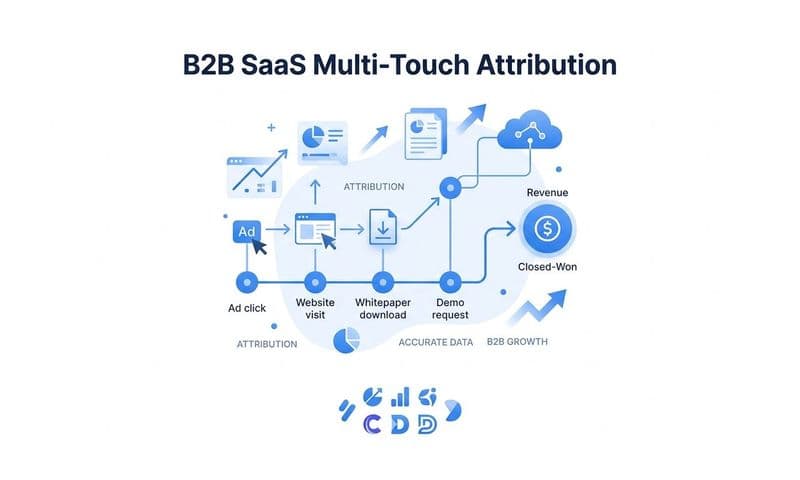
The technical approach is connecting disparate data sources around persistent user identifiers. Someone clicks a Facebook ad and provides their email address. That email becomes the key that connects everything else—the nurture email they opened three days later, the blog post they read on your site, the retargeting ad they clicked, the webinar they attended, the sales call they had, and finally the purchase they made. Each touchpoint gets captured and associated with that email address, creating a complete journey map that survives cookie deletions and device switches.
Different attribution tracking methods distribute credit differently, and choosing the right model matters more when you're working with more complete data. Linear attribution splits credit evenly across all touchpoints. Time-decay attribution gives more credit to recent touchpoints. Position-based attribution emphasizes the first and last touchpoints. Data-driven attribution uses machine learning to assign credit based on each touchpoint's actual impact on conversion probability.
The key insight is that no single attribution model is "correct." They each answer different questions. Linear attribution shows you the full journey. Last-click shows you what closed the deal. First-click shows you what generated awareness. The power of multi-touch attribution is being able to view your data through different lenses to understand different aspects of your marketing's impact.
This becomes especially valuable when making scaling decisions. Single-touch attribution might tell you to cut your Facebook budget because it's not showing up as the last click. Multi-touch attribution reveals that Facebook is actually driving most of your top-of-funnel awareness, and cutting it would destroy your entire pipeline three weeks later. You can make confident decisions because you're seeing the full picture instead of a cookie-limited fragment.
Multi-touch attribution also helps you understand channel interplay—how different marketing channels work together rather than in isolation. You might discover that your best customers typically see a Facebook ad first, then a Google search ad, then an email campaign before converting. Proper attribution tracking for multiple campaigns changes everything about how you allocate budget. Instead of pitting channels against each other, you optimize the combination that drives the highest-value conversions.
Putting It All Together: Building a Cookie-Resilient Tracking Stack
Understanding why tracking data disappears and knowing the solutions is one thing. Actually implementing a tracking infrastructure that captures accurate data in 2026 requires bringing together several key components.
Your tracking stack needs four core elements working together. First, server-side tracking infrastructure that captures conversions reliably regardless of browser settings or ad blockers. Second, first-party data collection that creates persistent user identifiers across devices and sessions. Third, CRM integration that connects marketing touchpoints to actual customer records and revenue. Fourth, conversion sync systems that feed enriched data back to ad platforms to improve their optimization.
The practical next steps start with auditing your current tracking gaps. Run a simple test: look at your ad platform reported conversions, your Google Analytics conversions, and your actual sales in your CRM or payment processor for the same time period. The discrepancies tell you how much data you're losing. If the numbers match within 5-10%, you're in good shape. If they're off by 30% or more, you have significant blind spots that are affecting your marketing decisions. Learning about solving attribution data discrepancies can help you identify and fix these gaps.
Prioritize fixes based on impact. Server-side tracking typically delivers the biggest immediate improvement in data accuracy, so that's often the right place to start. Implementing Conversions API for Meta and Enhanced Conversions for Google captures the conversions you're currently missing and improves ad platform optimization. This foundation makes everything else more effective.
Next, focus on first-party data collection mechanisms. Audit how you're capturing user identifiers—email addresses, phone numbers, account IDs. Look for opportunities to collect this information earlier in the journey. A lead magnet that captures emails before someone is ready to buy creates a tracking anchor that persists through their entire consideration process. Progressive profiling that gradually collects more information over multiple interactions builds rich customer profiles without overwhelming users with long forms.
Then tackle CRM integration. Your CRM contains the ground truth about which marketing efforts actually drove revenue. Connecting it to your marketing data transforms attribution from guesswork into reliable measurement. When you can see that a customer who clicked a Facebook ad three weeks ago, engaged with two email campaigns, and attended a webinar just closed a $10,000 deal, you understand the real value of each marketing touchpoint.
Finally, implement conversion sync to feed better data back to ad platforms. This closes the loop—you're not just tracking conversions more accurately, you're using that accurate data to improve campaign performance. When Meta receives complete conversion data with enriched details about customer value, its algorithm can optimize for profitable customers instead of just conversion volume.
The key is viewing this as an integrated system rather than disconnected tools. Each component amplifies the others. Server-side tracking captures more conversions. First-party data makes those conversions more valuable by enabling cross-device and cross-session tracking. CRM integration adds revenue context. Conversion sync improves campaign performance. Together, they create a tracking infrastructure that's resilient to privacy changes and delivers the visibility you need to scale confidently. The benefits of attribution tracking compound when all these elements work together.
Moving Forward: Marketing in the Post-Cookie Era
Losing tracking data from cookies isn't a temporary problem that will resolve itself. It's the permanent new reality of digital marketing. Browser privacy features will continue getting stricter, not more lenient. User expectations around data privacy will keep rising, not declining. The cookie-based tracking that powered digital marketing for two decades is fundamentally broken and won't be fixed.
This reality creates a stark divide between marketing teams. Those who adapt their tracking infrastructure will have accurate attribution, confident scaling decisions, and efficient ad spend. Those who keep relying on cookie-based tracking will operate with increasingly incomplete data, making worse decisions while wondering why their marketing efficiency keeps degrading.
The competitive advantage goes to marketers who move first. When your competitors are still losing 40% of their tracking data to cookie limitations, and you've implemented server-side tracking that captures 95% of conversions, you can outbid them for the same customers and still maintain better ROI. You can test more aggressively because you trust your attribution. You can scale faster because you know what's actually working.
The technical solutions exist today. Server-side tracking infrastructure is mature and accessible. First-party data strategies are well-understood. Multi-touch attribution platforms can connect your entire marketing stack. The question isn't whether these solutions work—they demonstrably do. The question is whether you'll implement them before your competitors do, or after you've already lost another quarter of marketing budget to misattribution and incomplete data.
Start by evaluating your current tracking accuracy. Run the audit we discussed—compare your ad platform numbers to your analytics to your CRM. Quantify how much visibility you're losing. Then prioritize the fixes that will have the biggest impact on your specific situation. For most marketing teams, that means implementing server-side tracking first, then building out first-party data collection, then layering in multi-touch attribution to make sense of the complete picture.
The marketing teams that win in 2026 and beyond won't be the ones with the biggest budgets or the most creative campaigns. They'll be the ones with the best data infrastructure—the teams who can see what's actually driving revenue while their competitors are flying blind. Ready to elevate your marketing game with precision and confidence? Discover how Cometly's AI-driven recommendations can transform your ad strategy—Get your free demo today and start capturing every touchpoint to maximize your conversions.