You just spent $50,000 on ads last month. Your dashboard shows 200 conversions. Meta claims 180 of them. Google Ads says 150. TikTok reports 75. When you add it all up, you've apparently generated 405 conversions from 200 actual sales.
Something doesn't add up.
This isn't a math problem—it's the reality of modern marketing attribution. Every platform wants credit for your success, but none of them can see the complete picture. Your customers don't convert in neat, linear paths anymore. They see your Instagram ad on their phone during lunch, research competitors on their laptop that evening, click a Google search ad the next day, and finally convert after reading reviews on a different device entirely.
Meanwhile, privacy regulations have fundamentally changed what data you can collect. Browser updates block your tracking pixels. iOS users opt out of tracking before you even get started. Your carefully crafted attribution models are built on incomplete data, making every budget decision feel like an educated guess at best.
The frustrating truth? Marketing attribution has never been more critical—or more broken. But understanding exactly why tracking has become so difficult is the first step toward fixing it. Let's break down the core challenges that are making accurate ROI measurement nearly impossible, and more importantly, what you can actually do about it.
The Privacy Revolution That Broke Traditional Tracking
Remember when you could track a user's journey from first click to final purchase with reasonable accuracy? Those days ended abruptly in April 2021 when Apple launched iOS 14.5 with App Tracking Transparency.
Here's what changed overnight: Every iPhone and iPad user now sees a popup asking if they want to allow apps to track their activity. The result? According to industry reports, opt-in rates hover around 15-25% globally. That means roughly 75-85% of iOS users—which represents a massive portion of high-value consumers—are now invisible to traditional pixel-based tracking.
The impact goes far beyond just losing visibility into individual users. When Meta's pixel can't fire properly, the platform loses the feedback loop it needs to optimize your campaigns. Your conversion data becomes incomplete, which means the algorithm can't learn which audiences actually convert. You're essentially asking Meta's AI to improve your results while blindfolding it.
But Apple was just the beginning. Google has been pushing back third-party cookie deprecation in Chrome repeatedly, but the writing is on the wall. When it finally happens, the last major browser supporting third-party cookies will join Safari and Firefox in blocking them by default. Your ability to track users across websites will essentially disappear.
Then there's the regulatory landscape. GDPR in Europe and CCPA in California have created a patchwork of consent requirements that vary by region. You need explicit permission to collect certain types of data, and users are increasingly clicking "reject all" on those cookie banners. Each rejection creates another gap in your attribution data in marketing analytics.
The technical reality is stark: browser-based pixels that once captured 90%+ of your conversion data now might only see 40-60% of actual events. You're making million-dollar budget decisions based on partial information, and the gap keeps widening.
This isn't a temporary setback that will reverse. Privacy-first tracking is the new reality, and it's only going to become more restrictive. The marketers who adapt their attribution infrastructure now will have a significant competitive advantage over those still relying on outdated pixel-based tracking methods.
Cross-Device and Cross-Platform Blind Spots
Your customer's journey doesn't happen in a single session on a single device. It's fragmented across smartphones, tablets, laptops, and sometimes even smart TVs. This cross-device reality creates massive blind spots in your attribution data.
Picture this: A potential customer sees your Meta ad on their iPhone during their morning commute. They're interested but not ready to buy. That evening, they open their laptop, search for your product category on Google, compare options, and eventually convert through a Google search ad. In your reporting, Google gets 100% of the credit. Meta's awareness campaign that started the journey? Completely invisible.
The technical challenge is identity resolution—connecting those two separate sessions to the same person. Without third-party cookies and with limited pixel data, platforms can't reliably link cross-device behavior. Each device looks like a different user, fragmenting what should be a unified customer journey.
Then you have the walled garden problem. Meta, Google, TikTok, LinkedIn—each platform operates in its own ecosystem with its own attribution methodology. They all use different attribution windows, different conversion counting methods, and different ways of assigning credit. When a customer interacts with ads on multiple platforms before converting, each platform claims credit based on its own rules.
This creates the conversion inflation problem we mentioned earlier. When you add up reported conversions across all platforms, the total often exceeds your actual conversions by 50-100% or more. It's not that the platforms are lying—they're each reporting accurately based on what they can see. The problem is they can't see each other.
Offline touchpoints make this even more complicated. A customer might attend your webinar, talk to your sales team, receive a proposal via email, and then finally convert. If those CRM events never connect back to the original ad interaction, you're attributing the conversion to whatever last touchpoint happened to have a tracking pixel fire—often drastically undervaluing the earlier marketing efforts.
The reality is that modern customer journeys involve an average of 6-8 touchpoints across multiple devices and platforms. Traditional attribution methods can only see 2-3 of those touchpoints, creating a fundamentally incomplete picture of what's actually driving conversions. Understanding cross-channel attribution and marketing ROI becomes essential for accurate measurement.
The Attribution Model Dilemma
Even when you have decent data coverage, choosing the right attribution model becomes a strategic minefield. Each model tells a different story about campaign performance, and they all have significant limitations.
Last-click attribution is the default in most platforms because it's simple: whoever gets the final click before conversion gets 100% of the credit. The problem? It completely ignores the awareness and consideration stages that made that final click possible. Your top-of-funnel campaigns that introduce new customers to your brand show terrible ROI, while bottom-funnel retargeting campaigns look like miracle workers. This leads to chronic underinvestment in awareness and overinvestment in retargeting.
First-click attribution flips the script, giving all credit to the initial touchpoint. This makes your awareness campaigns look fantastic but ignores all the nurturing, remarketing, and sales enablement that actually closed the deal. It's equally misleading, just in the opposite direction.
Multi-touch attribution models—linear, time-decay, position-based—sound like the solution. They distribute credit across multiple touchpoints based on different weighting schemes. Linear gives equal credit to every interaction. Time-decay gives more credit to recent touchpoints. Position-based (also called U-shaped) emphasizes both the first and last interactions. Exploring types of marketing attribution models helps you understand which approach fits your business.
Here's the catch: multi-touch attribution only works if you can actually see all the touches. Remember those cross-device blind spots and privacy-blocked pixels? They create gaps in your touchpoint data. When you're missing 40-60% of actual interactions, your multi-touch model is making credit decisions based on incomplete information. It's like trying to judge a movie when half the scenes are missing.
Data-driven attribution models use machine learning to assign credit based on actual conversion patterns. They sound sophisticated, but they face the same fundamental problem: garbage in, garbage out. If your underlying data has massive gaps, the algorithm can't identify true patterns. It's optimizing based on the limited data it can see, not the complete customer journey.
The uncomfortable truth is that there's no perfect attribution model. Each one makes trade-offs and assumptions. The model you choose fundamentally shapes which campaigns appear successful and which get cut, directly influencing where you allocate budget. Most marketers don't realize they're not just measuring performance—they're actively shaping it through their attribution model choice. Understanding what a marketing attribution model is helps clarify these strategic decisions.
Data Silos and Integration Headaches
Your marketing data lives in separate universes that barely communicate with each other. Meta Ads Manager speaks one language. Google Analytics speaks another. Your CRM has its own data structure. Your email platform, webinar software, and e-commerce backend each maintain their own separate databases.
This fragmentation isn't just inconvenient—it's actively destroying your ability to understand campaign performance. When ad platform data never connects to CRM data, you can't see which campaigns generate leads that actually close. You're optimizing for lead volume instead of lead quality, often spending more to acquire leads that your sales team will never convert.
The integration challenge goes beyond technical compatibility. Each system tracks different events, uses different identifiers, and maintains different attribution windows. Meta might track a conversion within 7 days of an ad click. Google might use a 30-day window. Your CRM tracks when deals close, which could be months after the initial ad interaction. Reconciling these different timeframes and methodologies manually is nearly impossible at scale.
Manual reporting becomes the default solution, and it's painfully inefficient. Your team spends hours each week downloading CSVs from different platforms, copying data into spreadsheets, and trying to create unified reports. By the time you finish the report, the data is already outdated. You're making today's budget decisions based on last week's incomplete information.
Human error compounds the problem. A misplaced decimal point, an incorrect formula, or a forgotten data source can lead to dramatically wrong conclusions. When your quarterly budget planning relies on manually compiled reports, small errors can lead to six-figure misallocations.
The hidden cost is opportunity cost. While you're wrestling with data exports and spreadsheet formulas, your competitors with unified attribution systems are already testing new campaigns, identifying winning audiences, and scaling what works. They're operating with real-time insights while you're still trying to figure out what happened last week.
Data silos don't just slow you down—they create blind spots that make it impossible to see the complete customer journey. That Meta ad might have introduced the customer. The Google search ad might have brought them back. The email campaign might have provided the final push. But if those systems never talk to each other, you'll never see the full picture. This is why marketing attribution platforms for revenue tracking have become essential infrastructure.
Practical Strategies to Overcome Attribution Gaps
The challenges are real, but they're not insurmountable. The marketers who thrive in this privacy-first era are those who adapt their tracking infrastructure to work with the new reality rather than against it.
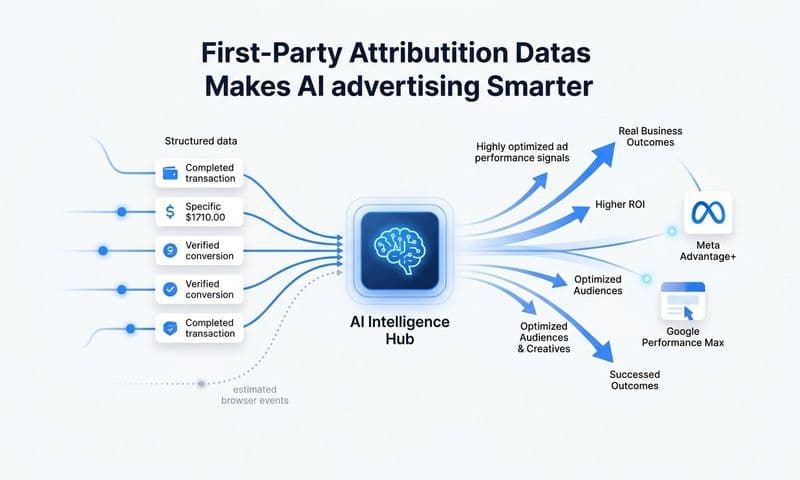
Server-side tracking represents the most significant shift in how modern attribution works. Instead of relying on browser-based pixels that users can block, server-side tracking sends conversion data directly from your server to ad platforms. When a conversion happens on your website or in your CRM, your server communicates that event to Meta, Google, and other platforms through their APIs.
This approach bypasses many privacy restrictions because the data flow doesn't depend on third-party cookies or trackable user sessions. You're sending conversion events based on your first-party data—information users have willingly provided to you—rather than trying to track them across the web. It's privacy-compliant and significantly more reliable than pixel-based tracking.
The implementation requires technical setup, but the payoff is substantial. You can track conversions that happen offline, in your CRM, or through phone calls—events that traditional pixels could never capture. Understanding marketing attribution for phone calls is particularly valuable for businesses with significant call volume. You can send richer conversion data back to ad platforms, including customer lifetime value, product categories, and custom event parameters that help algorithms optimize more effectively.
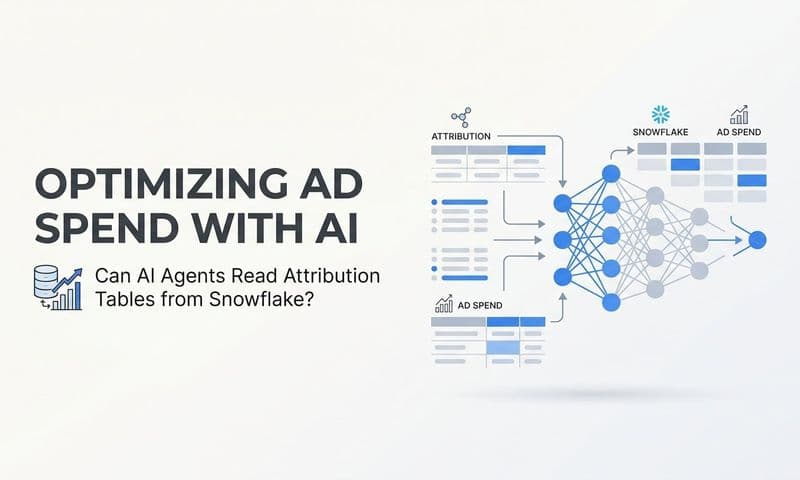
Unifying your data sources is equally critical. This means connecting your ad platforms, website analytics, CRM, email system, and any other customer touchpoint into a single attribution system. When all your data flows into one place, you can finally see the complete customer journey across devices, platforms, and channels.
The key is using a centralized attribution platform that acts as the hub for all your marketing data. It receives conversion events from your website and CRM, matches them to ad interactions across platforms, and provides a unified view of what's actually driving results. This eliminates the manual reporting nightmare and gives you real-time visibility into campaign performance.
Feeding enriched conversion data back to ad platforms closes the optimization loop. When you send detailed conversion information—including which leads actually closed, their revenue value, and how long they took to convert—ad platforms can optimize for quality, not just quantity. Meta's algorithm learns which audiences generate high-value customers, not just cheap clicks. Google's smart bidding can optimize for actual revenue, not just conversion volume.
This creates a virtuous cycle: better data leads to better optimization, which leads to better results, which generates more data to further improve performance. Marketers using this approach often see dramatic improvements in ROI simply because their ad platforms finally have the information they need to optimize effectively.
Building an Attribution System That Actually Works
Moving from theory to practice means building an attribution infrastructure that captures every touchpoint, connects all your data sources, and provides actionable insights in real time.
Start by establishing your website and CRM as the foundation of your attribution system. These are your first-party data sources—the places where you have complete control over data collection and can track events with certainty. Implement server-side tracking to capture conversions reliably, regardless of browser restrictions or privacy settings. A comprehensive attribution marketing tracking guide can help you establish these foundations properly.
Connect your ad platforms directly to this central system. Rather than relying on each platform's isolated view of performance, you want a unified system that receives conversion data and can attribute it back to the correct source. This means setting up API integrations with Meta, Google, TikTok, LinkedIn, and any other platform where you run campaigns.
The technical implementation matters. You need a system that can handle identity resolution—matching the same customer across different devices and sessions. This typically involves combining multiple identifiers: email addresses, phone numbers, customer IDs, and device fingerprints. When someone converts, the system looks back at their complete interaction history and attributes the conversion appropriately.
AI-powered pattern recognition becomes possible once you have unified data. Machine learning algorithms can analyze thousands of customer journeys to identify which combinations of touchpoints lead to conversions. They can spot patterns that humans would never notice: specific ad sequences that work particularly well, audience segments that convert at higher rates, or time-of-day patterns that impact performance. Learning how machine learning can be used in marketing attribution opens new optimization possibilities.
These insights translate directly into action. The system might identify that customers who see both a Meta awareness ad and a Google search ad convert at 3x the rate of those who only see one touchpoint. Armed with this insight, you can structure your campaigns to maximize these high-converting journey patterns.
Real-time reporting replaces outdated manual processes. Instead of waiting until the end of the week to compile reports, you can see current performance across all channels in a single dashboard. When a campaign starts underperforming, you know immediately rather than discovering it days later when you've already wasted significant budget. Implementing a multi-touch marketing attribution platform provides this unified visibility.
The confidence factor matters more than most marketers realize. When you're making budget decisions based on complete, accurate data, you can scale winning campaigns aggressively without second-guessing yourself. You know which channels truly drive revenue, which audiences convert best, and which campaigns deserve more investment. That confidence translates directly into faster growth.
Taking Control of Your Attribution Future
Marketing attribution challenges aren't going away. Privacy regulations will continue evolving. Browsers will implement stricter tracking prevention. Customer journeys will span even more devices and platforms. The gap between what traditional attribution methods can see and what's actually happening will only widen.
The marketers who thrive in this environment will be those who stop fighting against privacy changes and instead build attribution systems designed for the new reality. Server-side tracking, unified data platforms, and AI-powered insights aren't nice-to-have features anymore—they're essential infrastructure for making informed marketing decisions.
The cost of inaction is significant. Every day you operate with incomplete attribution data, you're making budget decisions based on partial information. You're scaling campaigns that might not actually drive revenue. You're cutting campaigns that might be your most valuable awareness drivers. You're leaving money on the table because you can't see the complete picture.
But here's the opportunity: most of your competitors are still struggling with the same broken attribution methods you are. They're still relying on last-click attribution, still dealing with data silos, still trying to reconcile conflicting reports from different platforms. The marketers who implement modern attribution infrastructure now will have a substantial competitive advantage.
The path forward is clear. Connect your data sources. Implement server-side tracking. Feed enriched conversion data back to ad platforms. Use AI to identify patterns and opportunities. Build a single source of truth that shows you what's actually driving results.
Ready to elevate your marketing game with precision and confidence? Discover how Cometly's AI-driven recommendations can transform your ad strategy—Get your free demo today and start capturing every touchpoint to maximize your conversions.