You've just spent $50,000 on ads this month. Facebook says you got 200 conversions. Google claims 180. Your CRM shows 95 closed deals. Which number is real? More importantly, which channels actually drove revenue—and which ones are just taking credit for conversions they didn't create?
This is the black box problem that keeps marketers up at night. Money flows into campaigns, but clarity never flows out. You're making budget decisions based on conflicting reports from platforms that all want to claim victory for the same customer.
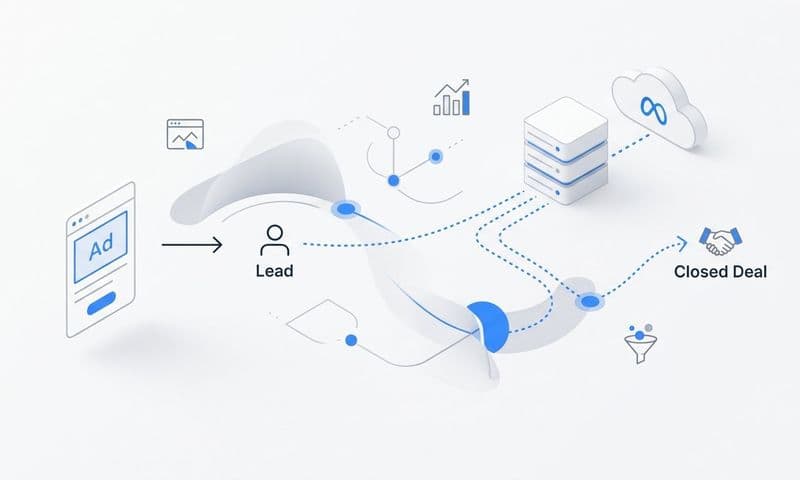
A marketing attribution company exists to solve exactly this problem. They track the complete customer journey from anonymous first click through every touchpoint to closed deal, connecting your entire marketing ecosystem so you can see what's actually working. In this guide, we'll break down what these companies really do, the core capabilities that separate signal from noise, and how to evaluate whether investing in attribution is the right move for your business right now.
Why Your Current Tracking Is Lying to You
Here's the uncomfortable truth: every ad platform has a vested interest in making their numbers look good. Facebook's pixel claims credit for conversions. Google Ads does the same. LinkedIn says they drove the deal. Add them all up, and you've somehow generated 300% more conversions than you actually closed.
This isn't just annoying—it's expensive. When you can't trust your data, you make decisions in the dark. You scale campaigns that feel successful but don't actually drive revenue. You cut budgets from channels that play crucial supporting roles in the customer journey.
The tracking breakdown has three main culprits. First, iOS privacy changes starting with iOS 14.5 gutted traditional pixel-based tracking. Browser-based tracking that marketers relied on for years now misses significant portions of mobile traffic. Cookie deprecation is making desktop tracking increasingly unreliable too.
Second, modern customer journeys are messy. Someone discovers you on their phone during their commute, researches on their work laptop, and converts on their home desktop three days later. Traditional tracking sees three different people, not one buyer moving through your funnel.
Third, B2B sales cycles stretch across weeks or months. A prospect might interact with seven different campaigns across four channels before they ever fill out a form. Last-click attribution gives all the credit to the final touchpoint—usually a branded search ad—while ignoring the awareness campaign that introduced them to your solution in the first place. Understanding these attribution challenges in marketing analytics is the first step toward solving them.
The cost of this confusion compounds quickly. Marketing teams waste budget on channels that look good in platform dashboards but don't actually contribute to revenue. They underfund channels that play crucial early-stage or mid-funnel roles. Worst of all, they make strategic decisions based on vanity metrics instead of actual business outcomes.
A marketing attribution company cuts through this noise by building a single source of truth. They track every touchpoint across every channel, connect that data to your CRM to see which leads actually closed, and show you the real customer journey—not the story each platform wants to tell you.
What Actually Defines a Capable Attribution Partner
Not all attribution solutions are created equal. The difference between a basic analytics tool and a true attribution partner comes down to three core capabilities that determine whether you get actionable insights or just another dashboard to ignore.
Multi-Touch Attribution That Reflects Reality: Simple last-click or first-click models are fundamentally broken because they ignore how people actually buy. A customer might see your LinkedIn ad, click a Facebook retargeting campaign, read three blog posts, download a guide, and finally convert through a Google search. Which touchpoint deserves credit?
Strong attribution companies offer multiple models—linear, time-decay, position-based, and ideally data-driven approaches that use machine learning to weight touchpoints based on their actual influence on conversions. The best multi-touch marketing attribution software gives you the flexibility to view your data through different lenses because no single model tells the complete story.
The key is that these models should analyze the entire journey across all your channels, not just the touchpoints within a single platform. Facebook's attribution only sees Facebook. Google's attribution only sees Google. A real attribution partner sees everything.
Server-Side Tracking That Captures What Browsers Miss: This is where modern attribution companies separate themselves from legacy solutions. Browser-based pixel tracking is dying. Ad blockers strip pixels. iOS blocks third-party cookies. Privacy-focused browsers limit tracking by default.
Server-side tracking bypasses these limitations by capturing conversion data on your server and sending it directly to your attribution platform. This approach isn't affected by browser restrictions, ad blockers, or privacy settings. It captures significantly more conversion data than pixel-based tracking alone.
When evaluating attribution providers, ask specifically about their server-side tracking capabilities. Companies still relying primarily on browser pixels are building on a crumbling foundation. Exploring the differences between marketing attribution software and traditional analytics can help clarify why this matters.
Deep Integrations That Connect Your Entire Stack: Attribution only works when it can see the full picture. That means direct integrations with your ad platforms, your CRM, your analytics tools, and ideally your payment processor or revenue system.
The most valuable integration is often CRM connectivity. This is what allows marketing attribution platforms to track beyond form fills and link clicks to actual closed deals and revenue. You can finally answer the question that actually matters: which marketing channels drive paying customers, not just leads?
Look for native integrations, not just Zapier connections or CSV imports. Native integrations update in real-time, handle complex data structures properly, and don't break when platforms update their APIs. The integration ecosystem tells you whether an attribution company is serious about connecting your entire marketing operation or just offering surface-level reporting.
These three capabilities—sophisticated multi-touch models, server-side tracking infrastructure, and deep platform integrations—form the foundation of attribution that actually improves your marketing performance instead of just giving you more data to analyze.
How Attribution Data Turns Into Better Campaign Performance
Understanding your attribution is valuable. Using that understanding to improve your campaigns is where the real ROI lives. The best marketing attribution companies don't just report on what happened—they help you make what happens next more profitable.
Feeding Smarter Data Back to Ad Platforms: Here's something most marketers don't realize: the conversion data you send back to Facebook, Google, and other ad platforms directly influences how their algorithms optimize your campaigns. When you feed them incomplete or inaccurate conversion data, their machine learning makes poor decisions.
This is where conversion sync capabilities—sometimes called CAPI (Conversions API) for Facebook or enhanced conversions for Google—become crucial. Attribution platforms that offer this functionality take the enriched, accurate conversion data they've tracked and feed it back to your ad platforms.
The result? Ad platform algorithms get better training data. They learn which audiences actually convert, which creative drives real results, and which placements generate valuable customers. Your campaigns optimize toward actual business outcomes instead of the incomplete picture browser pixels provide.
Identifying the Touchpoints That Actually Matter: Not all marketing touchpoints are created equal. Some channels excel at generating awareness. Others are conversion machines. Many play crucial supporting roles that are invisible in last-click reporting.
Strong attribution analysis reveals these patterns. You might discover that LinkedIn ads rarely get last-click credit but consistently appear early in high-value customer journeys. Or that your podcast sponsorships don't drive immediate conversions but significantly shorten sales cycles for people who later convert through other channels. Implementing cross channel attribution helps you uncover these hidden relationships.
This insight changes how you allocate budget. Instead of cutting channels that don't show strong last-click performance, you invest strategically across the customer journey. You fund awareness channels that introduce prospects to your solution, nurture campaigns that move them through consideration, and conversion channels that close the deal.
Making Budget Decisions Based on Revenue, Not Vanity Metrics: The ultimate value of attribution is confidence. When you can connect ad spend directly to closed deals and revenue, budget allocation becomes straightforward.
You're no longer guessing whether that expensive YouTube campaign is worth it based on view counts and click-through rates. You can see exactly how many customers discovered you through YouTube, what their average deal size is, and whether the channel delivers positive ROI. This is how channel attribution in digital marketing transforms guesswork into data-driven decisions.
This clarity compounds over time. Every campaign you run generates more data about which strategies work for your specific business. You build institutional knowledge about your customer acquisition costs by channel, your most profitable audience segments, and the optimal budget mix for your goals.
The marketing teams that win aren't necessarily the ones with the biggest budgets—they're the ones who know exactly what's working and double down on it while cutting what doesn't. Attribution is what gives you that knowledge.
How to Separate Strong Attribution Providers from Weak Ones
The attribution market is crowded with solutions that range from enterprise-grade platforms to glorified analytics dashboards. Knowing what questions to ask—and which answers should raise red flags—saves you from investing in a solution that creates more problems than it solves.
Critical Questions Every Attribution Provider Should Answer: Start with cross-device tracking methodology. Ask them specifically how they connect a mobile click to a desktop conversion. Strong providers use deterministic matching through login events, email addresses, or phone numbers. Weaker solutions rely heavily on probabilistic matching—essentially educated guessing based on device characteristics and behavior patterns.
Probabilistic matching isn't inherently bad, but if it's their primary method, your attribution data will be riddled with uncertainty. You need a provider that prioritizes deterministic tracking and uses probabilistic methods only as a fallback.
Next, ask about data latency. How quickly does conversion data flow from your website or CRM into their platform and back out to your ad platforms? Some attribution companies batch process data overnight. Others update in near real-time. The difference matters because delayed data means delayed optimization.
Finally, dig into their attribution model flexibility. Can you compare different attribution models side-by-side? Do they offer data-driven attribution that uses machine learning to weight touchpoints? Or are you locked into their predetermined view of the customer journey? When comparing marketing attribution software features, model flexibility should be near the top of your checklist.
Warning Signs That Should Make You Walk Away: Be wary of providers who can't clearly explain their cross-device tracking methodology or who dodge questions about data accuracy. Vague answers about "proprietary algorithms" usually mean they're using probabilistic matching exclusively.
Limited platform support is another red flag. If an attribution company only integrates with the major platforms—Facebook, Google, maybe LinkedIn—they're not serious about tracking your complete customer journey. Modern marketing happens across dozens of touchpoints. Your attribution partner needs to see all of them.
Watch out for solutions that require extensive custom development or months-long implementation timelines. While attribution isn't plug-and-play, providers with mature platforms should be able to get you tracking basic data within days, not quarters.
What Realistic Implementation Actually Looks Like: Expect a phased rollout. Week one typically involves installing tracking on your website and connecting your major ad platforms. Week two adds CRM integration and historical data import. Week three focuses on validation—making sure the data you're seeing matches reality.
You should start seeing value within the first month, even if you're not yet using advanced features. Basic multi-touch attribution across your core channels gives you immediate insight into which marketing efforts are contributing to conversions.
Full implementation—including custom conversion events, advanced attribution models, and conversion sync to ad platforms—typically takes two to three months. Any provider promising instant results or claiming you'll see complete attribution on day one is either oversimplifying or overselling.
When Attribution Investment Actually Makes Sense for Your Business
Not every business needs a marketing attribution company. There's a threshold where the investment starts generating positive ROI, and understanding whether you've crossed it saves you from either investing too early or waiting too long. If you're uncertain, this guide on whether you need a marketing attribution tool can help you decide.
The Spending and Complexity Thresholds That Signal Readiness: As a general guideline, businesses spending less than $10,000 monthly on paid marketing often don't have enough data volume to make sophisticated attribution worthwhile. The patterns you're trying to identify require sufficient traffic and conversion volume to be statistically meaningful.
Once you're spending $20,000 to $50,000 monthly across multiple channels, attribution starts paying for itself quickly. At this scale, even small improvements in budget allocation—cutting 10% from underperforming channels and reallocating to high-performers—can cover the cost of attribution software several times over.
Complexity matters as much as spend. If you're running campaigns across five or more channels, managing multiple audience segments, or operating in a space with long sales cycles, attribution becomes valuable even at lower spend levels. The more complex your marketing operation, the more you need unified visibility into what's working. B2B companies face unique challenges here, which is why understanding B2B marketing attribution fundamentals is essential.
Better Tracking vs. Full Attribution: Knowing the Difference: Sometimes the problem isn't attribution—it's basic tracking. If you're not confident that your website analytics are capturing conversions accurately, or if your CRM integration is broken, fix those fundamentals first.
Attribution platforms assume you have solid baseline tracking in place. They add the layer of cross-channel journey analysis and multi-touch modeling on top of accurate conversion data. If your foundation is shaky, attribution won't fix it—it'll just give you more sophisticated ways to analyze bad data.
Start by auditing your current tracking setup. Are conversions in your analytics matching what your CRM shows? Can you see the complete path from ad click to conversion? If the answers are no, focus on implementing proper attribution marketing tracking infrastructure before investing in attribution.
How Agencies and In-House Teams Use Attribution Differently: Agencies often need attribution platforms that support multiple clients under one roof, with clear data separation and client-specific reporting. They value white-label capabilities and the ability to demonstrate ROI to clients through clear before-and-after attribution comparisons. The digital marketing agency attribution measurement approach differs significantly from in-house needs.
In-house teams typically need deeper integrations with their specific tech stack and more flexibility to customize attribution models for their unique business. They're less concerned with client reporting and more focused on using attribution data to inform strategic decisions and budget planning.
Both use cases are valid, but they require different features from attribution providers. Make sure the solution you're evaluating aligns with how your team actually operates, not just what looks good in a demo.
Finding Your Attribution Partner
Choosing a marketing attribution company isn't about finding the most feature-rich platform or the one with the slickest dashboard. It's about finding a partner that connects your entire marketing ecosystem—from the first anonymous website visit through every campaign touchpoint to closed revenue in your CRM.
The right attribution solution should give you confidence in your data, not just more data to analyze. It should answer the questions that actually matter: Which channels drive revenue? Where should you invest more? What can you confidently cut?
Look for providers that combine server-side tracking infrastructure with deep platform integrations and flexible attribution modeling. Prioritize solutions that don't just report on the past but actively improve your future campaigns by feeding better conversion data back to your ad platforms.
Most importantly, choose a partner that matches where your business is today and where you're heading. The best attribution platform is the one you'll actually use to make better marketing decisions, not the one with the longest feature list.
Ready to elevate your marketing game with precision and confidence? Discover how Cometly's AI-driven recommendations can transform your ad strategy—Get your free demo today and start capturing every touchpoint to maximize your conversions.