

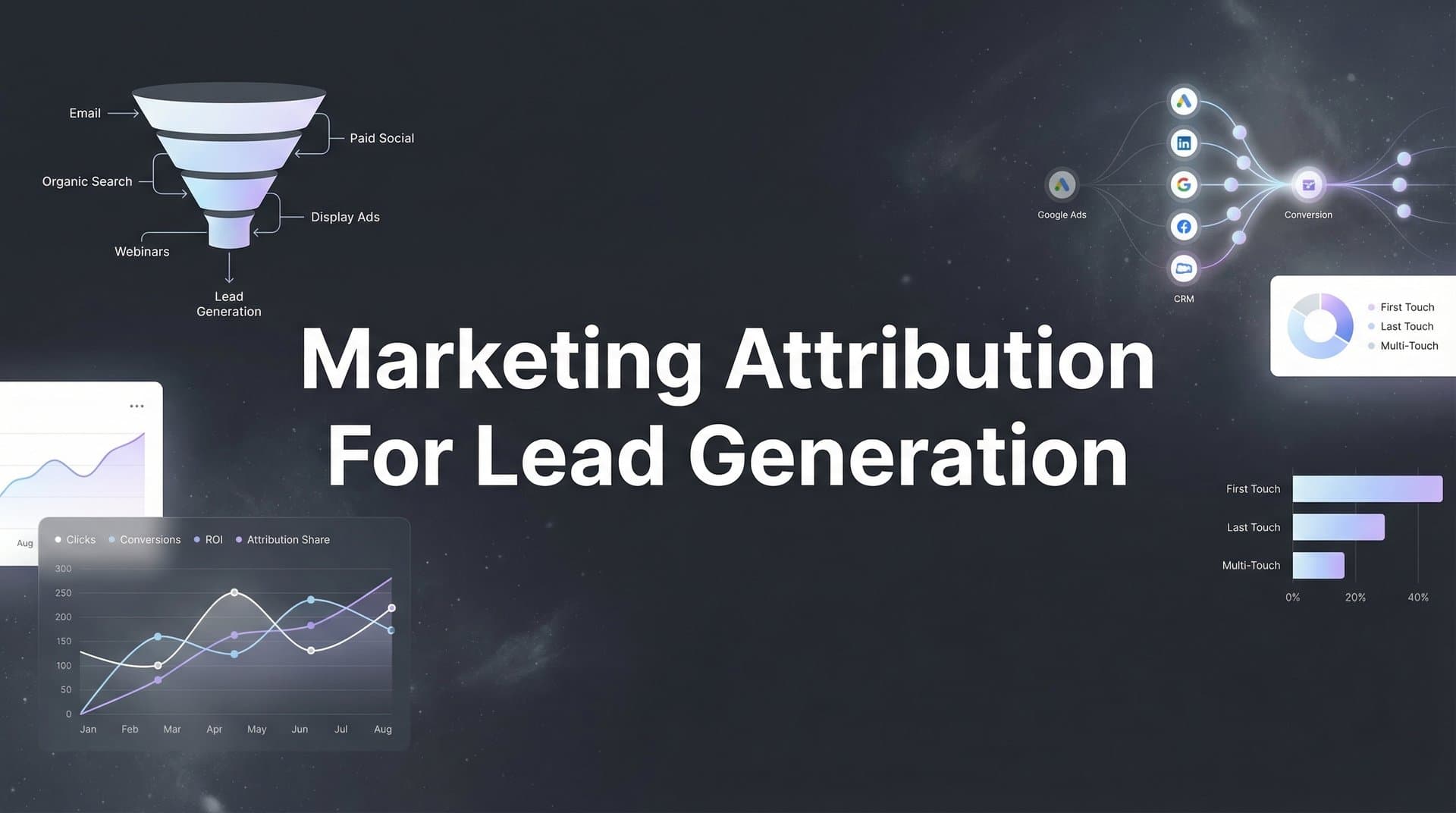
You're running ads on Google, Meta, and LinkedIn. Your content team is publishing blog posts and nurturing email sequences. Your sales team is hosting webinars and making calls. Leads are flowing in, but here's the million-dollar question: which of these efforts are actually filling your pipeline with qualified opportunities?
Most marketers can't answer that question with confidence. They see leads coming in, but the connection between specific marketing activities and revenue remains frustratingly unclear. One platform claims credit for 50 conversions, another says 40, and your CRM shows only 30 new leads total. The math doesn't add up.
Marketing attribution solves this puzzle by tracking the complete customer journey from first click to closed deal. It shows you which channels deserve credit for generating qualified leads, which campaigns are burning budget without results, and where to invest more aggressively. This guide breaks down exactly how to implement attribution for lead generation so you can stop guessing and start scaling what actually works.
Why Lead Generation Creates Unique Attribution Challenges
If you're selling shoes online, attribution is relatively straightforward. Someone clicks an ad, lands on your site, buys shoes. One session, one conversion, clear cause and effect.
Lead generation doesn't work that way. A prospect might discover your brand through a LinkedIn ad in January, read three blog posts in February, attend a webinar in March, and finally request a demo in April after clicking a Google search ad. Which channel gets credit for that lead?
The B2B buying journey involves multiple decision-makers researching across different channels over weeks or months. Your CFO might read your case study, your VP of Marketing might watch your product demo, and your CEO might see your retargeting ad before anyone fills out a contact form. Each touchpoint plays a role, but traditional analytics tools only see fragments of this story. Understanding attribution for B2B lead generation requires tracking these complex, multi-stakeholder journeys.
Here's where it gets messy: every ad platform reports conversions based on its own tracking window and attribution logic. Meta might claim credit because someone saw your ad two days before converting. Google might claim the same conversion because they clicked a search ad one day before. LinkedIn counts it too because the lead engaged with your content a week earlier.
Suddenly you're looking at 150 reported conversions across three platforms, but your CRM shows only 80 new leads. Each platform is technically correct based on its own tracking, but none of them are showing you the complete picture. They can't see what happened outside their ecosystem.
The stakes get higher when you consider lead quality. Not all leads are created equal. A form submission from someone who downloaded a generic ebook isn't worth the same as a demo request from a qualified prospect at your ideal customer profile. Platform reporting counts both as equal conversions, but your sales team knows the difference immediately.
This is why lead generation demands more sophisticated attribution than e-commerce. You need visibility into the full journey, the ability to weight different touchpoints appropriately, and most importantly, the connection between marketing activities and actual revenue outcomes.
The Core Attribution Models Every Marketer Should Understand
Attribution models are frameworks for distributing credit across the touchpoints in a customer journey. Think of them as different lenses for viewing the same data. Each model tells a different story about what's driving results.
First-touch attribution gives 100% credit to the channel that introduced the lead to your brand. If someone discovered you through an organic blog post, that content gets full credit even if they later clicked three different ads before converting. This model excels at identifying which channels are best at generating awareness and bringing new prospects into your ecosystem.
Marketing teams use first-touch to evaluate top-of-funnel performance. It answers the question: where are our best leads coming from initially? If you're launching a new product or entering a new market, first-touch helps you understand which channels are most effective at creating awareness. The limitation? It completely ignores everything that happened between discovery and conversion.
Last-touch attribution flips the script, crediting only the final interaction before conversion. If a lead clicked a Google search ad right before requesting a demo, that ad gets 100% credit regardless of the five other touchpoints that preceded it. This model reveals which channels are most effective at closing deals and driving immediate conversions.
Sales teams often prefer last-touch because it highlights channels that directly influence decision-making. It shows you which messages, offers, and campaigns push prospects over the finish line. The downside? It undervalues all the nurturing activities that kept your brand top-of-mind throughout the buying journey.
Linear multi-touch attribution distributes credit equally across every touchpoint. If a lead had five interactions before converting, each touchpoint receives 20% of the credit. A comprehensive multi-touch marketing attribution platform can help you implement this approach effectively across all your channels.
Time-decay attribution gives more credit to touchpoints closer to the conversion. The logic: interactions that happened recently had more influence on the final decision. If someone attended your webinar six weeks ago but clicked a retargeting ad yesterday before converting, the recent ad receives more credit. This model works well for longer sales cycles where recent engagement signals buying intent.
Position-based attribution, sometimes called U-shaped or bathtub model, recognizes that first and last touches deserve special attention. A common split is 40% to first touch, 40% to last touch, and 20% distributed among middle touchpoints. This balanced approach credits both discovery and conversion while acknowledging the nurture journey between them.
Here's the reality: no single model is objectively correct. First-touch tells you where leads originate. Last-touch shows what closes deals. Multi-touch reveals the complete journey. The best marketers compare multiple models to understand their funnel from different angles, then choose the model that aligns with their specific business goals and sales cycle complexity.
Building Your Attribution Infrastructure
Attribution doesn't happen automatically. It requires connecting your marketing tools, ad platforms, and CRM into a unified system that tracks every touchpoint across the customer journey. Think of it as building the nervous system for your marketing operations.
Start by establishing server-side tracking as your foundation. Browser-based tracking pixels face increasing limitations from iOS privacy features, cookie restrictions, and ad blockers. These changes mean traditional tracking misses significant portions of your traffic and conversions. Server-side tracking captures data directly from your server, bypassing browser limitations and providing more accurate, complete data about user behavior and conversions.
Your CRM is the source of truth for lead quality and revenue outcomes. Connect it directly to your attribution platform so you can see which marketing touchpoints led to qualified opportunities and closed deals, not just form submissions. This connection transforms attribution from tracking website behavior to tracking actual business results. Platforms that offer marketing attribution with revenue tracking make this connection seamless.
When someone converts from a marketing qualified lead to a sales qualified lead, or from opportunity to customer, that data should flow back to your attribution system. This closed-loop reporting reveals which channels generate leads that actually convert to revenue. You might discover that LinkedIn drives fewer total leads than Google Ads, but those LinkedIn leads close at three times the rate. That insight changes everything about budget allocation.
UTM parameters are the DNA of attribution. These tracking codes tell you exactly which campaign, source, medium, and content drove each website visit. But they only work if your team uses them consistently. Create a standardized naming convention and document it clearly. When your paid team uses "utm_source=facebook" while your content team uses "utm_source=meta", you've just fragmented your data.
Every ad, email, social post, and content piece should include properly formatted UTM parameters. This discipline pays dividends when you're analyzing performance across channels. You'll be able to compare the cost-per-lead of your Q1 LinkedIn campaign against your Q2 campaign, or see which specific blog posts drive the most qualified demo requests.
Implement conversion tracking across all your ad platforms, but remember that platform-reported conversions are just one piece of the puzzle. Send conversion events back to Meta, Google, and LinkedIn to help their algorithms optimize targeting and bidding. The more accurate conversion data you provide, the better these platforms become at finding similar high-value prospects.
This is where server-side tracking proves its value again. By sending enriched conversion data directly to ad platforms, you're feeding their AI better information than browser-based pixels can provide. You can tell Meta not just that someone converted, but that they became a sales-qualified lead worth $5,000 in potential revenue. That specificity improves campaign optimization dramatically.
Turning Attribution Data Into Actionable Insights
Having attribution data is one thing. Using it to make smarter marketing decisions is another. The goal isn't to create impressive dashboards, it's to identify opportunities and eliminate waste.
Start by separating lead volume from lead quality. Your Google Ads campaign might generate 100 leads per month while your LinkedIn campaign generates only 30. Surface-level analysis suggests Google is winning. But when you connect attribution to CRM data, you discover those LinkedIn leads convert to opportunities at 40% while Google converts at 10%. Suddenly LinkedIn looks like your most efficient channel.
Calculate attributed cost-per-qualified-lead, not just cost-per-form-submission. If you're spending $50 to acquire a lead through Facebook but only 5% become sales-qualified, your real cost per qualified lead is $1,000. Meanwhile, a content marketing program might cost $200 per lead with a 30% qualification rate, making the actual cost per qualified lead $667. The channel that looked expensive is actually more efficient. Effective attribution reporting for marketing teams surfaces these insights automatically.
Use multi-touch attribution to justify investments in brand awareness and nurture activities. These campaigns rarely get credit in last-touch models, but they play crucial roles in moving prospects through your funnel. When you can show that leads who engaged with your educational content convert at higher rates and close faster, you've built the business case for continued content investment.
Compare attribution windows across different channels to understand their roles in your funnel. Some channels like branded search tend to convert quickly, often within days. Others like organic content might influence conversions weeks or months later. This insight helps you set realistic expectations and optimization timelines for each channel.
Identify your highest-performing audience segments by overlaying attribution data with demographic and firmographic information. You might discover that leads from enterprise companies in healthcare convert at twice the rate of small business leads. That finding should immediately influence your targeting strategy and budget allocation.
Watch for changes in attribution patterns over time. If a channel that historically drove strong results starts declining, investigate quickly. Market saturation, increased competition, or creative fatigue might be eroding performance. Attribution data gives you early warning signals so you can adjust before wasting significant budget.
Use attribution insights to optimize your campaign structure. If certain ad creatives, landing pages, or offers consistently appear in high-converting journeys, double down on those elements. If specific combinations of touchpoints correlate with higher conversion rates, design campaigns that replicate those successful patterns.
Common Attribution Mistakes That Waste Marketing Budget
The most expensive attribution mistake is trusting platform-reported conversions without verification. When Meta reports 50 conversions and Google reports 40, but your CRM shows only 30 new leads, you're making decisions based on inflated numbers. Each platform uses its own attribution window and counting methodology, leading to significant overlap and double-counting.
Many marketers optimize campaigns based on these platform metrics without cross-referencing actual lead data. They scale a Facebook campaign because it reports strong conversion numbers, not realizing those same conversions are also being claimed by Google and LinkedIn. The result? Budget allocated to channels that aren't actually driving incremental results. Investing in dedicated lead attribution software for marketing eliminates this guesswork by providing a single source of truth.
Another common trap is ignoring brand awareness activities because they don't show direct conversions. A prospect might see your display ads for weeks, building familiarity and trust, before finally clicking a search ad and converting. Last-touch attribution credits only the search ad, making display look ineffective. But when you cut display spending, search performance often declines because fewer people are searching for your brand.
Failing to account for offline touchpoints creates blind spots in your attribution data. Sales calls, trade show conversations, direct mail, and in-person meetings all influence buying decisions, but they won't appear in your digital attribution unless you manually track them. A lead might attend your conference booth, then convert online weeks later. Without connecting those dots, you'll undervalue events and conferences. Consider how marketing attribution for phone calls can help capture these offline interactions.
Many teams set up attribution tracking once and never revisit it. Your business evolves. You launch new products, enter new markets, and add new marketing channels. Your attribution model and tracking infrastructure need to evolve too. Quarterly reviews ensure your setup still reflects your current reality and captures all relevant touchpoints.
Treating all conversions as equal value is another costly mistake. A whitepaper download shouldn't receive the same weight as a demo request. A free trial signup from a solo entrepreneur isn't equivalent to an enterprise inquiry. Build lead scoring into your attribution system so you're optimizing for valuable conversions, not just volume.
Putting It All Together: Your Attribution Action Plan
Start by defining what success looks like for your business. Is a qualified lead someone who matches your ideal customer profile? Someone who requests a demo? A prospect who reaches a specific lead score threshold? Clear definitions ensure everyone on your team measures success consistently.
Choose your primary attribution model based on your sales cycle and business goals. If you're focused on efficient customer acquisition and have a short sales cycle, last-touch might be your primary lens. If you're building long-term brand value with a complex B2B sale, multi-touch attribution provides the comprehensive view you need. Remember, you can analyze data through multiple models, but pick one as your primary decision-making framework.
Implement the technical infrastructure in phases. Start with server-side tracking and CRM integration, the foundational elements that enable accurate attribution. Then layer in UTM consistency and conversion tracking across ad platforms. Finally, refine your data enrichment and lead scoring to improve attribution accuracy over time. Reviewing a marketing attribution platform comparison can help you select the right tools for your specific needs.
Set up a regular cadence for reviewing attribution data. Monthly reviews help you spot trends and make tactical adjustments. Quarterly deep dives allow you to evaluate model effectiveness and infrastructure improvements. Annual reviews should assess whether your attribution approach still aligns with your evolved business strategy.
Train your team to think in terms of customer journeys, not isolated campaigns. When someone proposes a new initiative, ask how it fits into the broader attribution picture. Will it create new touchpoints? How will you track its influence? What success metrics align with your attribution model? This mindset shift transforms attribution from a reporting exercise into a strategic planning tool.
Test and iterate continuously. Attribution is part science, part art. Your first model won't be perfect. Your initial tracking setup will have gaps. That's expected. The goal is continuous improvement, gradually building a more accurate and actionable view of what's driving your pipeline.
Moving Forward With Confidence
Marketing attribution transforms lead generation from an expensive guessing game into a predictable, scalable system. When you understand which channels drive qualified leads, which campaigns influence revenue, and where to invest your next dollar, you gain a competitive advantage that compounds over time.
The marketers who master attribution make better decisions faster. They spot winning campaigns early and scale them aggressively. They identify underperforming efforts quickly and reallocate budget before waste accumulates. Most importantly, they connect their marketing activities to actual business outcomes, earning trust and budget from leadership.
Your attribution journey starts with honest assessment. Look at your current setup and ask: can I confidently explain which marketing activities drove my pipeline last quarter? Do I know the true cost-per-qualified-lead across channels? Am I making budget decisions based on complete data or platform-reported metrics that overcount conversions?
The gap between where you are and where you need to be might feel overwhelming. Start with one improvement. Connect your CRM to your marketing data. Implement server-side tracking. Standardize your UTM parameters. Each step builds toward a complete attribution system that guides smarter decisions.
Ready to elevate your marketing game with precision and confidence? Discover how Cometly's AI-driven recommendations can transform your ad strategy. Get your free demo today and start capturing every touchpoint to maximize your conversions.


