Your ad platforms are telling you one story. Your CRM is telling you another. Your analytics dashboard shows a third version of reality. And somewhere in the middle of all this conflicting data, you're supposed to make confident decisions about where to spend your marketing budget.
Sound familiar?
This isn't just frustrating—it's expensive. When your marketing data is scattered across platforms, inconsistently defined, and impossible to trust, every optimization decision becomes a gamble. You're flying blind, hoping your campaigns are working while your competitors are making data-driven moves with confidence.
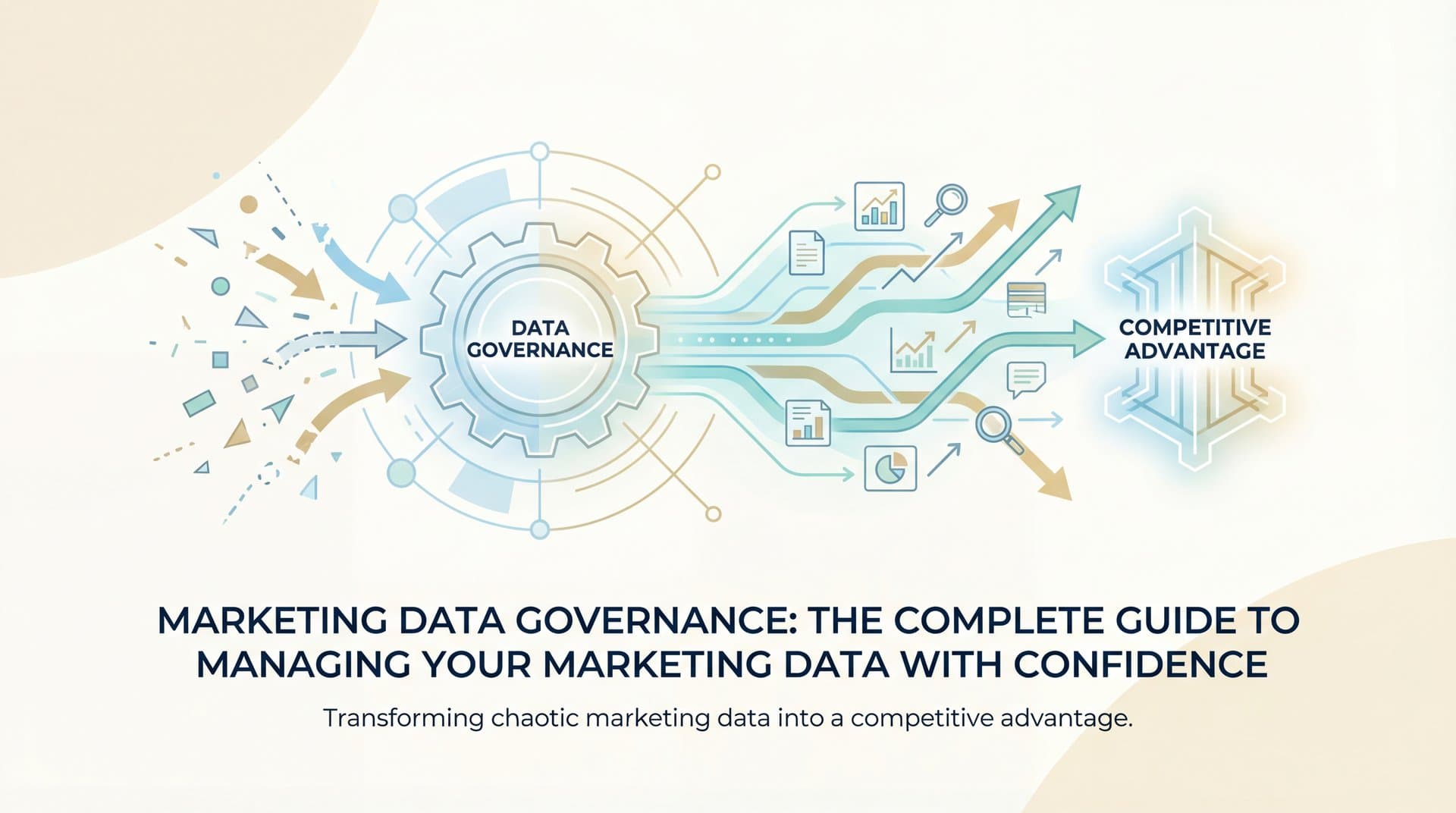
Marketing data governance is the framework that changes this. It's the system of policies, processes, and standards that transforms chaotic, unreliable data into a strategic asset you can actually use. Not bureaucratic red tape—a competitive advantage that helps you track accurately, optimize effectively, and scale with confidence.
By the end of this guide, you'll understand exactly what marketing data governance is, why it directly impacts your campaign performance, and how to implement it in a way that actually works for your team. Let's dig in.
The Foundation: Understanding Marketing Data Governance
Marketing data governance is the set of policies, processes, and standards that ensure your marketing data is accurate, consistent, accessible, and secure across all platforms and teams. Think of it as the operating system for your marketing data—the invisible infrastructure that makes everything else work properly.
Here's what that means in practice: When someone clicks your Facebook ad, visits your website, downloads a resource, and eventually becomes a customer, marketing data governance ensures that journey is tracked consistently, attributed correctly, and stored securely. It means your definition of a "lead" matches across your ad platforms, CRM, and analytics tools. It means you know exactly where your data lives, who can access it, and how it flows between systems.
This is different from general data governance, which typically focuses on enterprise-wide marketing data management across all departments. Marketing data governance specifically addresses the unique challenges you face: multi-platform advertising campaigns, complex attribution tracking across numerous touchpoints, cross-channel customer journeys that span weeks or months, and the need to feed accurate conversion data back to ad platform algorithms.
The framework rests on four core pillars. Data quality ensures your numbers are accurate, complete, and reliable—no duplicate records, no missing conversions, no conflicting values. Data security protects customer information and ensures you're handling personal data responsibly. Data accessibility means the right people can access the right data at the right time, without unnecessary barriers. And data compliance ensures you're meeting regulatory requirements like GDPR and CCPA while documenting your data handling practices.
When these pillars work together, something powerful happens: your marketing data becomes trustworthy. You stop second-guessing your reports. Your team stops arguing about which numbers are "real." And most importantly, you can make optimization decisions with confidence because you know your data reflects reality.
Why Poor Data Governance Costs You More Than You Think
Let's talk about what happens when your data governance is weak or nonexistent. The immediate problem is obvious: you can't trust your reports. But the real damage runs much deeper, and it's costing you money every single day.
Start with misattribution. When your tracking is inconsistent—maybe your Facebook pixel fires differently than your Google tag, or your CRM uses different conversion definitions than your analytics platform—you end up attributing conversions to the wrong sources. You think Channel A is driving results when it's actually Channel B. So you double down on the wrong campaigns while starving the ones that actually work.
The ripple effect is where it gets expensive. Modern ad platforms like Meta and Google rely heavily on conversion data to optimize their algorithms. When you send them incomplete, delayed, or inaccurate conversion signals, their AI optimizes toward the wrong audiences. You're essentially training the algorithm on bad data, which means higher costs per acquisition and lower return on ad spend.
Here's a concrete example: imagine your attribution system misses 30% of your conversions because of tracking gaps or browser limitations. Your ad platforms only see 70% of the results they're actually driving. Their algorithms conclude those campaigns are underperforming and shift budget elsewhere. Meanwhile, you're making strategic decisions based on incomplete information, potentially cutting campaigns that are actually profitable.
Poor governance also creates organizational chaos. When marketing uses one definition of "qualified lead" while sales uses another, you end up with endless meetings trying to reconcile the numbers. Your CMO presents one set of results to the board while your VP of Sales presents different numbers. Trust erodes, and data-driven decision-making becomes impossible. This is the classic marketing data silos problem that plagues organizations of every size.
Then there's the compliance risk. GDPR, CCPA, and the growing patchwork of state-level privacy regulations require documented data handling practices. You need to know what data you're collecting, where it's stored, who can access it, and how long you retain it. Without governance, you're one data breach or regulatory audit away from serious legal and financial consequences.
The hidden cost? Opportunity cost. While you're spending time reconciling conflicting reports, debugging tracking issues, and arguing about which numbers are correct, your competitors with strong data governance are testing new campaigns, optimizing faster, and scaling with confidence. They're moving at speed while you're stuck in analysis paralysis.
Strong marketing data governance doesn't just prevent these problems—it turns your data into a competitive weapon.
The Five Pillars of Effective Marketing Data Governance
Data Standardization: Creating a Common Language
Your first pillar is establishing consistent definitions, naming conventions, and taxonomy across all platforms. This means everyone—from your paid media team to your CRM administrator to your analytics specialist—speaks the same data language.
Start with conversion definitions. What exactly counts as a "lead" versus an "MQL" versus an "opportunity"? These distinctions need to be crystal clear and applied consistently everywhere. If your Facebook campaigns optimize toward "leads" but your CRM defines that term differently, you're optimizing toward the wrong goal.
Extend this to naming conventions. Campaign names, UTM parameters, custom event names—all need to follow a consistent structure. When every team member names campaigns differently, your reporting becomes impossible to aggregate. Create templates and enforce them.
Data Quality Controls: Keeping Your Data Clean
Quality controls are the systems that catch errors before they corrupt your reporting. This includes validation rules that prevent bad data from entering your systems in the first place, deduplication processes that identify and merge duplicate records, and regular audits that spot inconsistencies. Implementing proven marketing data accuracy improvement methods is essential for maintaining trustworthy data.
Think about the customer journey: if someone converts on mobile but later returns on desktop, you need deduplication logic to recognize that's the same person, not two separate conversions. If your tracking captures an email address in three different formats, you need normalization rules to standardize it.
Regular data audits are non-negotiable. Schedule monthly or quarterly reviews where you compare conversion counts across systems, check for tracking gaps, and validate that your numbers reconcile. Automated alerts can flag anomalies—like sudden drops in conversion volume or unusual spikes that might indicate tracking errors.
Access Management and Security: Protecting Your Data
Not everyone needs access to everything. Define clear roles and permissions: who can view reports, who can export raw data, who can modify tracking implementations, and who can access personally identifiable information.
This isn't just about security—it's about compliance. Privacy regulations require that you limit data access to only those who need it for legitimate business purposes. Document who has access to what, implement strong authentication, and maintain audit logs of data access and exports.
Consider data retention policies too. How long do you keep customer data? When do you purge old records? These decisions need to balance business needs with privacy requirements.
Documentation and Accountability: Creating Institutional Knowledge
Your governance framework needs clear ownership and documentation. Who owns each data source? Who's responsible for maintaining data quality in the CRM versus the analytics platform? What's the process for requesting changes to tracking implementations?
Create a marketing data dictionary—a central document that defines every metric, dimension, and conversion event your team uses. When a new team member joins or a stakeholder asks "how do we calculate this metric?", they should be able to find a clear, authoritative answer. Understanding the marketing data definition for each metric eliminates ambiguity across teams.
Establish review cadences. Monthly data governance meetings where stakeholders review data quality metrics, discuss upcoming changes, and address inconsistencies keep governance from becoming a one-time project that everyone forgets about.
Integration Architecture: Connecting Your Data Ecosystem
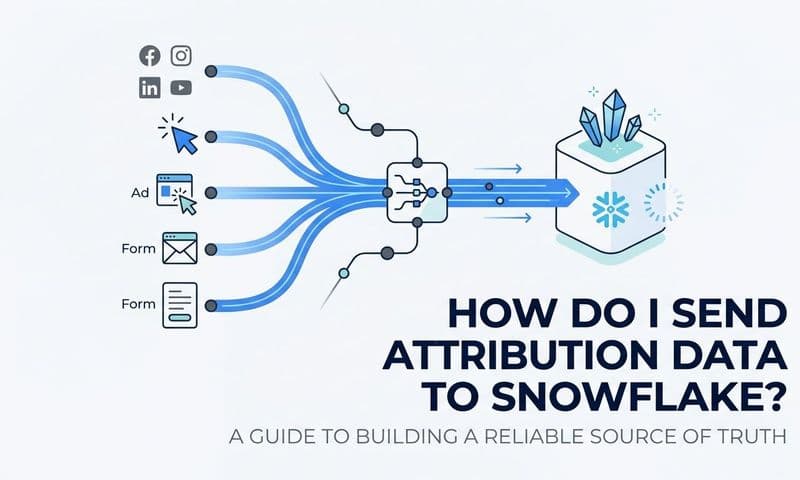
Your final pillar is ensuring data flows correctly between all your systems—ad platforms, analytics tools, CRM, attribution platforms, and data warehouses. This is where server-side tracking becomes crucial, giving you more control over what data is collected and how it's processed.
Map out your entire data flow: where does data originate, where does it go, what transformations happen along the way, and what systems depend on it? Identify single points of failure and implement redundancy where critical data is at risk. A robust marketing data integration strategy ensures seamless connectivity across your entire stack.
Modern marketing stacks often include conversion sync capabilities that feed enriched data back to ad platforms. This creates a feedback loop: better attribution data improves ad platform optimization, which drives better results, which generates more accurate data. But this only works when your integration architecture is solid.
Building Your Marketing Data Governance Framework
Step 1: Audit Your Current Data Landscape
Before you can fix your data governance, you need to understand what you're working with. Start by mapping every system that touches marketing data: ad platforms, analytics tools, CRM, email marketing, attribution software, data warehouses—everything.
For each system, document what data it collects, how it connects to other systems, and who owns it. Identify gaps: where are conversions being missed? Where do definitions conflict? Where does data get lost in transit between systems?
Run a reconciliation exercise. Pick a specific time period and compare conversion counts across all your systems. The differences you find reveal exactly where your governance is breaking down. If Facebook reports 100 conversions but your CRM shows 85, you've got a 15% tracking gap to investigate.
Step 2: Define Your Data Standards
Now create your marketing data dictionary. Start with conversion definitions—write out exactly what qualifies as each conversion type, including any conditions or exclusions. Be specific enough that two people reading the definition would implement tracking the same way.
Establish naming conventions for campaigns, ad sets, UTM parameters, and custom events. Create templates that enforce these conventions. If your naming convention requires campaigns to follow the format "platform_objective_audience_date", build that into your workflow so teams can't deviate.
Define your attribution windows and models. How long after a click or view do you credit that touchpoint? What attribution model do you use for reporting versus optimization? Document these decisions so everyone works from the same assumptions. Understanding the attribution challenges in marketing analytics helps you make informed decisions about your attribution approach.
Step 3: Establish Governance Roles and Cadences
Assign clear ownership. Designate data stewards for each major platform or data source—these are the people responsible for maintaining data quality, implementing changes, and serving as the point of contact for questions.
Create a governance committee that meets regularly to review data quality metrics, approve changes to standards, and address cross-functional issues. This doesn't need to be bureaucratic—a monthly 30-minute meeting with key stakeholders can be enough to keep governance alive.
Implement change management processes. When someone wants to modify tracking, add a new conversion event, or change how data flows between systems, there should be a documented process for reviewing and approving that change. This prevents one team from breaking everyone else's reporting.
Step 4: Implement Technology That Centralizes and Validates Data
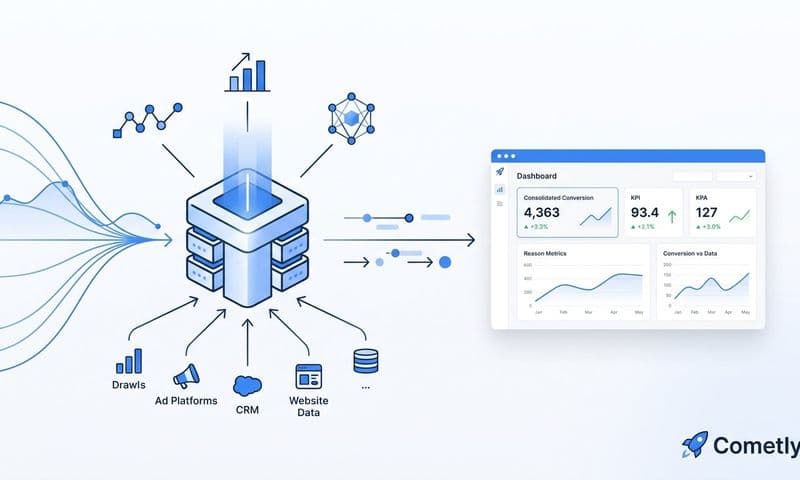
Governance requires the right tools. Look for platforms that can serve as a single source of truth, capturing data from all touchpoints and making it accessible across your organization. Server-side tracking solutions give you more control over data collection and processing, making governance easier to maintain.
Attribution platforms that connect all your marketing data provide visibility into the entire customer journey while enforcing consistent conversion definitions. When your attribution system becomes the authoritative source for conversion data, you eliminate the problem of different teams working from different numbers. Explore marketing data solutions that centralize your data ecosystem.
Implement automated validation and alerting. Set up monitors that flag tracking failures, unusual conversion patterns, or discrepancies between systems. The faster you catch data quality issues, the less damage they cause.
Common Governance Pitfalls and How to Avoid Them
Over-Engineering: When Process Becomes Paralysis
The biggest mistake teams make is creating governance processes so complex that people work around them rather than with them. If adding a new conversion event requires three approval committees and a two-week implementation timeline, teams will find shortcuts that undermine your governance.
Keep it simple. Your governance framework should make it easier to do the right thing, not harder. Focus on the 20% of rules that prevent 80% of problems. Document the critical standards and let teams have flexibility on the details.
Siloed Ownership: When Everyone Owns Their Own Truth
When marketing governs their data one way, sales governs theirs differently, and analytics has yet another approach, you end up with three versions of reality. This happens when governance is implemented within teams rather than across them.
Break down silos by establishing cross-functional standards that everyone follows. Your data dictionary should be organization-wide, not department-specific. Conversion definitions need buy-in from marketing, sales, and analytics—not imposed by one team on the others.
Set-It-and-Forget-It: When Governance Becomes Stale
Your governance framework isn't a one-time project—it's an ongoing practice. Platforms change, regulations evolve, business needs shift, and new tools get added to your stack. If your governance doesn't evolve with these changes, it becomes irrelevant.
Schedule regular reviews of your standards and processes. When a new privacy regulation drops or a platform makes a major tracking change, update your governance framework accordingly. Treat it as living documentation that grows with your business.
The key is finding balance: structured enough to maintain data quality and consistency, but flexible enough to adapt as your marketing evolves.
Turning Governed Data Into Competitive Advantage
Strong marketing data governance isn't just about avoiding problems—it's about unlocking opportunities that weak governance makes impossible. When your data is clean, consistent, and trustworthy, you can move faster and scale smarter than competitors who are still fighting with their numbers.
Start with attribution accuracy. When you're capturing every touchpoint consistently and feeding that data into a unified system, you see the complete customer journey. You understand which channels drive awareness, which drive consideration, and which close deals. This visibility lets you allocate budget based on actual performance rather than guesswork or last-click attribution that misses most of the story. Mastering attribution marketing tracking becomes possible only with governed data.
The feedback loop to ad platforms is where governed data really pays off. When you send accurate, complete conversion data back to Meta, Google, and other platforms, their algorithms optimize more effectively. They learn which audiences convert, which creative resonates, and which placements drive results. This means lower acquisition costs and better campaign performance without increasing your budget.
Governed data also enables confident scaling. When you trust your attribution and understand what's working, you can increase spend on winning campaigns without the fear that your data is misleading you. You can test new channels knowing you'll be able to measure their true impact. You can make strategic shifts based on evidence rather than intuition.
Perhaps most importantly, governed data speeds up decision-making. When everyone trusts the numbers and works from the same source of truth, you eliminate the endless debates about which report is correct. Your team can focus on what the data means and what to do about it, rather than arguing about whether the data is accurate in the first place. This is the foundation of truly data driven marketing strategies.
This speed compounds over time. While competitors with weak governance are still reconciling last month's reports, you're already testing next month's strategy. That advantage adds up to significant competitive separation.
Building Your Foundation for Data-Driven Growth
Marketing data governance isn't bureaucratic overhead—it's the foundation that makes confident, data-driven marketing possible. In an era of privacy changes, cross-platform complexity, and algorithmic optimization, teams with strong governance frameworks gain a measurable edge over those flying blind.
The path forward starts with an honest assessment of your current state. Map your data landscape, identify the gaps and inconsistencies, and acknowledge where your governance is weak. Then build your framework systematically: standardize definitions, establish quality controls, assign clear ownership, and implement the technology that makes governance sustainable.
Remember that perfect governance isn't the goal—effective governance is. Start with the standards that matter most, get buy-in from the teams who need to follow them, and evolve your framework as your business grows. The teams that win aren't the ones with the most complex governance processes—they're the ones who make data quality and consistency a non-negotiable part of how they operate.
Your marketing data should be an asset that drives growth, not a liability that creates confusion. With the right governance framework, you transform scattered, unreliable data into a strategic advantage that helps you track accurately, optimize effectively, and scale with confidence.
Ready to elevate your marketing game with precision and confidence? Discover how Cometly's AI-driven recommendations can transform your ad strategy—Get your free demo today and start capturing every touchpoint to maximize your conversions.