Your marketing team is spending thousands of dollars every month across Meta, Google, and TikTok. The campaigns are live, the budgets are running, and the dashboards are full of numbers. Then leadership walks in and asks one simple question: which campaigns are actually driving revenue?
The room goes quiet. Someone pulls up Meta Ads Manager. Someone else opens Google Analytics. A third person checks the CRM. The numbers don't match, the stories don't align, and nobody can give a confident answer. That moment of silence is poor ad campaign visibility in action.
Poor ad campaign visibility is the inability to accurately see, measure, and understand how your advertising campaigns are performing across channels and throughout the full customer journey. It's not just a reporting inconvenience. It's a structural problem that leaves marketing teams making expensive decisions with incomplete, unreliable, or outright contradictory data.
In 2026, this problem is more pressing than ever. Customer journeys are fragmented across devices and platforms. Privacy changes have degraded the accuracy of browser-based tracking. Multi-platform advertising strategies mean your data lives in silos that rarely talk to each other. The gap between what ad platforms report and what's actually happening in your business has never been wider.
This article will walk you through the root causes of poor ad campaign visibility, the real business costs it creates, the warning signs to watch for, and the practical strategies that restore clarity. By the end, you'll have a clear framework for moving from guesswork to confident, data-driven decisions.
The Anatomy of a Blind Spot: Why Marketers Lose Sight of Campaign Performance
Poor ad campaign visibility rarely happens because a team isn't paying attention. It happens because the underlying data infrastructure makes it structurally difficult to see the full picture. There are three core causes worth understanding.
Data silos between platforms, CRMs, and analytics tools: Most marketing teams run campaigns across multiple ad platforms, each with its own reporting interface, its own attribution model, and its own definition of a conversion. Meta counts a conversion one way. Google counts it another. Your CRM has a third record. None of these systems are designed to talk to each other natively, which means you end up with fragmented snapshots instead of a unified view of performance. When you can't connect ad spend to actual revenue in a single place, visibility breaks down. This is a common challenge when managing multiple ad platforms simultaneously.
Privacy changes and tracking degradation: Apple's App Tracking Transparency framework fundamentally changed what data ad platforms can collect about user behavior on iOS devices. Combined with the ongoing deprecation of third-party cookies across major browsers and evolving consent requirements, browser-based pixels are increasingly limited in what they can capture. The result is that platform-reported data has become less reliable over time. Conversions go unattributed. Audiences shrink. The signal that ad platforms depend on to optimize campaigns becomes noisier and less complete, creating significant campaign tracking gaps across your entire funnel.
The multi-touch attribution gap: Most teams still rely on last-click attribution, which gives 100% of the credit for a conversion to the final touchpoint before purchase. This model is easy to understand but deeply misleading. A customer might have seen a TikTok awareness ad, clicked a Google search ad three days later, and then converted through a retargeting campaign on Meta. Last-click gives all the credit to Meta and makes TikTok and Google look like they contributed nothing.
This matters because upper-funnel campaigns, the ones building awareness and nurturing consideration, are chronically undervalued in last-click models. Teams cut the campaigns that are actually creating demand because they don't appear to be driving conversions in the data. The customer journey doesn't happen in a straight line, but most attribution models pretend it does.
Together, these three forces create a compounding blind spot. You're working with siloed data that's already incomplete due to tracking limitations, and then applying an attribution model that misrepresents the customer journey on top of that. The result is a distorted view of what's actually working, and that distortion has real consequences.
The Hidden Price Tag of Flying Blind on Ad Spend
When visibility breaks down, the costs are rarely obvious at first. They accumulate quietly in the background, showing up as wasted budget, declining performance, and eroding confidence in marketing data. Here's where the damage actually happens.
Wasted budget and misallocated spend: Without clear visibility into which campaigns are driving real outcomes, teams tend to fund what looks good on the surface rather than what's actually converting. Campaigns with high click-through rates get budget. Campaigns with strong impressions get renewed. Meanwhile, the campaigns quietly generating qualified leads or driving high-value customers go underfunded because the attribution model doesn't give them proper credit. Over time, this misallocation compounds. You're not just wasting a portion of your budget on underperformers. You're actively starving the campaigns that could scale your results. Many teams find themselves losing money on ads precisely because they can't identify their winning campaigns.
Compounding algorithm problems: This is one of the most underappreciated consequences of poor ad campaign visibility. Ad platforms like Meta and Google rely on the conversion data you send them to optimize their targeting and bidding algorithms. When that data is incomplete, delayed, or inaccurate, the algorithms make worse decisions. They optimize for the wrong audiences, bid on the wrong signals, and gradually drift further from your ideal customers.
The problem is self-reinforcing. Poor tracking leads to weak conversion signals. Weak signals lead to poor algorithm performance. Poor algorithm performance leads to worse results, which makes it even harder to identify what's working. Many teams interpret this as a creative problem or a platform problem when the root cause is a data quality problem that leads to ad campaigns not optimizing properly.
Strategic paralysis and leadership trust: When your data is unreliable, decision-making slows down. Marketing teams can't confidently scale winning campaigns because they're not sure if the reported performance is real. They can't confidently cut losing campaigns because the data might be incomplete. Every budget conversation becomes a debate about whose numbers to trust rather than a strategic discussion about where to invest.
This dynamic also damages the relationship between marketing and leadership. When CMOs and CFOs see conflicting numbers across platforms, or when reported ROAS doesn't correlate with actual business revenue, they start to question the value of the entire marketing investment. Securing budget becomes harder. Justifying spend becomes a political exercise rather than a data-driven one.
The hidden price tag of poor ad campaign visibility isn't just the money spent on underperforming campaigns. It's the opportunity cost of the campaigns you couldn't confidently scale, the algorithm performance you couldn't optimize, and the strategic conversations you couldn't have because the data wasn't trustworthy.
Five Warning Signs Your Campaigns Are Running in the Dark
Poor ad campaign visibility can be gradual enough that teams normalize it before they realize how significant the problem has become. These are the clearest signals that your campaigns are operating without adequate visibility.
1. Conflicting numbers across platforms. If Meta, Google, and your CRM are all reporting different conversion counts for the same time period, that's a structural red flag. It's common for multiple platforms to claim credit for the same conversion, inflating your total reported conversions well beyond the actual number of sales or leads in your CRM. When platform-reported ROAS consistently looks better than your actual business revenue would suggest, the data is telling you something important about your tracking setup. Understanding cross-platform campaign performance is essential to reconciling these discrepancies.
2. You can't trace a customer from ad click to closed deal. A healthy attribution setup lets you follow a customer's journey from the first ad impression through to a purchase or signed contract. If you can only see the click but not what happened afterward, or if your ad platform data and CRM data live in separate worlds with no connection between them, you have a visibility gap at the most critical part of the funnel.
3. You're relying on vanity metrics because revenue data isn't available. When downstream conversion data is unavailable or unreliable, teams naturally fall back on the metrics they can see: impressions, clicks, reach, and engagement. These metrics have their place, but they're not a substitute for understanding which campaigns are generating actual revenue. If your reporting conversations are dominated by click-through rates and cost-per-click rather than cost-per-acquisition and return on ad spend tied to real revenue, that's a sign visibility is lacking. Learning how to measure marketing campaign effectiveness beyond surface-level metrics is critical.
4. Budget decisions are driven by gut feeling rather than data. This one is easy to rationalize. Experienced marketers develop intuition over time, and that intuition has value. But if you find yourself making significant budget reallocation decisions because something "feels like it's working" rather than because the data clearly supports it, poor visibility is likely the underlying cause.
5. Reported ROAS and actual business performance don't align. This is perhaps the most telling sign. If your ad platforms are reporting strong ROAS but your revenue isn't growing in proportion, or if cutting a campaign that looked underperforming had no noticeable impact on revenue, the reported metrics are not accurately reflecting reality. The gap between what the dashboards say and what the business experiences is the clearest measure of how serious your visibility problem has become.
Building a Clear Line of Sight: Strategies That Restore Campaign Visibility
Restoring poor ad campaign visibility is not about adding more tools to your stack. It's about connecting the right data sources, improving the accuracy of your tracking, and applying attribution models that reflect how customers actually behave. Here's how to approach it systematically.
Centralize your data into a single source of truth: The foundation of campaign visibility is having all your relevant data in one place. That means connecting your ad platforms, your website analytics, and your CRM so that every touchpoint in the customer journey is captured and unified. When a lead comes in from a Meta campaign, gets nurtured via email, and eventually converts through a sales conversation, that entire sequence should be visible and connected in a single system. A marketing dashboard for multiple campaigns makes this kind of unified view possible.
Without this centralization, you're always working from partial information. A platform like Cometly is built specifically to bridge these connections, pulling together data from ad platforms, CRM systems, and your website to give you a complete, real-time view of the customer journey from first touch to closed revenue.
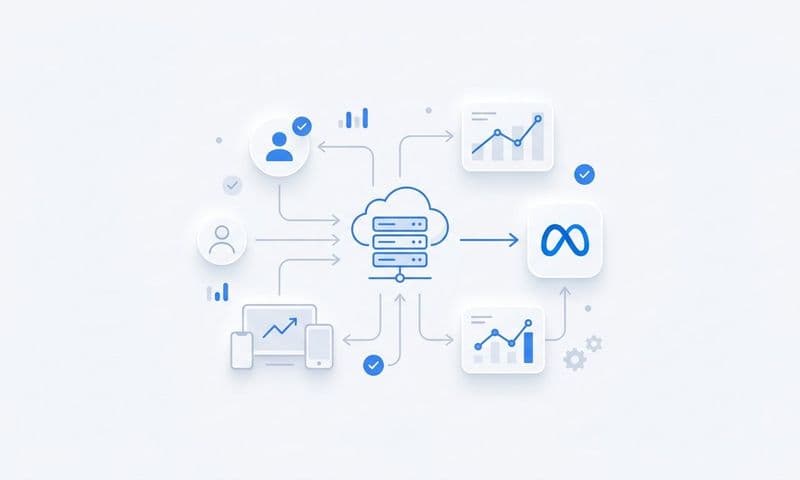
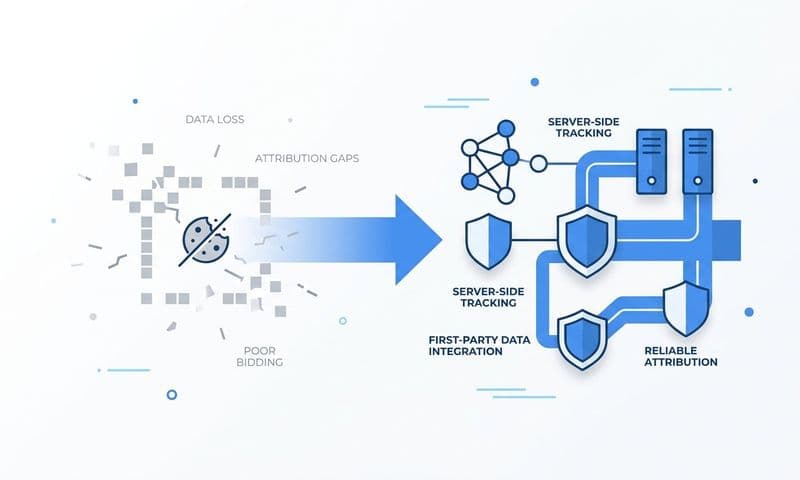
Implement server-side tracking: Browser-based pixels are increasingly unreliable. Ad blockers, iOS privacy restrictions, and browser-level cookie limitations mean that a meaningful portion of your conversions are never being reported back to ad platforms. Server-side tracking addresses this by sending conversion data directly from your server rather than relying on a browser-based pixel to fire correctly.
The practical impact is significant. You recover conversion data that would otherwise be lost, your ad platforms receive more complete and accurate signals, and your reported metrics more accurately reflect what's actually happening. Server-side tracking is no longer a technical nice-to-have. For any team running meaningful ad spend in 2026, it's a fundamental requirement for accurate measurement. Choosing the right ad campaign tracking solution that supports server-side implementation is a key step.
Adopt multi-touch attribution models: Moving beyond last-click attribution is one of the highest-leverage changes a marketing team can make. Multi-touch attribution models, including linear, time-decay, position-based, and data-driven approaches, distribute credit across every interaction in the buyer journey rather than assigning it all to the final click.
This shift changes how you evaluate campaign performance at every stage of the funnel. Awareness campaigns that were previously invisible in last-click reporting start showing their real contribution. You can see which channels are effective at generating initial interest, which are strong at nurturing consideration, and which are best at closing. That complete picture is what allows you to allocate budget intelligently across the full funnel rather than over-investing in the bottom and neglecting the top.
From Visibility to Action: Turning Better Data Into Better Decisions
Better visibility is only valuable if it translates into better decisions. Once you have accurate, unified, multi-touch data, here's how to put it to work.
Feed enriched conversion data back to ad platforms: One of the most impactful things you can do with accurate conversion data is send it back to the platforms running your campaigns. This is the principle behind conversion APIs and server-side event integrations. When Meta and Google receive richer, more accurate conversion signals, their machine learning algorithms can optimize targeting and bidding more effectively. Understanding how to attribute revenue to specific campaigns is the foundation of this feedback loop.
Think of it as a feedback loop. Better data in means better algorithm performance out. Cometly's Conversion Sync feature is designed specifically for this purpose, sending enriched, conversion-ready events back to Meta, Google, and other platforms to improve the quality of their optimization signals. Over time, this compounds into meaningfully better campaign performance without changing your creative or your targeting manually.
Use AI-powered analysis to surface actionable recommendations: Having access to unified data is one thing. Knowing what to do with it is another. AI-powered ad campaign optimization can help surface the patterns and recommendations that would take a human analyst hours to identify manually. Which ads are showing early signs of fatigue? Which campaigns are scaling efficiently and deserve more budget? Where is spend being wasted on audiences that aren't converting?
Cometly's AI Ads Manager and AI Chat features are built to answer exactly these kinds of questions, giving marketers clear recommendations on where to scale, where to pause, and where to shift budget for maximum return. This moves marketing from reactive reporting to proactive optimization.
Establish a regular review cadence with a unified dashboard: Visibility only drives better decisions if it's reviewed consistently. Build a regular cadence, whether weekly or bi-weekly, where your team reviews performance through a unified analytics dashboard that shows data across all channels in one view. Compare attribution models side by side to validate performance. Look for discrepancies between platform-reported data and your CRM. Use these sessions to make confident, data-backed decisions about where to invest and where to pull back.
This kind of structured review process transforms attribution data from a reporting exercise into a strategic planning tool. It's how teams that understand their full customer journey consistently outperform teams that are still flying blind.
Putting It All Together: Moving From Guesswork to Confidence
Poor ad campaign visibility is not just an inconvenience. It's a compounding problem that quietly erodes budget efficiency, degrades algorithm performance, and makes confident strategic decision-making nearly impossible. The longer it goes unaddressed, the more expensive it becomes, both in direct wasted spend and in the missed opportunities that come from not knowing what's actually working.
The good news is that this is a solvable problem. The solution is not about adding more platforms or generating more reports. It's about building better-connected data infrastructure, implementing accurate tracking that holds up against modern privacy constraints, and applying attribution models that reflect the real complexity of how customers make decisions.
When you centralize your data, implement server-side tracking, adopt multi-touch attribution, and feed enriched conversion signals back to ad platforms, the picture becomes clear. You can see which campaigns are driving real revenue, which channels are contributing at every stage of the funnel, and where your budget will generate the highest return. That clarity is what separates marketing teams that scale with confidence from those that are perpetually guessing.
Cometly is built to provide exactly this kind of clarity. By connecting your ad platforms, CRM, and website into a single source of truth, offering server-side tracking for accurate data capture, delivering multi-touch attribution across every channel, and using AI to surface actionable recommendations, Cometly gives you the full visibility your campaigns deserve.
If you're ready to stop guessing and start making decisions backed by complete, accurate marketing data, it starts with understanding where your current visibility gaps are. Explore how Cometly can help you close those gaps and gain full confidence in your ad performance. Get your free demo today and start capturing every touchpoint to maximize your conversions.