You're running campaigns across Meta, Google, TikTok, and maybe a handful of other platforms. Your dashboard shows clicks, impressions, and conversions. But when your CFO asks which channels actually drive revenue, you're piecing together spreadsheets and making educated guesses. Sound familiar?
This is the reality for most marketers today: fragmented data, unclear attribution, and mounting pressure to prove that every marketing dollar delivers measurable results. The challenge isn't a lack of data—it's having too much data scattered across disconnected systems with no clear line from ad spend to actual revenue.
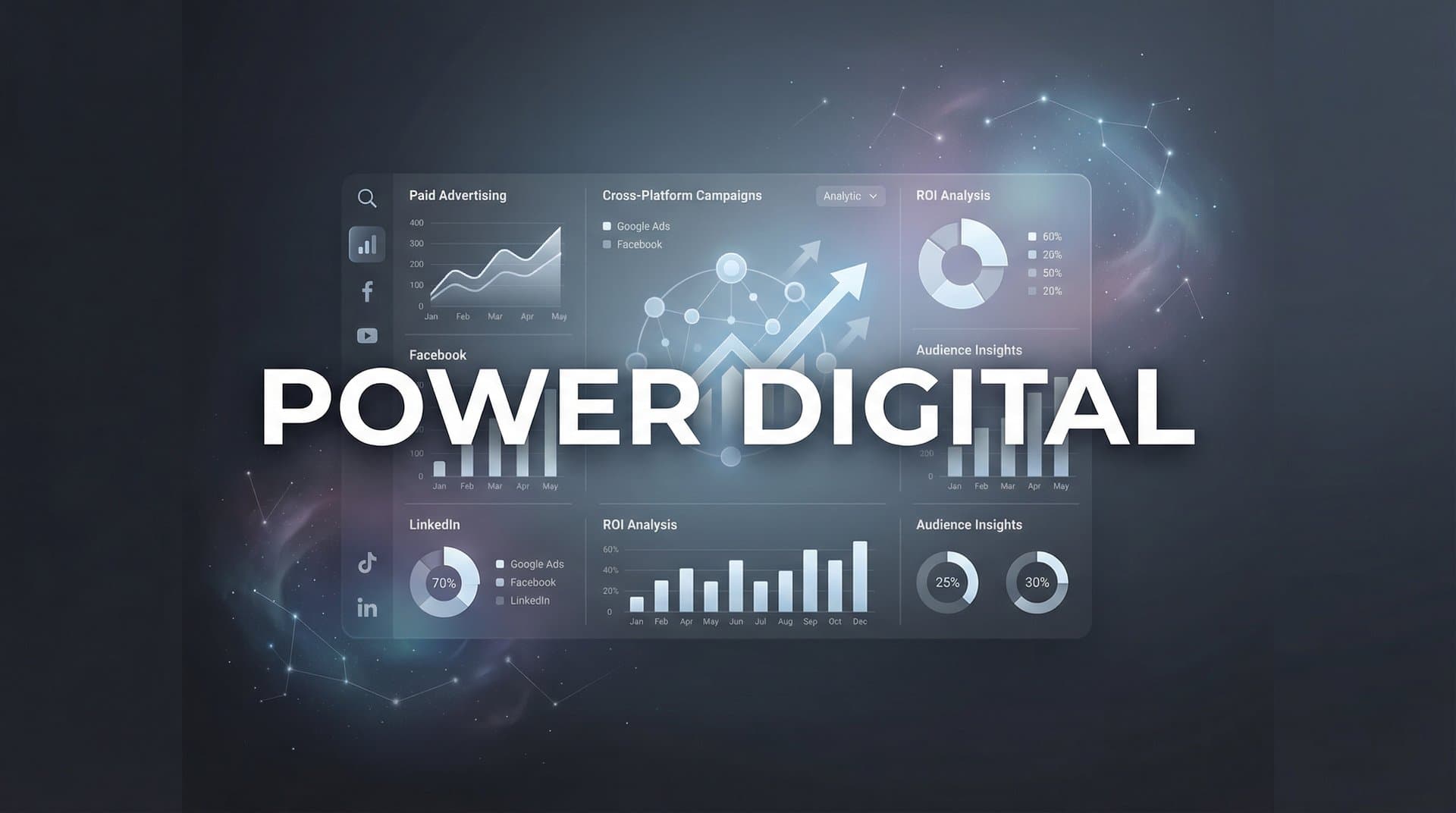
Enter power digital marketing: the evolution beyond basic channel management into a sophisticated, data-driven approach that connects every customer touchpoint to business outcomes. It's not about running more ads or trying more platforms. It's about building an integrated marketing ecosystem where attribution, analytics, and AI work together to show you exactly what's working and what's not. This article breaks down what power digital marketing actually means and how to implement these strategies to scale your campaigns with confidence.
From Spray-and-Pray to Precision: How Digital Marketing Grew Up
Digital marketing used to be simple. You'd run some Facebook ads, track clicks, maybe set up Google Analytics, and call it a day. If traffic went up, you assumed your campaigns were working. If sales increased that month, you'd credit whatever channel got the most clicks.
That approach stopped working years ago.
Today's customer journey is complex. Someone might see your Instagram ad on Monday, click a Google search result on Wednesday, read your email newsletter on Friday, and finally convert after clicking a retargeting ad the following week. Which channel "deserves" credit for that sale? The answer isn't simple, and that's exactly why modern marketing has evolved into something far more sophisticated.
Power digital marketing represents this maturation—a shift from isolated channel management to integrated, data-centric ecosystems. Instead of managing Facebook ads separately from Google campaigns and treating your CRM as a completely different universe, you're connecting everything into a unified view of the customer journey.
The catalyst for this evolution? Cross-platform attribution became not just helpful but essential. Marketers managing serious budgets realized that traditional metrics like clicks and impressions tell you almost nothing about actual business impact. A channel might generate thousands of clicks but zero revenue. Another might show modest engagement metrics but consistently drive high-value customers.
Revenue attribution changed the game. When you can trace every sale back through every touchpoint that influenced it—from the first awareness-building ad to the final retargeting click—you gain clarity that transforms decision-making. You stop guessing which campaigns to scale and start knowing with data-backed confidence.
This shift also reflects the reality of modern consumer behavior. People don't discover a brand and immediately buy anymore. They research across multiple platforms, compare options, read reviews, abandon carts, and return days or weeks later. Marketing that ignores this multi-touch reality is marketing that misunderstands its own effectiveness.
Power digital marketing acknowledges this complexity and builds systems to measure it accurately. It's the difference between hoping your marketing works and knowing exactly how it works.
The Three Pillars That Separate Good Campaigns from Great Ones
What actually makes power digital marketing different from the basic digital tactics most businesses use? Three core components work together to create campaigns that scale profitably: multi-touch attribution, server-side tracking, and real-time revenue analytics.
Multi-Touch Attribution: Seeing the Complete Picture
Multi-touch attribution tracks every interaction a customer has with your brand before converting. Not just the last click, but the Instagram ad they saw two weeks ago, the blog post they read, the email they opened, and the retargeting ad that finally brought them back.
This matters because customer journeys are rarely linear. Someone might need seven or eight touchpoints across multiple platforms before they're ready to buy. If you only measure last-click attribution, you'll think your retargeting campaigns are crushing it while your awareness campaigns look worthless—when in reality, those awareness campaigns are doing the heavy lifting that makes retargeting possible.
With multi-touch attribution, you can see which channels work together to drive conversions. You might discover that LinkedIn ads don't directly convert well, but they significantly boost conversion rates when combined with Google Search campaigns. That insight changes how you allocate budget.
Server-Side Tracking: Accuracy in a Privacy-First World
iOS privacy updates and cookie deprecation have made browser-based tracking increasingly unreliable. When users opt out of tracking, traditional pixel-based systems miss conversions entirely. Your Facebook Ads Manager might show 50 conversions when you actually got 80—you're making budget decisions based on incomplete data.
Server-side tracking solves this by capturing conversion data directly from your server rather than relying on browser pixels. When someone completes a purchase, your server records it and sends that data to your ad platforms. This approach bypasses browser restrictions and captures conversions that pixel-based tracking misses.
The result? More accurate attribution data, which means better decision-making and improved ad platform performance. When Facebook and Google receive complete conversion data, their algorithms optimize more effectively.
Real-Time Analytics: Speed Matters
Waiting until the end of the month to analyze campaign performance means you've potentially wasted weeks of budget on underperforming ads. Real-time analytics let you spot problems and opportunities as they happen.
When you can see which campaigns are driving actual revenue in real time, you can make immediate adjustments. That new creative you launched this morning? You'll know by afternoon if it's outperforming your control. That audience segment you're testing? You can scale it tomorrow if the data supports it.
This responsiveness compounds over time. Teams that can pivot quickly based on real revenue data consistently outperform those working with delayed, incomplete information. The competitive advantage isn't just having better data—it's having it fast enough to act on it while it still matters.
Building the Foundation: Your Attribution Infrastructure
Understanding the theory behind power digital marketing is one thing. Actually implementing it requires building the right technical infrastructure. This means connecting your scattered data sources into a unified system that tracks the complete customer journey.
Connecting Your Marketing Ecosystem
Your ad platforms, CRM, website analytics, and email marketing tools all contain valuable data. The problem? They don't talk to each other. Facebook knows about ad clicks. Your CRM knows about sales. Google Analytics knows about website behavior. But none of them see the complete picture.
Building attribution infrastructure means connecting these systems so data flows between them automatically. When someone clicks your Meta ad, visits your website, fills out a form, and eventually becomes a customer in your CRM, your attribution system tracks all of it and connects the dots.
This isn't just about convenience—it's about accuracy. When you can trace a $10,000 sale back through every touchpoint that influenced it, you understand which marketing efforts actually drive revenue versus which just generate activity.
Setting Up Comprehensive Conversion Tracking
Not all conversions are created equal, and your tracking should reflect that. A newsletter signup is different from a product purchase. A free trial signup is different from a paid conversion. Someone who requests a demo has different value than someone who just downloads a whitepaper.
Effective attribution infrastructure tracks multiple conversion types and assigns appropriate value to each. This lets you optimize for business outcomes, not just volume. You might discover that campaigns driving fewer total conversions actually deliver higher-value customers—insight you'd miss if you only tracked conversion count.
The key is capturing every meaningful touchpoint: ad clicks, website visits, content engagement, email opens, form submissions, phone calls, chat conversations, and ultimately purchases or subscriptions. The more complete your tracking, the more accurate your attribution.
Feeding Data Back to Ad Platforms
Here's where attribution infrastructure becomes truly powerful: conversion sync. Once you've captured complete, accurate conversion data, you can feed it back to your ad platforms to improve their algorithmic targeting.
Facebook and Google use machine learning to optimize ad delivery. But they can only optimize based on the data they receive. If they're missing 30% of your conversions due to tracking limitations, they're optimizing on incomplete information—which means they're not actually optimizing for your best outcomes.
When you send enriched, accurate conversion data back to these platforms, their algorithms get smarter. They learn which audience characteristics, ad placements, and creative approaches actually drive conversions. Over time, this feedback loop improves campaign performance without you manually adjusting anything.
Let AI Do the Heavy Lifting: Optimization at Scale
You're managing campaigns across multiple platforms, testing dozens of ad variations, and trying to figure out which audience segments perform best. The amount of data you need to analyze is overwhelming. This is where AI transforms power digital marketing from theory into practical advantage.
Pattern Recognition Humans Can't Match
AI excels at analyzing massive datasets to identify patterns that would take humans weeks to spot—if they could spot them at all. It can simultaneously evaluate performance across every campaign, ad set, creative variation, audience segment, and placement to determine what's actually working.
For example, AI might discover that your video ads perform significantly better on Tuesday afternoons for users who previously engaged with your Instagram content but haven't visited your website in the last week. That's a hyper-specific insight that would be nearly impossible to identify manually, but it's exactly the kind of pattern that lets you allocate budget more effectively.
The advantage compounds when you're running campaigns across multiple platforms. AI can analyze cross-platform performance to identify which combinations of channels and messaging sequences drive the best results. Maybe LinkedIn ads followed by Google Search campaigns convert better than the reverse. Maybe TikTok awareness campaigns boost Meta retargeting performance by 40%. These cross-channel insights are where serious optimization happens.
Budget Allocation with Confidence
One of the hardest decisions in digital marketing is budget allocation. Should you scale that campaign that's performing well? Should you cut budget from underperformers? How much should you invest in testing new approaches?
AI-powered budget allocation recommendations take the guesswork out of these decisions. By analyzing historical performance data and current trends, AI can suggest optimal budget allocation across campaigns and channels. It might recommend scaling a campaign that's showing strong early signals, or cutting budget from one that's declining in efficiency.
The key difference from manual analysis? AI considers far more variables simultaneously. It's not just looking at cost per conversion—it's analyzing conversion value, customer lifetime value, attribution patterns, audience saturation, competitive dynamics, and dozens of other factors to make recommendations that maximize overall return.
The Self-Improving Feedback Loop
Here's where AI-powered ad campaign optimization gets really interesting: the feedback loop between better data, smarter algorithms, and improved performance. When you feed accurate conversion data back to ad platforms, their machine learning algorithms optimize more effectively. As they optimize, you get better results. Better results mean more data about what works. More data makes the AI recommendations even more accurate.
This creates a compounding advantage over time. Teams using AI-powered attribution and optimization consistently improve campaign performance month over month, while those relying on manual analysis plateau or improve much more slowly. The gap between data-driven marketers and everyone else widens continuously.
What Actually Matters: Revenue-Focused Measurement
You can have the most sophisticated attribution infrastructure in the world, but it's worthless if you're measuring the wrong things. Power digital marketing requires shifting focus from vanity metrics to revenue impact—understanding what actually drives business growth rather than what looks good in a dashboard.
Why Attribution Models Matter (and Why You Need Multiple)
Different attribution models tell different stories about channel performance. First-touch attribution credits the initial touchpoint that introduced someone to your brand. Last-touch credits the final interaction before conversion. Linear attribution spreads credit equally across all touchpoints. Time-decay gives more credit to recent interactions.
Which model is "correct"? None of them, and all of them. Each provides a different perspective on channel value. First-touch shows which channels are best at generating awareness. Last-touch shows which channels close deals. Comparing multiple models gives you a more complete understanding than relying on any single view.
For instance, you might discover that your content marketing drives very few last-touch conversions but appears in most first-touch journeys. That tells you content is valuable for awareness but needs other channels to close the sale. Without comparing attribution models, you might undervalue content marketing and make poor budget decisions.
The KPIs That Actually Predict Growth
Clicks and impressions are easy to measure, but they don't pay the bills. Revenue-focused measurement means tracking metrics that directly connect to business outcomes: customer acquisition cost, customer lifetime value, return on ad spend, and contribution margin by channel.
These metrics tell you not just whether campaigns are generating activity, but whether they're generating profitable growth. A channel might have a low cost per click but attract customers with poor lifetime value. Another might have higher upfront costs but consistently bring in high-value customers who stick around. The second channel is more valuable, but you'd only know that by measuring the ROI of digital campaigns beyond surface-level metrics.
The most sophisticated marketers also track velocity metrics: how quickly campaigns reach profitability, how long it takes for customers to convert, and how attribution patterns change over time. These insights help you make smarter decisions about budget allocation and campaign strategy.
Building Dashboards That Drive Decisions
A dashboard isn't valuable because it has lots of charts—it's valuable when it helps you make better decisions faster. Revenue-focused dashboards connect marketing activity directly to business outcomes in ways that make action obvious.
The best dashboards answer specific questions: Which campaigns are driving profitable growth right now? Which channels are most efficient at different stages of the funnel? Where should we increase or decrease budget? What's our current trajectory toward monthly revenue goals?
This means designing dashboards for decision-making, not just reporting. Instead of showing every possible metric, focus on the ones that actually inform action. Make trends obvious. Highlight anomalies. Compare current performance to benchmarks. The goal is clarity that leads to confident decisions, not comprehensive data that leads to analysis paralysis.
Your Implementation Roadmap: From Theory to Practice
Understanding power digital marketing concepts is one thing. Actually implementing them in your business is another. Here's a practical roadmap for building a data-driven marketing operation that connects spend to revenue.
Start with Your Foundation: Data Infrastructure
Before you can optimize based on attribution data, you need to capture it accurately. Begin by auditing your current tracking: What conversion events are you measuring? How complete is your data? Where are the gaps?
Next, prioritize connecting your key systems. Your ad platforms, website analytics, CRM, and any other tools that contain customer data should feed into a unified attribution system. This doesn't have to happen overnight—start with your highest-spend channels and expand from there.
Implement server-side tracking to improve accuracy, especially for conversions that browser-based pixels might miss. This is particularly important if you're running significant iOS traffic or operating in industries where privacy concerns are high.
Build Progressive Complexity
Don't try to implement everything at once. Start with basic attribution modeling in digital marketing across your primary channels. Once that's working reliably, add more sophisticated analysis: comparing attribution models, tracking customer lifetime value, implementing AI-powered recommendations.
This progressive approach lets you learn and adjust as you go. You'll discover which metrics matter most for your business, which attribution models provide the most useful insights, and where AI recommendations deliver the biggest impact. Build on what works rather than trying to deploy a perfect system from day one.
Common Pitfalls to Avoid
The biggest mistake is trying to boil the ocean—implementing every possible tracking event, attribution model, and optimization technique simultaneously. This creates complexity that obscures insights rather than revealing them. Start focused and expand deliberately.
Another common pitfall is trusting data without validating it. When you first implement attribution tracking, compare the results to your source-of-truth systems (your actual sales data, your CRM). If the numbers don't match, something's wrong with your tracking setup. Fix it before making budget decisions based on inaccurate data.
Finally, avoid the trap of optimizing for the wrong goals. Just because you can measure something doesn't mean you should optimize for it. Keep your focus on metrics that actually drive business growth: profitable customer acquisition, revenue impact, and sustainable scaling.
The Competitive Edge: Clarity Drives Confident Growth
Power digital marketing isn't about working harder or spending more. It's about working smarter with complete visibility into what drives results. When you know exactly which campaigns, channels, and touchpoints generate revenue, you can scale with confidence instead of crossing your fingers and hoping.
The marketers who win in today's environment aren't the ones with the biggest budgets—they're the ones with the clearest data. They know which ads perform best for which audiences. They understand how channels work together to drive conversions. They can prove ROI at the campaign level, not just report on vanity metrics.
This clarity creates a compounding advantage. You make better budget decisions, which improves results, which generates better data, which leads to even smarter decisions. Meanwhile, competitors operating on incomplete data or gut instinct fall further behind with each cycle.
The tools and strategies that enable power digital marketing are more accessible than ever. Attribution platforms can now capture and analyze data that would have required enterprise-level resources just a few years ago. AI-powered recommendations that once required data science teams are now available to any marketer willing to implement them.
The question isn't whether data-driven, attribution-focused marketing delivers better results—the evidence is overwhelming that it does. The question is whether you're ready to implement it in your business.
Ready to elevate your marketing game with precision and confidence? Discover how Cometly's AI-driven recommendations can transform your ad strategy—Get your free demo today and start capturing every touchpoint to maximize your conversions.