

You're staring at your ad dashboard, and the numbers don't add up. Meta reports 150 conversions this month. Google Ads claims 120. But when you check your actual sales? Only 80 customers came through. Your CFO is asking questions you can't answer, and you're making budget decisions based on data that's fundamentally broken.
This isn't a tracking error on your end. It's the reality of modern advertising in a post-iOS 14.5 world where browser-based tracking has been systematically dismantled by privacy updates, cookie restrictions, and ad blockers. Every day, you're losing visibility into which ads actually drive revenue, and your competitors who've figured out the solution are quietly scaling while you're flying blind.
Server side tracking changes everything. Instead of relying on browser cookies and pixels that get blocked at every turn, it sends conversion data directly from your server to ad platforms through secure APIs. You capture conversions that browser tracking misses entirely, feed better data back to platform algorithms, and finally get attribution numbers that match reality. This guide walks you through exactly how it works, why it matters for your ad performance, and how to implement it without needing a team of developers.
The Browser Tracking Problem Costing You Conversions
Traditional client-side tracking relies on a simple premise: when someone clicks your ad and visits your website, a tracking pixel fires in their browser, drops a cookie, and reports back to the ad platform when they convert. This worked beautifully for years. Then everything changed.
Safari's Intelligent Tracking Prevention started blocking third-party cookies by default. Firefox followed suit. Chrome announced plans to phase them out. Ad blockers became mainstream, preventing pixels from firing in the first place. Each update chipped away at tracking accuracy, but advertisers could still work around the limitations.
Then iOS 14.5 landed like a bomb. Apple's App Tracking Transparency framework forced apps to ask users for permission to track their activity. When presented with a popup asking "Allow this app to track you across other companies' apps and websites?", most people said no. Industry-wide opt-in rates hover around 25%, meaning three out of four iOS users are invisible to traditional tracking methods. Understanding iOS tracking limitations for advertisers is essential for navigating this new reality.
The impact on Meta was immediate and brutal. Without the ability to track iOS users across apps and websites, Facebook's pixel could no longer see what happened after someone clicked an ad. Conversions that clearly happened simply weren't being reported. The attribution window shrank from 28 days to just 7 days for iOS users. Advertisers watching their dashboards saw conversion numbers plummet overnight, even though actual sales held steady.
Google Ads faced similar challenges. Cookie restrictions meant fewer users could be tracked across sessions. Someone might click your Google ad on their iPhone, research your product over several days, then convert on their laptop. Traditional tracking would miss the connection entirely, attributing the conversion to direct traffic or organic search instead of your paid campaign.
Here's where the data gap problem becomes critical for decision-making. Your ad platforms are only reporting conversions they can see through browser-based tracking. Your CRM or payment processor shows every actual customer. The difference between these numbers represents lost attribution, and that gap directly affects your ability to scale profitably.
When Meta thinks a campaign generated 50 conversions but you actually got 80, the platform's algorithm optimizes based on incomplete information. It might pause campaigns that are secretly profitable or scale ones that aren't performing as well as reported. You're making budget decisions based on fiction, and the platforms themselves can't optimize effectively because they're learning from flawed data.
How Server Side Tracking Actually Works
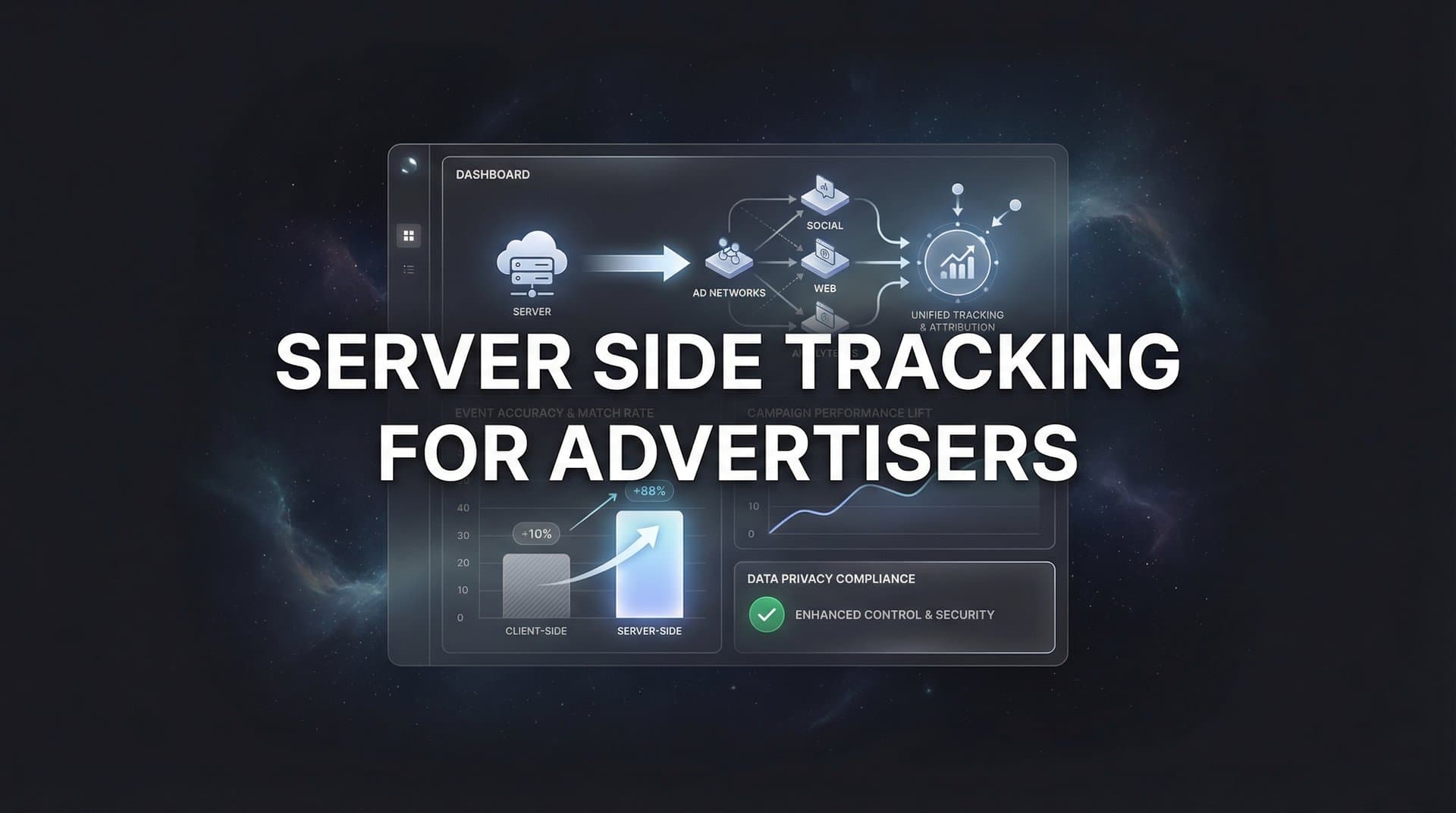
Server side tracking takes a fundamentally different approach to the data flow problem. Instead of relying on a user's browser to report conversion events, your server sends that information directly to ad platforms through their APIs. The user's browser never enters the equation, which means privacy restrictions and ad blockers can't interfere.
Here's the technical journey your data takes. When someone visits your website, you still collect first-party data through your own tracking, but this happens on your domain using your own cookies, which browsers don't block. When a conversion happens, your website sends that event to your server. Your server then packages up the conversion data and sends it directly to ad platforms like Meta, Google, and TikTok through their conversion APIs.
The contrast with client-side tracking is stark. In the old model, the data path looked like this: user clicks ad → lands on your site → browser pixel fires → pixel reports back to ad platform. Each step in that chain could fail. Ad blockers could prevent the pixel from loading. Cookie restrictions could prevent the pixel from identifying the user. Privacy updates could block the pixel from reporting back. For a deeper dive into these differences, explore server side vs client side tracking explained.
With server side tracking, the path is direct and reliable: user clicks ad → lands on your site → converts → your server reports conversion to ad platform. The user's browser isn't involved in the reporting step, so there's nothing for ad blockers or privacy features to interfere with. Your server has a direct line to the ad platform's API, and that connection works every single time.
The technical components that make this possible are straightforward but require careful implementation. First-party data collection happens through your own tracking system, capturing user actions on your website using cookies set on your domain. These first-party cookies persist much longer than third-party ones and aren't affected by the same restrictions.
Your server needs endpoints configured to receive conversion events from your website. When someone completes a purchase, fills out a lead form, or takes any action you want to track, your site sends that data to your server. This happens behind the scenes, invisible to the user and unaffected by their browser settings.
The server then communicates with ad platforms through their conversion APIs. Meta offers the Conversions API, commonly called CAPI. Google provides Enhanced Conversions, which supplements regular conversion tracking with hashed customer data sent from your server. TikTok has its Events API. Each platform has its own technical requirements, but the principle is the same: you're sending conversion data directly through a server-to-server connection. Learn more about conversion tracking API for advertisers to understand these integrations.
The data you send includes everything needed for attribution: which user converted, what they purchased, the conversion value, and critically, the click ID that ties the conversion back to a specific ad. These click IDs get passed through URL parameters when someone clicks your ad, stored in your system, and then sent back to the platform when the conversion happens. This creates an unbreakable chain of attribution that browser restrictions can't touch.
The Performance Benefits of Better Data
When you feed complete conversion data back to ad platforms, something powerful happens with their machine learning algorithms. These systems are designed to identify patterns in who converts and who doesn't, then find more people who match those patterns. But they can only learn from the data they receive. Give them incomplete data, and they optimize based on a distorted view of reality.
Think about Meta's algorithm trying to optimize your campaign. It shows your ad to 10,000 people. With browser-based tracking, it might only see 30 of the 50 actual conversions due to iOS limitations and ad blockers. The algorithm looks at those 30 conversions, identifies what those users have in common, and finds more people like them. But it's missing crucial information about 20 other converters who had different characteristics.
Server side tracking changes this equation completely. Now the algorithm sees all 50 conversions. It has a complete picture of your customer profile. It can identify patterns it was missing before. Maybe some of your best customers are iOS users that browser tracking couldn't see. Maybe they're using ad blockers. The algorithm can now find more people like your actual best customers instead of optimizing based on the subset it could track. This is why server side tracking is more accurate than traditional methods.
This improvement compounds over time. Better data leads to better targeting, which leads to more conversions from the right people, which gives the algorithm even better data to learn from. Advertisers who implement server side tracking consistently report that their campaigns become more efficient over the following weeks as the platforms' algorithms retrain on complete data.
The attribution benefits extend beyond just platform optimization. You're capturing conversions that browser tracking misses entirely. Someone clicks your ad on their iPhone, browses your site, then returns three days later on their laptop to make a purchase. Browser-based tracking likely lost that connection. Server side tracking maintains it through first-party data and server-side matching, correctly attributing the sale to your original ad.
This accuracy transforms your internal decision-making. Your ROAS calculations finally reflect reality. That campaign showing a 2x ROAS might actually be delivering 3.5x when you account for conversions browser tracking missed. You can confidently scale it. That other campaign reporting 4x ROAS might only be 2.5x when you remove duplicate conversions and properly attribute cross-device journeys. You can adjust before wasting more budget.
Budget allocation becomes data-driven instead of guesswork. When you know which campaigns truly drive revenue, you can shift spend toward winners and away from losers. You can test new channels and creative approaches with confidence because you'll actually see the results. Effective ad performance tracking across platforms becomes possible when your data is complete.
The competitive advantage here is real and growing. While your competitors struggle with broken attribution and make decisions based on incomplete data, you're operating with clarity. You know what's working. You can scale what works. You're not leaving money on the table because you couldn't see conversions happening. In a landscape where most advertisers are flying blind, having accurate data is like turning the lights on.
Implementation Paths: Build vs. Buy
You have two main approaches to implementing server side tracking: build it yourself with your development team, or use an attribution platform that handles the technical complexity for you. Each path has distinct tradeoffs in time, resources, and capabilities.
Building server side tracking in-house gives you complete control over the implementation. Your developers set up the server infrastructure to receive conversion events from your website, configure endpoints for each ad platform's API, handle data formatting and validation, and maintain the integrations over time. This approach makes sense for companies with strong technical teams and specific requirements that off-the-shelf solutions can't meet. Review the server side tracking setup challenges before committing to this path.
The technical requirements are substantial. You need developers who understand API integrations and can navigate each platform's documentation. Meta's Conversions API has specific requirements for data formatting, deduplication, and event matching. Google's Enhanced Conversions requires hashing customer data according to their specifications. TikTok's Events API has its own setup process. Each integration takes time to implement correctly.
Ongoing maintenance is the hidden cost of DIY implementation. Ad platforms update their APIs regularly. Requirements change. New features get released. Your team needs to monitor these updates and adjust your implementation accordingly. When something breaks, you're responsible for diagnosing and fixing it. For companies with dedicated engineering resources, this is manageable. For lean marketing teams, it can become a burden.
Attribution platforms take a different approach by handling the technical implementation for you. They provide a single integration point that connects to multiple ad platforms simultaneously. You send your conversion data to the platform once, and it distributes that data to Meta, Google, TikTok, and other channels automatically, formatted correctly for each platform's requirements. Explore the best server side tracking platforms to find the right fit for your needs.
The key advantage is speed to implementation. Instead of spending weeks or months building custom integrations for each ad platform, you can be up and running in days. The platform handles API updates automatically, so you're not constantly maintaining integrations. When Meta releases a new CAPI feature, the platform implements it for all customers at once.
Data enrichment is where attribution platforms add significant value beyond basic server side tracking. They don't just pass conversion data to ad platforms—they connect that data with your CRM, payment processor, and other tools to create a complete view of the customer journey. When someone converts, the platform can send enriched data back to ad platforms: not just "this person purchased" but "this person purchased for $500, is now a qualified lead, and matches your ideal customer profile."
Multi-platform support becomes critical as your advertising strategy grows. Running campaigns on Meta, Google, TikTok, LinkedIn, and Pinterest? Building and maintaining five separate server side integrations is a full-time job. An attribution platform handles all of them through a single implementation, and adding new platforms as you expand is typically just a few clicks.
The decision between building and buying often comes down to your specific situation. If you have a dedicated engineering team, highly custom requirements, and the resources to maintain integrations long-term, building might make sense. If you want to move quickly, need multi-platform support, and prefer to focus your team on marketing strategy rather than API maintenance, a platform solution is typically the faster path to results.
Connecting Conversion Data Across the Full Funnel
Server side tracking's real power emerges when you connect conversion data across the entire customer journey, from initial ad click all the way through to closed revenue. This full-funnel visibility transforms how you understand campaign performance and optimize for actual business outcomes.
Traditional browser tracking stops at the website conversion. Someone fills out a lead form, and the ad platform counts it as a conversion. But what happened next? Did they show up for the sales call? Did they become a qualified opportunity? Did they actually buy? Browser-based tracking has no visibility into these downstream events because they happen in your CRM, not on your website.
Server side tracking bridges this gap by connecting ad data with CRM events. When someone clicks your ad, that click ID gets stored in your system. When they fill out a form, you capture that as a lead and associate it with the original ad. When your sales team marks them as qualified, that event can be sent back to the ad platform. When they close as a customer weeks later, that revenue gets attributed back to the original campaign. This capability is especially valuable for attribution tracking for lead generation businesses.
This changes everything about campaign optimization. Instead of optimizing for leads, you can optimize for qualified leads or closed customers. Meta's algorithm can learn what a customer looks like, not just what a lead looks like. The difference in quality is substantial. A campaign generating 100 leads might produce 5 customers. Another campaign generating 50 leads might produce 15 customers. Browser tracking would tell you the first campaign is better because it has more conversions. Full-funnel tracking reveals the second campaign is actually three times more valuable.
The timeline matters especially for B2B and high-consideration purchases. Someone might click your ad today, download a whitepaper, attend a webinar next week, request a demo the following month, and close as a customer six weeks after that initial click. Browser-based attribution windows typically max out at 7-28 days. Server side tracking can attribute that customer back to the original ad even months later because you're controlling the attribution logic on your server.
Enriched conversion data dramatically improves lookalike audiences and retargeting effectiveness. When you send Meta or Google data about which leads actually became customers, their algorithms can build audiences of people who look like your best customers, not just people who look like anyone who filled out a form. The targeting precision improvement is measurable in campaign performance.
Retargeting becomes smarter when you can segment based on actual behavior. Someone who clicked your ad, visited your pricing page, but didn't convert is different from someone who downloaded three resources and attended a webinar. Server side tracking lets you pass these behavioral signals back to ad platforms, enabling sophisticated retargeting that matches message to intent.
The customer journey insights you gain are invaluable for strategy. You can see which ad platforms generate customers who stick around versus those who churn quickly. You can identify which campaigns drive high-value customers versus bargain hunters. You can analyze the path from first touch to closed revenue and optimize each stage. This level of visibility simply isn't possible when your attribution ends at the website conversion.
Making the Move to Server Side Tracking
The case for server side tracking is clear: capture conversions browser tracking misses, feed better data to ad platform algorithms, and make decisions based on accurate attribution instead of incomplete guesswork. The advertisers winning in today's privacy-focused landscape have already made this transition. The question isn't whether to implement server side tracking, but when.
Your first step is evaluating your current attribution accuracy. Compare what your ad platforms report against actual revenue in your CRM or payment processor. If you're seeing a significant gap, especially for iOS traffic, you're losing attribution that server side tracking would capture. Calculate how much revenue you're currently unable to attribute to specific campaigns. That's the opportunity cost of staying with browser-based tracking.
Next, assess your technical resources and timeline requirements. If you need to be up and running quickly across multiple ad platforms, an attribution platform that handles server side tracking automatically will get you there faster than building custom integrations. If you have specific requirements and dedicated engineering resources, building in-house gives you complete control over the implementation. Our server side tracking implementation guide can help you plan your approach.
The competitive advantage of accurate attribution compounds over time. Every week you operate with complete conversion data, your ad platform algorithms are learning and improving based on reality. Your competitors relying on broken browser tracking are optimizing based on distorted data. The performance gap widens with each campaign iteration. Early movers gain an edge that becomes harder to close as their data advantage accumulates.
Implementation doesn't require pausing your campaigns or disrupting your current setup. Server side tracking runs alongside existing browser-based tracking initially, giving you time to validate the data and build confidence in the new system. Once you confirm it's capturing conversions accurately, you can rely on it as your primary attribution source.
The marketing landscape will only become more privacy-focused. Browser restrictions will tighten further. Third-party cookies are disappearing entirely. Advertisers who wait to implement server side tracking will find themselves further behind as the gap between browser capabilities and server-side accuracy widens. Taking action now positions you ahead of the curve instead of scrambling to catch up later.
Ready to elevate your marketing game with precision and confidence? Discover how Cometly's AI-driven recommendations can transform your ad strategy. Get your free demo today and start capturing every touchpoint to maximize your conversions.
The Path Forward for Serious Advertisers
Server side tracking has crossed the line from competitive advantage to operational necessity. The days when browser-based pixels provided adequate attribution are over, and they're not coming back. Privacy regulations will continue tightening. Browser restrictions will expand. The gap between what traditional tracking can see and what actually happens will only grow wider.
Advertisers operating without server side tracking are making critical business decisions based on fundamentally incomplete data. They're scaling campaigns that might not be as profitable as reported. They're pausing campaigns that could be secretly driving revenue. They're feeding ad platform algorithms distorted information that prevents effective optimization. Every day this continues, they fall further behind competitors who've already made the transition.
The good news is that server side tracking is no longer a complex technical challenge requiring months of development work. Modern attribution platforms have made implementation accessible to any advertiser willing to prioritize data accuracy. The barrier isn't technical capability anymore, it's simply the decision to stop accepting broken attribution as normal.
Your next campaign deserves to be optimized on complete data. Your budget allocation decisions deserve to be based on reality. Your scaling strategy deserves the confidence that comes from knowing which ads actually drive revenue. Server side tracking delivers all of this, and the time to implement it is now, before the attribution gap costs you another month of missed opportunities and suboptimal decisions.


