Apple's App Tracking Transparency framework changed the rules of paid advertising overnight. When iOS 14.5 rolled out in April 2021 and gave users the ability to opt out of cross-app tracking, ad platforms lost visibility into a significant portion of conversion activity. Subsequent iOS versions have continued tightening the screws, with Mail Privacy Protection, Safari's Intelligent Tracking Prevention enhancements, and Link Tracking Protection stripping parameters from URLs before they ever reach your analytics.
The result for marketers is a familiar and frustrating set of symptoms: campaigns that appear to be underperforming when they are actually driving sales, cost-per-acquisition numbers that look inflated because conversions are missing from the count, and ad platform algorithms that are flying partially blind because they cannot see the full picture of what is converting.
Here is the core problem. When an iOS user opts out of tracking and then clicks your ad and buys your product, that conversion often goes unrecorded by your pixel. The ad platform does not know the campaign worked. The algorithm does not get the signal it needs to optimize. And you end up making budget decisions based on incomplete data, which means you are likely underfunding campaigns that are working and overfunding ones that are not.
This is not a minor data quality issue. It is a revenue problem that compounds over time as algorithms optimize toward worse and worse signals.
The good news is that accurate conversion tracking after iOS updates is absolutely achievable. It requires moving beyond the traditional pixel-and-cookie approach and building a more resilient tracking architecture. In this guide, you will walk through six concrete steps to rebuild and future-proof your conversion tracking setup.
You will learn how to audit your current setup for iOS-related gaps, implement server-side tracking that bypasses browser restrictions, configure your ad platforms correctly for the post-ATT landscape, connect your CRM data to close the attribution loop, validate that your data is accurate, and use that clean data to optimize campaigns with confidence. Whether you manage ads for your own brand or run campaigns for clients, these steps will help you regain the visibility you need to scale.
Step 1: Audit Your Current Tracking Setup for iOS Data Gaps
Before you can fix a tracking problem, you need to understand exactly where and how badly it is affecting your data. Many marketers skip this step and jump straight to implementing new tools, only to discover later that they still have gaps because they did not know what they were solving for.
Start with Meta Events Manager. Look at your conversion events and check whether they are labeled as "observed" or "modeled." Observed conversions are those Meta actually saw. Modeled conversions are Meta's statistical estimates filling in for events it could not track due to iOS restrictions. A high proportion of modeled conversions is a clear signal that your pixel is missing a significant share of real activity. Understanding tracking pixel limitations after privacy updates helps explain why this gap exists in the first place.
Next, go to Google Ads and review your conversion action statuses. Look for any actions flagged as having data quality issues or showing unusual drops in conversion volume that do not align with changes in your actual business results. Google's enhanced conversions and consent mode status indicators will tell you whether your setup is capturing the full picture.
Now do the most important check: compare what your ad platforms are reporting against what your actual backend records show. Pull 30 days of conversion data from each ad platform and line it up against your CRM, payment processor, or order management system for the same period. Create a simple spreadsheet with columns for each platform's reported conversions and a final column for your verified backend count.
What to look for in your gap analysis: Campaigns showing zero conversions despite confirmed sales in your backend. Total platform-reported conversions significantly exceeding your actual transaction count, which suggests attribution overlap. Revenue attributed to ad campaigns that does not match the revenue recorded in your payment processor.
Common symptoms of iOS tracking breakdown include underreported conversions, misattributed revenue where the wrong campaign gets credit, and large discrepancies between what platforms claim and what your backend confirms. If you are seeing these issues specifically on Meta, our guide on why Facebook Ads stopped working after iOS 14 dives deeper into the root causes.
Quantifying this gap is not just a diagnostic exercise. It tells you how much revenue intelligence you are currently missing and gives you a baseline to measure improvement against once you implement the steps that follow.
Success indicator: You have a clear, documented picture of which platforms and campaigns are most affected and how large the reporting gap is in real numbers.
Step 2: Implement Server-Side Tracking to Bypass Browser Restrictions
The reason client-side pixels struggle in a post-iOS world comes down to how they work. A browser-based pixel fires JavaScript on the user's device, drops a cookie, and sends event data back to the ad platform. Every step of that process depends on the browser cooperating. When ATT is opted out or Safari's Intelligent Tracking Prevention is active, that chain breaks.
Server-side tracking works differently. Instead of firing from the user's browser, conversion events are sent from your server directly to the ad platform's server. The browser's restrictions become irrelevant because the data never travels through it. If you want a thorough comparison, our article on server-side tracking vs pixel tracking breaks down the technical differences in detail.
Here is what the practical implementation looks like across major platforms.
Meta Conversions API (CAPI): Meta's server-side solution sends conversion events from your server to Meta's API endpoint. It can run alongside your pixel (recommended for redundancy) or replace it entirely. When running both, deduplication is critical so the same event does not get counted twice. You handle deduplication by passing a consistent event ID that Meta uses to match and deduplicate server and browser events.
Google Enhanced Conversions: Google's approach to server-side matching uses hashed first-party data like email addresses to match conversions back to Google users, even when cookies are unavailable. Setting this up in Google Ads or through Google Tag Manager adds a meaningful layer of conversion recovery for opted-out users.
TikTok Events API: TikTok offers a similar server-side API for sending conversion events directly, which is particularly important as TikTok's user base skews toward younger demographics on iOS devices. Learn more about how to track TikTok ad conversions accurately with server-side methods.
Managing separate server-side integrations for each platform is technically demanding. Each API has its own format, authentication method, and parameter requirements. This is where a platform like Cometly simplifies the process considerably. Cometly handles server-side tracking across all major ad channels from a single integration, so you are not maintaining separate codebases for Meta, Google, and TikTok simultaneously.
Key setup considerations regardless of platform: Always pass the highest-quality matching parameters available. For Meta CAPI, this means including hashed email, phone number, and the fbclid click ID when present. Higher-quality parameters improve your event match quality score, which directly affects how accurately conversions are attributed. For Google enhanced conversions, the hashed email is the primary matching signal.
Do not skip deduplication setup. Running pixel and server-side events simultaneously without deduplication will inflate your conversion counts and mislead your algorithms just as badly as missing data does.
Success indicator: Server-side events are firing and appearing in each platform's event manager, your event match quality scores are rated as good or excellent, and you are not seeing double-counted conversions in your reporting.
Step 3: Configure Ad Platform Settings for the Post-ATT Landscape
Server-side tracking gets the data to the platforms, but the platforms also need to be configured correctly to use that data effectively. Each major platform introduced specific settings in response to ATT, and not configuring them properly means you are leaving performance on the table even with good data flowing in.
Meta-specific configuration: Start by verifying your domain in Meta Business Manager. This is a prerequisite for Aggregated Event Measurement (AEM), Meta's framework for receiving conversion data from iOS users who have opted out of tracking. Without domain verification, Meta cannot apply modeled data to your campaigns. If your Meta campaigns are struggling, understanding why Facebook Ads are not tracking conversions can help you pinpoint configuration issues.
Once your domain is verified, configure your AEM event priority list. Meta limits you to eight conversion events per domain under AEM, ranked in priority order. This means you need to think carefully about which events matter most to your business model. For most advertisers, a purchase or lead event should sit at the top. Place your highest-value, most actionable events in the top positions, because Meta will prioritize reporting and optimization for those events when multiple events fire in the same session.
Confirm that your Conversions API is properly connected and that deduplication between CAPI and your pixel is active. Meta's Events Manager shows a "Deduplicated" status for events it successfully matched between both sources.
Google Ads configuration: Enable enhanced conversions at the account level and verify that the correct user data fields are being passed. Set up Consent Mode v2 if you have European traffic, as this is now required for Google's modeling to fill in gaps from users who decline consent. Review your conversion action attribution windows and counting methods to ensure they reflect how your business actually works. A subscription business, for example, should count every conversion rather than just the first one per user.
TikTok and other platforms: Follow the same pattern: complete domain verification, connect the Events API, and confirm that your conversion events are properly configured with the right parameters. Most platforms now have a data connections dashboard that shows the health of your server-side integration.
Why event prioritization matters beyond just AEM: every ad platform algorithm optimizes toward the conversion signals you give it. If you have misconfigured events or low-priority events set as your optimization target, you are training the algorithm on the wrong behavior. Our article on why conversion tracking numbers are wrong covers additional configuration pitfalls to watch for.
Success indicator: All platforms show verified domains, properly configured conversion events with healthy connection statuses, and no warnings about missing or misconfigured settings in their respective event or conversion dashboards.
Step 4: Connect Your CRM and Revenue Data to Close the Attribution Loop
Even with server-side tracking firing correctly and platforms properly configured, you still have a fundamental problem: each ad platform reports from its own perspective and attributes credit according to its own rules. Meta claims conversions. Google claims conversions. Sometimes they are claiming credit for the same customer. Without a neutral source of truth, you cannot know which platform actually drove the result.
This is why connecting your CRM and payment data to your attribution system is not optional. It is the step that transforms ad platform reporting from a collection of competing claims into a coherent picture of what actually happened.
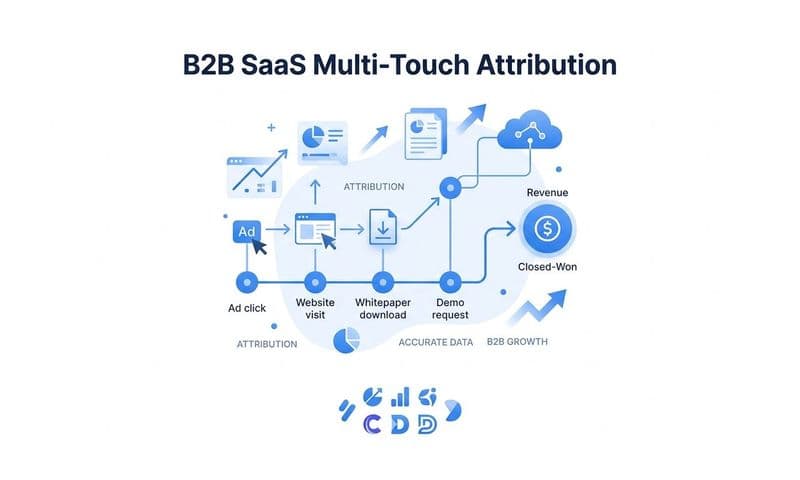
The goal is to build a unified customer journey that connects the ad click to every downstream event: website visit, form submission, CRM lead creation, pipeline stage progression, and ultimately the closed deal or completed purchase. When you can trace that full path, you can attribute revenue to the specific campaign, ad set, and creative that started the journey. If you are struggling with this visibility, our guide on how to track the full customer journey addresses common obstacles.
How to approach the CRM connection: If you use HubSpot, Salesforce, or a similar CRM, the key is capturing the original ad click data (UTM parameters and platform click IDs like fbclid or gclid) at the point of first contact and persisting that data through the lead's lifecycle in your CRM. When a deal closes, you can then match that revenue back to the originating ad click. Following UTM parameter tracking best practices is essential for ensuring this data is captured cleanly from the start.
For e-commerce businesses, connecting your payment processor or order management system works similarly. The order record should carry the attribution data from the session where the purchase decision was made.
Cometly is built specifically for this kind of end-to-end attribution. It connects your ad platforms, website, and CRM to track the entire customer journey and attribute revenue accurately, even when iOS restrictions prevent pixel-based tracking from capturing the full path. By pulling data from multiple sources and resolving it into a single customer timeline, Cometly gives you attribution that reflects reality rather than each platform's self-reported version of it.
This step also enables you to identify which campaigns drive high-quality leads versus which ones drive volume without revenue. That distinction is invisible when you are looking only at ad platform data.
Success indicator: You can open a specific conversion record and trace it back to the exact ad click that started the journey, with no gaps between the ad interaction and the revenue event in your CRM or payment system.
Step 5: Validate Your Data Accuracy Before Making Budget Decisions
You have implemented server-side tracking, configured your platforms, and connected your CRM. Now comes the step that most marketers skip because it is unglamorous: actually verifying that everything is working correctly before you trust the data enough to act on it.
Making budget decisions based on a tracking setup you have not validated is only marginally better than making them based on broken tracking. The validation step is what earns your data the right to drive real decisions. Understanding why ad tracking is inaccurate in the first place helps you know exactly what to test for.
Run a reconciliation test: Pull 7 to 14 days of conversion data from your new tracking setup and compare it against your backend records for the same period. Your CRM closed deals, payment processor transactions, or order management records are your ground truth. The total conversion count from your tracking system should be reasonably close to your backend count, with any variance explainable by attribution window differences or delayed reporting.
What to look for during validation: If your tracking system is reporting significantly more conversions than your backend records, you likely have a deduplication issue where the same event is being counted by both your pixel and your server-side integration. Go back to your deduplication settings and verify that event IDs are being passed consistently.
If your tracking system is reporting significantly fewer conversions than your backend, you have a data capture problem. Check that your server-side endpoint connections are active, that the correct parameters are being passed, and that there are no authentication errors in your API logs.
Some variance is normal and expected. Ad platforms report with attribution windows, meaning a click from two weeks ago might get credited for a conversion today. Understanding the reporting delay for each platform (typically 24 to 72 hours for most, and longer for view-through attribution windows) will help you interpret discrepancies accurately.
Test with iOS opt-out devices: This is the most direct way to confirm your server-side setup is doing its job. Have team members use iOS devices with ATT opted out to complete test conversions on your site. If those conversions appear in your tracking system, your server-side setup is capturing events that your pixel would have missed entirely.
Test across different browsers and devices to confirm consistent behavior. An event that fires correctly on desktop Chrome but fails on mobile Safari is a partial fix, not a complete one. For a broader look at this challenge, our article on tracking conversions across devices covers cross-device validation strategies.
Success indicator: Your tracking system reports conversion numbers that closely align with your backend data, and test conversions from opted-out iOS devices are successfully captured and attributed.
Step 6: Use Your Clean Data to Optimize Campaigns and Scale
All of the previous steps have been building toward this one. Clean, accurate conversion data is only valuable if you actually use it to make better decisions. Here is how to put your rebuilt tracking setup to work.
Feed better signals back to ad platform algorithms: Ad platforms like Meta and Google use the conversion data you send them to optimize ad delivery. When those platforms receive complete, accurate signals, their algorithms can identify the users most likely to convert and show your ads to more of them. Incomplete data produces worse targeting, higher costs, and diminishing returns over time.
Cometly's Conversion Sync addresses this directly by sending enriched conversion events back to Meta, Google, and other platforms. These are not just raw pixel fires but conversion events enhanced with first-party data that the platforms cannot collect on their own due to iOS restrictions. Better input data means better algorithmic output, which translates to improved targeting and lower cost per acquisition over time.
Compare attribution models to understand the full customer journey: Now that you have data you can trust, use it to look beyond last-touch attribution. A first-touch model will show you which campaigns are best at creating initial awareness. A multi-touch model will show you which touchpoints contribute throughout the journey. Comparing these models often reveals that certain campaigns that look weak on a last-touch basis are actually doing critical work earlier in the funnel. Our guide on tracking conversions across multiple touchpoints explores how to implement multi-touch analysis effectively.
This insight directly informs budget allocation. If a particular campaign consistently appears in the customer journey but rarely gets last-touch credit, cutting it based on last-touch data alone would be a costly mistake.
Use AI-powered recommendations to identify what is working: With clean data flowing through your attribution system, AI can surface patterns that would take hours to find manually. Which ad creatives are driving the highest-quality leads? Which campaigns have the best return on ad spend when measured against actual revenue rather than platform-reported conversions? Which audiences are converting at rates that justify scaling spend?
Cometly's AI-powered recommendations are built to answer exactly these questions across every ad channel, giving you a prioritized view of where to reallocate budget for maximum impact.
Success indicator: You are making budget decisions based on verified conversion data rather than platform estimates, your cost per acquisition trends downward as algorithms receive better signals, and you have a clear view of which campaigns drive revenue versus which ones only drive reported conversions.
Putting It All Together: Your Post-iOS Tracking Checklist
Tracking conversions after iOS updates is not about finding a single workaround. It requires a layered approach that addresses the problem at every level: capturing events that pixels miss, configuring platforms to work within Apple's framework, verifying attribution against real revenue data, and feeding clean signals back to ad algorithms so they can optimize effectively.
Here is your quick-reference checklist for everything covered in this guide.
1. Audit your current setup and quantify the data gap between platform reports and your backend records to understand the full scope of the problem.
2. Implement server-side tracking across all major ad platforms, with proper deduplication and high-quality matching parameters to maximize event match quality.
3. Configure each platform's post-ATT settings, including domain verification, AEM event prioritization on Meta, and enhanced conversions on Google.
4. Connect your CRM and payment data to build end-to-end attribution that traces revenue back to the specific ad click that started the customer journey.
5. Validate accuracy with reconciliation tests against backend records and confirm that opted-out iOS device conversions are being captured through your server-side setup.
6. Feed clean conversion data back to ad platforms and use multi-touch attribution and AI-powered recommendations to optimize budget allocation based on verified results.
Each step builds on the one before it. Skipping any of them leaves a gap that will continue to cost you visibility and, ultimately, revenue.
If you want to simplify this entire process, Cometly brings all of these pieces together in one platform. It provides accurate attribution, server-side tracking across all major ad channels, CRM connectivity for end-to-end revenue attribution, and AI-powered optimization recommendations that help you scale what is actually working. Get your free demo today and start making budget decisions based on data you can trust.