
Most marketers know their top-of-funnel metrics and their bottom-line revenue, but the middle remains a mystery. You can see ad clicks. You can see closed deals. But connecting those dots across multiple channels, touchpoints, and time delays? That is where most tracking systems fall apart.
End-to-end funnel tracking solves this by capturing every interaction from the first ad impression to the final purchase, giving you a complete picture of what actually drives revenue. In this guide, you will learn exactly how to set up comprehensive funnel tracking that connects your ad platforms, website, and CRM into one unified view.
By the end, you will have a system that shows you which campaigns generate real customers, not just clicks.
Step 1: Map Your Customer Journey and Define Key Funnel Stages
Before you can track your funnel, you need to understand what your funnel actually looks like. This means documenting every stage a prospect moves through from first awareness to final purchase.
Start by identifying all channels where prospects first discover your brand. These might include paid ads on Meta, Google, or LinkedIn, organic search traffic, referrals from partners, direct traffic, or social media. List every possible entry point. You cannot track what you have not defined.
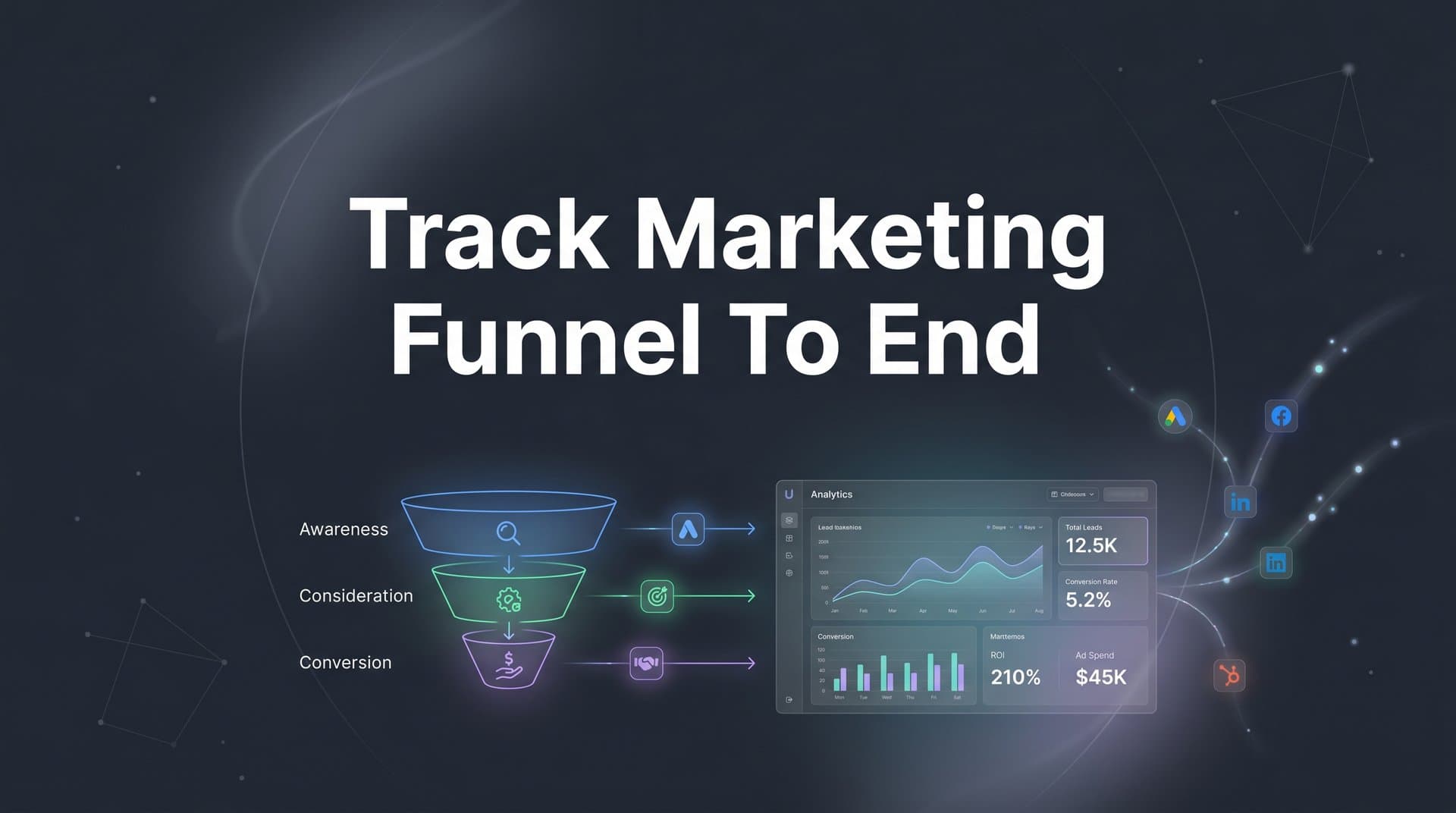
Next, define your specific funnel stages. While every business is different, most marketing funnels include these core stages: awareness (first touchpoint), consideration (engaging with content or products), intent (showing buying signals like demo requests or pricing page visits), purchase (becoming a customer), and post-purchase (retention and expansion).
The critical work happens when you document every touchpoint between first click and conversion. This includes email opens, specific page visits, content downloads, webinar registrations, demo requests, sales calls, proposal views, and contract signatures. Write them all down.
Think of it like mapping a road trip. You need to know not just the starting point and destination, but every turn, rest stop, and landmark along the way. Your prospects take a journey through your marketing ecosystem, and you need to mark every step. A comprehensive customer journey tracking approach ensures no touchpoint goes unrecorded.
Create a visual funnel map showing how these stages connect. Use a simple flowchart or spreadsheet. Show where handoffs occur between marketing and sales. For example, when does a marketing qualified lead become a sales qualified lead? Who owns that transition? What triggers it?
This mapping exercise reveals gaps you did not know existed. You might discover that prospects who attend webinars skip straight to purchase without a demo. Or that certain ad channels generate awareness but rarely lead to consideration. These insights shape your tracking strategy.
Document the typical number of touchpoints before conversion. If your average customer interacts with your brand seven times before buying, you need tracking that captures all seven touchpoints, not just the first and last.
Your funnel map becomes your tracking blueprint. Every stage you define here will need corresponding tracking events in the steps that follow.
Step 2: Set Up Tracking Infrastructure Across All Touchpoints
With your funnel mapped, you need the technical infrastructure to capture data at every stage. This means implementing tracking across your ad platforms, website, and conversion points.
Start with UTM parameters. These are the tags you add to URLs to track campaign source, medium, and content. Create a consistent UTM naming convention and use it everywhere. Every paid ad, email link, and social post should have UTM parameters that identify its source.
Your UTM structure might look like this: utm_source identifies the platform (google, meta, linkedin), utm_medium identifies the channel type (cpc, email, social), utm_campaign identifies the specific campaign name, and utm_content identifies the ad variation. Document your naming convention and share it with everyone who creates campaigns.
Next, install tracking pixels from your ad platforms on your website. Meta Pixel, Google Ads conversion tracking, LinkedIn Insight Tag, and TikTok Pixel all need to be installed on key pages. These pixels fire when visitors land on your site, allowing ad platforms to track conversions back to specific ads.
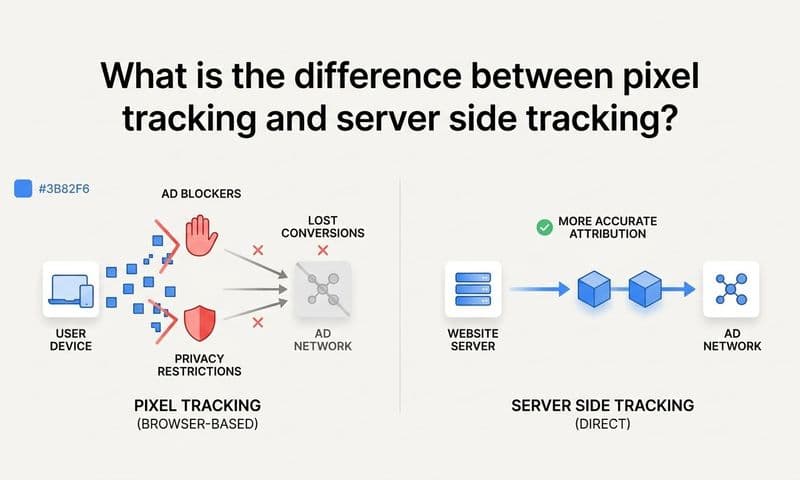
But here is where traditional tracking breaks down. Browser privacy changes and iOS App Tracking Transparency updates have severely limited client-side pixel effectiveness. Safari blocks third-party cookies by default. iOS requires user permission to track across apps and websites. Many visitors decline tracking.
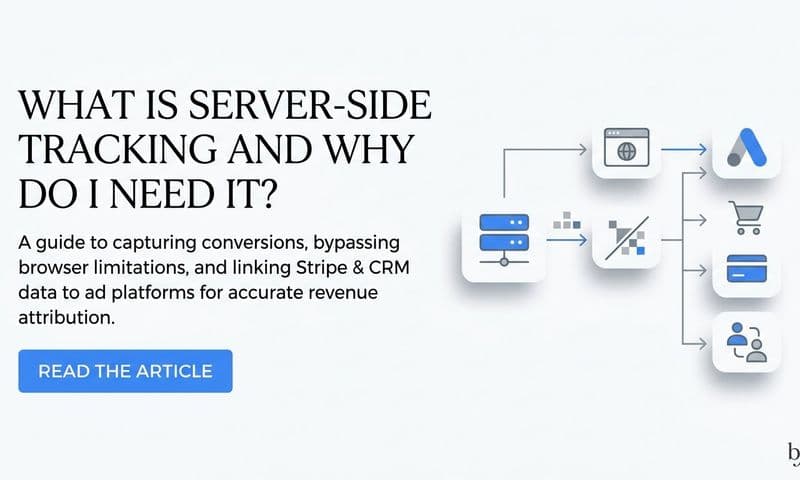
This is why server-side tracking has become essential. Server-side tracking sends conversion data directly from your server to ad platforms, bypassing browser restrictions. It captures data that client-side pixels miss, giving you more complete attribution. Understanding cookieless tracking future trends helps you stay ahead of these privacy changes.
Configure server-side tracking to send conversion events from your backend systems directly to Meta, Google, and other platforms. This requires technical implementation but dramatically improves data accuracy. Many marketers see 20-30% more tracked conversions after implementing server-side tracking.
Set up event tracking for micro-conversions that indicate funnel progression. Track scroll depth to see if visitors engage with your content. Track video views to measure content consumption. Track form field interactions to identify where prospects abandon forms. Track button clicks on key CTAs.
Each of these micro-conversions represents a funnel stage. Someone who scrolls 75% down your pricing page shows higher intent than someone who bounces after 10 seconds. Tracking these behaviors gives you granular funnel visibility.
Use a tag management system like Google Tag Manager to organize your tracking. This lets you deploy and update tracking tags without changing website code every time. It also makes it easier to ensure consistent tracking across your entire site.
Test your tracking infrastructure before moving forward. Fire test events and verify they appear in your ad platforms and analytics tools. Broken tracking at this stage means broken data later.
Step 3: Connect Your CRM and Sales Data to Marketing Touchpoints
Your marketing tracking captures the top and middle of the funnel. Your CRM holds the bottom of the funnel and revenue data. Connecting these systems is where end-to-end tracking actually happens.
Integrate your CRM with your tracking system. Whether you use HubSpot, Salesforce, Pipedrive, or another platform, you need bidirectional data flow. Marketing data should flow into the CRM, and sales outcomes should flow back to your marketing analytics.
When a lead enters your CRM, it should carry all the marketing source data with it. Which ad did they first click? What content did they engage with? How many touchpoints occurred before they converted? This data needs to live in the CRM record.
Pass UTM parameters into hidden form fields on your lead capture forms. When someone fills out a demo request form, capture their UTM source, medium, campaign, and content values. These values get stored in your CRM alongside their contact information.
Track offline conversions that happen outside your website. Phone calls, in-person meetings, and manual deal entries all represent funnel progression. Configure your CRM to capture these events and link them back to the original marketing source. This is especially critical for B2B marketing campaigns where sales cycles involve multiple offline touchpoints.
For example, if a prospect first clicked a Google ad, then attended a webinar, then requested a demo, then had three sales calls before closing, your tracking should connect all those dots. The closed deal should attribute back to that original Google ad, while also crediting the webinar and demo as influential touchpoints.
Ensure revenue data flows back to your marketing attribution system. When deals close in your CRM, that revenue should appear in your marketing dashboards attributed to the campaigns that generated the customer. This is how you move from tracking clicks to tracking actual ROI.
Set up automated syncs between your CRM and ad platforms. Many platforms now support conversion sync, where closed deals automatically send conversion events back to Meta, Google, and LinkedIn. This feeds better data to ad platform algorithms, improving targeting and optimization.
Think of it this way: ad platforms optimize toward the conversions you report. If you only report form fills, they optimize for form fills. If you report actual closed deals with revenue values, they optimize for revenue. Syncing CRM data back to ad platforms makes their AI work for your actual business goals.
Validate your CRM integration by running test conversions. Create a test lead, move it through your sales process, and verify that all the marketing touchpoint data stays connected throughout the journey.
Step 4: Implement Multi-Touch Attribution to Credit the Full Journey
Now that you are capturing data across the entire funnel, you need a system to credit each touchpoint appropriately. This is where attribution models come in.
Attribution models determine how credit for a conversion gets distributed across multiple touchpoints. First-touch attribution gives 100% credit to the first interaction. Last-touch attribution gives 100% credit to the final interaction before conversion. Both are incomplete pictures.
Linear attribution distributes credit equally across all touchpoints. If a customer had five interactions before purchasing, each gets 20% credit. This approach values every touchpoint but does not account for the fact that some interactions matter more than others.
Time-decay attribution gives more credit to recent touchpoints. The logic is that interactions closer to conversion had more influence on the final decision. This works well for longer sales cycles where early touchpoints might have less impact.
Data-driven attribution uses machine learning to analyze your actual conversion patterns and assign credit based on which touchpoints statistically correlate with conversions. This is the most sophisticated approach but requires significant data volume to work accurately. Learn more about how to track marketing attribution effectively across your campaigns.
Choose the right model based on your sales cycle and typical customer journey. If you have a short sales cycle with few touchpoints, last-touch might be sufficient. If you have a complex B2B sales cycle with many touchpoints over months, time-decay or data-driven attribution provides better insights.
Configure your attribution platform to track cross-device and cross-session journeys. Customers do not convert in a single session on a single device. They might see your ad on mobile, research on desktop, and purchase on tablet days later. Your attribution needs to connect these fragmented journeys into one customer story.
This requires identity resolution, which matches anonymous website visitors to known contacts in your database. When someone fills out a form, you can retroactively connect their previous anonymous sessions to their contact record, revealing their full journey.
Verify that your attribution is capturing both assisted conversions and direct conversions. Assisted conversions are touchpoints that contributed to a conversion but were not the final interaction. These often get overlooked in simple tracking setups but represent critical funnel stages.
For example, someone might click your Google ad, leave without converting, then return three days later via organic search and purchase. Google deserves credit for the initial awareness, even though organic search gets the last-touch credit. Multi-touch attribution captures both contributions.
Review your attribution data regularly and adjust your model if needed. If you notice certain channels consistently get credit but never generate actual revenue, your model might be over-crediting early-stage touchpoints.
Step 5: Build Dashboards That Show the Complete Funnel Picture
Data without visualization is just numbers. You need dashboards that transform your tracking data into actionable insights about funnel performance.
Create a unified dashboard showing metrics at each funnel stage from impression to revenue. Your dashboard should display impression volume, click-through rates, landing page conversion rates, lead qualification rates, sales opportunity creation rates, and closed deal rates all in one view.
This gives you a complete funnel snapshot. You can instantly see where volume drops off. If you have strong impression and click volume but weak landing page conversions, you know the problem is not traffic quality but landing page effectiveness. Explore strategies for optimizing marketing funnel with analytics to improve conversion rates at each stage.
Set up conversion rate tracking between stages. Calculate the percentage of visitors who move from awareness to consideration, consideration to intent, and intent to purchase. These conversion rates reveal your funnel efficiency.
Track these rates by channel. Your Google ads might convert at 3% while your Meta ads convert at 1.5%. This does not necessarily mean Google is better. The 1.5% Meta converters might have higher average order values or better retention rates. You need the full picture.
Display time-to-conversion metrics to understand your actual sales cycle by channel. Some channels generate quick wins. Others play the long game. LinkedIn might take 60 days average time-to-conversion while Google converts in 7 days. Both can be valuable, but they require different optimization strategies.
Include cohort analysis to see how campaigns perform over time. A campaign might look weak in the first week but generate strong revenue in weeks two through eight. Without cohort tracking, you might pause a campaign just as it starts delivering results.
Organize your dashboard by the questions you need to answer. Which channels drive the most revenue? What is my cost per acquisition by source? Which campaigns have the best return on ad spend? How many touchpoints does the average customer need? Your dashboard should answer these questions at a glance. The right marketing analytics tools make building these dashboards straightforward.
Use visual indicators to highlight performance. Color-code metrics that exceed targets in green and underperforming metrics in red. This makes it easy to spot problems and opportunities quickly.
Build separate dashboards for different stakeholders. Your executive team needs high-level revenue and ROI metrics. Your media buyers need granular campaign performance data. Your sales team needs lead quality and source information. Tailor dashboards to each audience.
Set up automated reporting that delivers dashboard snapshots on a regular schedule. Weekly funnel performance reports keep everyone aligned on what is working and what needs attention.
Step 6: Validate Your Tracking and Fix Data Gaps
Even perfectly configured tracking systems develop gaps over time. Website updates break pixels. UTM conventions drift. CRM integrations fail silently. Regular validation catches these issues before they corrupt your data.
Run test conversions through your entire funnel to verify data flows correctly. Create a test email address, click a tracked ad, fill out a form, and watch that data move through your systems. Does it appear in your analytics? Does it create a CRM record with correct source attribution? Does it fire conversion pixels back to ad platforms?
Compare your tracking data against CRM records and payment processor data to spot discrepancies. If your payment processor shows 100 purchases but your analytics only shows 85, you have a tracking gap. Investigate where the missing conversions are falling through.
Common discrepancies come from ad blockers, JavaScript errors, form submission tracking failures, and duplicate conversion counting. Work through each possibility systematically. Understanding ad spend tracking issues helps you identify and resolve these problems faster.
Identify and address common gaps. Missing UTM parameters are the most frequent culprit. Someone shares a link without UTMs, or a redirect strips them off. Implement UTM parameter preservation in your redirects and create fallback source attribution rules for traffic without UTMs.
Broken pixel fires happen when website updates remove tracking code or JavaScript errors prevent pixels from loading. Use browser developer tools to verify pixels fire on key pages. Check your tag management system for errors.
Untracked referral sources create attribution blind spots. If partners send you traffic without tracking parameters, you cannot attribute conversions back to them. Provide partners with tagged links and monitor referral traffic for untagged sources.
Set up automated alerts for tracking anomalies. If your daily conversion volume suddenly drops 40%, you need to know immediately. Configure alerts for significant drops in tracked events, sudden spikes in direct traffic (often indicates missing UTMs), and CRM sync failures.
Schedule monthly tracking audits. Review your UTM naming conventions for consistency. Check that all active campaigns have proper tracking. Verify CRM integrations are syncing correctly. Test conversion flows on key landing pages. The right marketing campaign tracking software simplifies these audits significantly.
Document your tracking setup completely. When team members change or agencies transition, institutional knowledge about tracking configuration often disappears. Maintain documentation showing what is tracked, how it is tracked, and where data flows.
Your tracking system is the foundation of your marketing decisions. Invest time in keeping it accurate and complete.
Your Complete Funnel Tracking System Is Ready
With end-to-end funnel tracking in place, you now have visibility into what was previously a black box. You can see exactly which ads generate qualified leads, which touchpoints influence purchase decisions, and where prospects fall out of your funnel.
Use this data to double down on high-performing campaigns, fix leaky stages, and make confident budget decisions based on actual revenue impact. The guesswork is gone. You have real data showing what drives real results.
Your tracking checklist: funnel stages mapped, tracking infrastructure deployed, CRM connected, attribution configured, dashboards built, and data validated. Start with Step 1 today and work through each phase systematically. Within a few weeks, you will have the complete picture you need to scale your marketing with confidence.
The difference between marketers who scale successfully and those who waste budget comes down to visibility. When you can track every touchpoint from first impression to final purchase, you know exactly where to invest. You can identify which channels deserve more budget and which need optimization. You can spot funnel leaks before they drain your conversion rates.
Ready to elevate your marketing game with precision and confidence? Discover how Cometly's AI-driven recommendations can transform your ad strategy. Get your free demo today and start capturing every touchpoint to maximize your conversions.