
You're running paid ads across Google, Meta, and LinkedIn. The clicks look promising, the leads are coming in, but then what? Your sales team closes deals over the phone, in meetings, or through lengthy email chains. The problem is your ad platforms have no idea these conversions happened.
They only see the click, not the closed deal worth thousands of dollars.
This disconnect means your ad algorithms optimize for the wrong signals. Your budget flows to campaigns that generate clicks but not revenue. And you can't prove which channels actually drive business results.
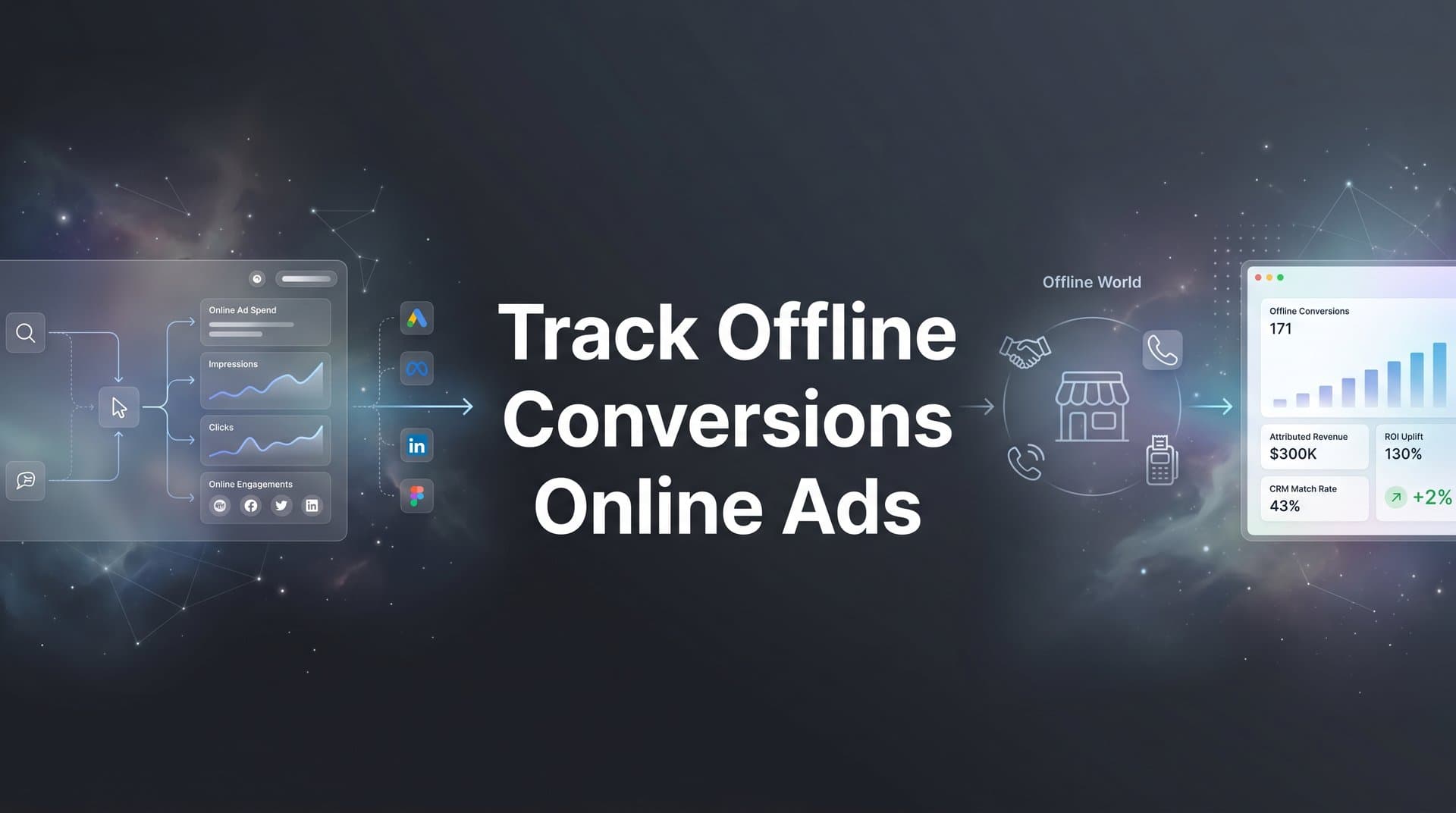
Tracking offline conversions bridges this gap by feeding real sales data back to your ad platforms. When done right, it transforms how your campaigns perform because the algorithms finally learn what a valuable customer looks like.
This guide walks you through the complete process of connecting your offline sales to your online advertising, from initial setup to optimization. You'll learn exactly how to close the loop between ad clicks and closed deals so your campaigns can finally optimize for what matters: revenue.
Step 1: Map Your Customer Journey from Click to Close
Before you can track offline conversions, you need to understand exactly what happens between the moment someone clicks your ad and the moment they become a paying customer. This journey is rarely linear, and the gaps in your tracking are costing you optimization opportunities.
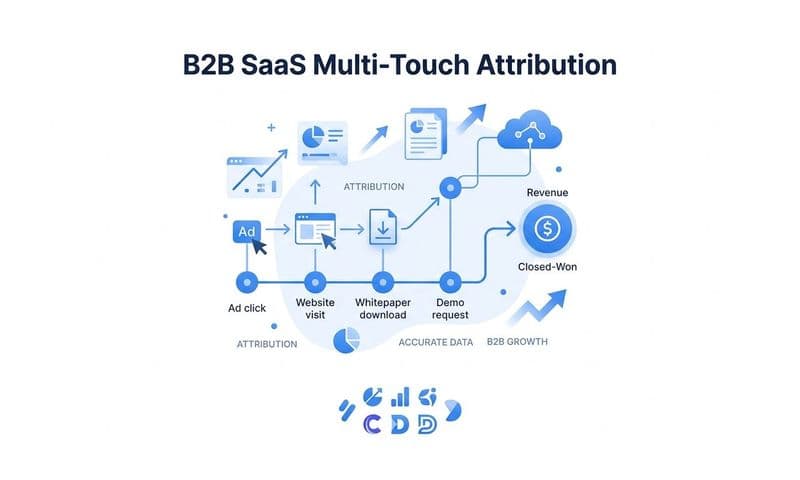
Start by documenting every touchpoint in your sales process. A typical B2B journey might look like this: ad click leads to landing page, visitor fills out demo request form, sales team schedules discovery call, prospect attends demo, proposal gets sent, follow-up emails exchange over two weeks, contract signed and deal closed.
Each of these stages represents a potential conversion event you could track back to your ad platforms.
Next, map these touchpoints to your CRM stages. If you're using Salesforce, HubSpot, or Pipedrive, you already have pipeline stages defined. The key is identifying which stages correspond to meaningful conversion value. A lead entering your CRM might be worth tracking, but a qualified opportunity or closed deal provides far more valuable signal to your ad algorithms.
Focus on revenue-generating actions rather than vanity metrics. Many marketers make the mistake of only tracking form fills or demo requests. While these matter, they don't tell ad platforms which clicks actually generate revenue. If your average deal takes 30 days to close and is worth $5,000, that closed deal event is exponentially more valuable for optimization than the initial form fill. Understanding how to track offline conversions properly starts with this mindset shift.
Create a visual diagram showing your current data flow. Draw boxes for each system (ad platforms, website, CRM, attribution tools) and arrows showing where data currently moves between them. This exercise reveals tracking gaps immediately. You might discover that click IDs aren't being captured on phone call conversions, or that deals closed through email aren't being tagged with their original traffic source.
Document your sales cycle length too. If deals typically close within 7 days, your attribution window settings will differ dramatically from a business where sales cycles run 90 days. Understanding this timeline helps you configure conversion windows that actually match your business reality.
The goal of this mapping exercise is clarity. You can't fix what you can't see. Once you have a complete picture of your customer journey and the current state of your tracking, you'll know exactly where to focus your implementation efforts.
Step 2: Set Up Click Tracking Parameters Across All Ad Platforms
Your ad platforms need a way to connect the click that happened today with the sale that closes three weeks from now. Click tracking parameters are the thread that ties everything together, and setting them up correctly is non-negotiable.
Start with platform-specific click IDs. Google Ads uses GCLID (Google Click Identifier), Meta uses FBCLID (Facebook Click Identifier), and LinkedIn has its own tracking parameters. These unique identifiers get automatically appended to your URLs when someone clicks your ad, creating a fingerprint for that specific click.
Configure auto-tagging in each platform. In Google Ads, enable auto-tagging in your account settings so GCLID parameters are automatically added to your destination URLs. For Meta, FBCLID is added by default. Don't disable these features thinking they clutter your URLs. They're essential for offline conversion tracking for online ads.
Layer UTM parameters on top of click IDs for additional context. While click IDs handle the technical matching, UTM parameters (utm_source, utm_medium, utm_campaign) provide human-readable campaign information in your analytics. A complete tracking URL might look like: yoursite.com/demo?utm_source=google&utm_medium=cpc&utm_campaign=enterprise_trial&gclid=abc123xyz.
Ensure your website captures and stores these parameters with every lead. This is where many implementations break down. Your landing pages need JavaScript or server-side code that grabs these URL parameters and either stores them in cookies or passes them directly to hidden form fields. If someone clicks your ad, browses three pages, then fills out a form, you need those original click parameters attached to that form submission.
Pass click IDs through to your CRM with every lead capture. When someone submits a form, the GCLID and FBCLID values should flow into custom fields in your CRM record. Create dedicated fields in your CRM specifically for these identifiers. In HubSpot, you might create properties called "Google Click ID" and "Facebook Click ID." In Salesforce, add custom fields to your Lead and Contact objects.
Test the entire flow before launching campaigns. Click one of your own ads, fill out a form, and verify that the click ID appears in your CRM record. This simple test catches 90% of implementation errors before they cost you data. Check that parameters persist across redirects, through thank-you pages, and into your CRM exactly as expected.
Common failure points to watch for: parameters getting stripped during redirects, form builders that don't support hidden fields, CRM integrations that don't map click ID fields correctly, and single-page applications that lose parameters during navigation. Address these issues now, because once you lose a click ID, you've lost the ability to attribute that conversion back to the original ad.
Step 3: Connect Your CRM to Your Attribution System
Your CRM holds the offline conversion data your ad platforms desperately need. The challenge is getting that data out of your CRM and into a format ad platforms can actually use. This is where an attribution platform becomes essential.
Choose an attribution platform that integrates with both your CRM and your ad platforms. Tools like Cometly specialize in this exact use case, connecting systems that don't naturally talk to each other. The platform acts as a bridge, pulling conversion data from your CRM and pushing it to Google Ads, Meta, and other channels in the format they expect.
Connect your CRM using native integrations or API access. Most modern attribution platforms offer one-click integrations with popular CRMs like HubSpot, Salesforce, and Pipedrive. These integrations authenticate with your CRM and gain permission to read contact, deal, and opportunity data in real time. If your CRM isn't supported natively, API-based connections provide more flexibility but require technical setup.
Map your CRM fields to conversion events carefully. This mapping tells your attribution system which CRM changes should trigger conversion tracking. For example, you might map "Deal Stage changed to Closed Won" as a purchase conversion event, "Opportunity Created" as a qualified lead event, and "Deal Amount" as the conversion value field.
Different CRM stages carry different optimization value. A contact entering your system might be worth tracking, but a deal moving to "Proposal Sent" or "Closed Won" provides much stronger signal to ad algorithms. Focus your initial mapping on revenue-stage events rather than trying to track every minor CRM update. Learning how to track sales leads effectively is crucial for this process.
Set up automatic data sync so offline events flow back continuously. Real-time or near-real-time sync ensures your ad platforms receive conversion data quickly enough to use it for optimization. Most attribution platforms sync every few minutes to every few hours, depending on your plan and CRM API limits.
Configure conversion value tracking to pass actual deal amounts. Instead of treating every conversion as equal, send the real revenue number from your CRM. If someone closes a $10,000 deal, that's what should be reported to your ad platforms. This allows algorithms to optimize for high-value conversions rather than just conversion volume.
Verify data accuracy by comparing sample records between systems. Pick a few recent deals from your CRM, note their details (contact email, deal amount, close date), and verify that matching conversion events appear in your attribution platform. Check that values are correct, timestamps align, and the right click IDs are associated with each conversion.
Watch for common integration issues: CRM API rate limits causing sync delays, field mapping errors where wrong data ends up in wrong fields, duplicate records creating inflated conversion counts, and missing data where certain CRM fields aren't being captured. Most attribution platforms provide sync logs and error reports that help you troubleshoot these problems quickly.
Step 4: Configure Offline Conversion Events in Each Ad Platform
Now that your CRM data is flowing into your attribution system, you need to configure your ad platforms to receive and use this offline conversion data. Each platform handles this differently, but the principles remain consistent.
In Google Ads, create offline conversion actions through the conversions section of your account. Navigate to Tools & Settings, then Conversions, and click the plus button to create a new conversion action. Choose "Import" as your source, then select "Other data sources or CRMs" if you're using an attribution platform, or "Track conversions from clicks" if you're uploading conversion data manually.
Name your conversion action descriptively. Instead of generic names like "Offline Conversion," use specific names like "CRM - Closed Won Deal" or "Sales - Qualified Opportunity." This clarity helps when you're optimizing campaigns later and need to understand which conversion events are driving performance. If you're experiencing issues, review common Google Ads conversion tracking issues to troubleshoot.
Set conversion values based on your business model. If every closed deal is worth roughly the same amount, you can use a static value. But if deal sizes vary significantly (which they do for most B2B businesses), configure your attribution platform to send the actual deal amount from your CRM as the conversion value. This gives Google's algorithms much better signal about which clicks lead to high-value customers.
Choose attribution windows that match your sales cycle length. Google Ads lets you set click-through and view-through conversion windows. If your average sales cycle is 30 days, set your click-through window to at least 45 days to capture most conversions. For longer enterprise sales cycles, you might extend this to 90 days. The default 30-day window is too short for many B2B businesses.
For Meta Ads, the process is similar but lives in Events Manager. Create a custom conversion or use the Conversions API to send offline events. Meta's Conversions API (CAPI) is particularly important because it bypasses browser-based tracking entirely, sending conversion data server-to-server for much higher match rates. Learn how to properly sync conversions to Facebook Ads for best results.
Configure event matching parameters carefully. Ad platforms match your offline conversions back to ad clicks using identifiers like email addresses, phone numbers, and click IDs. The more matching parameters you provide, the higher your match rate. Send email, phone, FBCLID or GCLID, and any other available identifiers with each conversion event.
Enable enhanced conversions in Google Ads for better matching. Enhanced conversions allow you to send hashed customer data (email, phone, address) along with conversion events, which Google uses to improve attribution accuracy when click IDs alone aren't sufficient. This is especially valuable for conversions that happen over the phone or in person where click IDs might not persist.
Set up conversion goals in your campaign optimization settings. Once your offline conversion events are configured and receiving data, update your campaigns to optimize for these events instead of just clicks or form fills. In Google Ads, change your Target CPA or Maximize Conversions settings to focus on your new offline conversion actions. In Meta, adjust your campaign optimization goal to prioritize your CAPI events.
Give algorithms time to learn. When you first start sending offline conversion data, ad platforms need time to accumulate enough conversions to optimize effectively. Google recommends at least 30 conversions in a 30-day period before automated bidding strategies can perform well. During this learning phase, performance may fluctuate as algorithms adjust.
Step 5: Implement Server-Side Tracking for Reliable Data Transfer
Browser-based tracking is dying. Cookie restrictions, iOS privacy changes, and ad blockers mean that relying solely on pixels and browser tracking leaves massive gaps in your conversion data. Server-side tracking solves this by moving data collection from the browser to your server.
The fundamental problem with browser tracking is that it depends on third-party cookies and client-side JavaScript that users can easily block or that browsers increasingly restrict. When someone clicks your Meta ad on their iPhone, browses your site, then converts three days later, Safari's Intelligent Tracking Prevention might have already deleted the tracking cookie. Your conversion happens, but Meta never knows about it. Understanding the App Tracking Transparency impact on ads helps explain why this matters.
Server-side tracking bypasses these restrictions entirely. Instead of relying on browser cookies to track conversions, your server sends conversion data directly to ad platforms through their APIs. When someone converts, your CRM or attribution platform makes a server-to-server API call to Meta, Google, or other platforms, passing along the conversion details and matching parameters.
Meta's Conversions API (CAPI) is the most mature server-side solution. It allows you to send web events, offline events, and CRM conversions directly from your server to Meta. Match rates with CAPI typically run 20 to 40 percentage points higher than pixel-only tracking because you're not dependent on browser cookies that may be blocked or deleted.
Google Ads offers server-side conversion tracking through their API as well. While Google's ecosystem is slightly more resilient to tracking restrictions than Meta's (since Google owns Chrome), server-side tracking still improves match rates and data accuracy. This is especially important for offline conversions where there's no browser session at all. Learn more about what is server-side tracking for ads to understand the technical foundations.
Implement deduplication to prevent counting conversions twice. When you run both browser-based pixels and server-side tracking simultaneously (which is recommended for maximum coverage), you need logic to prevent the same conversion from being counted twice. Most attribution platforms handle this automatically by sending an event ID with each conversion that ad platforms use to deduplicate.
Send rich event data with each conversion. Server-side tracking lets you include more context than browser pixels can capture. Send customer lifetime value, deal stage, product category, and other CRM data along with the basic conversion event. This additional context helps ad algorithms understand not just that a conversion happened, but what kind of customer converted.
Use your attribution platform to handle the technical implementation. Tools like Cometly manage server-side connections to multiple ad platforms, handling the API authentication, data formatting, and deduplication logic automatically. This approach is far more reliable than building custom integrations yourself, especially when you're tracking across multiple ad channels.
Monitor your match rates to gauge effectiveness. Ad platforms report what percentage of the conversion events you send can be successfully matched back to ad clicks. Match rates below 50% indicate problems with your identifier quality or implementation. Rates above 70% are good, and above 85% is excellent. If your match rates are low, you may need to send additional matching parameters like email addresses or phone numbers.
Step 6: Validate Your Setup and Troubleshoot Common Issues
Your tracking setup looks complete on paper, but the only way to know it actually works is to test it end-to-end. Validation catches configuration errors before they cost you weeks of lost data.
Run test conversions through your entire system. Create a test contact in your CRM, attach a real GCLID or FBCLID to it (you can grab one from your own ad click), and move that contact through your pipeline stages. When you mark the deal as closed won, verify that a conversion event appears in your ad platform within the expected sync timeframe.
Check conversion reporting in each ad platform. In Google Ads, navigate to your conversions report and filter by your offline conversion action. You should see test conversions appearing with the correct values and timestamps. In Meta Events Manager, check your CAPI events to confirm they're being received and matched successfully.
Verify match rates and investigate discrepancies. If you're sending 100 conversion events but only 60 are matching, you're losing 40% of your attribution data. Common causes include missing or incorrect email addresses, click IDs that weren't captured properly, or formatting issues with phone numbers or other identifiers. When offline conversions not tracked becomes an issue, systematic debugging is essential.
Resolve the most common implementation problems systematically. Missing click IDs usually mean your website form capture isn't working correctly. Go back to Step 2 and verify that parameters are being stored and passed to your CRM. CRM sync delays often indicate API rate limiting or integration errors. Check your attribution platform's sync logs for error messages.
Watch for incorrect event mapping where the wrong CRM triggers are firing conversion events. If every new contact creation triggers a purchase event instead of just closed deals, your conversion data will be wildly inflated. Review your field mapping carefully and test each trigger condition.
Establish ongoing monitoring to catch issues quickly. Set up alerts in your attribution platform for sync failures, dramatic drops in conversion volume, or match rate degradation. Many problems announce themselves through sudden changes in data flow. The faster you catch them, the less data you lose.
Create a validation checklist you can run monthly: test conversion flows end-to-end, review match rates across all platforms, verify conversion values are passing correctly, check that new CRM fields are mapped properly, and confirm sync frequency meets your needs. Regular validation prevents small issues from becoming major data gaps.
Step 7: Optimize Campaigns Using Your Offline Conversion Data
You've built the infrastructure. Now comes the payoff: using your offline conversion data to dramatically improve campaign performance. This is where tracking effort turns into revenue results.
Switch your campaign optimization targets from leads to revenue events. If you've been optimizing for form fills or demo requests, change your goal to closed deals or qualified opportunities. This single change redirects your ad spend toward clicks that actually convert to revenue, not just clicks that generate activity.
In Google Ads, update your Target CPA or Maximize Conversions campaigns to focus on your offline conversion actions instead of form submissions. The algorithms will start learning which audiences, keywords, and ad creatives correlate with actual sales. Performance may dip briefly during the learning period, but give it two to three weeks to stabilize. For best practices, explore how to optimize Google Ads conversion tracking effectively.
Analyze which campaigns drive real sales versus superficial engagement. Your attribution platform should show you which campaigns, ad sets, and individual ads generate closed deals. You'll often discover that your highest-converting campaigns aren't the ones with the most clicks or even the most leads. Some campaigns attract tire kickers, while others attract serious buyers.
Adjust budgets based on true ROAS calculated from offline conversion values. If Campaign A generates 50 leads at $100 each but only 2 close at $5,000, that's $10,000 in revenue from $5,000 in spend (2x ROAS). If Campaign B generates 20 leads at $200 each but 5 close at $8,000, that's $40,000 in revenue from $4,000 in spend (10x ROAS). Campaign B deserves more budget despite fewer leads and higher cost per lead.
Let ad platform algorithms learn from higher-quality signals over time. The more offline conversion data your campaigns accumulate, the better algorithms become at predicting which clicks will turn into revenue. Google and Meta's machine learning models improve continuously as they see more examples of what a valuable customer looks like.
Segment your analysis by conversion value tiers. Not all customers are created equal. Identify which campaigns attract high-value deals versus small deals, and consider creating separate campaigns optimized for each segment. You might run one campaign optimized for any closed deal, and another specifically targeting enterprise opportunities worth over $25,000.
Use your attribution platform's AI recommendations to identify optimization opportunities you might miss manually. Cometly's AI analyzes your complete conversion data across all channels and surfaces insights about which campaigns, audiences, or creatives are driving disproportionate revenue. These recommendations help you scale what's working and cut what's not.
Test creative and messaging based on closed deal data, not just click data. The ad that gets the most clicks might not be the ad that attracts your best customers. Review which ad creatives and messaging angles correlate with high-value conversions, then create more variations in that direction.
Putting It All Together
Tracking offline conversions transforms your advertising from guesswork into a data-driven revenue engine. By connecting your CRM data back to your ad platforms, you give algorithms the signals they need to find more customers like your best buyers.
Before you launch, run through this final checklist. Your customer journey should be mapped with all conversion points clearly identified. Click tracking parameters must be capturing and passing to your CRM correctly on every lead. Your CRM needs to be integrated with your attribution platform and syncing conversion data in real time.
Verify that offline conversion events are configured properly in all your ad platforms. Confirm that server-side tracking is implemented for reliable data transfer that bypasses browser restrictions. Run test conversions through the entire system and validate they appear correctly end-to-end.
Finally, ensure your campaigns are optimized for revenue events instead of surface metrics like clicks or form fills. This shift in optimization focus is what actually drives better results.
Start with your highest-volume campaign and expand from there. You don't need to implement offline conversion tracking across every campaign simultaneously. Pick your biggest spend campaign, get it working perfectly, learn from any issues that arise, then roll out the same approach to other campaigns.
The sooner you close the loop between online ads and offline sales, the faster your campaigns will improve. Every day without offline conversion tracking is a day your algorithms optimize for the wrong signals and your budget flows to campaigns that generate activity instead of revenue.
Ready to elevate your marketing game with precision and confidence? Discover how Cometly's AI-driven recommendations can transform your ad strategy. Get your free demo today and start capturing every touchpoint to maximize your conversions.