
You've just spent $50,000 on a multi-channel ad campaign. Your dashboard shows 200 conversions. Success, right? But here's the problem: you have no idea which ads actually drove those sales. Was it the Facebook ad they clicked three weeks ago? The Google search that brought them back? The LinkedIn post they engaged with last Tuesday? Without proper tracking across your multi step sales funnel, you're flying blind—and likely wasting thousands on channels that don't convert while starving the ones that do.
Modern buyers don't convert on first touch. They research, compare, hesitate, and return multiple times before pulling the trigger. They switch between devices, bounce between channels, and interact with your brand in ways that traditional tracking completely misses. The result? Marketing teams make budget decisions based on incomplete data, crediting the wrong touchpoints and fundamentally misunderstanding what drives revenue.
This guide shows you how to track multi step sales funnels the right way—connecting every touchpoint from first ad click to final purchase so you can see which channels actually contribute to conversions. We'll break down the tracking infrastructure you need, the attribution models that make sense of complex journeys, and how to turn funnel data into smarter budget decisions that scale revenue with confidence.
Why Traditional Tracking Falls Short for Complex Buyer Journeys
Think about the last significant purchase you made. Did you see one ad and immediately buy? Probably not. You likely clicked an ad, browsed the website, left to think about it, searched for reviews, came back through Google, signed up for an email list, and eventually converted days or weeks later. That's the reality of modern buyer behavior—and traditional tracking captures almost none of it.
Here's the core problem: most marketers still rely on single-touch attribution models that credit only one interaction in the entire customer journey. Last-click attribution gives all the credit to the final touchpoint before conversion, completely ignoring the Facebook ad that introduced your brand or the content piece that built trust. First-click attribution does the opposite, crediting the initial interaction while dismissing all the nurturing that actually closed the deal.
The data tells a stark story. Modern customers interact with an average of six to eight touchpoints across different channels before making a purchase decision. When you only track one of those interactions, you're missing 85% of the story. That incomplete picture leads to catastrophically bad decisions. Understanding multiple touchpoint tracking complexity is essential for modern marketers.
Consider what happens when your tracking shows that Google Search drives most conversions using last-click attribution. You naturally increase your Google Ads budget and cut spending on Facebook and LinkedIn. But what you don't see is that those Facebook ads are introducing new customers who later search for your brand name and convert. By cutting Facebook, you're actually killing the top of your funnel—and you won't realize it until your Google conversions mysteriously drop weeks later.
The real cost of tracking gaps extends far beyond wasted ad spend. You're underfunding channels that nurture conversions, over-investing in channels that simply capture demand you've already created, and making strategic decisions based on fundamentally flawed data. Your competitors who track the complete journey? They're scaling the right channels, feeding better data to ad platform algorithms, and capturing market share while you're guessing.
This gets even more complicated in a privacy-first world. iOS updates have broken traditional pixel-based tracking. Third-party cookies are disappearing. Browser restrictions block cross-domain tracking. The old methods of following customers across their journey simply don't work anymore—which means the gap between what's actually happening and what your analytics show is wider than ever.
The solution isn't better guessing. It's building a tracking infrastructure that captures every touchpoint across your multi step sales funnel and connects them to actual revenue outcomes. Let's break down what that looks like.
The Anatomy of a Multi Step Sales Funnel Worth Tracking
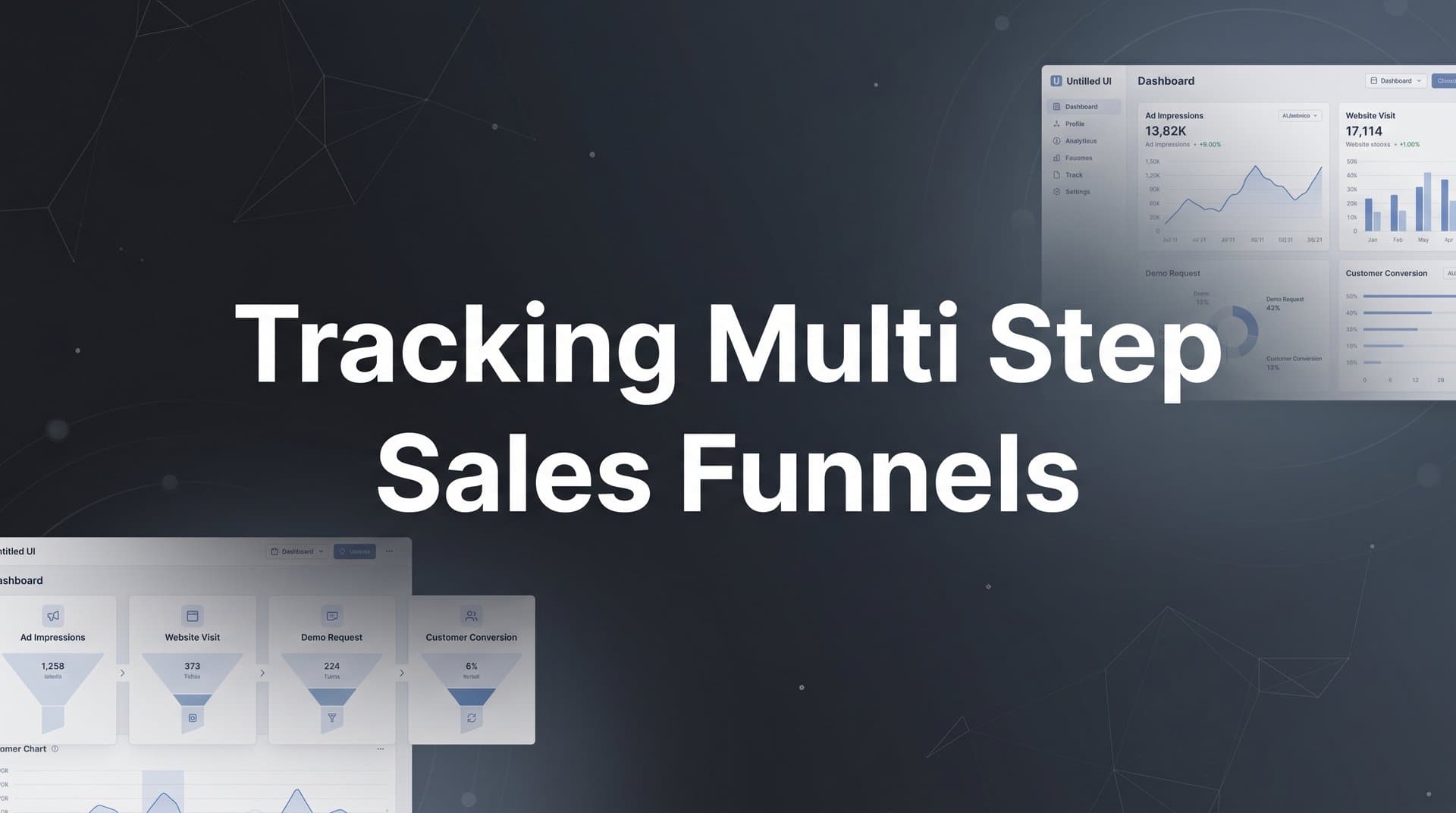
Not all funnel interactions matter equally, and tracking everything without strategy creates more noise than insight. The key is understanding which stages drive progression and which events signal genuine buying intent. Let's map out a funnel structure that actually reflects how customers move toward conversion.
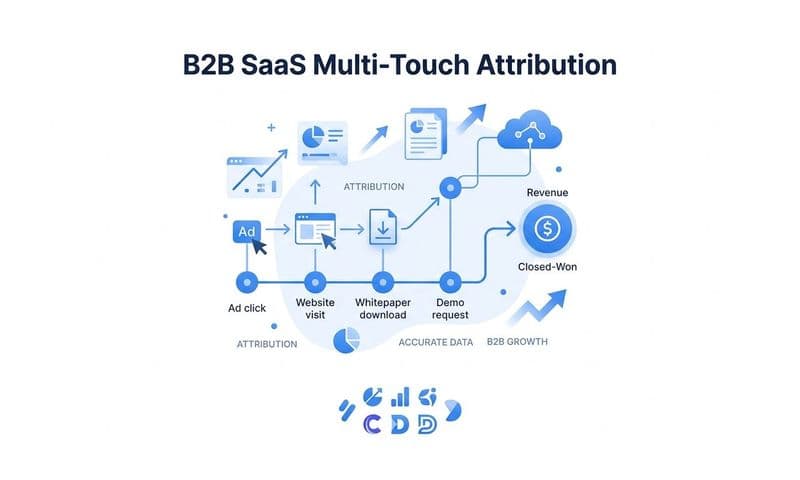
Your funnel breaks into three distinct stages, each with specific touchpoints worth tracking. At the awareness stage, you're capturing initial exposure—the moments when potential customers first encounter your brand. These include ad impressions and clicks across paid channels, organic social media engagement, content discovery through search, and referral traffic from partner sites. The goal here isn't immediate conversion; it's getting on the customer's radar and creating enough interest to warrant a second look.
Track these awareness events: ad clicks from Meta, Google, LinkedIn, and other platforms; landing page views; blog post reads; video views; and social media profile visits. Each represents a potential customer raising their hand and saying "tell me more." Don't expect conversions here—you're building the top of your funnel and establishing the baseline for future attribution.
The consideration stage is where real buying intent emerges. Customers return to your site, dig deeper into your content, and actively evaluate whether you solve their problem. This stage typically includes multiple website sessions, content downloads like ebooks or case studies, pricing page views, comparison shopping, email list signups, and engagement with nurture campaigns. For businesses selling premium products, tracking for high ticket sales funnels requires special attention to these consideration signals.
Key consideration events to track: return visits to your website, time spent on product or service pages, resource downloads, email opens and clicks, webinar registrations, demo request forms, and calculator or assessment tool usage. These interactions signal that someone has moved beyond casual interest into active evaluation. When you track these events and connect them to earlier awareness touchpoints, you start seeing which channels introduce customers who actually engage—not just click and bounce.
The decision stage is where customers convert, but it's rarely a single moment. Track application starts and completions, shopping cart additions and abandonments, checkout initiations, payment processing, account creation, and any post-purchase actions that indicate successful onboarding. For B2B funnels, this includes sales calls scheduled, proposals sent, contracts signed, and first payment received.
Here's where it gets interesting: CRM events and offline conversions are just as critical as digital touchpoints. When a lead becomes a sales-qualified opportunity in your CRM, that's a conversion event worth tracking back to its original source. When someone calls your sales team after seeing an ad, that's a touchpoint that belongs in your funnel data. When a customer upgrades their plan three months after initial purchase, that lifetime value needs to connect back to the marketing channel that acquired them.
The mistake most marketers make is treating their funnel as purely digital. Your customer journey includes phone calls, in-person meetings, sales team interactions, customer success touchpoints, and renewal decisions. If you're only tracking website events, you're missing the most valuable conversions and systematically undervaluing the channels that drive high-quality leads.
Build your tracking infrastructure to capture all of this—from first ad impression through purchase and beyond. That complete view is what separates guessing from knowing which channels actually drive revenue.
Building Your Tracking Infrastructure: Tools and Connections
You can't track a multi step funnel with disconnected tools that don't talk to each other. Your ad platforms, website analytics, CRM, and email system all collect data, but if they're not connected, you're looking at five different versions of the truth—none of them complete. Building proper tracking infrastructure means creating a single source of truth that follows customers across every touchpoint.
Start with the foundation: connecting your ad platforms to your website. Meta Ads, Google Ads, LinkedIn Campaign Manager, and any other paid channels need to pass data through to your tracking system. This typically involves installing tracking pixels or tags that fire when users click ads and land on your site. But here's the critical part: those clicks need to persist across sessions and devices so you can connect them to conversions that happen days or weeks later. Many businesses struggle with multiple ad platforms tracking problems when trying to unify this data.
Traditional client-side tracking—JavaScript pixels that run in the browser—has become increasingly unreliable. iOS privacy features block tracking. Ad blockers strip pixels. Browser restrictions prevent cookies from working across domains. Users who click an ad on mobile and convert on desktop appear as two different people. The result is massive data loss that makes your attribution worthless.
Server-side tracking solves this by processing data on your server instead of in the user's browser. When someone clicks an ad, your server receives the click data directly from the ad platform and stores it in a way that can't be blocked or deleted. When that person converts later—even on a different device—your server can match the conversion back to the original click using first-party data like email addresses or customer IDs.
This isn't just a technical nicety; it's the difference between seeing 60% of your conversions and seeing 95% of them. Implementing first-party data tracking for ads is the only way to maintain accurate attribution across complex, multi-device customer journeys in a privacy-first world.
Next, connect your CRM to your marketing data. When a lead fills out a form, that contact needs to flow into your CRM with all the marketing touchpoint data attached. When a sales rep marks a lead as qualified, closes a deal, or logs a customer interaction, those events need to flow back to your marketing analytics. This bidirectional connection ensures that marketing can see which channels drive sales-qualified leads and closed revenue—not just form fills.
For e-commerce businesses, your shopping cart and payment processor need to send conversion data back to your tracking system and forward to your ad platforms. When someone completes a purchase, that conversion event should automatically sync to Meta and Google so their algorithms can optimize for customers who actually buy—not just people who click.
Email marketing platforms are another critical connection point. When someone clicks a link in your nurture campaign and converts, that email touchpoint deserves credit in your attribution model. Connect your email system to your tracking infrastructure so those interactions appear in the complete customer journey.
The goal is creating a unified data layer where every touchpoint—ad clicks, website visits, email engagement, CRM events, and conversions—exists in one place with clear connections between them. This is what platforms like Cometly are built for: capturing every touchpoint across your entire funnel and connecting them to revenue outcomes so you can see which channels actually drive results.
Without this infrastructure, you're not tracking a multi step funnel—you're tracking disconnected fragments that tell incomplete stories and lead to bad decisions.
Attribution Models That Make Sense of Multi Step Journeys
Once you're capturing every touchpoint, you face a new challenge: how do you assign credit when a customer interacts with eight different touchpoints before converting? Which ad gets credit for the sale? All of them? Just the first? Just the last? This is where attribution models come in—and choosing the wrong one can be just as misleading as not tracking at all.
Linear attribution takes the simplest approach: every touchpoint in the journey gets equal credit. If a customer clicked a Facebook ad, visited through Google Search, engaged with an email, and returned through a retargeting ad before converting, each touchpoint receives 25% of the credit. This model is easy to understand and acknowledges that multiple channels contribute to conversions. The downside? It treats all interactions as equally valuable, which isn't realistic. The ad that introduced your brand probably matters more than the retargeting ad that simply reminded them to come back.
Time-decay attribution gives more credit to touchpoints closer to conversion. The theory is that recent interactions have more influence on the final decision than earlier ones. If someone clicked an ad three weeks ago and then converted after clicking another ad yesterday, the recent ad gets more credit. This makes sense for short sales cycles where urgency drives decisions, but it systematically undervalues the channels that introduce customers and build initial interest.
Position-based attribution (also called U-shaped) assigns 40% of the credit to the first touchpoint, 40% to the last touchpoint, and splits the remaining 20% among all the touches in between. The logic here is that introducing the customer and closing the deal are the most critical moments. This model works well when you want to balance awareness and conversion efforts, but it still makes assumptions about which touchpoints matter most. Our attribution marketing tracking complete guide breaks down these models in greater detail.
Data-driven attribution uses machine learning to analyze thousands of customer journeys and determine which touchpoints actually influence conversions. Instead of applying a predetermined rule, it looks at patterns: customers who interact with X channel are Y% more likely to convert. It identifies which touchpoints genuinely move the needle versus which ones simply happen to be in the journey. This is the most sophisticated approach, but it requires significant data volume to work effectively.
So which model should you use? It depends on your sales cycle and funnel complexity. For e-commerce businesses with short sales cycles (customers convert within days), time-decay or position-based attribution often makes sense because recent interactions heavily influence immediate purchase decisions. For B2B companies with long sales cycles (weeks or months), linear or data-driven models better reflect the reality that multiple touchpoints over time contribute to eventual conversions.
Here's the real insight: you shouldn't pick just one model and call it truth. Compare multiple attribution models side by side to understand how credit shifts based on methodology. If a channel looks strong in last-click but weak in first-click, it's probably capturing demand rather than creating it. If a channel performs well across all models, it's genuinely driving conversions at multiple stages.
The goal of attribution isn't finding one perfect answer—it's understanding the relative contribution of each channel so you can make smarter budget decisions. When you see that LinkedIn introduces high-quality leads who take longer to convert, you don't cut that budget just because it doesn't show strong last-click numbers. You recognize its role in the funnel and optimize accordingly.
Use attribution insights to identify which touchpoints actually influence conversions, which channels work together to drive results, and where you should invest more budget to scale revenue. That's how tracking multi step sales funnels translates into competitive advantage.
Turning Funnel Data Into Smarter Budget Decisions
Tracking is pointless if it doesn't change how you allocate budget. The whole purpose of measuring multi step sales funnels is making data-driven decisions about where to invest, what to scale, and what to cut. Let's talk about how complete journey data transforms budget optimization from guesswork into science.
Start by identifying high-performing ads and campaigns across every channel using complete journey data. When you can see which specific Facebook ads introduce customers who eventually convert, you're not just optimizing for clicks—you're optimizing for revenue. Look for patterns: which ad creative, messaging, and targeting consistently appears in conversion paths? Those are your winners worth scaling. Learning tracking multiple ad campaigns accurately is the foundation for this analysis.
This analysis reveals surprising insights. You might discover that your highest-cost-per-click campaigns actually drive the most valuable customers because they attract serious buyers who convert at higher rates. Or you might find that cheap clicks from one channel never progress past the awareness stage, making them worthless despite low CPCs. Without multi-touch attribution, you'd optimize for the wrong metrics and systematically misallocate budget.
Here's where it gets powerful: enriched conversion data improves ad platform algorithms. When you send complete conversion information back to Meta and Google—not just that a conversion happened, but the customer's lifetime value, which products they bought, and their engagement level—those platforms can optimize for the outcomes you actually care about. Their AI learns to find more customers who behave like your best customers, not just more people who click.
This is what conversion sync enables. Instead of telling Facebook "this person converted," you're telling it "this person converted with a $5,000 purchase after interacting with three of our ads over two weeks." That enriched data helps the algorithm identify patterns and target similar high-value prospects. The result is better targeting, higher conversion rates, and more efficient ad spend.
Use your funnel data to make strategic budget shifts. If attribution shows that LinkedIn introduces customers who convert at 3x the rate of Facebook traffic, but you're spending 80% of your budget on Facebook, you have a clear optimization opportunity. Shift budget toward channels that drive qualified traffic, even if they're more expensive per click. The goal isn't cheap clicks—it's profitable conversions.
Look for channel synergies in your data. You might discover that customers who interact with both Facebook ads and Google Search convert at higher rates than those who only touch one channel. That insight suggests running coordinated campaigns across both platforms rather than treating them as independent efforts. Mastering tracking conversions across multiple channels reveals these powerful synergies. When you understand how channels work together, you can build integrated strategies that amplify results.
Scale winning campaigns with confidence when you know what truly drives revenue. Traditional tracking makes scaling risky because you're never sure if a campaign's success will hold at higher budgets. But when you have complete funnel data showing that a campaign consistently drives customers who progress through every stage and convert at strong rates, you can scale aggressively without fear. You're not guessing—you're following proven performance.
The competitive advantage here is massive. While your competitors optimize for vanity metrics like clicks and impressions, you're optimizing for revenue. While they waste budget on channels that don't convert, you're doubling down on what works. While they guess about which ads drive results, you know—and you're using that knowledge to capture market share.
This is why tracking multi step sales funnels matters. It's not about data for data's sake. It's about making every marketing dollar count by understanding exactly what drives revenue and scaling those efforts relentlessly.
Putting It All Together: Your Funnel Tracking Action Plan
Let's turn everything we've covered into a practical action plan you can implement immediately. Start by auditing your current tracking setup. Map out every touchpoint in your customer journey from first ad impression through conversion and beyond. Identify which events you're currently tracking and, more importantly, which ones you're missing. The gaps in your tracking are where insights disappear and bad decisions get made.
Next, connect your data sources. Set up integrations between your ad platforms, website, CRM, and email system so data flows bidirectionally. Implement server-side tracking to maintain accuracy in a privacy-first world. This is the technical foundation that makes everything else possible—skip it, and your attribution will always be incomplete.
Configure your attribution models. Set up multiple models (linear, time-decay, position-based) so you can compare how credit shifts based on methodology. If you have sufficient data volume, implement data-driven attribution to let machine learning identify which touchpoints actually influence conversions. Don't pick one model as absolute truth—use multiple perspectives to understand the complete picture.
Build your conversion sync infrastructure to send enriched data back to ad platforms. When conversions happen, pass back not just the event but the value, customer quality, and journey details that help algorithms optimize for your best customers. This feedback loop is what transforms ad platform AI from blunt instrument into precision tool.
Common pitfalls to avoid: don't track so many events that you drown in data noise. Focus on touchpoints that signal genuine progression through your funnel. Don't ignore offline conversions—phone calls, in-person meetings, and sales team interactions are often your most valuable conversions. Don't set up tracking once and forget it—your funnel evolves, and your tracking needs to evolve with it.
Review your funnel data weekly. Look for trends in which channels drive progression, which ads appear in conversion paths, and where customers drop off. Use these insights to make small, continuous optimizations rather than waiting for quarterly reviews. The faster you can turn data into action, the faster you can scale what works and cut what doesn't.
Finally, continuously refine your tracking as your funnel evolves. When you add new marketing channels, integrate them into your tracking infrastructure immediately. When you launch new products or change your sales process, update your conversion events to reflect the new reality. Tracking is never "done"—it's an ongoing process of capturing more complete data and extracting better insights.
Start Tracking What Actually Drives Revenue
Tracking multi step sales funnels isn't optional anymore—it's the baseline for competing in modern digital marketing. Customers interact with multiple touchpoints across different channels before converting, and if you're not capturing those complete journeys, you're making budget decisions based on fiction. Your competitors who track properly? They're scaling the right channels, feeding better data to ad algorithms, and capturing market share while you're flying blind.
The good news is that building proper tracking infrastructure is more accessible than ever. With server-side tracking solving privacy challenges and attribution models revealing which touchpoints drive conversions, you can finally see the complete picture of what generates revenue. The question isn't whether you should track multi step funnels—it's how fast you can implement it before your competition leaves you behind.
Stop guessing which ads work. Stop wasting budget on channels that don't convert. Stop making strategic decisions based on incomplete data. Start capturing every touchpoint, connecting them to revenue outcomes, and using those insights to scale with confidence.
Ready to elevate your marketing game with precision and confidence? Discover how Cometly's AI-driven recommendations can transform your ad strategy—Get your free demo today and start capturing every touchpoint to maximize your conversions.