Every dollar you spend on paid advertising should be traceable to a result. Yet many marketers find themselves staring at conflicting numbers across platforms, wondering which ads actually drove that sale or lead.
The gap between what ad platforms report and what actually happened in your business can mean thousands of dollars in wasted spend. You see one conversion count in Google Ads, a different number in Meta, and yet another total in your analytics dashboard. Meanwhile, your actual sales data tells a completely different story.
This guide walks you through the exact steps to set up accurate paid traffic tracking, from implementing proper URL parameters to connecting your entire customer journey. By the end, you will have a clear system that shows you precisely which campaigns, ads, and channels deserve more budget and which ones need to be cut.
Whether you are running campaigns on Google, Meta, LinkedIn, or multiple platforms simultaneously, these steps will help you build a tracking foundation you can trust. No more guessing. No more conflicting reports. Just clear, actionable data that helps you make smarter decisions with your ad spend.
Step 1: Audit Your Current Tracking Setup
Before you fix anything, you need to know exactly what is broken. Think of this like a home inspection before renovation: you cannot build a solid foundation until you understand what is crumbling underneath.
Start by pulling up every active campaign across all your platforms. Open each one and examine the destination URLs. Are UTM parameters present? Are they consistent? You will likely find a mess: some campaigns with perfect tracking, others with missing parameters, and a few with parameters that make no sense because someone copied a URL without understanding what they were copying.
Document everything you find. Create a simple spreadsheet with columns for platform, campaign name, UTM parameters used, and any issues spotted. This becomes your baseline.
Next, compare what your ad platforms report against what your analytics tool shows. Log into Google Analytics or your preferred platform and filter traffic by source and medium. Do the session counts match what your ad platforms claim they sent? If you see major discrepancies, you have found your first problem area. Understanding ad tracking data discrepancy causes can help you identify where your numbers diverge.
Check your conversion tracking specifically. Run a test purchase or lead submission on your site while watching your analytics in real time. Did the conversion fire? Did it attribute to the correct source? Many marketers discover their conversion tracking works fine for organic traffic but fails completely for paid campaigns because of redirect issues or missing parameters.
Look for common tracking killers. Redirects through link shorteners often strip UTM parameters. Payment gateways that take users to external pages can break the tracking chain. Mobile apps that open web pages in in-app browsers sometimes block tracking scripts entirely.
Pay special attention to iOS traffic. Since the introduction of App Tracking Transparency in 2021, tracking paid ads after the iOS update has become significantly more challenging. Check what percentage of your traffic comes from iOS devices and how much of that converts. If you see conversions happening but cannot attribute them to specific campaigns, you have identified a critical gap.
Your audit should also cover pixel health. Verify that your Meta Pixel, Google tag, LinkedIn Insight Tag, and any other tracking pixels are installed correctly and firing on the right pages. Use browser extensions like Meta Pixel Helper or Google Tag Assistant to check pixel status in real time.
Finally, document which touchpoints you are currently capturing versus which ones you are missing. Can you see when someone clicks an ad, visits your site, downloads a resource, and then converts three days later? Or do you only see the final conversion with no journey context? Understanding these gaps tells you exactly where to focus your tracking improvements.
Step 2: Establish a Consistent UTM Naming Convention
Inconsistent UTM parameters are the silent killer of accurate reporting. One person writes "facebook" while another writes "Facebook" and someone else uses "fb". Your analytics tool treats these as three separate sources, fragmenting your data into useless pieces.
Create a single source of truth for your entire team. Build a UTM naming convention document that defines exactly how each parameter should be formatted. This document becomes non-negotiable for anyone creating campaign URLs.
Start with your source parameter. Decide right now: will you use "google", "Google", or "google_ads"? Pick one format and stick to it forever. Common sources include google, facebook, linkedin, twitter, tiktok, and any other platform where you run ads. Write them all down with the exact capitalization and formatting you will use.
Your medium parameter identifies the type of traffic. Standard options include cpc for paid clicks, display for banner ads, social for organic social, email for email campaigns, and affiliate for partner traffic. Again, document the exact format. Will you use "cpc" or "paid" or "ppc"? Choose one.
Campaign names require the most thought because you will create new ones constantly. Establish a naming pattern that includes key information in a consistent order. Many teams use formats like "platform_objective_targeting_date" which produces names like "google_leads_software_buyers_2026q2". This makes campaigns instantly recognizable and sortable.
The content parameter helps you distinguish between different ads or links within the same campaign. Use it to track ad variations, placement locations, or creative versions. A simple system like "ad1", "ad2", "ad3" works, or get more descriptive with "video_testimonial" or "carousel_product_features".
Term parameters are primarily for paid search, capturing the keyword that triggered your ad. Most ad platforms auto-tag this, but if you are manually building URLs, include a placeholder like {keyword} that the platform will replace dynamically. Proper paid search attribution tracking depends on capturing these parameters correctly.
Set clear rules for special characters. Decide whether you will use underscores or hyphens to separate words (pick one, not both). Ban spaces entirely because they create URL encoding issues. Establish whether you will allow capital letters or enforce lowercase only.
Build a UTM template that your team can copy for every new campaign. Include examples of properly formatted URLs and common mistakes to avoid. Share this document in your team workspace and reference it in your campaign creation process.
Plan for growth. As you add new platforms, your naming convention should accommodate them without breaking your existing structure. If you start running ads on a new platform like Reddit or Pinterest, you should be able to add "reddit" or "pinterest" as a source without rethinking your entire system.
Consider using a UTM builder tool that enforces your conventions automatically. Several free options exist, or you can create a simple spreadsheet with dropdown menus that only allow approved values. This prevents human error and keeps your data clean from day one.
Step 3: Implement Server-Side Tracking
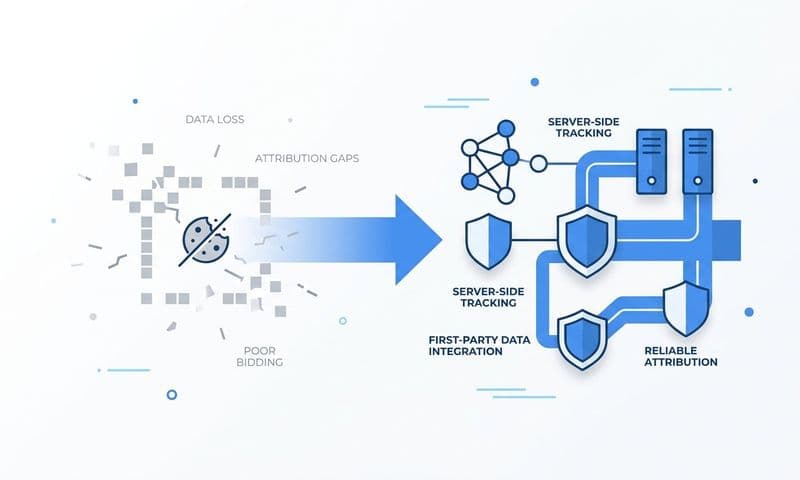
Browser-based tracking is dying. Ad blockers, privacy settings, and browser restrictions are creating massive blind spots in your data. If you are still relying entirely on client-side pixels and cookies, you are missing a significant portion of your conversions.
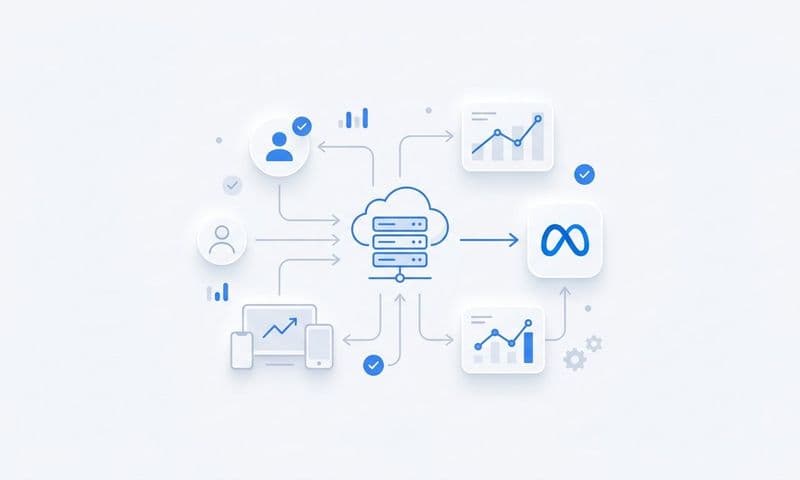
Server-side tracking solves this by sending conversion data directly from your server to ad platforms, completely bypassing the browser. When a user completes a purchase or fills out a form, your server fires the conversion event, regardless of whether their browser blocked your tracking pixel. Learn why server-side tracking is more accurate for modern marketing attribution.
The difference is substantial. Client-side tracking depends on JavaScript executing in the user's browser, which can be blocked by privacy tools, disabled by browser settings, or broken by page load issues. Server-side tracking happens on your backend, where users have no ability to interfere.
Setting up server-side tracking requires connecting your backend systems to ad platform APIs. For Meta, this means implementing the Conversions API. For Google, you will use the Measurement Protocol or Google Analytics 4's server-side implementation. Each platform has its own API documentation and requirements.
Start by identifying which conversion events matter most to your business. Purchases are obvious, but also consider lead form submissions, demo requests, free trial signups, or any action that indicates real business value. These are the events you want to track server-side.
You will need to capture key data points when these events occur: the user's click ID from the original ad click, the conversion value, timestamp, and any relevant user information. Most platforms provide a click ID parameter (like fbclid for Meta or gclid for Google) that gets appended to your URLs automatically when someone clicks your ad.
Store this click ID when users land on your site, typically in a cookie or session variable. When they convert later, retrieve that click ID and send it along with the conversion event to the ad platform's API. This allows the platform to match the conversion back to the original ad click. Implementing first-party data tracking for ads ensures you maintain this connection even as third-party cookies disappear.
The technical implementation varies based on your website platform. If you use Shopify, WooCommerce, or similar e-commerce systems, plugins exist that handle much of the server-side setup automatically. Custom websites require developer work to integrate the APIs properly.
Testing is critical. After implementation, run test transactions and verify that conversion events appear in your ad platform's events manager. Check that the conversion values match, timestamps are accurate, and attribution connects back to the correct campaigns.
Monitor your server logs to ensure events are firing successfully. Failed API calls mean lost conversion data, so set up alerts for any errors or unusual patterns. Most platforms provide debugging tools that show you exactly what data they are receiving from your server.
Server-side tracking also improves data quality for ad platform optimization algorithms. When you send complete, accurate conversion data directly from your server, platforms like Meta and Google can better optimize your campaigns for actual business outcomes rather than proxy metrics.
For businesses with complex customer journeys, server-side tracking becomes even more valuable. You can send events at multiple stages: lead created, opportunity qualified, deal closed, and even lifetime value updates. This gives ad platforms the full picture of which campaigns drive not just clicks, but actual revenue.
Step 4: Connect Your CRM and Ad Platforms
Your CRM holds the truth about which leads actually convert into customers and how much revenue they generate. Without connecting this data back to your ad platforms, you are optimizing for the wrong outcomes.
Think about the typical disconnect: your ads generate leads, those leads enter your CRM, your sales team works them, and some eventually close. But your ad platform only knows about the initial lead, not whether it turned into a $50,000 customer or went nowhere. You end up optimizing for lead volume when you should be optimizing for revenue.
Start by mapping your CRM's conversion stages to trackable events. In most B2B scenarios, this includes stages like marketing qualified lead, sales qualified lead, opportunity created, and closed won. Each stage represents a meaningful progression that your ad platforms should know about. Proper attribution tracking for lead generation captures these critical milestones.
Set up offline conversion imports to send this CRM data back to your ad platforms. Both Google Ads and Meta allow you to upload conversion data that happened outside their tracking view. You provide the click ID, conversion event, value, and timestamp, and they match it back to the original ad click.
The technical setup requires extracting data from your CRM in the format your ad platforms expect. Most CRMs can export data via CSV or provide API access. You will need to include the original click ID (which should be captured when the lead first enters your system), the conversion event name, timestamp, and value.
For recurring uploads, consider automating the process. Many integration platforms like Zapier can connect your CRM to ad platforms, automatically sending conversion updates whenever a deal stage changes. This keeps your ad platform data fresh without manual exports.
Lead quality data becomes incredibly valuable here. If your sales team marks certain leads as high quality or low quality in your CRM, you can send that signal back to ad platforms. Over time, the algorithms learn which campaigns produce leads that your sales team actually wants to work.
Revenue tracking completes the picture. When a deal closes, send the actual revenue amount as the conversion value. This allows you to calculate true return on ad spend rather than just cost per lead. A campaign that generates fewer leads but higher deal values might be your best performer, but you would never know without revenue data.
Attribution windows matter when connecting CRM data. If your sales cycle takes 60 days, make sure your ad platform attribution window extends long enough to capture those conversions. Default settings often use 7-day or 28-day windows, which might cut off before your deals close.
Verify data accuracy by comparing conversion counts between your CRM and ad platforms. Small discrepancies are normal due to attribution window differences, but large gaps indicate a problem with your click ID capture or upload process.
For businesses with multiple touchpoints, consider sending micro-conversions throughout the journey. Demo scheduled, proposal sent, contract signed: each event gives ad platforms more signal to optimize against. The more complete picture you provide, the better the algorithms can identify winning patterns.
Step 5: Configure Multi-Touch Attribution
Last-click attribution gives all the credit to the final touchpoint before conversion, completely ignoring everything that happened earlier in the customer journey. This creates a distorted view of what actually drives results.
Picture a customer who sees your LinkedIn ad, clicks but does not convert, then sees your retargeting ad on Meta a week later, clicks again, and finally converts after clicking a Google search ad. Last-click attribution gives Google all the credit. LinkedIn and Meta get nothing, even though they played crucial roles in the journey.
Multi-touch attribution distributes credit across all the touchpoints that contributed to the conversion. Different models split the credit in different ways, and choosing the right model depends on your business and sales cycle. Review attribution tracking best practices to determine which model fits your needs.
Linear attribution gives equal credit to every touchpoint. In our example, LinkedIn, Meta, and Google each get one-third credit. This model works well when you believe every interaction matters equally, though it might overvalue early touches that had minimal impact.
Time-decay attribution gives more credit to touchpoints closer to the conversion. The Google search ad gets the most credit, Meta gets less, and LinkedIn gets the least. This model makes sense for businesses where recent interactions matter more than early awareness.
Position-based attribution (also called U-shaped) gives 40% credit to the first touch, 40% to the last touch, and splits the remaining 20% among middle touches. This model values both the channel that introduced the customer and the one that closed them, which works well for longer sales cycles.
Data-driven attribution uses machine learning to analyze your actual conversion patterns and assign credit based on what statistically drives results. This is the most sophisticated approach but requires significant conversion volume to work effectively.
Setting up multi-touch attribution requires tracking the full customer journey across devices and sessions. You need to identify when the same person interacts with your brand multiple times, even if they switch from mobile to desktop or clear their cookies between visits. When tracking multiple ad campaigns accurately, this cross-session visibility becomes essential.
User identification becomes critical here. When someone fills out a form and provides their email, you can use that to connect their previous anonymous sessions to their known identity. This allows you to see that the person who clicked your LinkedIn ad last week is the same person who just converted via Google.
Cross-device tracking adds another layer of complexity. Someone might see your ad on their phone during their commute, research on their work computer during lunch, and convert on their home laptop that evening. Without cross-device tracking, these look like three different people.
Most attribution platforms handle this by creating a unified user profile that stitches together sessions across devices and time. When a user logs in or provides identifying information, the system connects all their previous anonymous activity to their profile.
Compare different attribution models side by side to understand how credit shifts. You might discover that a channel looks terrible under last-click attribution but actually plays a crucial role as a first touch. This insight changes how you allocate budget and measure success.
Be realistic about attribution limitations. No model is perfect, and some conversions will always remain mysterious. Users who research on one device and convert on another without ever logging in, or who use ad blockers throughout their journey, create gaps that no attribution system can fully close.
The goal is not perfect attribution but better decision-making. Even an imperfect multi-touch model gives you a more complete picture than last-click alone. You will make smarter budget decisions when you understand the full journey rather than just the final step.
Step 6: Validate and Test Your Tracking System
A tracking system that looks perfect in theory can still fail in practice. The only way to know if your setup actually works is to test it thoroughly and validate the data against reality.
Start with end-to-end test conversions. Click one of your own ads, go through the entire conversion process, and watch your data flow through every system. Check that the click appears in your analytics, the conversion fires in your ad platform, and the revenue matches in your backend.
Test from different devices and browsers. iOS Safari behaves differently from Chrome on Android. Make sure your tracking works across the full range of devices your customers actually use. If 40% of your traffic comes from iPhones, you better verify that iPhone conversions track correctly.
Compare tracked revenue against your actual revenue in your payment processor or accounting system. Pull your total revenue for the past month from your source of truth, then compare it to what your tracking systems report. They should match closely, though some discrepancy is normal due to refunds, failed payments, or attribution window differences. Following best practices for tracking conversions accurately minimizes these gaps.
Large gaps between tracked and actual revenue indicate serious problems. Maybe conversions are firing multiple times, creating duplicate revenue. Maybe your tracking breaks on certain pages or for certain user flows. Identify the gap, then dig into the data to find where conversions are being overcounted or undercounted.
Check for duplicate conversions specifically. If someone refreshes your thank you page, does it fire the conversion pixel again? If they complete checkout but then hit the back button and forward again, do you count two sales? Duplicate conversions inflate your reported results and make campaigns look better than they actually are.
Look for missing events in your data. Set up a conversion that should fire, then check if it appears in all your systems. If it shows in Google Analytics but not in Google Ads, you have a configuration problem. If it appears in your ad platform but not your CRM, your integration is broken. When your attribution tracking is not working, systematic testing reveals exactly where the breakdown occurs.
Monitor your tracking health over time with automated alerts. Set up notifications for unusual patterns: conversion rate drops by more than 30%, zero conversions for an entire day, or revenue totals that seem impossibly high or low. These alerts catch tracking failures before you waste significant budget.
Review your UTM parameter consistency monthly. Export all your campaign URLs and scan for naming convention violations. Someone always goes rogue and creates a campaign with improper formatting. Catch these early before they pollute your reporting.
Verify that your server-side tracking continues working correctly. API integrations can break when platforms update their requirements or when your website code changes. Schedule quarterly tests of your server-side conversion events to ensure they still fire properly.
Document your validation process so anyone on your team can run these checks. Create a testing checklist that covers every critical tracking element. When you launch a new campaign or make changes to your website, run through the checklist to verify nothing broke.
Putting It All Together: Your Accurate Tracking Checklist
With these six steps complete, you now have a tracking system that captures the full picture of your paid traffic performance. Let's review what you have built.
Your quick reference checklist: audit completed and gaps identified, UTM convention documented and shared with team, server-side tracking active and verified, CRM connected with conversion data flowing, multi-touch attribution configured, and validation tests passed.
The real power comes from acting on this data. When you can trust your numbers, you can confidently scale what works and cut what does not. You will spot winning campaigns earlier, identify losing ad sets faster, and allocate budget based on actual revenue rather than vanity metrics.
Your tracking system should evolve with your business. As you add new ad platforms, expand to new markets, or change your product offerings, revisit these steps to ensure your tracking adapts. What works perfectly today might need adjustments six months from now.
Review your tracking setup monthly to catch any drift. Campaign naming conventions tend to degrade over time as team members forget the rules or new people join without proper training. Regular audits keep your data clean and consistent.
Update your system as platforms release new features or change their requirements. Ad platforms constantly evolve their tracking capabilities, and staying current ensures you are capturing the most accurate data possible. Subscribe to platform update notifications and test new tracking features as they become available.
Share your tracking insights with stakeholders who need to understand campaign performance. When executives ask which campaigns are working, you can now show them complete, accurate data that connects ad spend to actual business outcomes. This builds trust and often unlocks larger budgets for proven channels.
Accurate tracking is not a one-time project but an ongoing practice that compounds into better decisions and higher returns over time. Every improvement to your tracking system pays dividends across every campaign you run, every optimization decision you make, and every budget allocation you approve.
Ready to elevate your marketing game with precision and confidence? Discover how Cometly's AI-driven recommendations can transform your ad strategy. Get your free demo today and start capturing every touchpoint to maximize your conversions.