
You just launched three campaigns across Google Ads, Facebook, and a targeted email blast. Traffic jumped 40% overnight. Your analytics dashboard shows the spike, but when you dig into the numbers, all you see is a vague mix of "referral traffic" and "direct visits." Which campaign actually worked? Which one flopped? Without clear answers, you're flying blind, unable to double down on what works or cut what doesn't.
This is where UTM parameter tracking changes everything. It's the difference between guessing which marketing efforts drive results and knowing with precision. UTM parameters transform your analytics from a confusing jumble of traffic sources into a clear, organized view of exactly which campaigns, channels, and even specific ads bring visitors to your site.
In this guide, you'll learn what UTM parameters are, how they work behind the scenes, and how to build a tagging strategy that turns your marketing data into actionable insights. Whether you're running paid ads, email campaigns, or social media promotions, mastering UTM tracking is the foundation of data-driven marketing.
The Building Blocks: Understanding UTM Parameters
UTM stands for Urchin Tracking Module, a name that traces back to Urchin Software Corporation. Google acquired Urchin in 2005 and used its tracking technology as the foundation for Google Analytics. Today, UTM parameters have become the web analytics standard, supported by virtually every major analytics platform.
At their core, UTM parameters are simple tags you add to the end of a URL. When someone clicks that tagged link and lands on your website, your analytics tool reads those parameters and records where the visitor came from, what campaign brought them in, and other details you specify. This turns anonymous traffic into organized, trackable data. For a deeper dive into the fundamentals, explore what UTM tracking is and how it helps your marketing.
There are five standard UTM parameters, and each serves a specific purpose. Understanding what each one does is essential for building URLs that give you the insights you need.
utm_source: This identifies the referrer or platform sending traffic. Think "google," "facebook," "newsletter," or "linkedin." It answers the question: where did this visitor come from?
utm_medium: This identifies the marketing medium or channel type. Common values include "cpc" for paid search, "email" for email campaigns, "social" for organic social posts, and "display" for banner ads. It categorizes how the traffic arrived.
utm_campaign: This names the specific campaign or promotion. You might use "spring_sale," "product_launch_2026," or "webinar_april." It groups related links under one campaign umbrella so you can measure overall performance.
utm_term: Originally designed for paid search, this parameter identifies the keyword that triggered your ad. If someone clicks your Google Ad after searching "marketing attribution software," you'd tag that term. While less commonly used outside paid search, it's valuable for tracking keyword performance.
utm_content: This differentiates similar content or links within the same campaign. If you're A/B testing two different ad creatives or email CTAs, you'd use utm_content to label them separately, like "blue_cta" versus "red_cta." It helps you see which variation performs better.
Here's what a fully tagged URL looks like in practice:
https://www.yoursite.com/landing-page?utm_source=facebook&utm_medium=cpc&utm_campaign=spring_sale&utm_content=carousel_ad
In this example, the base URL is followed by a question mark, then each UTM parameter separated by ampersands. Your analytics platform reads this and records: this visitor came from Facebook (source), through a paid ad (medium), as part of the spring sale campaign, and clicked on the carousel ad version (content).
The beauty of UTM parameters is their simplicity. You're not installing complex tracking scripts or dealing with technical integrations. You're just adding structured information to your URLs that analytics tools already know how to read.
How UTM Tracking Actually Works Behind the Scenes
When someone clicks a UTM-tagged link, something straightforward but powerful happens. The moment their browser loads your page, your analytics tool captures the full URL, including all those UTM parameters you added. It parses each parameter, extracts the values, and stores them with that user's session data.
Think of it like this: your analytics platform is constantly watching for visitors. When someone arrives via a tagged link, the platform reads the parameters like a label on a package, then files that session under the appropriate categories. Every action that visitor takes during that session gets attributed back to the source, medium, and campaign you specified.
This process happens in real time. Within seconds of someone clicking your tagged Facebook ad, your analytics dashboard updates to show a new session from Facebook, categorized under paid social, tied to your specific campaign. If that visitor converts, the conversion gets credited to those same UTM parameters.
The technical mechanism is client-side tracking. Your analytics tracking code, typically a JavaScript snippet embedded in your website, reads the URL parameters from the browser. It sends this data to your analytics platform's servers, where it's processed and made available in your reports. This happens entirely through standard web protocols without requiring any special software on the user's device.
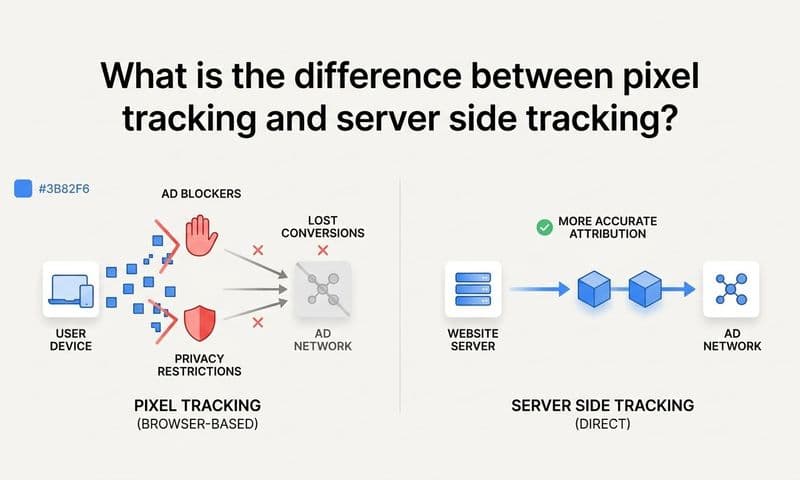
Now, how does this differ from other tracking methods you might be using? Pixels and cookies work differently. A tracking pixel is a tiny, invisible image embedded in an ad or email. When someone loads that content, the pixel fires and records an impression or open. Cookies are small text files stored in a user's browser that remember information across sessions.
UTM parameters complement these methods but operate independently. While a Facebook pixel tracks actions on Facebook and can retarget users, UTM parameters track what happens after someone clicks through to your site. Cookies help you recognize returning visitors, but UTM parameters tell you which specific campaign brought them back.
The key advantage of UTM tracking is transparency and control. You decide exactly how to tag each link. You're not relying on third-party platforms to share data or hoping cookies persist across sessions. The information travels directly in the URL, making it reliable and consistent.
However, this client-side approach has limitations. If a user's browser blocks JavaScript, your analytics code might not fire. If someone shares a tagged link and the recipient clicks it, that second visitor gets attributed to your original campaign even though they came through a different path. And because the data lives in the URL, anyone can see and potentially manipulate your UTM parameters.
Despite these quirks, UTM tracking remains the most accessible and widely supported method for campaign tracking. It works across platforms, requires no special permissions, and gives you granular control over how you organize your marketing data.
Building Your UTM Tagging Strategy
The difference between useful UTM data and a chaotic mess comes down to one thing: consistency. Without a clear naming convention, you'll end up with "Facebook," "facebook," "fb," and "FB" all showing up as separate sources in your reports. Multiply that across every parameter and every campaign, and your data becomes unusable.
Start by establishing rules that everyone on your team follows. The most important rule: always use lowercase. Analytics platforms treat "Facebook" and "facebook" as different values. Sticking to lowercase eliminates this problem entirely. For a comprehensive guide on implementation, check out how to set up UTM parameters correctly.
Next, decide how to handle spaces and special characters. The safest approach is using hyphens or underscores instead of spaces. So "spring sale" becomes "spring-sale" or "spring_sale." Pick one style and use it everywhere. Avoid special characters like ampersands, question marks, or slashes, which can break URLs or confuse analytics tools.
Create a naming convention document. This can be a simple spreadsheet that lists approved values for each parameter. For utm_source, you might standardize on "google," "facebook," "linkedin," "newsletter." For utm_medium, you'd define "cpc," "email," "social," "display," "affiliate." For campaigns, establish a format like "product-launch-2026" or "q2-webinar-series."
Share this document with everyone who creates marketing links. When your team knows the approved values, you avoid the fragmentation that makes data analysis painful. Update the document as you add new sources or campaigns, and make it the single source of truth for UTM tagging.
Now, when should you actually use UTM parameters? The general rule: tag any external link that brings traffic to your website. This includes paid ads, social media posts, email campaigns, partner websites, guest blog posts, and influencer collaborations. If the link exists outside your website and you want to track its performance, tag it.
But here's a critical mistake to avoid: never use UTM parameters on internal links within your own website. When someone clicks from your homepage to a product page, don't tag that link with UTM parameters. Doing so starts a new session in your analytics, breaking the continuity of the user's journey and inflating your session counts.
Internal navigation should be tracked through your analytics platform's built-in event tracking or page view reports, not through UTM parameters. Reserve UTMs exclusively for traffic coming from external sources.
Another common pitfall: over-tagging or under-tagging. Some marketers tag every single link variation, creating hundreds of campaign names that dilute their data. Others use the same generic campaign name for everything, losing the granularity that makes UTM tracking valuable. Find the middle ground. Tag enough to distinguish meaningful differences, but group related efforts under shared campaign names.
For example, if you're running a product launch across Google Ads, Facebook Ads, and email, use the same utm_campaign value like "product-launch-april-2026" for all three channels. Differentiate them with utm_source and utm_medium. This lets you compare performance across channels while still seeing the overall campaign impact.
One more best practice: use utm_content strategically for A/B testing. If you're testing two email subject lines or two ad creatives, tag each version with a unique utm_content value. This turns your UTM data into a testing framework, showing you which variation drives more clicks and conversions.
Building a solid UTM strategy takes upfront effort, but it pays off every time you open your analytics dashboard and see clean, organized data instead of a confusing mess.
Turning UTM Data Into Marketing Decisions
Tagging your links is only half the equation. The real value comes from analyzing the data and using it to make smarter marketing decisions. Once your UTM parameters are feeding clean data into your analytics platform, you can start asking the questions that matter.
Which traffic source drives the most conversions? Open your analytics platform and filter by utm_source. You might discover that while Facebook sends the most traffic, Google Ads delivers a higher conversion rate. That insight alone can reshape your budget allocation.
Which campaign generated the best ROI? Compare campaigns by filtering on utm_campaign. If your spring sale outperformed your product launch by 3x in revenue per session, you've learned something valuable about what resonates with your audience. Double down on similar offers in the future. Understanding UTM tracking and attribution together helps you connect these insights to actual revenue.
Which ad creative or email version performs better? Use utm_content to compare variations. If your carousel ad outperforms your single-image ad consistently, shift more budget to the winning format. If your blue CTA button drives more clicks than your red one, update your design standards.
This is where UTM tracking transforms from a technical exercise into a strategic advantage. You're not just collecting data. You're building a feedback loop that tells you what works, what doesn't, and where to invest your time and money.
But here's where it gets even more interesting. UTM data doesn't just show you what happened. It helps you understand why. When you see that organic social traffic has a high bounce rate but email traffic converts at 15%, you can hypothesize that your email audience is more qualified and your social content needs better targeting or messaging.
Use UTM insights to optimize your budget in real time. If you're running parallel campaigns across multiple channels and one is clearly outperforming, you don't have to wait until the end of the month to react. Shift budget toward the winner while it's hot. Pause or adjust underperformers before they drain more resources.
Connect your UTM data to the bigger picture: the full customer journey. Most analytics platforms let you see the path users take before converting. You might discover that many customers first click a Facebook ad, return later through Google search, and finally convert after clicking an email link. This multi-touch journey shows you that each channel plays a role, even if only the last click gets credit in a default analytics report. Learn more about customer journey tracking to capture these complex paths.
This is where UTM tracking starts to reveal its limitations. It shows you which campaign brought someone to your site, but it doesn't automatically connect that visit to what happens next in your CRM, your sales process, or across multiple devices. If someone clicks your ad on their phone but converts on their laptop two days later, standard UTM tracking loses that connection.
Still, even with its limitations, UTM data gives you a foundation. It tells you which marketing efforts are generating interest and engagement. It helps you prioritize where to focus your energy. And when you layer it with more advanced attribution tools, it becomes part of a complete picture of how your marketing drives revenue.
When UTM Tracking Falls Short (And What to Do About It)
UTM parameter tracking is powerful, but it's not a complete solution. Understanding its limitations helps you know when to layer in additional tracking methods and avoid drawing incorrect conclusions from incomplete data. For a detailed breakdown, explore UTM parameter tracking limitations.
The first limitation: cross-device tracking gaps. When someone clicks your UTM-tagged link on their phone, browses your site, but doesn't convert until they return on their laptop the next day, that second visit often appears as direct traffic. The UTM parameters from the original click don't carry over. Your analytics shows two separate sessions from two different sources, even though it's the same person on the same journey.
This matters because customer journeys are rarely linear. People research on mobile, compare options on desktop, and convert after multiple touchpoints. UTM tracking captures each individual touchpoint but struggles to connect them into a unified story.
Another challenge: link sharing strips parameters. If someone clicks your UTM-tagged Facebook ad, loves your content, and shares the URL with a colleague, that colleague's visit gets attributed to your Facebook campaign even though they came through a completely different path. The UTM parameters persist in the URL, creating false attribution.
Privacy changes have also reduced UTM tracking accuracy. iOS privacy features limit how long cookies persist and restrict cross-site tracking. When someone clicks your ad but Safari blocks your analytics cookie, you might not capture that session at all. The traffic shows up as direct or gets lost entirely. This is why many marketers are exploring cookieless tracking alternatives.
Then there's the fundamental attribution problem: UTM tracking defaults to last-click attribution. Whichever tagged link someone clicked most recently before converting gets all the credit. But what about the Facebook ad that introduced them to your brand three weeks ago? Or the blog post that educated them about your solution? Those earlier touchpoints contributed to the conversion but receive no credit in a last-click model.
So what do you do about these limitations? First, acknowledge them. Don't assume your UTM data tells the complete story. Use it to understand campaign-level performance and channel effectiveness, but recognize that the true customer journey is more complex than any single report shows.
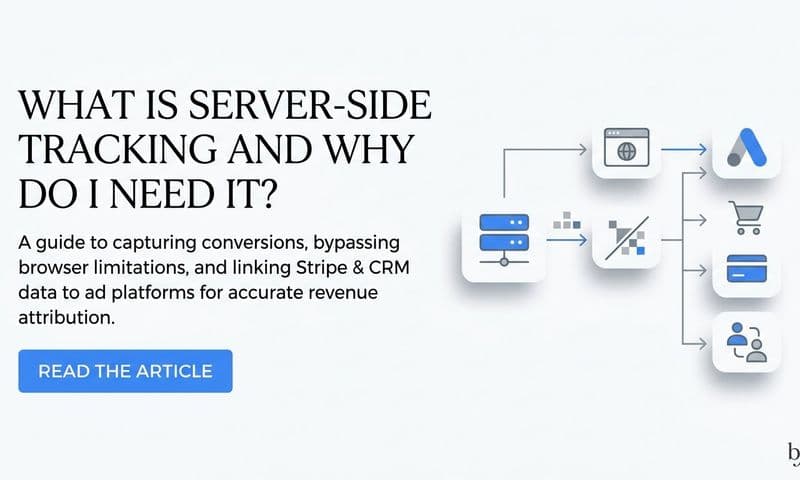
Second, consider implementing server-side tracking for ads. Unlike client-side UTM tracking that relies on JavaScript in the browser, server-side tracking captures data on your server before sending it to analytics platforms. This approach is more reliable, harder to block, and gives you greater control over what data you collect and how you use it.
Third, explore multi-touch attribution models. These models distribute credit across multiple touchpoints in the customer journey instead of giving everything to the last click. You might use a linear model that gives equal credit to every touchpoint, a time-decay model that gives more credit to recent interactions, or a custom model based on your specific sales cycle.
Tools that combine UTM data with CRM integration, cross-device tracking, and multi-touch attribution give you a far more complete picture. They connect the initial ad click to the lead form submission, the sales call, and the final purchase. This end-to-end visibility shows you not just which campaigns drive traffic, but which ones drive actual revenue.
UTM tracking is the starting point, not the finish line. It gives you campaign-level insights and helps you organize your marketing data. But to truly understand what's driving your business results, you need to layer in additional tracking methods that capture the full customer journey across devices, platforms, and time.
Putting It All Together
UTM parameter tracking is the foundation every data-driven marketer needs. It transforms vague analytics into precise, actionable insights by tagging your marketing links with structured data that shows exactly which campaigns, channels, and content drive results.
Start with the basics: understand the five core parameters (source, medium, campaign, term, and content) and how they work together to organize your traffic data. Build a consistent naming convention that keeps your data clean and usable. Tag every external link that brings traffic to your site, but never use UTM parameters on internal navigation.
Use your UTM data to make smarter decisions. Identify which channels and campaigns perform best. Shift budget toward winners and away from underperformers. Test variations and let the data show you what resonates with your audience.
But remember: UTM tracking alone cannot show you the complete customer journey. It struggles with cross-device tracking, link sharing, and multi-touch attribution. When you're ready to move beyond campaign-level insights and connect your marketing efforts to actual revenue, you need tools that layer server-side tracking, CRM integration, and advanced attribution models on top of your UTM foundation.
That's where a platform like Cometly makes the difference. By capturing every touchpoint across your entire customer journey and feeding enriched data back to your ad platforms, you get the complete picture that UTM tracking alone cannot provide. You'll know not just which campaigns drive clicks, but which ones drive revenue. You'll see how channels work together, not just in isolation. And you'll get AI-driven recommendations that help you scale what works with confidence.
Ready to elevate your marketing game with precision and confidence? Discover how Cometly's AI-driven recommendations can transform your ad strategy. Get your free demo today and start capturing every touchpoint to maximize your conversions.