

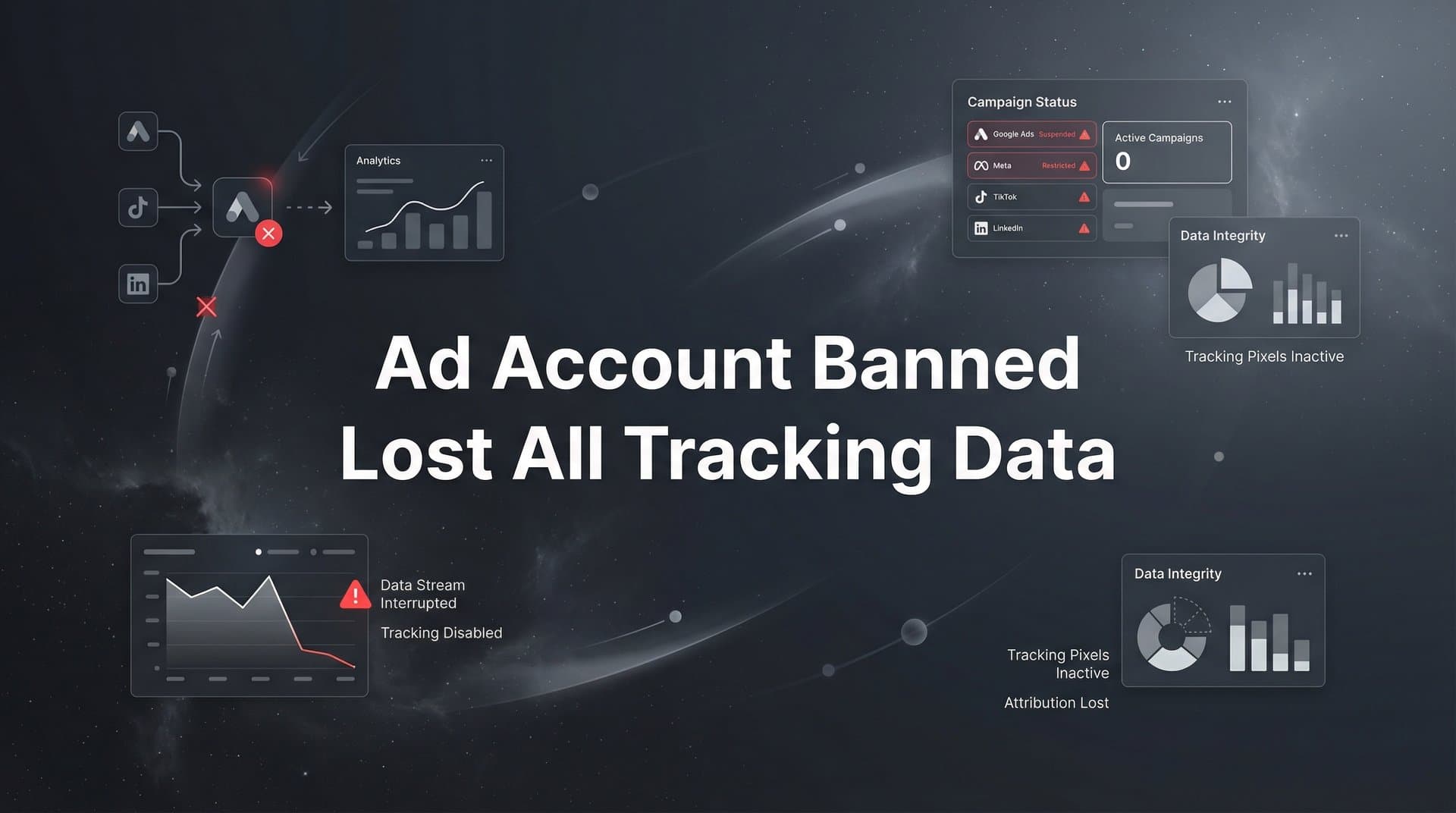
Few things are more frustrating than logging into your ad platform and discovering your account has been banned, especially when you realize all your historical tracking data has vanished with it. Whether it was a policy violation, suspicious activity flag, or an automated system error, the immediate panic is real. Years of conversion data, audience insights, and campaign learnings can disappear in an instant.
But here is the good news: your marketing intelligence does not have to be lost forever.
This guide walks you through the exact steps to recover from an ad account ban, protect your tracking data, and build a more resilient attribution system that survives platform disruptions. You will learn how to assess what data you can salvage, rebuild your tracking infrastructure, and implement safeguards that ensure you never face this nightmare scenario again.
Let us turn this crisis into an opportunity to build a stronger, more independent marketing data foundation.
Step 1: Assess the Damage and Document Everything Immediately
The first 24 hours after discovering your ad account ban are critical. Platform access can disappear completely without warning, so your immediate priority is capturing every piece of data you can while you still have it.
Start by exporting any accessible data from platforms connected to your banned account. Log into Google Analytics and download reports showing traffic sources, conversion paths, and campaign performance for the past 90 days at minimum. If you have access to your CRM, export all lead data with source attribution fields intact. Check your email marketing platform for any campaign data tied to specific ad campaigns.
Take screenshots of everything. Capture your campaign structure, audience definitions, conversion tracking settings, and any custom metrics you have configured. These screenshots become your blueprint for rebuilding once you regain access or migrate to a new account.
Document the ban details meticulously. Save every email from the platform, note the exact date and time you discovered the ban, and record the specific policy violation cited. This documentation becomes essential for your appeal process and helps you understand what triggered the ban in the first place.
Create a spreadsheet listing every data source connected to your ad account. For each source, note whether the data still exists independently or if it was platform-dependent. Your CRM data typically survives because it lives on your own servers. Your Google Analytics data remains intact because it is tracked independently. But platform-specific metrics like audience insights or attribution windows may be gone. Understanding how to connect all marketing data sources becomes critical during this assessment phase.
The key question to answer: what data truly disappeared versus what exists in systems you control?
Many marketers discover during this assessment that they have more recoverable data than they initially thought. The panic subsides when you realize your CRM captured lead sources, your analytics platform tracked conversions, and your email system logged campaign interactions. The platform ban hurt, but your marketing intelligence survived in distributed systems.
This immediate documentation phase sets the foundation for everything that follows. The data you capture now determines how quickly you can rebuild and how much historical context you retain.
Step 2: Recover Data from Alternative Sources
Now that you have documented what is accessible, it is time to extract every piece of marketing data from systems that operate independently of your banned ad account.
Your CRM is often your most valuable data source. Pull reports showing every lead generated during the period your ad account was active, making sure to include fields that capture original source information. Most CRMs track UTM parameters, referral sources, and first-touch attribution data. Export this information along with conversion outcomes, revenue data, and customer lifecycle stages.
This CRM data tells you which campaigns actually drove business results, not just which ads got clicks. It is the difference between knowing your cost per click and knowing your cost per customer.
Next, dive deep into your website analytics platform. Whether you use Google Analytics, Adobe Analytics, or another tool, extract campaign performance data organized by source and medium. Focus on reports that show the complete customer journey, from initial ad click through final conversion. Download data showing which landing pages performed best, which traffic sources had the highest conversion rates, and which campaigns drove the most valuable customers.
Check your email marketing platform for attribution data. Tools like Mailchimp, HubSpot, or ActiveCampaign often track which email subscribers came from specific ad campaigns. This data helps you understand the long-term value of your advertising beyond immediate conversions.
If you were using any third-party attribution or analytics tools, now is the time to extract their data. Platforms that track independently of your ad account may have preserved campaign performance metrics, multi-touch attribution data, and conversion path analysis that would otherwise be lost. Many marketers face marketing data consolidation challenges during this recovery process.
The pattern becomes clear: marketers who diversified their data collection across multiple independent systems have far more to recover than those who relied solely on platform-provided analytics.
Compile all this recovered data into a master spreadsheet or database. Organize it by campaign, date range, and key performance metrics. This becomes your historical baseline for rebuilding and helps you identify which strategies were working before the ban.
You might be surprised by how much marketing intelligence you can reconstruct from these alternative sources. While you may have lost some platform-specific metrics, the data that matters most for business decisions often exists in systems you control.
Step 3: File Your Appeal and Prepare for Account Reinstatement
With your data secured, turn your attention to getting your account reinstated. The appeal process requires a strategic, evidence-based approach rather than an emotional plea.
Start by thoroughly understanding the specific policy violation cited in your ban notice. Read the platform's advertising policies related to that violation. Identify exactly what triggered the ban, whether it was ad creative, landing page content, targeting parameters, or business documentation issues.
Prepare your appeal with precision. Write a clear, professional message that acknowledges the specific issue, explains what happened, and details the corrective actions you have taken. Avoid defensive language or accusations of unfair treatment. Instead, demonstrate that you understand the policy, recognize the violation, and have fixed the problem.
Include evidence with your appeal. If the ban was due to misleading ad copy, show your updated creatives. If it involved landing page issues, provide screenshots of your revised pages. If business verification was the problem, attach the requested documentation. Make it easy for the review team to verify that you have addressed their concerns.
Set realistic expectations for the appeal timeline. Platform reviews can take anywhere from a few days to several weeks. Some bans are permanent, especially for repeat violations or serious policy breaches. While you wait, prepare your backup plan.
Consider whether you need to create a new ad account with proper documentation from the start. Some situations require starting fresh rather than appealing. If you choose this route, ensure you have addressed the underlying issue that caused the original ban. The lost ad revenue from tracking issues during this downtime can be significant, making swift action essential.
During the waiting period, focus on the other recovery steps in this guide. Do not let the appeal process paralyze your marketing efforts. You can rebuild tracking infrastructure, recover data, and prepare for campaign relaunch whether or not your original account gets reinstated.
The appeal is important, but it is just one component of your recovery strategy. The real power comes from building systems that make you less dependent on any single platform's decision.
Step 4: Set Up Platform-Independent Tracking Infrastructure
This step transforms a crisis into an opportunity to build a more resilient marketing data foundation. The goal is creating tracking infrastructure that survives any platform disruption.
Implement server-side tracking as your primary data collection method. Unlike browser-based pixels that live on ad platforms, server-side tracking captures data on your own servers before sending it to various platforms. This means you own the raw data regardless of what happens to any advertising account. Understanding server-side tracking setup challenges helps you implement this correctly from the start.
Server-side tracking also solves accuracy problems created by browser privacy features, ad blockers, and iOS limitations. You capture every conversion and customer touchpoint with precision that platform pixels cannot match.
Connect all your marketing systems through a central attribution platform. Your CRM, website analytics, ad platforms, and email tools should feed data into a unified system that tracks the complete customer journey. This creates a single source of truth for marketing performance that exists independently of any single platform.
Configure first-party data collection that you control completely. Set up tracking that captures user behavior, conversion events, and customer interactions directly on your website and in your CRM. This data belongs to you, lives on your infrastructure, and remains accessible regardless of ad account status. A robust first-party data tracking platform is essential for this independence.
Tools like Cometly provide exactly this kind of platform-independent tracking infrastructure. Cometly captures every touchpoint across your entire customer journey, from initial ad click through CRM conversion and beyond. The data lives in your Cometly account, giving you complete visibility and control regardless of what happens on Meta, Google, TikTok, or any other ad platform.
When an ad account gets banned, marketers using centralized attribution platforms like Cometly retain all their historical data, conversion tracking, and performance insights. The platform ban becomes an inconvenience rather than a catastrophe because the marketing intelligence lives independently.
Set up conversion sync from your attribution platform back to your ad accounts. This feeds enriched, accurate conversion data to platform algorithms, improving targeting and optimization while maintaining your independent data copy.
The infrastructure you build now protects you from future disruptions while improving your marketing effectiveness today. It is the difference between being at the mercy of platform decisions and owning your marketing data destiny.
Step 5: Rebuild Your Campaign Data Foundation
Whether your appeal succeeded or you are starting with a new account, rebuilding your campaigns with proper tracking from day one is essential.
Create your new campaign structure with comprehensive tracking parameters built in from the start. Use consistent UTM parameters across all campaigns so you can track performance in your analytics platform. Configure conversion events that align with your business goals, not just platform-recommended actions.
Set up conversion sync to feed accurate data back to ad platform algorithms. When you send enriched conversion data from your attribution platform to Meta, Google, or other ad networks, their AI gets better information for optimization. This improves targeting, bidding, and creative delivery while ensuring you maintain an independent copy of all conversion data.
Use your recovered historical data as performance benchmarks. You know what conversion rates, cost per acquisition, and return on ad spend looked like before the ban. Set these as your initial targets and measure new campaigns against proven baselines. Proper marketing budget allocation based on data ensures you invest wisely as you rebuild.
Document your entire tracking setup in detail. Create a reference guide showing which tracking pixels are installed, what conversion events are configured, how UTM parameters are structured, and where data flows between systems. This documentation ensures team continuity and makes future troubleshooting far easier.
Test everything before spending significant budget. Run small test campaigns to verify that conversions track correctly, attribution data flows properly, and your reporting shows accurate information. Catching tracking issues early prevents wasted spend on untrackable campaigns. If you manage multiple brands or clients, consider tracking multiple ad accounts in one dashboard for streamlined oversight.
Build your campaign structure with resilience in mind. Organize campaigns logically, use clear naming conventions, and maintain detailed notes about strategy and performance. If you ever face another disruption, this organization makes recovery much faster.
The foundation you build now determines how effectively you can scale and how resilient your marketing becomes. Invest the time to set it up correctly rather than rushing to restore previous spending levels.
Step 6: Implement Safeguards to Prevent Future Data Loss
The final step is building systems that ensure you never face this situation again, or at least minimize the impact if you do.
Schedule regular data exports from all marketing platforms. Set a weekly reminder to download campaign data, audience lists, and performance reports from each ad platform you use. Store these exports in a secure location with clear date labels. If an account gets banned, you have recent data to reference.
Diversify your advertising across multiple platforms to reduce single-point risk. Running campaigns on Meta, Google, TikTok, LinkedIn, and other channels means a ban on one platform does not shut down your entire marketing operation. You maintain momentum on other channels while resolving issues. Be aware of cross-device tracking challenges as you expand across platforms.
Set up automated alerts for policy warnings and account health issues. Most platforms provide early warning signals before taking ban actions. Configure notifications so you can address problems proactively rather than discovering bans after the fact.
Maintain independent attribution tracking that survives any platform disruption. A centralized attribution system like Cometly ensures your marketing intelligence remains intact regardless of what happens on individual ad platforms. You track every customer touchpoint, analyze performance across all channels, and maintain complete historical data in a system you control.
Review platform policies regularly, especially when launching new campaigns or entering new markets. Policy violations often result from ignorance rather than malice. Staying current with advertising guidelines prevents many ban scenarios. Understanding lost tracking after cookie restrictions and similar privacy changes helps you stay compliant.
Create a documented recovery plan that your team can execute if another ban occurs. Include steps for data extraction, appeal filing, tracking verification, and campaign rebuilding. Having a plan reduces panic and accelerates recovery.
The marketers who thrive long-term are those who build resilient systems rather than depending on any single platform's goodwill. These safeguards transform potential catastrophes into manageable inconveniences.
Your Path Forward
Recovering from an ad account ban is stressful, but it does not have to mean losing your marketing intelligence forever. By following these steps, you can salvage existing data, rebuild your tracking infrastructure, and create a more resilient system that protects your marketing insights regardless of what happens on any single platform.
Quick Recovery Checklist:
Document and export all accessible data immediately from every connected platform before access expires.
Pull historical data from your CRM, analytics platforms, and email marketing tools to reconstruct campaign performance.
File a clear, evidence-based appeal that addresses the specific policy violation and demonstrates corrective action.
Implement server-side, platform-independent tracking that captures data on your own infrastructure.
Rebuild campaigns with proper attribution tracking configured from the start, using historical data as benchmarks.
Set up ongoing data backups, diversify your advertising presence, and maintain independent attribution systems.
The marketers who thrive are those who own their data independently. When your tracking infrastructure lives on platforms you control, account bans become temporary setbacks rather than existential crises. You maintain visibility into what drives revenue, which campaigns perform best, and how customers move through your funnel.
Consider implementing a centralized attribution platform like Cometly that tracks every touchpoint across your entire customer journey. Cometly captures data from ad clicks through CRM conversions, giving you complete visibility and control over your marketing intelligence. When an ad account faces issues, your attribution data, conversion tracking, and performance insights remain intact and accessible.
Cometly's AI-powered recommendations help you identify high-performing campaigns and scale with confidence, while conversion sync feeds enriched data back to ad platforms to improve their targeting and optimization. You get the best of both worlds: platform-independent data ownership and enhanced ad platform performance.
Ready to elevate your marketing game with precision and confidence? Discover how Cometly's AI-driven recommendations can transform your ad strategy. Get your free demo today and start capturing every touchpoint to maximize your conversions.


