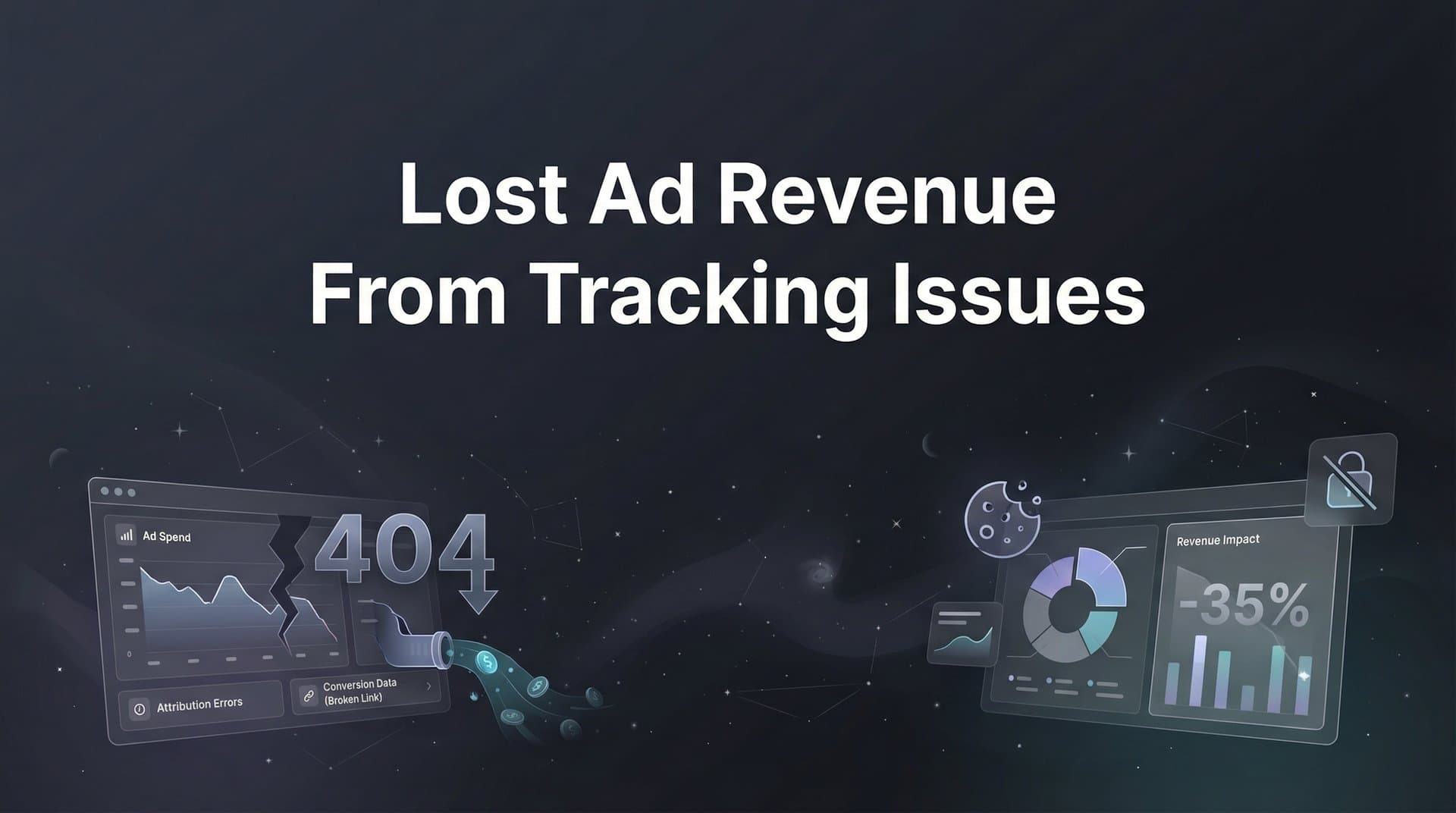
Your Meta campaign dashboard shows a 0.8 ROAS. Your Google Ads account reports similar numbers. Based on this data, the logical decision is clear: pause the campaigns, they're losing money.
But here's what actually happened last month: those same campaigns generated $47,000 in revenue. Your CRM confirms it. Your bank account reflects it. Yet your ad platforms are blind to 60% of those conversions.
This isn't a hypothetical scenario. It's the daily reality for marketers navigating the post-privacy landscape of digital advertising. The gap between what platforms report and what actually converts has grown into a chasm—and every day it stays open, you're making decisions that cost you real money.
The problem compounds in ways most marketers don't immediately recognize. When platforms can't see conversions, their algorithms optimize toward the wrong outcomes. Campaigns that should scale get paused. Audiences that convert get deprioritized. Budget flows toward channels that report well rather than channels that perform well.
This article breaks down exactly where your ad revenue disappears, why tracking issues have become a fundamental business problem rather than a technical nuisance, and most importantly—how to reclaim the revenue you're currently leaving on the table.
The Hidden Mechanics of Revenue Leakage
Understanding where your revenue actually disappears requires looking at the technical changes that have reshaped digital advertising over the past few years. These aren't abstract privacy updates—they're concrete mechanisms that actively prevent your tracking from working.
Safari's Intelligent Tracking Prevention has become increasingly aggressive. When someone clicks your ad on their iPhone, visits your site, but doesn't convert immediately, that cookie gets a 24-hour lifespan. If they return three days later and purchase, Safari blocks the conversion from being attributed back to your ad. The purchase happens. The revenue is real. But your Meta pixel never fires the conversion event.
Firefox's Enhanced Tracking Prevention operates similarly, blocking third-party cookies by default and limiting the lifespan of first-party cookies from known tracking domains. Chrome has delayed its privacy changes, but the direction is clear—browser-based tracking is being systematically dismantled. Understanding the full scope of losing tracking data from cookies is essential for any modern marketer.
Then came the earthquake: iOS 14.5 in April 2021. Apple's App Tracking Transparency framework requires apps to ask explicit permission before tracking users across apps and websites. When someone opens Instagram or Facebook and sees that permission prompt, most tap "Ask App Not to Track." Industry observers note that opt-in rates have remained low, fundamentally changing how much data platforms like Meta can collect. Marketers still struggle with iOS 14 tracking issues years after the initial rollout.
Here's what this means in practice. Someone sees your Meta ad on Instagram, clicks through to your site on Safari, browses but doesn't buy. Two days later, they Google your brand name, click the organic result, and complete a purchase. Your Meta pixel can't connect these dots—Safari's restrictions prevent it, and if they opted out of tracking, Meta's app can't follow them to your website anyway.
The cross-device problem multiplies this effect. Your prospect discovers you on mobile, researches on their work laptop, and converts on their home computer. Each device represents a separate anonymous user to your tracking systems. The conversion happens on a device that never saw the original ad, so the attribution chain breaks completely. Implementing cross-device attribution tracking has become critical for accurate measurement.
What makes this particularly insidious is that these aren't random gaps—they're systematic blind spots that disproportionately affect certain customer journeys. Longer consideration cycles suffer more. Higher-value purchases that require research get undercounted. B2B campaigns where someone discovers your solution at work but signs up from their personal device lose attribution entirely.
The revenue doesn't disappear—it just becomes invisible to the systems you rely on to make optimization decisions. Your campaigns are working better than your data suggests, but you're managing them based on incomplete information. That's where the real leakage begins.
Five Warning Signs Your Tracking Is Costing You Money
The challenge with tracking issues is that they rarely announce themselves clearly. Instead, they manifest as subtle discrepancies that marketers often attribute to other factors. Recognizing these warning signs is the first step toward understanding the scope of your revenue leakage.
The CRM-Platform Discrepancy: Your Meta Ads Manager reports 50 conversions this month. Your CRM shows 83 new customers who came from social channels. That 40% gap isn't a rounding error—it's a systematic undercount that's degrading every optimization decision you make. When this gap exceeds 20%, you're essentially flying blind.
The Engagement-Revenue Paradox: You have campaigns generating strong click-through rates, healthy engagement, and solid time-on-site metrics. People are clearly interested. Yet the attributed revenue remains stubbornly low, and the campaigns appear unprofitable. This pattern often indicates that conversions are happening but not being tracked back to the source. These conversion tracking accuracy issues plague marketers across every industry.
The Degrading Audience Performance: Your lookalike audiences used to perform exceptionally well. Over the past year, they've become less effective, requiring higher budgets to maintain the same results. This isn't audience fatigue—it's data starvation. When platforms receive fewer conversion signals, their ability to find similar high-value users deteriorates progressively.
The Attribution Window Mystery: You notice that most conversions happen within the first day of ad interaction, with very few attributed to longer windows. This seems odd because your sales cycle typically takes 3-5 days. The likely explanation: conversions are happening in those longer windows, but browser restrictions and cross-device gaps prevent proper attribution.
The Channel Conflict: Your last-click attribution shows Google Ads dominating performance, but when you pause those campaigns, overall revenue doesn't drop proportionally. Meanwhile, your upper-funnel Meta campaigns look unprofitable on paper but seem to influence the customer journey in ways your attribution model can't capture. This suggests your tracking is missing crucial touchpoints in the customer journey. Understanding channel attribution in digital marketing helps resolve these conflicts.
These warning signs often appear gradually, making them easy to rationalize away. Markets change. Competition increases. Audience saturation happens. But when multiple signals point in the same direction, the root cause is usually tracking degradation rather than market dynamics.
The business impact extends beyond individual campaign decisions. When your tracking is incomplete, you can't accurately calculate customer lifetime value by acquisition channel. You can't reliably test creative variations because the conversion data is noisy. You can't confidently scale winning campaigns because you're not certain which campaigns are actually winning.
How Broken Tracking Sabotages Ad Platform Algorithms
Modern ad platforms aren't just displaying your ads to whoever happens to be online. They're running sophisticated machine learning models that predict which users are most likely to convert, then bidding accordingly in real-time auctions. This entire system depends on one critical input: accurate conversion data.
When Meta's algorithm receives conversion signals, it learns patterns. It notices that users who engage with certain content types, who browse at specific times, who match particular demographic profiles—these users convert at higher rates. The algorithm then finds more people who match those patterns and shows your ads preferentially to them.
But here's what happens when tracking breaks down. The algorithm sees 100 ad clicks but only receives conversion signals for 40 of them. It doesn't know that 30 more conversions happened but weren't tracked. It only knows what it can measure. So it builds its predictive model on incomplete data, learning the wrong patterns and optimizing toward the wrong outcomes.
The compounding effect is brutal. With less conversion data, the algorithm's predictions become less accurate. Less accurate predictions lead to worse targeting. Worse targeting generates fewer conversions. Fewer conversions provide even less data for the algorithm to learn from. The cycle accelerates downward. These ad platform tracking issues affect every major advertising network.
Google Ads faces the same challenge. Its Smart Bidding strategies—Target CPA, Target ROAS, Maximize Conversions—all rely on historical conversion data to make bidding decisions. When the algorithm thinks your true cost per acquisition is $200 (because it only sees half the conversions), it bids conservatively. You miss auction opportunities for valuable clicks because the algorithm is protecting you from costs that aren't actually problematic.
Our explainer on what is cost per share covers the fundamentals in more depth.
TikTok's algorithm, being newer and still building its advertising sophistication, is even more dependent on strong conversion signals. When tracking is incomplete, the platform struggles to move beyond basic demographic targeting to the more nuanced behavioral patterns that drive performance.
The auction dynamics make this worse. Ad platforms use predicted conversion rates to calculate effective bids. If your tracking shows a 2% conversion rate when the reality is 3.5%, the platform systematically underbids on your behalf. You lose auctions you should win. Your impression share drops. Your best-performing campaigns get throttled by algorithms trying to protect you from overspending.
This explains why some marketers see performance improve dramatically after implementing better tracking—not because their campaigns changed, but because the algorithms finally received accurate data to work with. The campaigns were always performing well; the platforms just couldn't see it clearly enough to optimize effectively.
Server-Side Tracking: The Foundation for Accurate Attribution
The fundamental problem with traditional pixel-based tracking is that it relies on browsers to cooperate. When browsers decide to prioritize privacy by blocking cookies and limiting tracking, pixels stop working. Server-side tracking takes a different approach entirely—one that's resilient to these browser-level restrictions.
Here's how traditional tracking works: someone clicks your ad, lands on your website, and a pixel (a small piece of JavaScript code) fires in their browser. That pixel attempts to set a cookie, then sends conversion data back to the ad platform. This process depends on the browser allowing cookies, executing JavaScript, and not blocking the connection to the ad platform's servers.
Server-side tracking flips this model. Instead of relying on the user's browser to send data, your server sends conversion events directly to the ad platform. When someone converts on your website, your server logs that event and transmits it to Meta's Conversions API or Google's Enhanced Conversions endpoint. The user's browser isn't involved in this data transmission. The difference between Google Analytics vs server-side tracking becomes clear when you examine data completeness.
This architectural difference makes server-side tracking immune to many privacy restrictions. Safari can't block a server-to-server connection. Users opting out of app tracking doesn't prevent your server from reporting conversions. Ad blockers running in browsers can't intercept data that never flows through the browser.
The implementation requires connecting your backend systems to ad platform APIs. For e-commerce sites, this typically means your order confirmation process triggers a server-side event that includes the transaction details, the user identifier, and any relevant metadata. For lead generation, it's your form submission handler or CRM integration that fires the server-side event.
The technical lift varies based on your stack. Platforms like Shopify have built-in support for server-side tracking through their native integrations. Custom-built sites require more development work—you're essentially building an integration between your application server and ad platform APIs. Tag management systems like Google Tag Manager have introduced server-side container options that can simplify this process.
One critical consideration: server-side tracking doesn't automatically solve attribution. You still need to match the conversion happening on your server to the ad click that drove it. This typically requires passing user identifiers through the customer journey and maintaining that connection on your server side. Cookie-based identifiers help, but you'll also want to leverage email addresses, phone numbers, and other durable identifiers when available. A proper first-party data tracking setup ensures these identifiers persist across sessions.
The result is a more complete picture of conversions. You're capturing events that browser-based pixels miss, feeding better data to ad platform algorithms, and making decisions based on reality rather than a privacy-restricted subset of reality.
Building a Complete Customer Journey View
Server-side tracking solves the data collection problem, but understanding which marketing touchpoints actually drive revenue requires connecting multiple data sources into a unified view. This is where attribution platforms transform incomplete data into actionable intelligence.
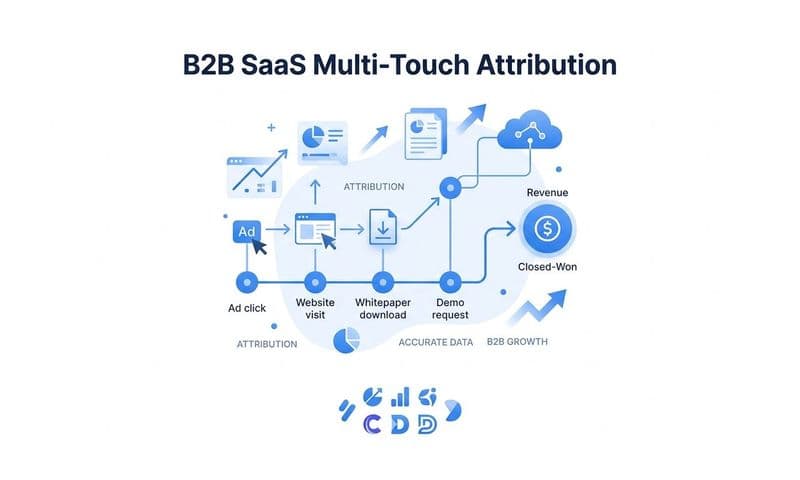
Think about a typical customer journey. Someone sees your Meta ad on mobile, clicks through but doesn't convert. Two days later, they Google your brand, click an organic result, browse your site, but still don't purchase. That evening, they receive your email campaign, click through, and finally convert. Which channel deserves credit for that sale?
Last-click attribution would give all credit to the email. But the Meta ad created initial awareness. The organic search showed intent. The email closed the deal. Each touchpoint played a role, and understanding those roles is essential for smart budget allocation. Comprehensive touchpoint tracking analytics reveals these hidden relationships.
A complete customer journey view requires connecting three data layers. First, your ad platform data—impressions, clicks, and platform-reported conversions from Meta, Google, TikTok, and others. Second, your website behavior data—page views, session duration, content engagement, and on-site conversion events. Third, your CRM and revenue data—actual customers, transaction values, and long-term customer value.
When these layers connect, patterns emerge that single-source data can't reveal. You might discover that users who interact with both Meta ads and Google search before converting have a 40% higher lifetime value than single-touchpoint customers. Or that certain ad campaigns rarely generate immediate conversions but consistently appear early in high-value customer journeys.
Multi-touch attribution models help distribute credit across these touchpoints. Linear attribution splits credit evenly. Time-decay gives more credit to recent interactions. Position-based emphasizes first and last touch. Data-driven models use machine learning to assign credit based on actual conversion patterns in your data. Understanding different attribution tracking methods helps you select the right approach for your business.
The real power comes from feeding these insights back into your ad platforms. When you understand that certain campaigns drive valuable assisted conversions even if they don't get last-click credit, you can use that data to inform your server-side conversion events. You're not just tracking what platforms can see—you're enriching their data with the complete picture.
This enriched conversion data helps algorithms optimize more effectively. Instead of only learning from immediately attributed conversions, they receive signals about the full range of valuable customer interactions. The result is better targeting, more efficient bidding, and campaigns that scale based on actual business impact rather than platform-visible conversions.
Reclaiming Lost Revenue: A Practical Recovery Framework
Understanding the problem is one thing. Fixing it requires a systematic approach that prioritizes impact and builds progressively toward complete tracking coverage. Here's how to structure your recovery process.
Start with the Audit: Document your current tracking setup completely. List every pixel, every conversion event, every platform integration. Then compare platform-reported conversions against your CRM data for the past 90 days. Calculate the discrepancy percentage for each major channel. This baseline measurement is essential—you need to know where you're starting to measure improvement.
Prioritize by Revenue Impact: If you're spending $50,000 monthly on Meta and $5,000 on TikTok, fix Meta first. Focus on the channels where tracking gaps cost you the most money. Within each channel, prioritize high-value conversion events—a 30% gap in purchase tracking hurts more than a 30% gap in newsletter signups.
Implement Server-Side Tracking for Primary Channels: Begin with your highest-spend platform. For most marketers, that's Meta's Conversions API or Google's Enhanced Conversions. Work with your development team or platform provider to implement server-side event transmission. Test thoroughly—send test conversions, verify they appear in platform reporting, confirm the data matches your server logs. If you're running Facebook campaigns, addressing Facebook Ads tracking pixel issues should be your first priority.
Connect Your CRM Data: The most valuable conversion signals include customer information that helps platforms find similar high-value users. When your server sends conversion events, include hashed email addresses, phone numbers, and other identifiers when available and compliant with privacy regulations. This data enrichment dramatically improves algorithm performance.
Implement Multi-Touch Attribution: Once server-side tracking is capturing conversions accurately, layer on attribution that connects the full customer journey. This requires a platform that can track users across sessions and devices, connecting ad interactions to website behavior to final conversions. The goal is understanding which combinations of touchpoints drive revenue, not just which got the last click. Proper attribution tracking setup ensures you capture the complete picture.
Measure the Impact: After implementing improvements, monitor the same metrics you documented in your initial audit. Watch for platform-reported conversions increasing to match CRM data. Track campaign performance metrics—CPAs should improve as algorithms receive better data. Monitor audience performance to see if lookalikes and automated targeting become more effective.
The timeline for seeing results varies. Server-side tracking improvements often show impact within weeks as algorithms receive more complete data. Attribution insights develop over months as you accumulate enough data to identify patterns across the full customer journey. The key is consistent measurement against your baseline so you can quantify the revenue impact of better tracking.
Turning Tracking Into Your Competitive Advantage
Lost ad revenue from tracking issues isn't a permanent condition—it's a solvable problem that most of your competitors haven't addressed yet. That creates an opportunity. While others make decisions based on incomplete data, you can operate with clarity about what actually drives results.
The tracking landscape has fundamentally changed. Browser privacy features and platform restrictions mean pixel-based tracking alone can't provide the visibility you need. But server-side tracking combined with unified attribution gives you something more valuable than what existed before—a complete view of the customer journey that connects ad interactions to actual revenue.
The marketers who adapt to this new reality gain a compounding advantage. Better data feeds better algorithm optimization. Better optimization drives better results. Better results generate more conversion data. The cycle reinforces itself, creating a growing gap between those who can see clearly and those still operating in the fog of incomplete tracking.
Start with an honest assessment of where your tracking stands today. Calculate the gap between platform-reported conversions and actual revenue. Prioritize the channels where that gap costs you the most money. Then systematically close those gaps with server-side tracking and comprehensive attribution.
The revenue you're losing to tracking issues is recoverable. Every conversion that happens but doesn't get attributed represents optimization decisions made on false information. Every algorithm trained on incomplete data is a missed opportunity for better performance. Every budget allocation based on partial visibility leaves money on the table.
Ready to elevate your marketing game with precision and confidence? Discover how Cometly's AI-driven recommendations can transform your ad strategy—Get your free demo today and start capturing every touchpoint to maximize your conversions.