You're spending thousands on ads. Your dashboard shows conversions rolling in. But when you check your bank account or CRM, the numbers don't match. Sound familiar?
This isn't a glitch. It's the reality of modern conversion tracking, where browser restrictions, privacy updates, and fragmented customer journeys create massive blind spots in your data. The problem compounds daily: every budget decision you make is based on incomplete information, and those small inaccuracies snowball into serious waste.
Here's what makes this particularly frustrating: you're not just losing visibility into what happened. You're feeding incomplete data back into the algorithms that decide where your next dollar goes. When Meta or Google's AI optimizes based on partial conversion signals, it doubles down on the wrong audiences while starving your actual best performers of budget.
This guide breaks down exactly why your conversion data is wrong, where the gaps come from, and what you can do to fix it. Because accurate tracking isn't just about reporting—it's the foundation of every optimization decision you make.
The Invisible Wall Between What Platforms Report and What Actually Happened
Let's start with a scenario that plays out daily across marketing teams: Meta Ads Manager shows 47 conversions. Your CRM shows 31 actual sales. Google Analytics reports 52 goal completions. Which number is real?
The answer is probably none of them are completely accurate.
The gap between reported conversions and actual revenue has widened dramatically since Apple's iOS 14.5 update introduced App Tracking Transparency in 2021. When users opt out of tracking—and most do—traditional browser-based pixels lose visibility into their actions. Your Facebook pixel fires when someone clicks your ad, but if they're on an iPhone and haven't granted permission, that conversion signal never makes it back to Meta. Understanding how to fix iOS 14 tracking issues has become essential for modern marketers.
Google's ongoing deprecation of third-party cookies creates similar blind spots. As Chrome phases out cookie-based tracking through 2026, the browser-level data that platforms have relied on for years is disappearing. The result? Ad platforms are making optimization decisions based on an increasingly incomplete picture of who's actually converting.
But privacy changes are just one piece of the puzzle. The bigger issue is how customer journeys actually work today.
Think about your own buying behavior. You see an ad on your phone during your commute. Later, you research the product on your laptop at work. That evening, you finally purchase on your tablet while watching TV. That's three devices, potentially three different browsers, and multiple sessions spread across hours or days.
Traditional tracking methods struggle to connect these dots. Browser cookies don't follow users across devices. Platform pixels can't see what happens on other platforms. Implementing effective cross-device conversion tracking solutions is critical for capturing these complex journeys. The more complex the journey, the more likely your tracking is to miss critical touchpoints or misattribute the conversion entirely.
This creates a fundamental problem: you're optimizing campaigns based on what your platforms can see, not what actually drives revenue. And the gap between those two realities grows larger every day.
The Five Breaking Points Where Your Tracking Falls Apart
Client-Side Tracking Hits a Wall: Every time you rely on a browser-based pixel, you're gambling that nothing blocks it. Ad blockers are now standard on many browsers. Safari's Intelligent Tracking Prevention actively limits cookie lifespans. Firefox Enhanced Tracking Protection blocks third-party tracking by default. Consent management platforms add another layer—if a user declines cookies, your pixel never fires at all. The result is that a significant portion of your actual conversions simply vanish from your reporting.
The Cross-Device Attribution Black Hole: Here's where tracking gets messy. Someone clicks your Instagram ad on their phone during lunch. They don't convert immediately. Three days later, they're on their work computer, they Google your brand name, click an organic result, and purchase. Which channel gets credit? Most platforms would attribute this to organic search using last-click attribution, completely missing the Instagram ad that started the journey. When users switch devices or platforms, traditional tracking loses the thread entirely. Exploring cross-device conversion tracking methods can help you recover these lost conversions.
Pixel Firing Failures You Never See: Your conversion pixel should fire the moment someone completes a purchase. But what if the page loads slowly and they close the tab before the pixel triggers? What if there's a JavaScript error that prevents the pixel from executing? What if your thank-you page redirects too quickly? These technical failures happen more often than you'd think, and each one represents a conversion your platform never knows about. The worst part? These failures are invisible—your setup looks fine in testing, but it's silently dropping real conversions in production.
Attribution Windows That Don't Match Reality: Meta defaults to a 7-day click and 1-day view attribution window. But what if your product has a longer consideration cycle? B2B software purchases often take weeks or months. High-ticket items require research and comparison. If someone clicks your ad today but converts in 10 days, Meta won't count it. Your actual conversion happened, but your platform reports zero return on that ad spend. The mismatch between platform attribution windows and real buying cycles creates systematic underreporting of campaign performance.
The Duplicate and Missing Conversion Problem: Without proper event deduplication, you can count the same conversion multiple times. Someone completes a purchase, hits back, and lands on the thank-you page again. Your pixel fires twice. Or the opposite happens: you have both a Facebook pixel and Google tag firing on the same page, but they're not properly coordinated. One fires, one doesn't. Now you're missing conversions in one platform while potentially double-counting them in another. Inconsistent event deduplication logic creates chaos in your attribution data.
Each of these issues chips away at your tracking accuracy. But when they combine—and they often do—you end up with conversion data that bears little resemblance to reality.
When Bad Data Teaches Your Algorithms the Wrong Lessons
Here's the insidious part about inaccurate conversion tracking: it doesn't just affect your reporting. It actively sabotages your ad performance.
Meta's Advantage+ campaigns and Google's Smart Bidding rely on machine learning to optimize toward conversions. But here's what happens when you feed them incomplete data: they learn to optimize toward the conversions they can see, not the ones that actually happen. If your tracking misses conversions from certain audience segments, devices, or traffic sources, the algorithm interprets that as "these don't convert" and stops showing ads to them.
The result? You're systematically excluding your actual best customers from your targeting.
Budget misallocation becomes inevitable. Let's say your Facebook ads are actually driving strong revenue, but iOS privacy restrictions mean Meta only sees 60% of those conversions. Meanwhile, your Google Search ads have better tracking visibility and report 95% of their conversions. Looking at the platform data alone, Google Search appears to have a much better ROAS. You shift budget accordingly. In reality, you just starved your better-performing channel because its tracking was worse.
This creates a negative feedback loop. Incomplete conversion data leads to poor optimization decisions. Poor optimization leads to worse results. Worse results lead to more budget cuts or campaign changes. All based on fundamentally flawed information.
The compounding effect is particularly dangerous with automated bidding strategies. When you tell Google or Meta to maximize conversions or target a specific ROAS, you're handing control to an algorithm that's only as good as the data it receives. Feed it partial conversion signals, and it will confidently optimize toward partial success. The algorithm doesn't know it's missing data—it just assumes what it sees is the complete picture and adjusts accordingly.
This is why tracking accuracy isn't just a reporting problem. It's an optimization problem that directly impacts how efficiently your ad budget converts into revenue.
Why Server-Side Tracking Changes the Game Completely
The solution to browser-based tracking limitations is surprisingly straightforward: stop relying on browsers entirely.
Server-side tracking flips the traditional model. Instead of placing a pixel in someone's browser and hoping it fires correctly, you send conversion data directly from your server to the ad platform's API. When someone completes a purchase on your site, your server immediately notifies Meta, Google, or any other platform you're using. No browser required. No cookies needed. No ad blockers to circumvent.
This approach bypasses virtually every limitation we've discussed. iOS privacy restrictions? Irrelevant—you're not tracking through the browser. Ad blockers? They can't stop server-to-server communication. Slow page loads or JavaScript errors? Your server sends the conversion signal regardless of what happens in the user's browser.
The mechanics work like this: when a conversion event occurs—a purchase, a signup, a qualified lead—your server captures that information along with relevant identifiers like email address, phone number, or a click ID from the original ad. It then sends this data to the platform's Conversions API (Meta) or Enhanced Conversions (Google) endpoint. The platform matches the conversion back to the original ad click using these identifiers, giving you accurate attribution without relying on fragile browser cookies.
First-party data collection becomes your foundation. Instead of depending on third-party cookies that can be blocked, restricted, or deleted, you're working with information you collected directly from your customers through your own website and systems. This data is more reliable, more complete, and more valuable for attribution because it includes details platforms can't see through pixels alone—like customer lifetime value, subscription tier, or whether this is a repeat purchase.
Server-side tracking also solves the timing problem. Browser pixels can be delayed or fail to fire if users navigate away quickly. Server-side events send immediately and reliably because they're triggered by actual business events in your system, not by page loads or user actions in a browser. For businesses struggling with Facebook Ads tracking pixel issues, server-side implementation offers a reliable alternative.
Building a Tracking System You Can Actually Trust
Accurate conversion tracking requires connecting the full customer journey from first click to final revenue. This means integrating your CRM, ad platforms, and analytics tools into a unified system that sees every touchpoint.
Start by connecting your CRM to your ad platforms. When someone fills out a lead form after clicking your ad, that information should flow into your CRM. When that lead eventually converts to a customer weeks later, that conversion event needs to flow back to the ad platform that originated the click. This closed-loop tracking shows you which campaigns drive not just leads, but actual revenue. A comprehensive conversion tracking setup guide can help you implement this correctly from the start.
Event deduplication becomes critical when you're sending conversion data from multiple sources. Implement a system that assigns unique transaction IDs to each conversion and uses those IDs to prevent double-counting. If both your website pixel and server-side integration send the same purchase event, your deduplication logic should recognize they're the same transaction and count it only once.
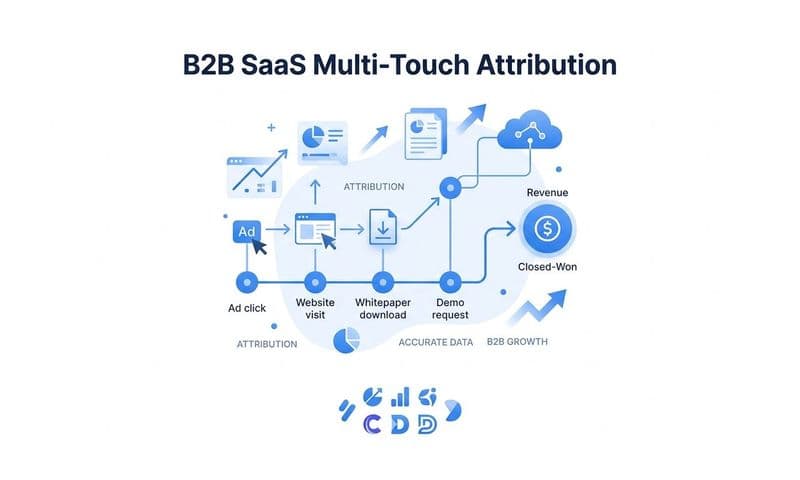
Multi-touch attribution provides the complete picture that last-click models miss. Instead of giving all credit to the final touchpoint before conversion, multi-touch attribution distributes credit across every interaction in the customer journey. Our attribution marketing tracking complete guide explains how to implement this effectively. This reveals the true contribution of awareness campaigns, remarketing efforts, and nurture sequences that don't get the final click but play crucial roles in driving conversions.
Feeding enriched conversion data back to ad platforms transforms how their algorithms optimize. Instead of just telling Meta "a conversion happened," you can send additional context: the conversion value, the product category, whether it's a new or returning customer, the customer's lifetime value prediction. This enriched data helps platform algorithms identify patterns and optimize toward your most valuable conversions, not just the highest volume.
The key is treating your conversion tracking as a system, not a collection of individual pixels and tags. Each component—your website tracking, CRM integration, server-side events, and platform APIs—needs to work together to capture, validate, and route conversion data accurately.
How to Audit Your Tracking and Find the Gaps
Start with a conversion reconciliation exercise. Pull your conversion numbers from each ad platform for the last 30 days. Now pull your actual sales data from your CRM or e-commerce system for the same period. Compare them side by side. The discrepancies you see represent your tracking accuracy problem.
Calculate your match rate for each platform. If Meta reports 100 conversions but your CRM shows 150 actual sales that originated from Meta traffic, your match rate is 67%. That means Meta's algorithm is optimizing based on only two-thirds of your actual conversion data. Run this calculation for every platform and traffic source you use.
Monitor conversion latency—the time gap between when a conversion happens and when it's reported to your ad platforms. Server-side tracking should report conversions within seconds or minutes. If you're seeing delays of hours or days, something in your implementation is broken. Long latency means platforms can't optimize in real-time, reducing the effectiveness of your campaigns. Addressing conversion sync issues with ad platforms should be a priority when you identify these delays.
Check attribution coverage by analyzing how many of your conversions can be tied back to a specific marketing touchpoint. If 40% of your conversions show as "direct" or "unknown source" in your analytics, you have a serious attribution gap. These orphaned conversions represent marketing efforts that drove results but aren't getting credit, leading to poor optimization decisions.
Watch for these warning signs that indicate immediate tracking problems: sudden drops in reported conversions without corresponding drops in revenue, significant discrepancies between platform reports and your internal data, conversions showing zero value when they should have transaction amounts, duplicate conversion events firing for the same transaction, or match rates below 80% on any major platform.
Test your tracking implementation regularly. Make test purchases or conversions and verify that events fire correctly across all your tracking systems. Check that conversion values are accurate, that deduplication works properly, and that events reach your ad platforms within acceptable timeframes. What works today can break tomorrow due to website updates, platform changes, or configuration drift. Following best practices for tracking conversions accurately will help you maintain data integrity over time.
Document everything. Create a tracking specification that details every conversion event you're capturing, where it fires, what data it includes, and which platforms receive it. This documentation becomes essential when troubleshooting discrepancies or onboarding new team members who need to understand your tracking setup.
Turning Accurate Data Into Confident Decisions
Conversion tracking accuracy isn't a technical detail to delegate and forget. It's the foundation of every optimization decision you make. When your data is wrong, every conclusion you draw from it is suspect. Every budget allocation is a guess. Every campaign adjustment is based on incomplete information.
The solution requires three fundamental shifts: moving from browser-based pixels to server-side tracking that bypasses privacy restrictions and technical failures, integrating your CRM and revenue data to track the complete customer journey from click to purchase, and feeding enriched conversion data back to ad platforms so their algorithms can optimize toward your actual business outcomes.
This isn't about perfection. Some tracking gaps will always exist. But the difference between 60% tracking accuracy and 95% tracking accuracy is massive when you're spending thousands or millions on ads. That gap represents wasted budget, missed opportunities, and optimization decisions based on fundamentally flawed data.
Cometly solves this by capturing every touchpoint across your entire marketing funnel and connecting them to actual revenue. The platform tracks the full customer journey from initial ad click through CRM events, providing the complete attribution picture that single-platform tracking misses. AI-powered recommendations identify which campaigns and channels are actually driving your best results, not just the ones with the best tracking visibility. And by feeding enriched, accurate conversion data back to Meta, Google, and other ad platforms, Cometly helps their algorithms optimize toward real revenue, not partial signals.
Ready to elevate your marketing game with precision and confidence? Discover how Cometly's AI-driven recommendations can transform your ad strategy—Get your free demo today and start capturing every touchpoint to maximize your conversions.