

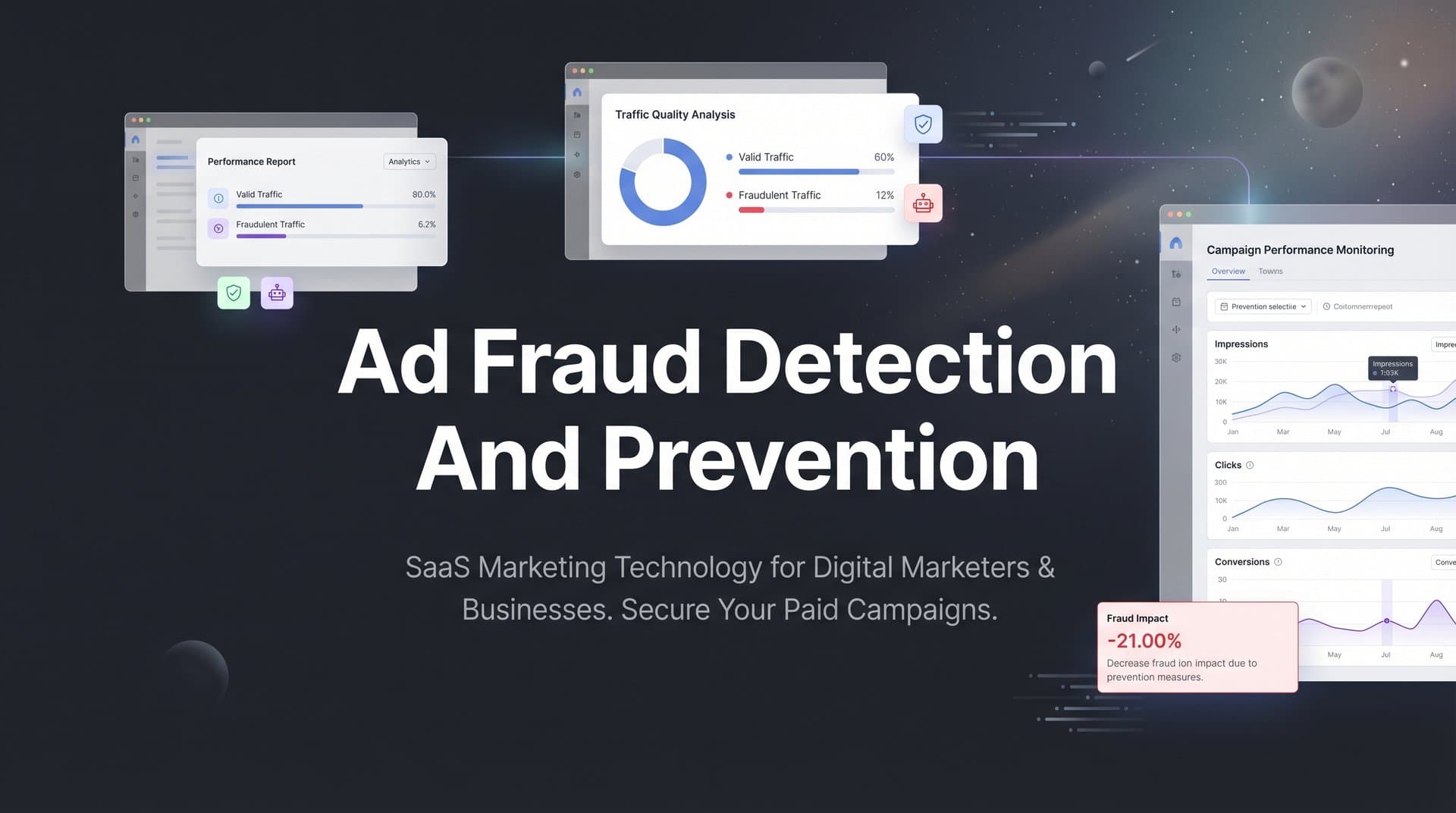
You've just reviewed your monthly ad performance report, and something feels off. Your click-through rates look solid. Your cost-per-click is within budget. But when you dig into conversions and revenue, the numbers don't add up. Traffic is up 40%, but sales barely moved. Session durations are suspiciously short. Geographic data shows clusters of clicks from regions you don't even target.
Here's the uncomfortable truth: a portion of your ad spend is likely funding fraudsters, not reaching real customers. Ad fraud isn't just an abstract industry problem. It's a silent budget drain that corrupts your campaign data, misleads your optimization decisions, and undermines every attribution model you rely on to understand what's actually working.
For marketers who depend on accurate data to make smart scaling decisions, ad fraud creates a dangerous distortion. You're not just losing money on fake clicks. You're feeding bad signals back to ad platform algorithms, teaching them to optimize toward bots instead of buyers. The result? Wasted spend, skewed analytics, and strategic decisions built on fraudulent data.
This guide breaks down how ad fraud actually operates, how to spot the warning signs in your campaigns, and practical prevention strategies that protect both your budget and your data integrity. Because the best defense isn't hoping fraud won't find you. It's building systems that detect it early and prevent it from corrupting your marketing decisions.
The Mechanics Behind Modern Ad Fraud
Ad fraud operates through coordinated systems designed to mimic legitimate user behavior while extracting advertiser budgets. Understanding how these systems work is the first step toward protecting your campaigns.
Click Fraud: Bots or human click farms generate clicks on your ads with zero intention of engaging with your offer. These clicks consume budget and inflate your traffic metrics while delivering no real prospect value. Sophisticated operations use residential IP addresses and randomized timing patterns to avoid detection.
Impression Fraud: Your ads get served to placements where no human will ever see them. This includes ads loaded in hidden iframes, stacked beneath other content, or displayed for microseconds before the page redirects. You pay for impressions that never reached an actual audience.
Conversion Fraud: Fraudsters submit fake form fills, create bogus accounts, or generate false purchase events to collect affiliate commissions or inflate performance metrics. These phantom conversions corrupt your attribution data and make worthless traffic sources appear valuable.
Domain Spoofing: Low-quality websites misrepresent themselves as premium publishers to command higher ad rates. Your ads might show on a questionable site while your reporting shows placement on a reputable domain. You pay premium rates for bottom-tier inventory.
The sophistication of modern fraud operations is what makes detection challenging. Simple bot traffic that clicks ads in rapid-fire sequences is relatively easy to catch. Today's fraud networks deploy advanced invalid traffic that carefully mimics human behavior.
These operations use residential proxy networks to mask their true locations. They randomize click timing and mouse movements. They simulate realistic browsing patterns, visiting multiple pages and spending plausible amounts of time on each. Some even generate fake engagement signals like scroll depth and video views to appear more legitimate.
The cat-and-mouse dynamic between fraud detection and fraud execution creates constant evolution. As platforms improve their detection algorithms, fraud networks adapt their tactics. They study detection patterns, identify thresholds that trigger flags, and calibrate their behavior to stay just below those limits. This ongoing adaptation means that ad fraud prevention isn't a one-time implementation. It requires continuous monitoring and updated strategies to stay ahead of emerging tactics, which is why understanding marketing data and analytics becomes essential for identifying anomalies.
Red Flags That Signal Fraudulent Activity
Your campaign data contains clues that reveal fraudulent traffic. Learning to recognize these patterns helps you catch fraud before it drains significant budget or corrupts your optimization decisions.
Watch for sudden, unexplained traffic spikes that don't correlate with any campaign changes or external events. Legitimate traffic growth typically follows predictable patterns tied to your marketing activities. A sharp spike in clicks from a specific source with no corresponding increase in conversions suggests non-human traffic.
Geographic anomalies often reveal fraud operations. If you're targeting the United States but seeing significant traffic from countries you didn't include in your targeting, something's wrong. Even within your target regions, clusters of activity from unlikely locations—especially known data center hubs—indicate potential bot traffic rather than real prospects.
Timing patterns provide another detection signal. Real human traffic distributes across the day with natural peaks and valleys. Bot traffic often shows unnaturally consistent patterns or concentrated bursts of activity during off-hours. When you see perfectly even click distribution across all hours or sudden spikes at 3 AM, investigate further.
Engagement metrics reveal the quality of your traffic. Bounce rates above 80% from specific sources suggest visitors who click and immediately leave without any interaction. Average session durations under 10 seconds indicate traffic that isn't genuinely engaging with your content. These metrics point to clicks that came from bots or incentivized click farms, not interested prospects.
Compare your ad platform reported clicks against the actual sessions recorded in your analytics. The discrepancy between platform and analytics data—especially when reported clicks significantly exceed tracked sessions—suggests that a portion of those clicks never resulted in real page loads. This gap often indicates click fraud where bots trigger the click event but don't actually load your landing page.
Look for conversion patterns that seem too good to be true. If a traffic source shows an unusually high conversion rate but those conversions don't connect to downstream revenue or engagement, you're likely seeing conversion fraud. Real customers leave a trail of engagement beyond the initial conversion event. Fraudulent conversions often appear as isolated events with no subsequent activity.
Building Detection Systems That Catch Fraud Early
Effective fraud detection requires infrastructure that captures accurate data and makes discrepancies visible before they corrupt your optimization decisions.
Server-side tracking provides a more fraud-resistant data foundation than client-side tracking alone. When tracking events fire from your server rather than the user's browser, bots have far less ability to manipulate the signals. Client-side tracking can be blocked, spoofed, or triggered without actual page loads. Server-side tracking verifies that events occurred on your infrastructure, not just in a bot's simulated browser environment. Understanding what a tracking pixel is and how it works helps you identify where vulnerabilities exist in your current setup.
This doesn't mean abandoning client-side tracking entirely. The combination of both methods creates a validation layer. When server-side data confirms what client-side tracking reports, you have higher confidence in data accuracy. When the two sources diverge significantly, you've identified a red flag worth investigating.
Multi-touch attribution serves as a fraud verification mechanism beyond its primary purpose of understanding customer journeys. Real customers interact with multiple touchpoints before converting. They might click an ad, visit your site, leave, return through organic search, read content, and eventually convert. This multi-step journey creates a connected pattern across your tracking data.
Fraudulent traffic rarely creates these connected patterns. A bot might trigger a click and a conversion event, but it won't generate the authentic browsing behavior that fills in the journey between those points. When you examine your attribution data and see conversions that appear as isolated events without preceding engagement touchpoints, you're likely looking at fraud. This is why understanding the difference between single source attribution and multi-touch attribution models matters for fraud detection.
Set up monitoring dashboards that specifically compare ad platform reported metrics against your first-party data. Create alerts for significant discrepancies between reported clicks and tracked sessions. Monitor the ratio of clicks to engaged sessions over time. Establish baseline metrics for legitimate traffic sources so you can quickly spot when new sources deviate from expected patterns.
Your dashboard should track metrics by source, campaign, and placement. Fraud often concentrates in specific areas rather than affecting all traffic equally. A granular view helps you identify which particular placements, networks, or targeting parameters are attracting fraudulent activity. This precision allows you to take targeted action rather than making broad changes that might impact legitimate performance.
Implement regular data audits that examine your conversion funnel for anomalies. Look at the relationship between top-of-funnel metrics and downstream outcomes. When traffic increases but qualified leads don't, investigate the quality of that traffic. When conversions spike but revenue doesn't follow, examine whether those conversions represent real customer actions.
Practical Prevention Strategies
Detection identifies fraud after it occurs. Prevention stops it from reaching your campaigns in the first place. A layered prevention strategy combines platform-level controls with your own verification systems.
Start with your ad platform settings. Most major platforms offer invalid traffic filters and exclusion options. Enable these protections, but understand they're not foolproof. Supplement platform-native filters with your own exclusion lists built from your fraud detection efforts. When you identify specific placements, apps, or sites that consistently deliver fraudulent traffic, exclude them explicitly.
Use placement controls strategically. Automatic placements give platforms flexibility to find efficient inventory, but they also open the door to fraud-prone environments. Review where your ads actually appear and exclude categories or specific placements that show fraud signals. Focus your budget on verified placements where you can confirm real engagement.
Implement IP blocking for addresses that show clear fraud patterns. When you detect clusters of fraudulent activity from specific IP ranges—especially those associated with data centers or known proxy services—block them at your server level. This prevents repeat fraud attempts from the same sources.
Device fingerprinting adds another prevention layer. By tracking unique device characteristics beyond just IP addresses, you can identify when the same device generates suspicious volumes of activity. Frequency caps limit how often the same user or device can trigger ad events, reducing the impact of fraud operations that repeatedly click ads from the same sources.
Concentrate your budget on channels and placements where you can verify complete customer journeys. When you can track users from initial click through to conversion and beyond, you have stronger evidence of traffic quality. Sources that consistently show connected, multi-touch journeys are far less likely to contain significant fraud compared to sources that only show isolated click events. Proper tracking for Facebook and Google Ads ensures you can validate traffic quality across your major ad platforms.
Consider implementing CAPTCHA or similar verification for high-value conversion actions. While this adds friction to the user experience, it effectively blocks automated bot conversions. For lead generation campaigns or account creation flows, this trade-off often makes sense to ensure conversion quality.
Regularly review and update your prevention measures. Fraud tactics evolve, so your defenses need to adapt. What worked to block fraud six months ago might not catch today's more sophisticated operations. Schedule quarterly reviews of your fraud prevention stack and adjust based on new patterns you've detected.
How Clean Data Drives Better Campaign Performance
Eliminating fraud from your campaigns does more than save wasted spend. It fundamentally improves how your marketing operates by ensuring optimization decisions are based on real customer behavior rather than bot activity.
When you remove fraudulent conversions from the data you send back to ad platforms, you dramatically improve the quality of signals those algorithms use for optimization. Ad platforms learn from conversion events to identify patterns that predict future conversions. Feed them fraudulent conversions, and they optimize toward characteristics that attract more fraud. Feed them clean conversions from real customers, and they learn to find more people like your actual buyers.
This improvement compounds over time. As platforms receive consistently accurate conversion data, their machine learning models become more precise at identifying high-value audiences. Your cost per acquisition improves not because you're spending less, but because a higher percentage of your budget reaches real prospects who actually convert. This is the foundation of effective marketing attribution and optimization.
Accurate attribution reveals which marketing sources genuinely drive revenue versus those inflated by fraudulent activity. Without fraud distortion, you can confidently identify your most valuable channels and scale them appropriately. You stop accidentally increasing budget on sources that look effective due to fake conversions while underfunding channels that deliver real customers.
Clean data enables smarter creative testing and optimization. When you know your engagement metrics reflect real human responses rather than bot behavior, you can trust your test results. The creative variations that perform best in your data actually resonate with your target audience. The messaging that drives conversions genuinely persuades prospects rather than simply triggering more fraud.
Your customer lifetime value calculations become reliable when they're based on real customers rather than phantom conversions. This accuracy allows you to set appropriate acquisition cost targets and make sound decisions about how much to invest in acquiring new customers. You can scale confidently knowing your unit economics are based on reality, not fraudulent data. Leveraging attribution and analytics tools helps ensure your data remains trustworthy for these critical calculations.
Perhaps most importantly, clean data restores your ability to make strategic decisions with confidence. When you trust your marketing data, you can move faster on optimization opportunities, test new channels without second-guessing the results, and scale campaigns knowing you're amplifying real performance rather than fraud-inflated metrics.
Building Long-Term Protection Into Your Marketing Operations
Ad fraud detection and prevention isn't a project you complete and move on from. It's an ongoing operational practice that requires continuous monitoring, regular updates, and robust data infrastructure.
The most effective defense combines technical prevention measures with attribution tracking that verifies real customer journeys. Technology alone can't catch every fraud attempt, especially as tactics evolve. But when you pair fraud prevention tools with comprehensive tracking that validates whether clicks actually connect to genuine engagement and conversions, you create a resilient system that adapts to new threats.
Make fraud monitoring a regular part of your campaign management routine. Set aside time each week to review your fraud detection dashboards, investigate anomalies, and update exclusion lists. This consistent attention catches emerging fraud patterns before they consume significant budget and ensures your prevention measures stay current.
Document what you learn from fraud incidents. When you identify a new fraud pattern or tactic, record the characteristics that revealed it and the steps you took to prevent it. This institutional knowledge helps your team recognize similar patterns faster in the future and provides a foundation for training new team members.
Investing in data accuracy today protects your ad spend tomorrow and enables confident scaling decisions for months to come. Every dollar you save from fraud prevention flows directly to your bottom line. Every optimization decision you make based on clean data compounds into better long-term performance. The marketers who win aren't just those who spend the most on ads. They're the ones who ensure every dollar reaches real prospects and every data point reflects genuine customer behavior.
Ready to elevate your marketing game with precision and confidence? Discover how Cometly's AI-driven recommendations can transform your ad strategy. Get your free demo today and start capturing every touchpoint to maximize your conversions.



