You're spending thousands on ads across Meta, Google, TikTok, and LinkedIn. Each platform's dashboard shows promising numbers—decent click-through rates, solid impression counts, respectable engagement metrics. But when you check your actual revenue? The numbers don't add up.
Here's the frustrating reality: Meta claims credit for 47 conversions this month. Google Ads reports 52. Your CRM shows 38 actual new customers. Something doesn't add up, and you're making budget decisions based on metrics that might be counting the same customer three times over.
This is the gap that keeps marketers up at night—the disconnect between what platforms report and what actually drives business growth. Vanity metrics like impressions and clicks feel good in the moment, but they don't pay the bills. You need to know which ads are genuinely driving revenue, not just which ones are getting eyeballs.
Ad performance analytics bridges this gap. It's the systematic approach to measuring advertising effectiveness across the entire customer journey—connecting every touchpoint from first click to final purchase. When done right, it transforms scattered platform data into a unified view of what's actually working, giving you the confidence to scale what matters and cut what doesn't.
Beyond Clicks and Impressions: What Ad Performance Analytics Really Measures
Let's clear up what ad performance analytics actually means, because it's not just another dashboard full of colorful charts.
Ad performance analytics is the systematic measurement of advertising effectiveness across the complete customer journey. It's not about what one platform thinks happened. It's about tracking every interaction a customer has with your brand—from their first ad impression to their final purchase—and understanding how each piece contributed to the outcome.
Think of it this way: Platform analytics tells you what happened inside their walled garden. Ad performance analytics tells you what happened in the real world.
The difference matters more than you might think. When you look at click-through rates and impressions, you're measuring attention. That's useful, but attention doesn't pay your team's salaries. Revenue does. And the metrics that connect to revenue look completely different.
Revenue-Connected Metrics: True return on ad spend (ROAS) calculated from actual revenue data, not platform-reported conversions. Customer acquisition cost broken down by channel and campaign. Lifetime value by traffic source. Contribution margin per customer cohort.
Surface-Level Metrics: Click-through rates. Cost per click. Impressions. Engagement rates. Video view percentages.
Surface metrics aren't useless—they help you understand ad creative performance and audience engagement. But they're incomplete. A 5% CTR means nothing if those clicks never convert. A low cost-per-click is irrelevant if the traffic bounces immediately.
Here's where it gets interesting: native platform analytics often overcount conversions significantly. Why? Because each platform uses its own attribution window and methodology. Meta might claim a conversion if someone clicked your ad within 7 days of purchasing. Google might claim the same conversion because they searched your brand name before buying. LinkedIn might claim it because they saw your ad last week.
Same customer. Same purchase. Three platforms claiming credit.
This isn't a bug—it's how attribution windows work when platforms operate in isolation. Each one assumes it deserves credit for any conversion that happens within its attribution window, regardless of what else the customer encountered. The result? Reported conversions that add up to 150% of your actual sales.
Ad performance analytics solves this by creating a single source of truth. It tracks the customer's actual journey across all touchpoints, assigns appropriate credit based on your chosen attribution model, and connects everything back to real revenue data from your CRM or analytics platform. Understanding what data analytics in marketing truly means is the first step toward building this unified view.
The Core Metrics That Actually Matter for Scaling Campaigns
When you're ready to move beyond platform-reported numbers, these are the metrics that separate profitable campaigns from money pits.
True Return on Ad Spend (ROAS): This isn't the ROAS number your ad platform shows you. True ROAS compares your actual ad spend to actual revenue generated, tracked through your complete customer journey. It accounts for multi-touch attribution, removes duplicate conversions, and connects to real transaction data. If you spent $10,000 and generated $45,000 in revenue from customers who interacted with those ads, your true ROAS is 4.5x—regardless of what individual platforms claim.
Cost Per Acquisition by Channel: How much does it actually cost to acquire a customer through each marketing channel? This metric reveals which channels are efficient customer acquisition engines versus which ones are expensive attention-getters. The key is measuring true acquisition cost—including all the touchpoints that contributed to the conversion, not just the last click.
Conversion Path Length: How many touchpoints does a customer typically encounter before converting? In B2B and high-consideration purchases, this number is often 7-12 interactions. Understanding path length helps you set realistic expectations for campaign performance and avoid prematurely killing campaigns that are actually contributing to longer conversion journeys.
Time-to-Conversion: How long does it take from first interaction to purchase? For impulse buys, this might be hours. For enterprise software, it might be 90 days. This metric is critical for setting appropriate attribution windows and understanding when to expect ROI from your campaigns.
Here's where multi-touch attribution becomes essential. Not all touchpoints contribute equally to a conversion, but most contribute something. Mastering marketing analytics metrics helps you identify which touchpoints deserve credit and how much.
Think about your own buying behavior. You probably see an ad, ignore it, see it again, click through, browse, leave, see another ad, come back through search, read reviews, and finally purchase. Which touchpoint "caused" the conversion? All of them played a role.
Last-click attribution gives 100% credit to the final touchpoint—usually a branded search or direct visit. This systematically undervalues top-of-funnel campaigns that introduce customers to your brand. First-click attribution does the opposite, giving all credit to the initial touchpoint and ignoring everything that moved the customer toward purchase.
Multi-touch attribution distributes credit across the journey. Linear models split credit equally. Time-decay models give more credit to recent interactions. Position-based models emphasize the first and last touchpoints while acknowledging middle interactions.
The model you choose matters less than using one consistently. What matters is understanding that the customer journey is complex, and single-touch attribution oversimplifies reality.
Offline and CRM Event Tracking: Here's a metric gap that kills B2B marketing analysis: offline conversions. Someone fills out a form, gets a sales call, and purchases three weeks later. If your analytics only track the form fill, you're missing the actual revenue event. Connecting CRM data to your ad analytics closes this loop, showing you which campaigns drive not just leads, but customers.
The same principle applies to any conversion that happens outside your website: phone calls, in-store purchases, app downloads that lead to subscriptions, demo requests that close weeks later. If you're not tracking these events and connecting them back to the original ad interaction, you're optimizing based on incomplete data. Implementing proper event tracking in Google Analytics is essential for capturing these crucial touchpoints.
Why Platform-Native Analytics Fall Short
Platform analytics dashboards are built to make their advertising products look good. That's not a conspiracy theory—it's a business model reality. Understanding their limitations helps you avoid expensive optimization mistakes.
The iOS privacy changes starting with iOS 14.5 fundamentally broke how advertising platforms track conversions. When Apple introduced App Tracking Transparency, requiring apps to ask permission before tracking users across other apps and websites, opt-in rates plummeted. Many estimates suggest 70-80% of iOS users declined tracking.
For platforms like Meta that relied heavily on cross-site tracking, this created massive blind spots. They can no longer reliably track whether someone who saw an ad on Instagram later converted on your website. The result? Significant underreporting of conversions, particularly for iOS users.
Cookie deprecation compounds this problem. As browsers phase out third-party cookies, traditional tracking methods fail. Safari and Firefox already block them by default. Chrome has delayed full deprecation but is moving in the same direction. The tracking infrastructure that powered digital advertising for two decades is crumbling.
But here's the twist: while platforms underreport some conversions due to tracking limitations, they also overreport due to attribution overlap.
Each platform operates in its own silo, claiming credit for conversions based on its own rules. Meta uses a 7-day click and 1-day view attribution window by default. Google Ads uses different windows. TikTok has its own methodology. None of them know what the other platforms did.
The result? If a customer clicks a Meta ad, then a Google ad, then converts, both platforms claim the conversion. Add in a LinkedIn impression and a TikTok interaction, and you might have four platforms claiming credit for one sale.
This isn't theoretical. Many marketers report that platform-claimed conversions add up to 150-200% of actual conversions. When you're making budget allocation decisions based on these inflated numbers, you're essentially flying blind. These are the common attribution challenges in marketing analytics that every serious marketer must address.
The Blind Spots: Cross-device journeys represent another major gap. Someone sees your ad on mobile, researches on tablet, and purchases on desktop. Platform analytics typically can't connect these dots without sophisticated identity resolution. The mobile ad gets no credit, even though it started the journey.
Long sales cycles create similar problems. B2B purchases often take 60-90 days from first interaction to close. If your attribution window is 7 days, you're missing the conversions that happen outside that window. The campaign looks unsuccessful when it's actually driving revenue—just not within the arbitrary timeframe your platform uses.
Building a Unified Analytics Framework Across Channels
Creating a complete view of ad performance requires connecting data sources that were never designed to talk to each other. Here's how to build an analytics framework that actually works.
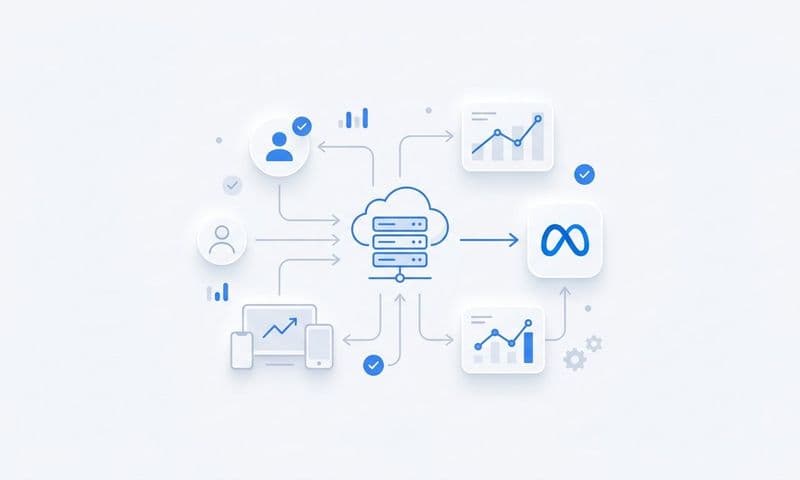
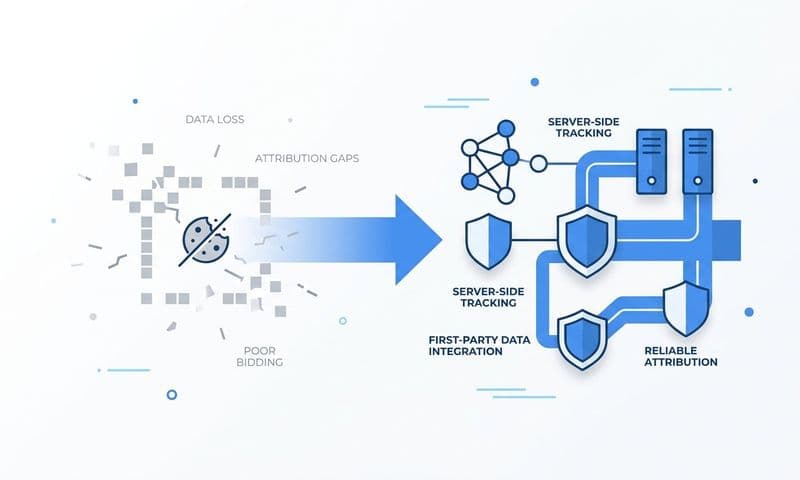
Server-Side Tracking Foundation: Start with server-side tracking as your foundation. Unlike browser-based tracking that relies on cookies and pixels, server-side tracking sends conversion data directly from your server to ad platforms. This bypasses browser restrictions, ad blockers, and cookie limitations. Understanding the difference between Google Analytics vs server-side tracking helps you choose the right approach for your business.
When a customer converts on your website, your server sends that conversion event directly to Meta, Google, and other platforms through their Conversion APIs. The data is more reliable, more complete, and less vulnerable to privacy restrictions.
Server-side tracking doesn't solve attribution overlap—platforms still claim credit based on their own rules—but it ensures they have accurate conversion data to work with.
CRM Integration Layer: Your CRM holds the truth about which leads became customers and how much revenue they generated. Connecting this data to your advertising analytics transforms surface-level metrics into revenue-connected insights.
This integration works both directions. Ad interaction data flows into your CRM, enriching lead records with information about which campaigns they engaged with. Revenue data flows back to your analytics platform, connecting closed deals to the marketing touchpoints that influenced them.
For B2B companies, this connection is critical. A lead that converts today might have interacted with your ads three months ago. Without CRM integration, that historical ad interaction looks like a failure. With integration, you see the complete picture.
Centralized Attribution Engine: This is where everything comes together. A centralized attribution platform ingests data from all your sources—ad platforms, website analytics, CRM, offline conversions—and creates a unified view of the customer journey. Many marketers are now exploring an alternative to Google Analytics attribution to gain this unified perspective.
Instead of checking five different dashboards with conflicting numbers, you see one source of truth. Every touchpoint is tracked. Attribution is applied consistently using your chosen model. Revenue connects back to the campaigns that influenced it.
This isn't just about reporting—it's about enabling better decisions. When you can see which campaigns contribute to revenue versus which just generate clicks, you can confidently reallocate budget to what works.
Conversion Sync Component: Here's the piece that closes the loop: feeding accurate conversion data back to ad platforms. Platforms use conversion data to optimize their algorithms—teaching them which audiences and placements drive results.
When platforms only see partial conversion data due to tracking limitations, their optimization suffers. They can't identify patterns in who converts. They can't effectively optimize for conversions they don't know about.
Conversion sync solves this by sending complete, deduplicated conversion data back to platforms through their Conversion APIs. Meta's algorithm learns from real conversion patterns, not just the subset it could track through pixels. Google's Smart Bidding gets better data to optimize against. The platforms' AI works better because it has better information.
This creates a positive feedback loop: better data leads to better optimization, which leads to better performance, which generates more data to optimize against.
Turning Analytics Into Action: Optimization Strategies That Scale
Data without action is just expensive noise. Here's how to use ad performance analytics to make optimization decisions that actually improve results.
Identifying Hidden Value Campaigns: Some campaigns look like underperformers based on last-click attribution but actually contribute significantly to conversions when you examine the full journey. Top-of-funnel awareness campaigns often fall into this category.
Look for campaigns with high assisted conversions—they appear in the conversion path but aren't the final touchpoint. These campaigns might show poor ROAS in platform dashboards while actually playing a crucial role in customer acquisition. Learning how to improve campaign performance with analytics starts with identifying these hidden contributors.
The optimization move isn't to kill these campaigns—it's to understand their role and fund them appropriately. If a campaign consistently appears as the first or second touchpoint in high-value customer journeys, it's working even if it never gets last-click credit.
Budget Reallocation Based on True Attribution: Once you see which campaigns actually drive revenue, budget reallocation becomes straightforward. Increase spend on campaigns with strong true ROAS. Reduce or eliminate spend on campaigns that look good in platform dashboards but don't contribute to real conversions.
The key is making changes based on complete data, not platform-reported metrics. A campaign might show 3x ROAS in Meta's dashboard but only 1.5x true ROAS when you account for attribution overlap and connect to actual revenue. That's the difference between scaling profitably and burning money.
Test budget shifts gradually. Move 20% of budget from underperforming campaigns to high performers. Measure the impact over a complete conversion cycle. Adjust again based on results. This iterative approach prevents dramatic mistakes while continuously improving efficiency.
Cross-Channel Optimization Opportunities: Here's where unified analytics creates advantages that platform-specific optimization can't match. When you see the complete customer journey, you can identify patterns across channels.
Maybe customers who see both Meta and Google ads convert at 3x the rate of those who only see one. That's a signal to run coordinated campaigns across both platforms rather than treating them as separate initiatives. Effective performance marketing analytics reveals these cross-channel synergies that would otherwise remain hidden.
Or perhaps LinkedIn ads rarely drive direct conversions but significantly shorten the sales cycle for leads that come through other channels. That insight changes how you value LinkedIn spend—it's not about direct ROAS, it's about acceleration.
AI-Powered Recommendation Systems: Manual analysis of cross-channel data at scale is nearly impossible. This is where AI-powered analytics platforms add serious value. They can identify optimization opportunities across thousands of campaigns and audience segments simultaneously.
AI can spot patterns humans miss: certain audience combinations that consistently outperform, times of day when conversion rates spike, creative elements that correlate with higher customer lifetime value. Predictive analytics for campaign performance takes this further by forecasting which campaigns will deliver results before you spend the budget.
The key is using AI as a recommendation engine, not an autopilot. Review the suggestions, understand the reasoning, and implement changes strategically. AI excels at pattern recognition across massive datasets. You excel at strategic judgment and business context. Combine both for optimal results.
Common Analytics Pitfalls and How to Avoid Them
Even with solid analytics infrastructure, certain mistakes can lead you astray. Here's what to watch out for.
The Last-Click Trap in Complex Sales Cycles: Optimizing for last-click attribution in B2B or high-consideration purchases systematically undervalues awareness and consideration-stage marketing. The problem is that last-click attribution gives 100% credit to whatever touchpoint happened right before conversion—usually branded search or direct traffic.
This creates a false narrative where top-of-funnel campaigns look ineffective because they rarely get final-touch credit. You cut budget from awareness campaigns, and three months later your pipeline dries up because you stopped feeding the top of the funnel.
The fix is using multi-touch attribution models that recognize the full journey. Even a simple linear model that distributes credit equally across touchpoints provides a more accurate picture than last-click for complex sales cycles. Proper digital attribution analytics implementation prevents this common mistake.
Incomplete Data Windows: Conversions don't respect your reporting calendar. If you analyze campaign performance for January but some January ad interactions convert in February, your analysis is incomplete. You're making decisions based on partial data.
This is particularly dangerous when comparing campaigns with different conversion timelines. A quick-converting offer might look more effective than a longer-cycle product simply because more conversions happen within your reporting window.
Always use a conversion lag window that matches your typical sales cycle. If customers typically convert within 30 days, wait 30 days after a campaign ends before evaluating its full performance. Yes, this slows down your analysis. It also makes it accurate.
Cross-Platform Comparison Mistakes: Comparing platform-reported metrics across channels leads to flawed conclusions because each platform uses different attribution methodologies, different conversion tracking, and different audience definitions.
When Meta reports a 4x ROAS and Google reports 3x ROAS, you can't conclude that Meta is outperforming Google. They're measuring different things using different rules. The conversions they're counting likely overlap significantly.
Only compare performance using a consistent attribution methodology applied across all channels. This requires a centralized analytics platform that tracks conversions independently and applies the same attribution rules to all traffic sources. Understanding the difference between marketing attribution software vs traditional analytics clarifies why this unified approach matters.
Ignoring Statistical Significance: Small sample sizes lead to false conclusions. A campaign with 5 conversions out of 100 clicks might look more efficient than one with 50 conversions out of 1,200 clicks, but the sample size is too small to be meaningful. Random variation creates apparent patterns that disappear with more data.
Use statistical significance testing before making major optimization decisions. Most analytics platforms include this functionality. If a performance difference isn't statistically significant, treat it as noise rather than signal.
Making Analytics Your Competitive Advantage
The digital advertising landscape isn't getting simpler. Privacy regulations continue evolving. Tracking becomes more challenging. Competition for attention intensifies. In this environment, accurate analytics isn't just helpful—it's the foundation of sustainable growth.
Moving beyond siloed platform data to unified, revenue-connected measurement transforms how you make decisions. Instead of guessing which campaigns work based on incomplete platform reports, you know. Instead of hoping your budget allocation is optimal, you can prove it.
This confidence enables the kind of aggressive scaling that grows businesses. When you trust your data, you can confidently increase spend on campaigns that genuinely drive revenue. You can test new channels knowing you'll accurately measure their contribution. You can optimize continuously based on complete information rather than fragments.
The marketers winning in this environment aren't the ones with the biggest budgets—they're the ones with the best data. They see the complete customer journey. They understand true attribution. They optimize based on revenue, not vanity metrics.
Building this capability requires the right infrastructure: server-side tracking for accuracy, CRM integration for revenue connection, centralized attribution for unified measurement, and conversion sync to improve platform optimization. These components work together to create a complete picture of what's actually driving results.
The alternative is continuing to make decisions based on conflicting platform reports, wondering why campaigns that look successful in dashboards don't translate to business growth. That gap between reported performance and actual results isn't going to close on its own—it requires a fundamentally different approach to measurement.
Ready to elevate your marketing game with precision and confidence? Discover how Cometly's AI-driven recommendations can transform your ad strategy—Get your free demo today and start capturing every touchpoint to maximize your conversions.