Ad spend is scattered across more platforms than ever before. You have campaigns running on Meta, Google, TikTok, LinkedIn, and maybe a handful of programmatic networks on top of that. Yet despite all this activity, many marketers find themselves staring at dashboards that tell conflicting stories, missing conversions, and struggling to answer a simple question: which campaigns are actually driving revenue?
The culprit is not your strategy. It is your tracking infrastructure. Privacy changes, cookie deprecation, and browser-level restrictions have quietly eroded the accuracy of traditional tracking methods over the past few years. What used to work reliably no longer does, and the gap between what your ad platforms report and what your CRM records has grown wider as a result.
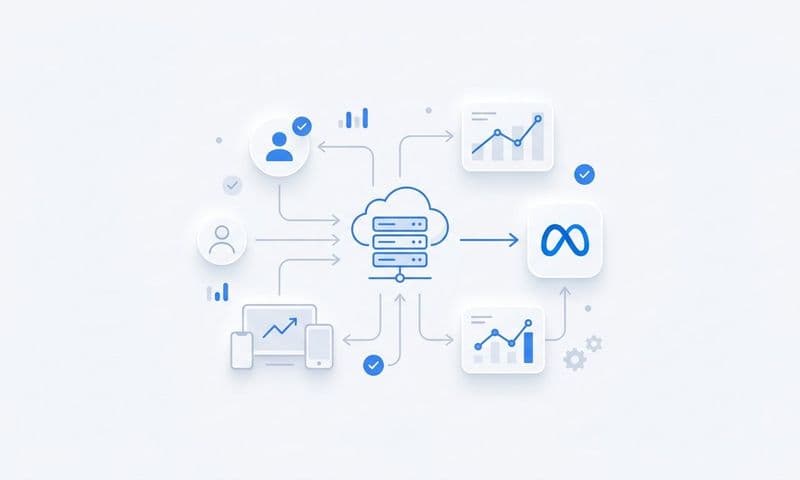
This is where the ad tracking API enters the picture. Think of it as the connective tissue that links your ad platforms, your website, and your CRM into a single, coherent data pipeline. Instead of relying on fragile browser-based pixels that can be blocked, lost, or degraded by privacy settings, an ad tracking API enables server-to-server communication that is far more resilient and accurate. The result is a unified, trustworthy view of campaign performance across every channel you run.
In this article, we will break down exactly what ad tracking APIs are, how they work under the hood, why they have become essential for modern marketers, and how you can use them to make smarter, more confident budget decisions.
The Engine Behind Your Marketing Data Pipeline
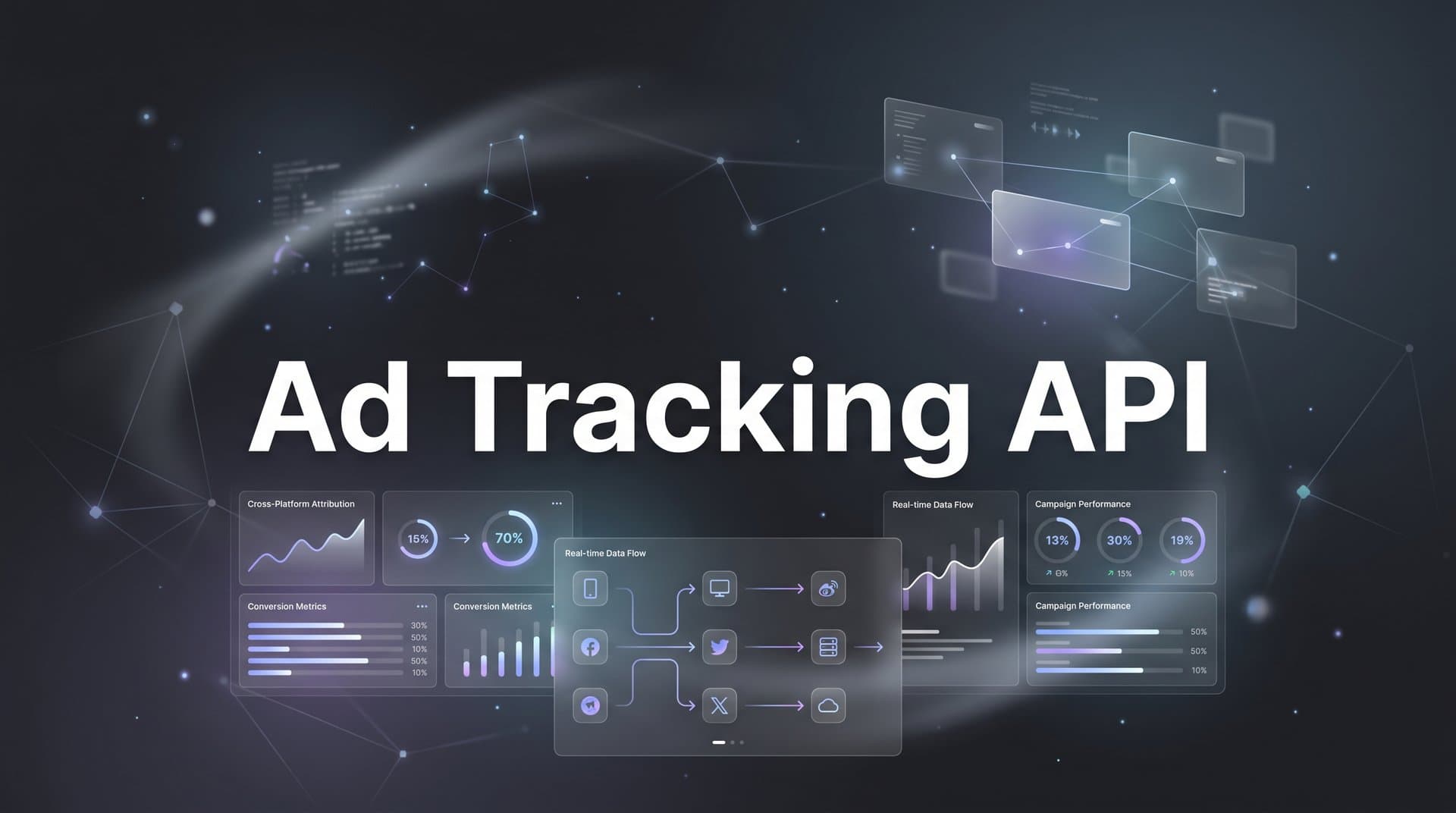
At its core, an ad tracking API is a programmatic interface that allows software systems to send and receive ad performance data between platforms. In plain terms, it is a structured communication channel that lets your tracking system, CRM, or analytics platform talk directly to ad platforms like Meta, Google, or TikTok without going through a user's browser.
To understand why this matters, it helps to contrast it with older tracking methods. UTM parameters are URL tags that tell you where a visitor came from, but they rely entirely on the user completing an action in the same browser session. Pixels are small snippets of JavaScript code that fire in the browser when a user takes an action, like making a purchase or filling out a form. Cookies store user identifiers locally in the browser to track behavior over time.
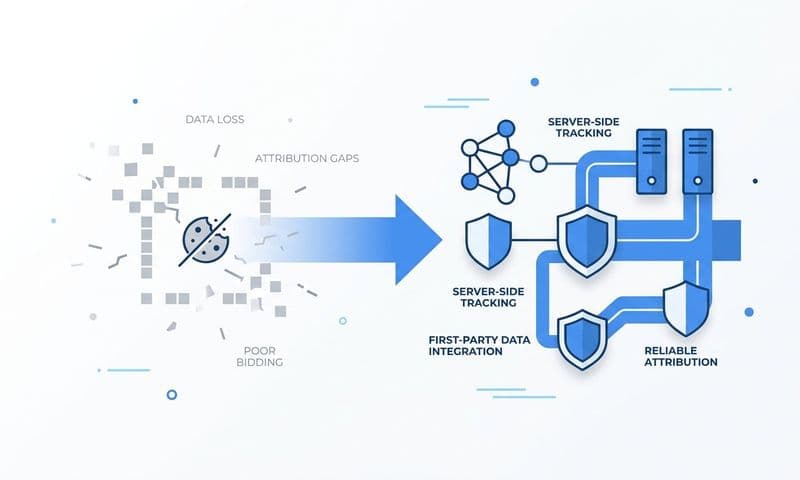
All three of these approaches share a common vulnerability: they depend on the browser cooperating. Ad blockers can suppress pixels. Safari's Intelligent Tracking Prevention limits cookie lifespans. iOS restrictions reduce cross-app tracking. The result is that a meaningful portion of your conversions simply goes unrecorded.
An ad tracking API sidesteps this entirely. Instead of waiting for a browser to fire a pixel, your server sends conversion data directly to the ad platform's server. No browser involvement. No cookie dependency. No ad blocker interference. The data travels from your systems to the platform's systems through a secure, authenticated connection.
The types of data an ad tracking API handles are broad and valuable. Click data captures when and where users interact with your ads. Impression data records how many times an ad was shown and to whom. Conversion events signal when a user completes a meaningful action, whether that is a purchase, a lead form submission, or a trial signup. Cost data helps you understand spend at the campaign and ad level. Audience signals, such as customer match lists and behavioral data, can also flow through APIs to improve targeting precision.
Together, these data types give ad platforms the information they need to optimize their machine learning models, and give you the visibility you need to understand what is working. The ad tracking API is not just a technical component. It is the foundation of your entire marketing intelligence system.
How Ad Tracking APIs Actually Work (Step by Step)
Understanding the technical flow of an ad tracking API does not require a computer science degree. The process is logical once you see it laid out, and understanding it will help you make better decisions about your tracking setup.
Here is how it typically works from start to finish.
A user sees your ad on Meta or Google and clicks on it. At the moment of that click, the ad platform assigns a unique identifier to that interaction. On Meta, this is called a Click ID (fbclid). On Google, it is a Google Click ID (gclid). This identifier is appended to the URL the user lands on and is captured by your tracking system.
The user then navigates your website, perhaps reads a product page, and eventually completes a conversion action, like submitting a lead form. At this point, your server captures the conversion event along with the click ID that was stored when the user first arrived. Your system then packages this data and sends it to the ad platform's API endpoint: a specific URL that the platform has set up to receive this kind of information.
The ad platform receives the conversion event, matches it back to the original click using the click ID, and attributes the conversion to the correct campaign, ad set, and creative. This attribution data then feeds into the platform's bidding and targeting algorithms.
This is server-side tracking in action, and it produces dramatically more reliable data than browser-based pixels for several reasons. Browser pixels fire only when a page loads successfully and the JavaScript executes without interference. Server-side events, by contrast, are sent from your infrastructure directly to the platform's infrastructure. They are not subject to browser restrictions, ad blockers, or the inconsistencies of individual user environments.
The post-iOS 14.5 landscape made this distinction critical. When Apple introduced its App Tracking Transparency framework, it required apps to ask users for permission before tracking them across other apps and websites. Opt-in rates were low, which meant that a large share of conversions driven by Meta ads on iOS devices became invisible to pixel-based tracking. Meta's Conversions API was built specifically to address this gap by enabling server-side event transmission.
Conversion sync is the final piece of this loop. Once your server has sent enriched conversion data back to platforms like Meta and Google, those platforms use it to improve their algorithmic optimization. Better conversion signals mean the platform's machine learning models can identify higher-quality audiences, adjust bids more intelligently, and deliver your ads to people more likely to convert. The data you send back does not just improve your reporting. It actively improves your campaign performance over time.
Why Marketers Cannot Afford to Ignore API-Based Tracking
The accuracy gap between browser-based and API-based tracking is not a minor rounding error. For businesses running significant ad spend, it can represent a substantial portion of conversions going unattributed, which leads to misguided budget decisions and underperforming campaigns.
Consider a typical cross-device journey. A user sees your ad on their phone during a commute, clicks through, and browses your product. They then switch to their laptop that evening and complete the purchase. A pixel-based setup will often fail to connect these two events, because the cookie set on the phone does not transfer to the desktop browser. The conversion appears to come from nowhere, or gets attributed to a direct visit, while the original ad gets no credit.
API-based tracking handles this more gracefully. Because the click ID is captured at the server level and stored against the user's session or CRM record, it is possible to match the eventual conversion back to the originating ad interaction even across devices and sessions. The result is a more complete and accurate picture of what drove the purchase. Understanding why ad tracking is inaccurate helps illustrate the scale of this problem.
This accuracy improvement has a direct downstream effect on ad platform optimization. Ad platforms like Meta and Google use the conversion signals you send them to train their bidding algorithms. If your pixel is only capturing a fraction of your actual conversions, the algorithm is working with incomplete information. It may underbid for audiences that are actually converting at high rates, or overbid for audiences that look good on the surface but do not actually close. When you feed the algorithm better data through an API, it makes better decisions on your behalf.
Touchpoint attribution tracking is another area where ad tracking APIs create a meaningful advantage. Last-click attribution, which gives full credit to the final touchpoint before a conversion, is a well-known oversimplification. A customer might have encountered your brand through a TikTok video, clicked a retargeting ad on Instagram, and converted after clicking a Google search ad. Last-click gives all the credit to Google and zero credit to TikTok or Instagram, even though those earlier touchpoints were essential to building intent.
Ad tracking APIs allow you to stitch together the full customer journey across channels. When every touchpoint is captured at the server level and stored in a unified system, you can apply attribution models that distribute credit more fairly and accurately. This gives you a clearer picture of which channels are genuinely contributing to revenue, not just which ones happen to be present at the final click.
Common Ad Tracking APIs Every Marketer Should Know
The major ad platforms have each built their own server-side conversion APIs, and understanding what each one offers is useful context for building your tracking strategy.
Meta Conversions API (CAPI): Meta's server-side solution allows you to send web events, app events, and offline conversions directly from your server to Meta. It was designed in large part to recover the signal lost after iOS 14.5, and it works alongside the Meta Pixel to create a more complete conversion picture. When both are running, Meta can deduplicate events to avoid double-counting while benefiting from the combined signal. You can learn more about this in our guide to conversion API tracking.
Google Ads API and Enhanced Conversions: Google's approach involves sending hashed first-party data, such as email addresses, alongside conversion events. This allows Google to match conversions to signed-in Google users even when cookies are not present. The Google Ads API also enables programmatic campaign management, bid adjustments, and reporting at scale, making it valuable beyond just conversion tracking.
TikTok Events API: TikTok's server-side solution mirrors the functionality of Meta's CAPI, allowing advertisers to send web and app events from their servers to TikTok. As TikTok has grown as an advertising platform, its Events API has become increasingly important for brands running performance campaigns there. For a deeper look, explore our guide on TikTok ads attribution tracking.
LinkedIn Conversions API: LinkedIn's offering is particularly valuable for B2B marketers, where conversion cycles are long and the customer journey often spans multiple sessions and devices. The LinkedIn Conversions API allows you to send CRM events, such as a lead reaching a qualified stage or a deal closing, back to LinkedIn for attribution and optimization.
Here is the challenge: managing all of these APIs simultaneously is genuinely complex. Each platform has its own authentication requirements, event schemas, error handling protocols, and data mapping conventions. A developer who sets up Meta CAPI needs to learn an entirely different set of specifications to implement the TikTok Events API. Keeping these integrations maintained, updated, and accurate as platforms evolve their APIs is an ongoing engineering burden.
This is why unified tracking platforms have emerged as a practical solution. Rather than building and maintaining individual API integrations for every platform, a unified platform aggregates multiple ad tracking APIs into a single system. Your team configures events once, and the platform handles the routing, formatting, and transmission to each ad platform's API. This dramatically reduces the technical burden on marketing teams and ensures that your tracking infrastructure stays current as platform APIs change.
Setting Up Ad Tracking API Integrations the Right Way
Getting your ad tracking API setup right from the beginning saves a significant amount of pain later. The technical plumbing matters, but so does the strategic foundation you build before you write a single line of code or configure a single integration.
Start with your event taxonomy. Before connecting any APIs, define exactly which user actions constitute meaningful events in your funnel. Page views, button clicks, form submissions, trial signups, purchases, and subscription renewals all deserve clear, consistent names. If your CRM calls a qualified lead one thing and your website calls it something else, your data will be inconsistent from the start. Establish naming conventions that are descriptive, consistent, and shared across your team.
Next, define what counts as a conversion at each stage of your funnel. For an e-commerce business, this might be a completed purchase. For a SaaS company, it might be a trial signup, a demo request, and a paid subscription activation. For a B2B company, it might include a marketing-qualified lead, a sales-accepted lead, and a closed deal. Our guide on sales funnel attribution tracking covers how to map these stages effectively.
When it comes to implementation, a practical approach is to start with your highest-spend platforms first. If Meta and Google account for the majority of your ad budget, set up their conversion APIs before moving on to TikTok or LinkedIn. This ensures that your most critical data flows are working accurately before you expand the scope of your integration work.
Validate your data rigorously after each integration. Compare API-reported conversions against your CRM records over a rolling window of time. If you see significant discrepancies, investigate the cause before moving on. Common issues include event deduplication errors, mismatched click IDs, or incorrect event timing. Understanding why conversion tracking numbers are wrong can help you diagnose these problems early.
This is where platforms like Cometly make a meaningful difference. Rather than requiring your team to build and maintain custom API integrations for each ad platform, Cometly connects your ad platforms, CRM, and website through server-side tracking and conversion sync out of the box. You get the benefits of API-based tracking without the engineering overhead. Events are captured accurately, routed to the right platforms, and fed back as enriched conversion signals that improve algorithmic performance. For marketing teams that want accurate data without a dedicated engineering resource, this kind of unified platform removes the biggest barrier to getting API-based tracking right.
Turning API Data Into Smarter Budget Decisions
Accurate data is only valuable if you act on it. The real payoff of a well-configured ad tracking API setup is what it enables you to do with your budget.
When every conversion is captured accurately and attributed to the right campaign, creative, and channel, you can move beyond gut-feel budget allocation. You can look at your data and say with confidence that a specific campaign on a specific platform is generating revenue at a specific cost, and that another campaign is consuming budget without producing meaningful returns. Investing in the right revenue attribution tracking tools makes this level of clarity possible.
This is where AI-powered analysis adds another layer of value. Platforms like Cometly use the data flowing through your API integrations to surface actionable recommendations. Rather than manually sifting through dashboards to identify trends, you can get AI-driven insights that flag high-performing ads, identify campaigns ready to scale, and highlight areas where spend is underperforming relative to revenue contribution. The AI is only as good as the data it works with, which is exactly why accurate API-based tracking is the prerequisite for meaningful AI-driven optimization.
The feedback loop is worth emphasizing because it compounds over time. When you send enriched, accurate conversion data back to Meta or Google through their APIs, their machine learning models update their understanding of who converts for your business. They begin to find more people who look like your best customers. Bid strategies become more efficient. Targeting improves. Cost per acquisition trends downward. This is not a one-time benefit. It is a flywheel that keeps improving as long as you keep feeding it high-quality data.
Marketers who invest in API-based tracking infrastructure are not just solving a data accuracy problem. They are building a compounding performance advantage that grows more valuable over time as their conversion data accumulates and their ad platform algorithms become better calibrated to their actual business outcomes.
Putting It All Together
Ad tracking APIs have moved from a technical nice-to-have to an operational necessity. The combination of privacy changes, browser restrictions, and increasingly complex customer journeys has made browser-based tracking insufficient for marketers who need accurate, complete data to make confident decisions.
The good news is that the path forward is clear. Server-side tracking through ad platform APIs captures the conversions that pixels miss. Enriched conversion data fed back to platforms improves algorithmic performance. Multi-touch attribution gives you a true picture of which channels and campaigns are driving revenue. And unified platforms like Cometly make it possible to capture all of this without building a custom engineering project from scratch.
If you are still relying primarily on pixel-based tracking, there is a good chance you are making budget decisions based on incomplete data. Some of your best-performing campaigns may be underreported. Some of your underperforming ones may be getting more credit than they deserve. The gap between what you think is working and what is actually working can be significant.
Now is the right time to evaluate your current tracking setup and ask honestly whether your data infrastructure is keeping pace with the complexity of your ad strategy. The marketers who get this right will have a real and durable advantage over those who do not.
Ready to elevate your marketing game with precision and confidence? Discover how Cometly's AI-driven recommendations can transform your ad strategy. Get your free demo today and start capturing every touchpoint to maximize your conversions.