Running paid ads without proper tracking is like driving with your eyes closed. You spend budget, generate clicks, and hope for the best. But without knowing which ads actually drive purchases, you cannot scale what works or cut what does not.
Ad tracking software gives ecommerce teams the visibility they need to connect ad spend to real revenue. The right tool shows you which campaigns, channels, and creatives are generating customers, not just clicks. And in 2026, with browser privacy changes, iOS restrictions, and cookie limitations reshaping how data flows, choosing the right platform matters more than ever.
We evaluated each tool below on attribution accuracy, integration depth, ease of use, and how well it handles modern tracking challenges. Whether you run a direct-to-consumer brand, a subscription business, or a multi-channel store, there is a solution here that fits your stack and your scale.
1. Cometly
Best for: Ecommerce and SaaS teams that need multi-touch attribution, server-side tracking, and AI-driven ad insights in one platform.
Cometly is a marketing attribution and analytics platform that connects every ad dollar to real revenue through multi-touch attribution, server-side conversion tracking, and an AI-powered ads manager.
 9 Best Marketing Attribution Platforms to Compare in 2026
Where This Tool Shines
Cometly is built for teams that are tired of trusting platform-reported ROAS. Instead of relying on Meta or Google to grade their own homework, Cometly gives you a neutral, unified view of performance across every channel. You can see which campaigns, ad sets, and creatives are actually driving conversions, not just which ones are claiming credit.
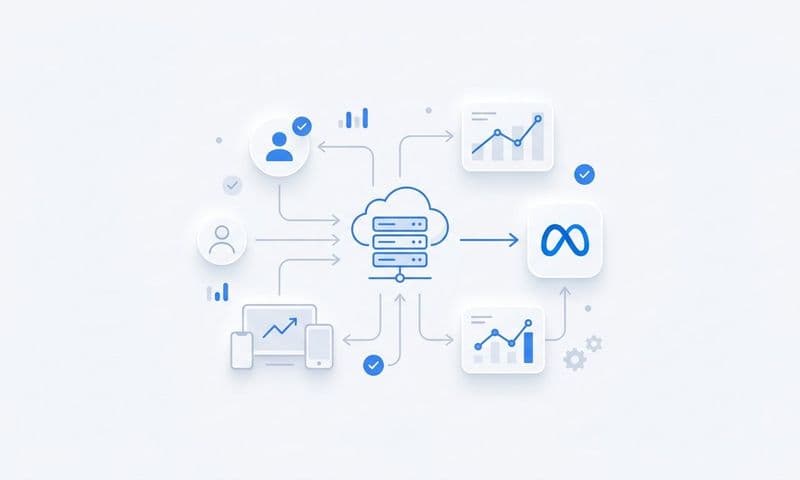
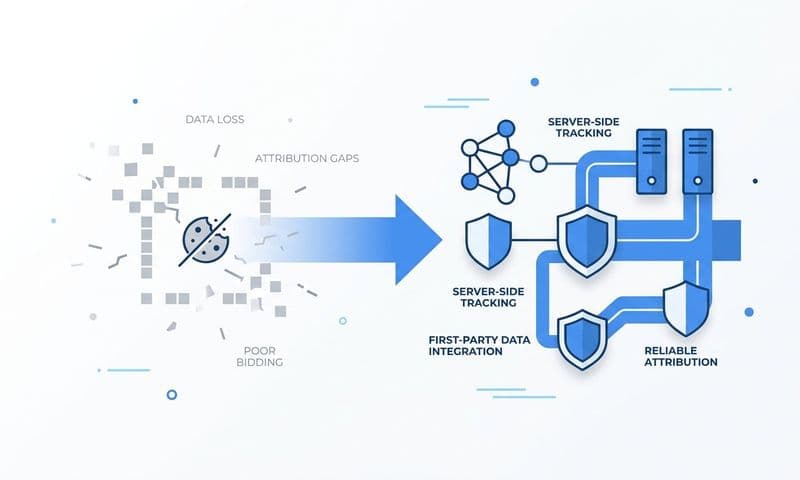
The server-side tracking and Conversion API integration make it particularly strong for ecommerce teams dealing with signal loss from browser restrictions. Rather than watching your data degrade every time a user blocks cookies, Cometly sends enriched, conversion-ready events directly to ad platforms, improving both attribution accuracy and ad optimization.
Key Features
Multi-Touch Attribution: Tracks every touchpoint across paid channels and attributes revenue using multiple attribution models so you can compare first-click, last-click, and linear views side by side.
Server-Side Conversion Tracking: Bypasses browser limitations by sending conversion data server-to-server, maintaining accuracy even as third-party cookies continue to disappear.
AI Ads Manager: Surfaces performance recommendations based on your actual revenue data, helping you identify which ads to scale and which to cut without guessing.
Customer Journey Analytics: Visualizes the full path from first ad click to conversion, giving you a clear picture of how customers move through your funnel.
70+ Native Integrations: Connects with Stripe, major CRMs, Shopify, Meta, Google Ads, and dozens of other platforms to pull all your data into one place.
Best For
Ecommerce brands and growth teams that need accurate cross-channel attribution without patching together multiple tools. Especially valuable for teams running significant ad spend across Meta and Google who want to move beyond platform-reported numbers and connect campaigns directly to revenue.
Pricing
Paid plans available with pricing based on usage and team size. Visit cometly.com for current pricing details.
2. Triple Whale
Best for: Shopify-native DTC brands running paid social and search who want a clean, consolidated analytics dashboard.
Triple Whale is a Shopify-native analytics and attribution platform designed specifically for direct-to-consumer ecommerce brands managing paid social and search campaigns.
 9 Best Ad Tracking Software for Ecommerce in 2026
Where This Tool Shines
Triple Whale has built a strong reputation in the DTC community for good reason. Its Summary dashboard pulls together your most important metrics, including blended ROAS, new customer acquisition cost, and total ad spend, into a single view that gives founders and marketers a daily pulse on performance.
The creative analytics feature is a standout. Instead of toggling between ad platforms to compare creative performance, Triple Whale surfaces ad-level data in one place, making it easier to identify which hooks, formats, and offers are actually resonating with your audience.
Key Features
Pixel-Based Attribution: Captures conversion data using a first-party pixel and blends it with platform data for a more accurate ROAS picture.
Summary Dashboard: Consolidates key DTC metrics into a daily overview that reduces the need to log into multiple ad platforms.
Creative Analytics: Breaks down performance by individual ad creative so you can quickly identify winning and losing assets.
Post-Purchase Survey Integration: Collects self-reported attribution data from customers at checkout to supplement pixel tracking.
Shopify-Native Integration: Connects directly to your Shopify store for accurate order and revenue data without complex setup.
Best For
Shopify-based DTC brands, particularly those in the $1M to $20M revenue range, that want a purpose-built analytics tool without the complexity of enterprise attribution platforms. Works best for teams running Meta and Google as primary channels.
Pricing
Starts around $129 per month, with pricing tiers based on store revenue. Higher-revenue stores will fall into higher pricing brackets.
3. Northbeam
Best for: Scaling ecommerce brands with complex, multi-channel ad stacks that need advanced attribution modeling and budget forecasting.
Northbeam is an advanced multi-touch attribution and media mix modeling platform built for ecommerce brands that have outgrown simpler analytics tools.
 9 Best Ad Campaign Attribution Platforms to Track Your Marketing ROI in 2026
Where This Tool Shines
Northbeam goes deeper than most attribution tools by incorporating machine learning models that account for the full complexity of how customers actually convert. Rather than applying a fixed attribution rule, it uses data-driven models that adapt to your specific customer behavior patterns.
The media mix modeling and budget forecasting capabilities set it apart for brands managing significant ad budgets across multiple channels. If you are trying to answer questions like "what happens to my revenue if I shift budget from Meta to YouTube," Northbeam gives you a data-backed framework to explore those scenarios.
Key Features
Machine Learning Attribution: Uses ML models to assign credit across touchpoints based on actual conversion patterns rather than fixed rules.
Media Mix Modeling: Models the relationship between ad spend and revenue across channels to support budget allocation decisions.
Cross-Channel Visualization: Displays performance across every paid channel in a unified interface for easy comparison.
Customizable Attribution Windows: Lets you adjust lookback windows to match your specific customer purchase cycle.
Deep Ad Platform Integrations: Connects with Meta, Google, TikTok, Snapchat, and other major platforms for comprehensive data ingestion.
Best For
Mid-market and enterprise ecommerce brands spending heavily across multiple channels who need sophisticated attribution modeling beyond what standard pixel-based tools provide. Best suited for teams with dedicated analytics resources.
Pricing
Custom pricing based on ad spend and business size. Typically positioned for brands with significant monthly ad budgets. Contact Northbeam directly for a quote.
4. Rockerbox
Best for: Ecommerce brands that need a unified view across paid, organic, and offline channels in a single attribution platform.
Rockerbox is a marketing attribution platform that brings paid, organic, direct, and offline channel data together into one source of truth for ecommerce teams.
 9 Best D2C Brand Analytics Software Tools in 2026
Where This Tool Shines
Most attribution tools focus exclusively on digital paid channels. Rockerbox takes a broader view by incorporating organic search, direct traffic, email, and even offline spend like TV into the same attribution framework. For brands running omnichannel campaigns, this unified perspective is genuinely valuable.
The ability to compare attribution models side by side, from first-touch to last-touch to linear, helps teams move beyond the debate about which model is "correct" and instead understand how different perspectives tell different parts of the story.
Key Features
Unified Channel View: Combines paid, organic, direct, and offline data into a single attribution dashboard.
Multi-Model Comparison: Lets you view performance through multiple attribution lenses simultaneously.
Pixel, UTM, and Impression Data: Layers multiple data signals together for more complete conversion tracking.
TV and Offline Tracking: Extends attribution beyond digital to include linear TV and other offline spend.
Shopify and WooCommerce Integration: Connects directly to major ecommerce platforms for accurate revenue data.
Best For
Ecommerce brands running a mix of digital and offline marketing who need all channels represented in one attribution view. Particularly useful for brands where organic and direct traffic play a significant role alongside paid.
Pricing
Custom pricing based on business size and the volume of channels tracked. Contact Rockerbox for a tailored quote.
5. SegMetrics
Best for: Subscription and high-ticket ecommerce brands that need LTV-level revenue attribution back to original traffic sources.
SegMetrics is a revenue attribution platform focused on connecting customer lifetime value and cohort-level revenue back to the ads and funnels that originally acquired those customers.
 9 Best Conversion Tracking Tools for Facebook Ads in 2026
Where This Tool Shines
Most ad tracking tools measure conversion events. SegMetrics measures what happens after the conversion, which is where the real revenue story often lives. For subscription businesses or high-ticket brands with long purchase cycles, knowing that a campaign generated sign-ups is less useful than knowing it generated customers who retained and purchased again.
The integration with email platforms and payment processors means SegMetrics can follow a customer from their first ad click through multiple purchases over months, attributing all that revenue back to the original source.
Key Features
LTV Attribution: Tracks customer lifetime value back to the original ad, channel, or funnel that acquired each customer.
Cohort Revenue Reporting: Groups customers by acquisition period and shows how revenue from each cohort develops over time.
Full-Funnel Tracking: Follows customers from ad click through email nurture sequences to repeat purchases.
Subscription Revenue Tracking: Accurately attributes recurring revenue to original acquisition sources.
Lead Quality Scoring: Ranks traffic sources by the quality of customers they produce, not just the volume of leads.
Best For
Subscription box brands, SaaS-adjacent ecommerce, and high-ticket product businesses where customer LTV varies significantly by acquisition source and channel-level quality matters as much as volume.
Pricing
Starts around $175 per month, with pricing scaling based on contact volume in your account.
6. Hyros
Best for: High-ticket ecommerce and digital product sellers that need AI-powered, cross-device attribution with true revenue accuracy.
Hyros is an AI-powered ad tracking platform built for brands where accurate revenue attribution is critical and platform-reported ROAS is notoriously unreliable.
 9 Best Ad Tracking Software for Ecommerce in 2026
Where This Tool Shines
Hyros is particularly strong at solving the cross-device and cross-session attribution problem. Its AI-based user identification connects activity across multiple devices and sessions, which is essential for high-ticket products with longer consideration cycles where a customer might research on mobile, click an ad on desktop, and convert through email days later.
The phone call and email attribution tracking is a differentiator that few other platforms offer. For brands where sales happen via phone or follow-up email sequences, Hyros can connect those conversions back to the original ad source.
Key Features
AI User Identification: Uses AI to stitch together cross-device and cross-session behavior into a unified customer profile.
Phone and Email Attribution: Tracks conversions that happen via phone calls or email sequences back to originating ad campaigns.
True Revenue Attribution: Reports on actual revenue rather than relying on platform-reported conversion values.
Custom Attribution Models: Configures attribution logic to match your specific sales cycle and customer journey.
Major Ad Network Integrations: Connects with Meta, Google, YouTube, and other primary ad platforms.
Best For
High-ticket ecommerce brands, digital course sellers, and premium product businesses where deals are larger, sales cycles are longer, and the gap between platform-reported and actual ROAS tends to be significant.
Pricing
Custom pricing based on ad spend and business requirements. Hyros is typically positioned for brands investing heavily in paid advertising. Contact their team for a quote.
7. RedTrack
Best for: Media buyers and agencies managing multiple ecommerce clients or high-volume campaigns across many ad networks.
RedTrack is a performance marketing and affiliate tracking platform designed for media buyers, agencies, and advertisers who need granular campaign tracking and automation across multiple accounts.
 9 Best Ad Tracking Software for Ecommerce in 2026
Where This Tool Shines
RedTrack is built for the performance marketer who lives in the details. Its cost syncing pulls spend data from all major ad platforms automatically, so you always have an accurate picture of profitability without manually updating numbers. The rule-based automation layer lets you set conditions that trigger bid adjustments or campaign pauses based on real-time performance data.
For agencies managing multiple ecommerce clients, the multi-account workspace is a practical time-saver. You can manage campaigns across clients from a single interface without the operational chaos of juggling separate logins and dashboards.
Key Features
Automated Cost Syncing: Pulls spend data from all connected ad platforms automatically to keep ROAS calculations accurate.
Rule-Based Automation: Creates conditional rules that automatically adjust bids or pause campaigns based on performance thresholds.
Affiliate and Partner Tracking: Tracks affiliate-driven conversions alongside paid media for a complete performance picture.
Multi-Account Agency Workspace: Manages multiple client accounts from a single, organized interface.
Server-Side Postback Tracking: Supports server-side conversion tracking for improved accuracy across campaigns.
Best For
Performance marketing agencies, independent media buyers, and ecommerce brands running affiliate programs alongside paid media who need granular tracking and workflow automation in one platform.
Pricing
Self-serve plans start around $149 per month. Agency plans with additional account management features are available at higher tiers.
8. Elevar
Best for: Shopify stores that need accurate, server-side conversion tracking with consent management and data quality monitoring.
Elevar is a server-side tracking and data layer platform built specifically for Shopify stores that need reliable, privacy-compliant conversion data flowing to their ad platforms and analytics tools.
Where This Tool Shines
Elevar sits at the infrastructure layer of your tracking stack. Rather than replacing your analytics or attribution tool, it ensures that the conversion data feeding into GA4, Meta, and Google Ads is accurate, complete, and properly structured. Think of it as the foundation that makes every other tool in your stack more reliable.
The error monitoring and tracking health alerts are particularly useful. Instead of discovering weeks later that a checkout event stopped firing after a theme update, Elevar proactively flags tracking issues so you can fix them before they affect your ad optimization algorithms.
Key Features
Server-Side Event Tracking: Sends Shopify conversion events server-to-server to Meta, Google, and other platforms, bypassing browser-level signal loss.
GA4 and Meta Conversion API: Pre-built integrations that ensure accurate event data flows to both analytics and ad platforms simultaneously.
Consent Mode Compliance: Manages user consent signals to ensure data collection aligns with privacy requirements.
Data Layer Management: Structures ecommerce event data correctly so tags fire at the right time with the right information.
Tracking Health Monitoring: Continuously monitors event firing and alerts you when something breaks or underperforms.
Best For
Shopify merchants who have experienced data loss from browser restrictions or iOS updates and need a reliable server-side tracking foundation. Particularly valuable for stores where conversion data accuracy directly impacts Meta or Google Ads optimization.
Pricing
Plans start around $50 per month for basic Shopify setups, with pricing scaling based on monthly order volume.
9. Google Analytics 4 (GA4)
Best for: Ecommerce teams that need free baseline tracking, funnel analysis, and native Google Ads integration to get started.
Google Analytics 4 is Google's free web analytics platform that provides foundational ecommerce event tracking, audience building, and direct integration with Google Ads.
Where This Tool Shines
GA4 is the logical starting point for any ecommerce team that has not yet invested in a dedicated attribution platform. The free tier provides genuine value, including ecommerce event tracking, funnel exploration reports, and path analysis that can surface meaningful insights about how customers move through your site.
The native Google Ads integration is a practical advantage for brands whose primary paid channel is search. Conversion data flows directly between GA4 and Google Ads, enabling smart bidding optimization without additional configuration. For brands running primarily Google campaigns on a tight budget, this alone makes GA4 worth setting up correctly.
Key Features
Free Ecommerce Tracking: Tracks product views, add-to-cart events, checkouts, and purchases without any subscription cost.
Native Google Ads Integration: Shares conversion data directly with Google Ads to power smart bidding and audience targeting.
Funnel Exploration Reports: Builds custom funnel visualizations to identify where users drop off in the purchase process.
Audience Building: Creates remarketing audiences based on behavioral segments for use across Google's ad network.
BigQuery Export: Exports raw event data to BigQuery for advanced analysis and custom reporting by data teams.
Best For
Early-stage ecommerce brands, teams with limited analytics budgets, or any brand using Google Ads as a primary channel. GA4 works best as a starting point or as a complement to a more advanced attribution tool rather than a standalone solution for multi-channel attribution.
Pricing
Free for standard use with generous data limits. Google Analytics 360, the enterprise version, is custom-priced for organizations with advanced data needs.
Which Tool Is Right for Your Ecommerce Stack?
The best ad tracking tool is the one that matches where your business is today and where you are headed. Here is a quick framework to help you decide.
Early-stage brands with limited budgets: Start with GA4 to establish baseline tracking and connect your Google Ads data. It is free, widely supported, and gives you enough visibility to make informed decisions while you grow.
Shopify-native DTC brands: Triple Whale or Elevar are natural fits. Triple Whale gives you a consolidated analytics dashboard built for DTC metrics, while Elevar strengthens the data infrastructure underneath your existing tools.
Agencies managing multiple clients: RedTrack is purpose-built for this use case, with multi-account workspaces, cost syncing, and automation that makes managing campaigns across clients operationally manageable.
Subscription or high-ticket ecommerce: SegMetrics and Hyros both excel at connecting long-term revenue to original acquisition sources. SegMetrics is stronger for LTV and cohort analysis, while Hyros shines for cross-device identification and phone or email conversion tracking.
Omnichannel brands mixing digital and offline: Rockerbox provides the broadest channel coverage, including TV and offline spend, making it the right choice when your marketing mix extends beyond digital.
Scaling brands that need true multi-touch attribution: This is where Cometly and Northbeam compete. Northbeam brings sophisticated media mix modeling for complex, high-spend operations. Cometly brings multi-touch attribution, server-side tracking, AI-powered recommendations, and 70+ integrations in a platform that connects ad spend directly to revenue without requiring a dedicated data team to interpret the results.
The goal is not just tracking clicks. It is connecting every ad dollar to actual revenue so you can make smarter decisions about where to invest next. If you are ready to move beyond platform-reported ROAS and get a true picture of what is driving growth, Get your free demo of Cometly and see how multi-touch attribution and AI-driven insights can change how you approach your ad strategy.