You're running ads on Meta. Google's delivering clicks. TikTok says it's driving conversions. LinkedIn claims attribution for your best leads. Your dashboard shows thousands of impressions, hundreds of clicks, and a growing ad spend number that keeps climbing.
But here's the question that keeps you up at night: which of these platforms is actually making you money?
Most marketers are drowning in data while starving for insights. Every ad platform has its own dashboard, its own metrics, its own version of success. Meta shows you cost per click. Google celebrates your impression share. TikTok highlights engagement rates. Meanwhile, you're trying to figure out which campaigns are generating actual revenue and which ones are just burning budget.
This is where advertising data analytics transforms from a nice-to-have into a competitive necessity. It's the practice of collecting, connecting, and interpreting data from all your advertising channels to understand what's actually driving business results. Not vanity metrics. Not platform-reported conversions that all claim credit for the same sale. Real insights that show you where your revenue is coming from and how to get more of it.
This guide breaks down everything you need to know about advertising data analytics—from understanding what data actually matters to building a system that connects your ad spend to revenue. If you're ready to move beyond guesswork and start making confident, data-driven decisions about where to invest your marketing budget, let's dive in.
Beyond Clicks and Impressions: What Advertising Data Analytics Actually Measures
Advertising data analytics is the systematic process of collecting, analyzing, and interpreting data from your paid advertising campaigns to optimize performance and prove ROI. It's not just about tracking clicks or counting impressions—it's about connecting every dollar you spend to the business outcomes that matter.
Think of it this way: platform-level metrics tell you what happened on that specific platform. Business-level insights tell you what happened to your bottom line. There's often a massive gap between the two.
Platform-level metrics are what you see when you log into Meta Ads Manager or Google Ads. Click-through rates, cost per click, impressions, reach, engagement. These metrics measure activity, but they don't measure value. A campaign with a stellar CTR might be attracting tire-kickers who never buy. A low-engagement ad might be quietly converting your highest-value customers.
Business-level insights answer the questions that actually matter: Which campaigns generated qualified leads? Which channels drove customers with the highest lifetime value? What was the true cost to acquire a paying customer across all touchpoints? How much revenue did each marketing channel actually generate? Understanding what data analytics in marketing truly encompasses helps you shift from vanity metrics to meaningful business outcomes.
Effective advertising data analytics works with four core data types, each revealing a different piece of the puzzle.
Campaign Performance Data: This includes spend, impressions, clicks, and conversions as reported by each ad platform. It's your starting point, but it's incomplete because each platform operates in isolation.
Audience Behavior Data: How people interact with your website, app, or landing pages after clicking an ad. Time on site, pages viewed, actions taken. This shows you what happens after the click—the part most ad platforms can't see.
Conversion Data: The actions that matter to your business. Form submissions, purchases, sign-ups, demo requests. This is where you start connecting ad activity to business outcomes.
Cross-Channel Attribution Data: The complete customer journey across all touchpoints. This is the holy grail—understanding how different channels work together to drive conversions, rather than treating each platform as if it operates in a vacuum.
When you combine these data types, you stop asking "how many clicks did we get?" and start asking "which combination of touchpoints drives our most valuable customers?" That shift in perspective is what separates marketers who optimize campaigns from marketers who optimize revenue.
The Customer Journey Problem: Why Single-Platform Data Falls Short
Here's a scenario that plays out thousands of times every day: A potential customer sees your Facebook ad on Monday morning during their commute. They're interested but busy, so they keep scrolling. Tuesday evening, they search for your product category on Google and click your search ad. They browse your site but don't convert. Thursday, they see your retargeting ad on Instagram and finally make a purchase.
Now here's the problem: Facebook will claim that conversion. Google will claim that conversion. Instagram will claim that conversion. If you're relying on platform-reported data, you're counting the same sale three times and making budget decisions based on inflated numbers.
Modern customers don't convert in a straight line. They research across devices, compare options across platforms, and often interact with your brand multiple times before making a decision. Each touchpoint plays a role, but no single platform sees the complete picture. This is one of the core attribution challenges in marketing analytics that every advertiser faces.
This fragmentation has gotten dramatically worse in recent years. iOS privacy changes through App Tracking Transparency have made it harder for platforms to track user behavior across apps and websites. Third-party cookie deprecation means browser-based tracking is becoming less reliable. Cross-device tracking—understanding when the same person uses their phone, tablet, and laptop—remains challenging for most analytics setups.
The result? Platform data is increasingly unreliable for understanding true customer behavior. When Meta reports a conversion, you can't be certain whether that person actually converted because of the Meta ad or whether they were already planning to buy after seeing your Google ad yesterday.
Siloed data creates three major problems that directly impact your bottom line.
First, misattribution leads to bad budget decisions. If you're scaling the wrong campaigns because you don't know which touchpoints actually influenced conversions, you're essentially throwing darts blindfolded. You might be doubling down on channels that look good in isolation but don't actually drive incremental revenue.
Second, you're likely wasting budget on redundant touchpoints. If someone was already going to convert after seeing your Google search ad, did you really need to pay for that Instagram retargeting impression? Without understanding the full journey, you can't identify which touchpoints are necessary and which are just expensive victory laps.
Third, incomplete data makes it impossible to optimize with confidence. When you can't trust your conversion data, every optimization decision becomes a gamble. Should you increase bids on that high-performing keyword? Scale that Facebook campaign? Test a new platform? Without accurate attribution, you're guessing.
The customer journey problem isn't going away—it's getting more complex as new platforms emerge and privacy restrictions tighten. The solution isn't to collect more platform data. It's to connect the data you already have into a unified view that shows the complete journey from first impression to final purchase.
Building Your Analytics Foundation: Essential Data Sources and Connections
Effective advertising data analytics starts with connecting the right data sources. Think of it as assembling a puzzle—each piece provides crucial information, but the real value emerges when you see how they fit together.
Your ad platforms are the most obvious data source. Meta Ads Manager, Google Ads, TikTok Ads, LinkedIn Campaign Manager—wherever you're running paid campaigns. These platforms provide campaign-level data: what you spent, who you reached, what actions people took on the platform itself.
But platform data only tells you what happened before someone left that platform. To understand what happened next, you need website and app analytics. Tools like Google Analytics track user behavior after the click—which pages they visited, how long they stayed, what actions they took. This shows you whether your traffic is actually engaging with your content or bouncing immediately.
Your CRM system holds the data that connects marketing activity to actual business outcomes. Salesforce, HubSpot, Pipedrive—these systems track leads, opportunities, and closed deals. This is where you see whether that Meta ad click turned into a qualified lead, and whether that lead eventually became a paying customer. Implementing the right marketing data analytics software bridges the gap between your ad platforms and revenue systems.
Revenue data completes the picture. Whether it's from your e-commerce platform, subscription billing system, or accounting software, this shows you the actual money generated by your marketing efforts. Not estimated value, not projected revenue—actual dollars that hit your bank account.
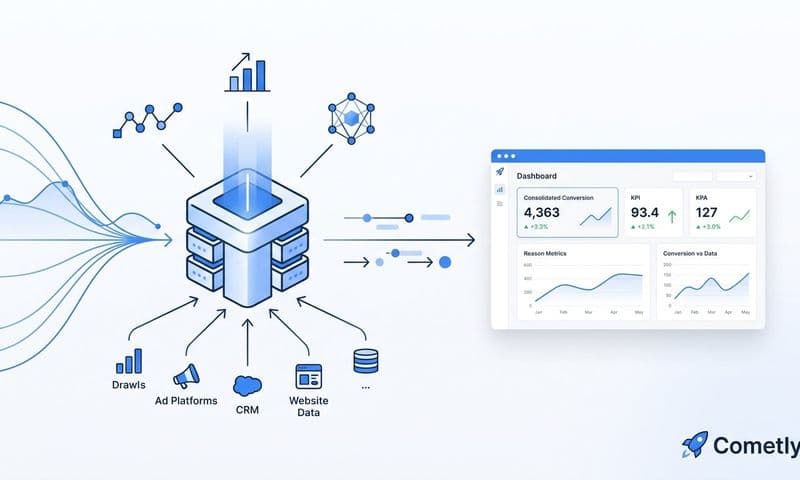
Here's where most analytics setups fall short: these data sources don't naturally talk to each other. Your ad platforms don't know what happened in your CRM. Your CRM doesn't automatically connect leads back to specific campaigns. Your revenue system doesn't tag transactions with marketing attribution data.
This is why server-side tracking has become essential for accurate advertising analytics. Unlike browser-based tracking that relies on cookies and pixels, server-side tracking captures data directly from your server. When someone converts on your website, that conversion event is sent directly from your server to your analytics platform—bypassing browser restrictions, ad blockers, and privacy limitations. Setting up first-party data tracking ensures you capture conversions that browser-based methods miss.
Server-side tracking solves several critical problems. It captures conversions that browser-based tracking misses, providing a more complete dataset for attribution analysis. It's more resilient to iOS privacy restrictions and cookie blocking. And it gives you control over what data you send to ad platforms, allowing you to share accurate conversion information that improves their optimization algorithms.
When you connect these data sources properly, something powerful happens. You can trace a customer's complete journey: from the first ad impression through multiple touchpoints, to the moment they become a lead in your CRM, all the way to the revenue they generate for your business.
This unified view reveals patterns that siloed data can't show. You might discover that customers who interact with both Google search ads and Meta retargeting have a 3x higher lifetime value than single-touchpoint customers. Or that LinkedIn ads rarely get last-click credit but play a crucial role in introducing enterprise customers to your brand. These insights are invisible when you're looking at each platform in isolation.
Building this foundation takes effort upfront—connecting platforms, implementing tracking, ensuring data flows correctly. But once it's in place, you have a system that automatically connects ad spend to revenue, making every optimization decision clearer and more confident.
Attribution Models Explained: Choosing How to Credit Your Conversions
Once you're tracking the complete customer journey, you face a new question: when someone converts after interacting with five different ads across three platforms, which one deserves credit?
This is where attribution models come in. An attribution model is simply a set of rules for distributing credit for conversions across the touchpoints that led to them. Different models tell different stories about your marketing performance, and understanding these differences is crucial for making smart budget decisions.
First-Touch Attribution gives all the credit to the first interaction a customer had with your brand. If someone clicked a Facebook ad three weeks ago, then clicked five more ads before finally converting, first-touch says Facebook gets 100% of the credit.
This model makes sense when you're focused on brand awareness and top-of-funnel performance. It answers the question: which channels are best at introducing new customers to our brand? It's particularly useful for businesses with longer sales cycles where initial awareness is a critical first step.
Last-Touch Attribution does the opposite—it gives all credit to the final touchpoint before conversion. If someone converted immediately after clicking a Google search ad, Google gets all the credit, regardless of what marketing touchpoints came before.
Last-touch is the default model for most ad platforms because it makes their performance look good. It's useful for understanding which channels are effective at closing deals, but it completely ignores the journey that led to that final click. Understanding how marketing attribution software differs from traditional analytics helps you see why platform-default models often mislead.
Linear Attribution distributes credit equally across all touchpoints. If a customer interacted with four different ads before converting, each one gets 25% of the credit. This model recognizes that multiple touchpoints contribute to conversions, but it assumes they all contribute equally—which is rarely true.
Linear attribution works well when you want a balanced view of channel performance without over-crediting first or last touches. It's particularly useful for businesses where each touchpoint plays a genuinely important role in moving customers through the funnel.
Time-Decay Attribution gives more credit to touchpoints that happened closer to the conversion. The first interaction might get 10% credit, the second 20%, the third 30%, and the final touchpoint 40%. This model assumes that recent interactions have more influence on purchase decisions than older ones.
Time-decay makes sense for businesses with shorter sales cycles where momentum matters. It recognizes the role of early touchpoints while acknowledging that recent interactions are often more influential in driving immediate conversions.
Multi-Touch or Data-Driven Attribution uses algorithms to analyze your actual conversion data and determine how much credit each touchpoint deserves based on its real influence. Instead of applying a one-size-fits-all rule, it learns from your specific customer journeys to distribute credit more accurately. Leveraging data science for marketing attribution enables these sophisticated models to reveal true channel value.
Data-driven models are the most sophisticated approach, but they require sufficient conversion volume to identify meaningful patterns. When you have enough data, these models reveal which touchpoints actually drive conversions versus which ones just happen to be present in the journey.
Here's the key insight: there's no single "correct" attribution model. Each one reveals different aspects of your marketing performance. First-touch shows you which channels are best at awareness. Last-touch shows you which channels close deals. Multi-touch shows you how channels work together.
The smartest approach is to compare multiple attribution models side by side. When you see how credit shifts between models, you gain a much deeper understanding of your marketing ecosystem. You might discover that a channel looks weak in last-touch attribution but plays a crucial role in first-touch—suggesting it's excellent for awareness but needs better nurturing sequences to drive conversions.
Your choice of attribution model should align with your business reality. If you have a short sales cycle and customers typically convert quickly, last-touch or time-decay might be most relevant. If you have a long, complex B2B sales process with multiple stakeholders, first-touch and multi-touch models reveal more about what's actually working.
From Insights to Action: Using Analytics to Optimize Ad Performance
Data without action is just expensive noise. The real value of advertising data analytics emerges when you use insights to make better decisions about where to invest your budget.
Start by identifying your true high performers—and this means looking beyond platform metrics. A campaign might have a low cost per click but generate customers with high lifetime value. Another campaign might look expensive on a cost-per-conversion basis but attract leads that close at twice the rate of other sources.
When you connect ad data to revenue data, you can calculate true return on ad spend for each campaign, audience segment, and creative variation. This reveals which efforts are actually profitable versus which ones just generate activity. You might discover that your lowest-cost campaigns are attracting bottom-of-barrel leads while a more expensive channel is quietly delivering your best customers. Tracking the right marketing analytics metrics ensures you're measuring what actually matters to your bottom line.
Use this revenue-focused view to reallocate budget strategically. If one campaign is generating a 5x return while another struggles to break even, the decision becomes obvious—even if the struggling campaign has better vanity metrics. This is where most marketers leave money on the table: they optimize for platform metrics instead of business outcomes.
Here's where it gets even more powerful: feeding accurate conversion data back to ad platforms improves their optimization algorithms. When you send complete, server-side tracked conversion data to Meta or Google, their machine learning systems get better training data. They learn to identify and target people who actually buy, not just people who click. Understanding how ad tracking tools help you scale ads with accurate data transforms your campaign performance.
This creates a virtuous cycle. Better data leads to better targeting. Better targeting leads to more efficient conversions. More efficient conversions generate more data to improve targeting further. Many marketers see immediate improvements in campaign performance simply by ensuring their ad platforms receive accurate conversion information.
Cross-channel optimization becomes possible when you understand the full customer journey. You might discover that Google search ads rarely initiate customer relationships but excel at converting people who first discovered you through Meta. This insight suggests a strategy: maintain Meta spending for awareness while ensuring you have strong search coverage to capture intent from people in your consideration phase.
Or you might find that LinkedIn ads generate few direct conversions but significantly boost conversion rates from other channels when they're part of the journey. This tells you that LinkedIn's value isn't captured in last-touch attribution—it's playing a supporting role that makes other channels more effective.
These insights allow you to build a coordinated multi-channel strategy rather than treating each platform as if it operates independently. You stop asking "which platform is best?" and start asking "how do these platforms work together to drive revenue?" Learning best practices for using data in marketing decisions helps you turn these insights into consistent action.
The optimization process becomes continuous. Monitor performance weekly, identify what's working, scale the winners, and cut the losers. But make these decisions based on complete data that connects ad spend to actual business outcomes—not platform-reported metrics that inflate results and hide the full story.
Your Path to Data-Driven Advertising Success
Building an effective advertising data analytics system isn't about collecting more data—it's about connecting the right data to see what's actually driving revenue. The marketers who win in today's complex advertising landscape aren't the ones with the biggest budgets. They're the ones with the clearest view of what's working.
The foundation is unified tracking that captures the complete customer journey across all touchpoints. Server-side tracking ensures you're not missing conversions due to browser restrictions or privacy limitations. Connected data sources mean your ad platforms, website analytics, CRM, and revenue systems all speak the same language.
Multi-touch attribution reveals how your channels work together rather than competing for credit. When you compare different attribution models, you understand which channels excel at awareness, which ones drive consideration, and which ones close deals. This insight allows you to build a coordinated strategy where each channel plays to its strengths.
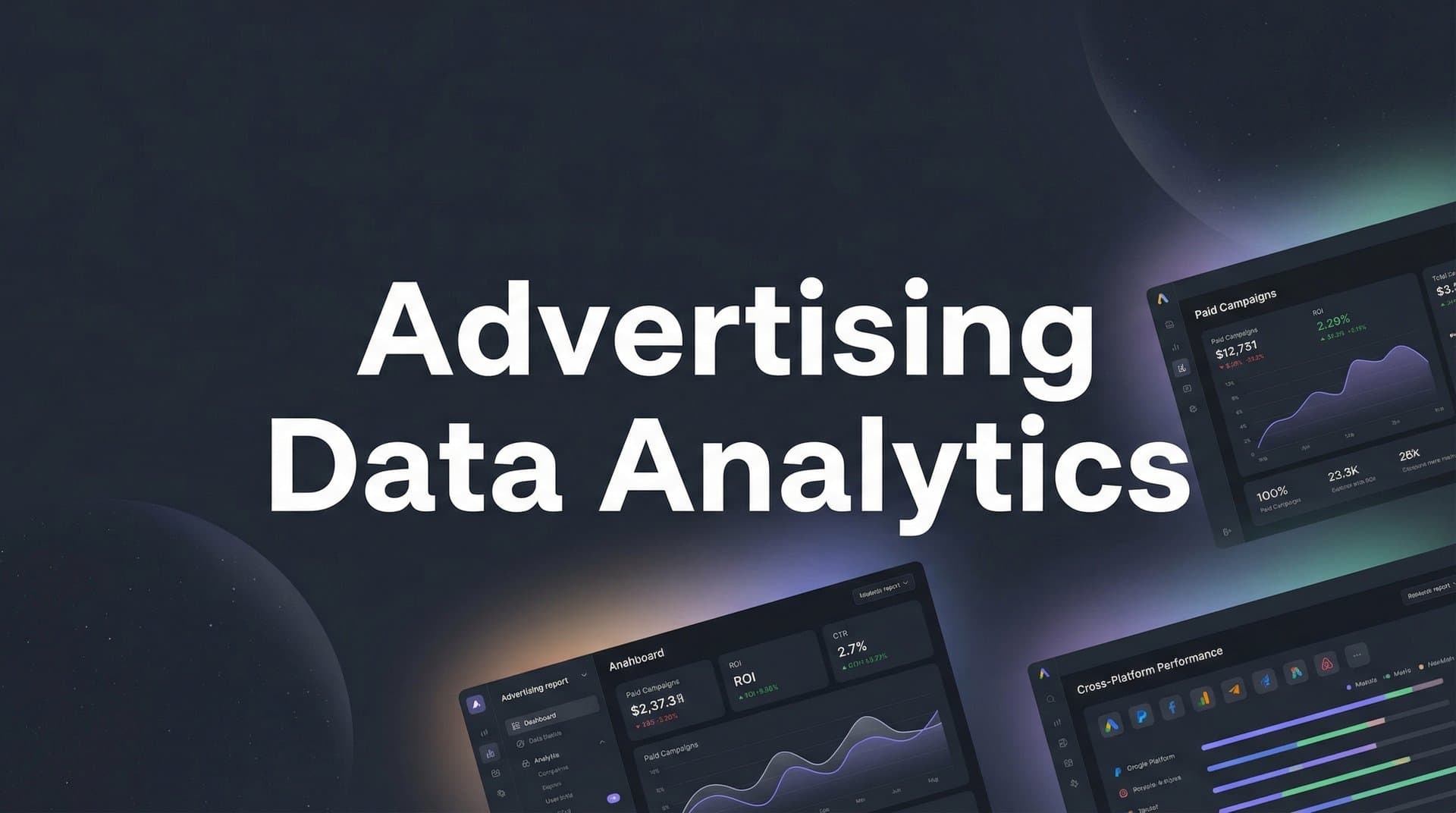
Closed-loop reporting connects every dollar you spend to the revenue it generates. You can finally answer the questions that matter: What's our true customer acquisition cost? Which campaigns drive customers with the highest lifetime value? Where should we invest our next marketing dollar for maximum return? Visualizing this data through a well-designed data analytics dashboard makes these insights accessible to your entire team.
This level of clarity creates a massive competitive advantage. While your competitors are optimizing for clicks and impressions, you're optimizing for revenue. While they're scaling campaigns based on platform-reported conversions, you're scaling based on actual business outcomes. While they're guessing about attribution, you're making decisions with confidence.
The complexity of modern advertising—multiple platforms, privacy restrictions, cross-device journeys—isn't going away. If anything, it's getting more challenging. But that complexity is exactly why accurate attribution has become so valuable. The marketers who solve this problem gain clarity while their competitors remain confused.
Ready to elevate your marketing game with precision and confidence? Discover how Cometly's AI-driven recommendations can transform your ad strategy—Get your free demo today and start capturing every touchpoint to maximize your conversions.