
Amplitude is one of the most respected product analytics platforms on the market. But when B2B SaaS marketing teams start asking which ads drove their best customers, which campaigns are generating pipeline, and which channels actually close revenue, they quickly hit a wall. Amplitude was built to answer different questions.
The real decision is not simply Amplitude versus attribution software. It is understanding which category of tool solves your specific problem, and then finding the best option within that category. This list covers nine tools across both product analytics and dedicated marketing attribution so you can make a clear, informed choice based on your team's actual goals.
Selection criteria include attribution model depth, ad platform integrations, server-side tracking capabilities, pipeline and revenue visibility, and fit for B2B SaaS marketing teams. Here are the top tools to evaluate.
1. Cometly
Best for: B2B SaaS teams that need end-to-end attribution from first ad click to closed-won revenue.
Cometly is a marketing attribution platform built specifically for B2B SaaS companies that need to connect ad spend directly to pipeline and revenue.
 9 Best Attribution Platforms for Agencies in 2026
Where This Tool Shines
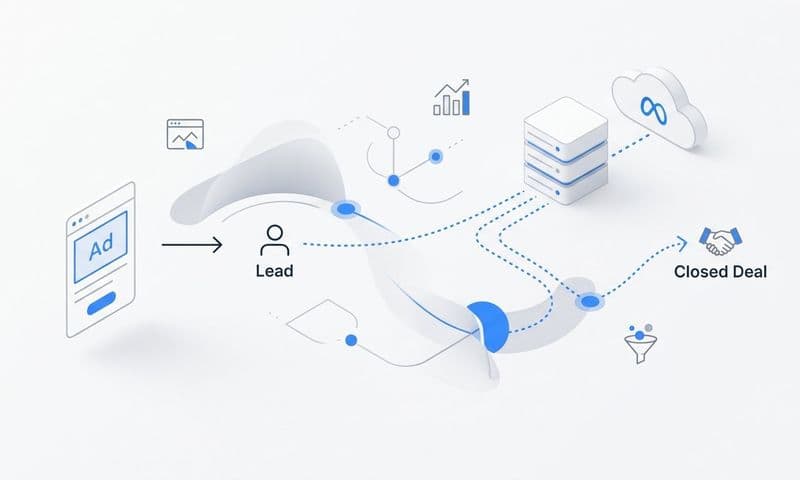
Most attribution tools track clicks and conversions. Cometly goes further by connecting your ad platforms, CRM, and website into a single source of truth that shows exactly which campaigns are generating real revenue. The Stripe integration is a standout feature, allowing you to tie ad spend directly to closed-won deals rather than stopping at lead or MQL stage.
The AI ads manager adds another layer by surfacing which ads and campaigns are performing across every channel, giving marketers confidence to scale what is working and cut what is not. With server-side conversion tracking and Conversion API integration, Cometly also feeds richer, more accurate data back to Meta, Google, and other ad platforms to improve their optimization algorithms.
Key Features
Multi-Touch Attribution: Multiple attribution model options so you can analyze customer journeys from multiple angles and understand the full path to conversion.
Server-Side Tracking and Conversion API: Captures conversion events server-side to reduce data loss from browser restrictions and ad blockers, then sends enriched signals back to ad platforms.
Pipeline and Revenue Attribution with Stripe: Connects ad spend to CRM pipeline stages and Stripe revenue data for true closed-loop attribution.
AI Ads Manager: Identifies high-performing ads and campaigns across every channel so you can scale with confidence rather than guessing.
Customer Journey Analytics: Tracks every touchpoint from the first ad click through to conversion, giving you a complete view of how buyers move through your funnel.
70+ Native Integrations: Connects with major ad platforms, CRMs, and marketing tools without requiring custom engineering work.
Best For
B2B SaaS marketing teams and growth leaders who need to prove ROI on ad spend, connect marketing activity to pipeline and revenue, and make data-driven budget decisions. Particularly strong for teams running paid campaigns across multiple channels who want a single platform to track everything.
Pricing
Subscription-based. Contact Cometly directly for current pricing details based on your team's needs and data volume.
2. Amplitude
Best for: Product and growth teams tracking in-app behavior, feature adoption, and user retention.
Amplitude is a leading product analytics platform designed to help teams understand what users are doing inside their product after they sign up.
 9 Best Amplitude vs Attribution Software Tools for B2B SaaS in 2026
Where This Tool Shines
Amplitude excels at answering product questions: Which features are users adopting? Where are they dropping off in onboarding? Which user segments retain best over time? Its behavioral cohort analysis and funnel visualization tools are among the best in the market for product-led growth teams.
Where Amplitude falls short for marketing attribution is at the top of the funnel. It does offer some acquisition reporting, but it lacks deep ad platform integrations, server-side conversion tracking, Conversion API support, and direct revenue attribution from ad spend. If your primary question is "which campaign drove that closed deal," Amplitude is not the right tool for that job.
Key Features
Behavioral Cohort Analysis: Segment users by behavior and compare how different groups engage with your product over time.
Product Funnel Visualization: Map out conversion funnels within the product and identify where users drop off.
A/B Testing and Experiment Tracking: Run and analyze product experiments to measure the impact of feature changes.
Retention and Engagement Reporting: Track how often users return and which behaviors correlate with long-term retention.
Acquisition Funnel Reporting: Some top-of-funnel visibility, though limited compared to dedicated attribution platforms.
Best For
Product managers, growth engineers, and data teams who need deep insight into in-product behavior. Not recommended as a standalone solution for marketing attribution or ad spend analysis.
Pricing
Free tier available with limited event volume. Paid plans scale with monthly event volume and can become significant for high-activity products.
3. Rockerbox
Best for: Mid-market brands running spend across many channels who want a unified attribution view.
Rockerbox is a dedicated multi-channel marketing attribution platform that combines multi-touch attribution, media mix modeling, and survey-based attribution.
 9 Best Marketing Measurement Solutions for B2B SaaS in 2026
Where This Tool Shines
Rockerbox is built around the idea that no single attribution method tells the whole story. By combining rule-based multi-touch attribution, statistical media mix modeling, and post-purchase survey data, it gives marketers a layered view of what is actually driving performance. This triangulation approach is valuable for teams who have learned to distrust any single attribution signal.
Its unified marketing data warehouse is also a practical feature for teams that want to consolidate spend and performance data across channels without building custom pipelines. The cross-channel reporting makes it easier to compare performance across paid search, paid social, and organic in one place.
Key Features
Multi-Touch Attribution: Tracks touchpoints across paid, organic, and direct channels to assign credit across the customer journey.
Media Mix Modeling: Statistical modeling to understand channel contribution and inform budget planning at a higher level.
Post-Purchase Survey Attribution: Captures self-reported attribution data from customers to complement pixel-based tracking.
Unified Marketing Data Warehouse: Centralizes spend and performance data from across all channels.
Cross-Channel Spend Reporting: Side-by-side comparison of spend and results across every active channel.
Best For
Mid-market brands and performance marketing teams managing significant spend across multiple channels. Better suited for e-commerce and DTC than for B2B SaaS pipeline attribution specifically.
Pricing
Subscription-based with mid-market pricing. Contact Rockerbox for specific plan details based on your channel mix and data volume.
4. Triple Whale
Best for: DTC and e-commerce brands running paid social on Meta, TikTok, and Google.
Triple Whale is a first-party pixel attribution and creative analytics platform built primarily for direct-to-consumer brands.
 9 Best Amplitude vs Attribution Software Tools for B2B SaaS in 2026
Where This Tool Shines
Triple Whale's strength is in creative performance analytics. For DTC brands running dozens of ad creatives across Meta and TikTok, being able to score creative performance and see which assets are driving actual purchases is genuinely useful. The first-party pixel approach also helps recover conversion data that is lost through browser-based tracking limitations.
The blended ROAS dashboard gives e-commerce operators a fast, high-level view of overall marketing efficiency. However, Triple Whale is designed around e-commerce metrics like purchase events and LTV, making it a less natural fit for B2B SaaS teams who care about pipeline stages, demo bookings, and closed-won revenue.
Key Features
First-Party Pixel: Server-side event tracking that captures conversion data independent of browser restrictions.
Creative Analytics: Performance scoring for ad creatives to identify which assets are driving results.
Blended ROAS Dashboard: High-level view of overall marketing return on ad spend across channels.
Post-Purchase Survey Attribution: Self-reported attribution data from customers at the point of purchase.
Cohort-Based LTV Reporting: Tracks customer lifetime value by acquisition cohort to inform long-term budget decisions.
Best For
E-commerce and DTC brands running high-volume paid social campaigns. Not designed for B2B SaaS marketing attribution or CRM pipeline tracking.
Pricing
Tiered subscription plans with pricing based on store revenue. Contact Triple Whale for current plan details.
5. Northbeam
Best for: Scaling brands with significant ad spend who want machine learning-driven attribution and budget forecasting.
Northbeam is a machine learning-based marketing attribution platform that combines multi-touch attribution with media mix modeling and predictive budget recommendations.
 9 Best Attribution Tools for Paid Advertising in 2026
Where This Tool Shines
Northbeam differentiates itself through its machine learning approach to attribution. Rather than applying fixed rules to assign credit, it uses statistical models to estimate the true contribution of each channel and touchpoint. The predictive budget recommendation feature is particularly useful for media buyers who want data-informed guidance on where to shift spend.
Like Triple Whale, Northbeam has its roots in e-commerce and DTC. It handles high-volume transactional attribution well, but B2B SaaS teams looking for CRM pipeline integration and account-level journey tracking will find it less tailored to their workflow.
Key Features
Machine Learning Multi-Touch Attribution: Statistical models estimate channel contribution rather than applying fixed rules.
Media Mix Modeling with Budget Forecasting: Helps predict the impact of budget shifts across channels before making changes.
Cross-Channel Spend and ROAS Reporting: Consolidated view of performance across all active ad channels.
First-Party Data Collection: Captures conversion data using first-party methods to reduce reliance on third-party cookies.
Predictive Optimization Recommendations: Surfaces actionable suggestions for improving budget allocation based on historical performance.
Best For
Performance marketing teams and media buyers managing large ad budgets who want predictive modeling alongside attribution. Primarily suited for e-commerce with some applicability for growth-stage brands in other verticals.
Pricing
Subscription-based with a typically higher price point designed for brands with significant monthly ad spend. Contact Northbeam for specific pricing.
6. HockeyStack
Best for: B2B SaaS teams that need account-level journey tracking and LinkedIn Ads attribution connected to CRM pipeline.
HockeyStack is a B2B revenue attribution platform that connects marketing touchpoints to CRM pipeline data with a focus on account-level visibility.
 9 Best Amplitude vs Attribution Software Tools for B2B SaaS in 2026
Where This Tool Shines
HockeyStack is one of the few attribution platforms built specifically with B2B buying journeys in mind. Most attribution tools think in terms of individual users, but B2B deals involve multiple stakeholders across an account. HockeyStack tracks at the account level, which gives revenue teams a much more accurate picture of how marketing is influencing complex, multi-touch deals.
The LinkedIn Ads integration is a meaningful differentiator for B2B SaaS teams where LinkedIn is a primary demand generation channel. Being able to see LinkedIn touchpoints alongside CRM pipeline stages in one view addresses a real gap that many B2B marketers face.
Key Features
Account-Level Customer Journey Tracking: Maps touchpoints at the account level rather than just the individual user level for more accurate B2B attribution.
LinkedIn Ads Attribution and Reporting: Native integration with LinkedIn Ads to track campaign performance tied to pipeline outcomes.
CRM Pipeline and Revenue Attribution: Connects marketing activity directly to pipeline stages and closed revenue in your CRM.
No-Code Setup with Pre-Built Dashboards: Designed for marketers to get up and running without heavy engineering involvement.
Multi-Touch Attribution Models: Flexible model options to analyze how credit is distributed across the customer journey.
Best For
B2B SaaS marketing teams, demand generation leaders, and revenue operations professionals who need account-level attribution and LinkedIn Ads visibility connected to CRM data.
Pricing
Subscription-based with pricing designed for B2B SaaS companies. Contact HockeyStack for current plan details based on your team size and data needs.
7. Mixpanel
Best for: Product and engineering teams that need granular event tracking and flexible funnel analysis.
Mixpanel is an event-based product analytics platform for tracking user behavior, funnel performance, and retention with a flexible pricing model.
 9 Best Conversion Optimization Analytics Tools in 2026
Where This Tool Shines
Mixpanel and Amplitude occupy a similar space, but Mixpanel often wins on pricing flexibility and data governance controls. Its event-based model allows teams to track virtually any user action with custom properties, and its funnel analysis tools make it straightforward to identify where users are dropping off in any flow within the product.
Like Amplitude, Mixpanel is a product analytics tool rather than a marketing attribution platform. It answers questions about what users do inside the product, not which ad campaigns drove those users to sign up or convert to paid. Teams who need both product analytics and marketing attribution typically use Mixpanel alongside a dedicated attribution tool.
Key Features
Granular Event Tracking and Segmentation: Track any user action with custom event properties and filter results by virtually any dimension.
Funnel Analysis with Conversion Rate Reporting: Build multi-step funnels and measure conversion rates between any steps in the user journey.
Retention and Engagement Cohort Reports: Understand how different user segments return to the product over time.
A/B Test Analysis: Analyze the results of product experiments with statistical significance reporting.
Flexible Data Governance and User Management: Controls for managing data access, user permissions, and event schema across teams.
Best For
Product managers, engineers, and growth teams at SaaS companies who need deep in-product behavioral analytics. Best used alongside a dedicated marketing attribution tool rather than as a replacement for one.
Pricing
Free tier available with limited monthly tracked users. Paid plans scale with monthly tracked user count and offer additional features and data history.
8. Segment
Best for: Engineering and data teams building a composable analytics stack that routes event data to multiple downstream tools.
Segment is a customer data platform that collects, cleans, and routes event data to downstream attribution, analytics, and marketing tools.
Where This Tool Shines
Segment is infrastructure, not an attribution tool. Its value is in acting as the central nervous system for your data stack: you instrument once, and Segment routes that data to every tool that needs it. This eliminates the need to implement separate tracking code for every analytics and attribution platform you use.
For teams building a composable stack, Segment is a practical foundation. You could use Segment to feed event data into Cometly, Mixpanel, and your CRM simultaneously without duplicating instrumentation work. The 300+ destination integrations make it genuinely flexible, and the identity resolution capabilities help stitch together user journeys across devices and sessions.
Key Features
Centralized Event Data Collection and Routing: Single instrumentation layer that sends data to any connected destination tool.
300+ Destination Integrations: Connects to virtually every analytics, attribution, marketing, and data warehouse tool in the modern stack.
Identity Resolution: Stitches together user journeys across devices, sessions, and anonymous-to-known transitions.
Real-Time Data Streaming: Events are routed to destinations in real time rather than batched on a delay.
Audience Building and Data Enrichment: Build user segments and enrich profiles with additional data for downstream activation.
Best For
Engineering teams, data engineers, and technical marketers who want a clean, centralized data layer that powers multiple downstream tools. Not a standalone attribution solution but a strong foundation for teams who want flexibility in their analytics stack.
Pricing
Free tier available with limited monthly tracked users. Paid plans scale with data volume and number of destinations. Enterprise pricing available for larger organizations.
9. Google Analytics 4
Best for: Teams primarily running Google Ads who need a free baseline attribution and web analytics solution.
Google Analytics 4 is Google's free web analytics platform with a data-driven attribution model and native integration with Google Ads.
Where This Tool Shines
GA4's biggest advantage is its native connection to Google Ads. If Google Search or YouTube is your primary acquisition channel, GA4 provides solid conversion import, campaign reporting, and a data-driven attribution model that goes beyond simple last-click. The price point of free is also hard to argue with for teams that are just getting started with attribution.
The limitations become clear for B2B SaaS teams running multi-channel campaigns. GA4 has limited visibility into paid social performance, no native CRM integration, no pipeline or revenue attribution, and its cross-channel attribution weakens significantly in a privacy-constrained environment. It works well as a baseline layer but rarely serves as the single source of truth for marketing teams managing spend across multiple platforms.
Key Features
Data-Driven Attribution Model: Distributes conversion credit across touchpoints using Google's machine learning rather than simple last-click rules.
Native Google Ads Conversion Import: Sends conversion data back to Google Ads to optimize bidding and campaign performance.
Cross-Device and Cross-Platform Tracking: Attempts to unify user journeys across web and app using Google signals and user IDs.
Exploration Reports and Funnel Analysis: Custom reporting tools for building funnels, path analysis, and cohort reports.
Free with GA4 360 Enterprise Option: The standard version is completely free; GA4 360 adds enterprise-grade features and SLA at custom pricing.
Best For
Teams running primarily Google Ads who need free web analytics and basic attribution. A practical starting point but not sufficient as a standalone attribution solution for B2B SaaS teams running multi-channel paid campaigns.
Pricing
Free for the standard version. GA4 360 is available at custom enterprise pricing for organizations that need higher data limits and advanced features.
Which Tool Is Right for Your Team
The tools on this list serve genuinely different purposes, and the right choice depends on what question you are actually trying to answer.
If you are a product or engineering team that needs to understand in-app behavior, feature adoption, and retention, Amplitude or Mixpanel are purpose-built for that job. They are excellent at answering "what are users doing inside the product?" but they are not marketing attribution tools.
If you are building a composable data stack and need a clean event routing layer, Segment is a smart foundation. But it does not replace attribution software on its own.
If you are primarily running Google Ads and need a free baseline, GA4 is a reasonable starting point. Just understand its limitations for multi-channel and B2B attribution.
If you are a B2B SaaS marketing team that needs to know which ads, campaigns, and channels are driving pipeline and closed-won revenue, Cometly is built specifically for that. It connects your ad platforms, CRM, and website data into a single attribution view, tracks every customer touchpoint from first click to closed deal, and feeds enriched conversion data back to Meta, Google, and other ad platforms to improve their optimization. The Stripe integration means you are not just tracking leads. You are tracking revenue.
HockeyStack is also worth evaluating for B2B teams with strong LinkedIn Ads investment. Rockerbox and Northbeam are strong options for brands running significant spend across many channels, though they skew more toward e-commerce use cases. Triple Whale is best left for DTC teams.
For B2B SaaS marketing teams who are tired of guessing which campaigns are actually working, the clearest path forward is a dedicated attribution platform that connects every touchpoint to revenue. Get your free demo of Cometly today and see exactly which ads are driving your pipeline.