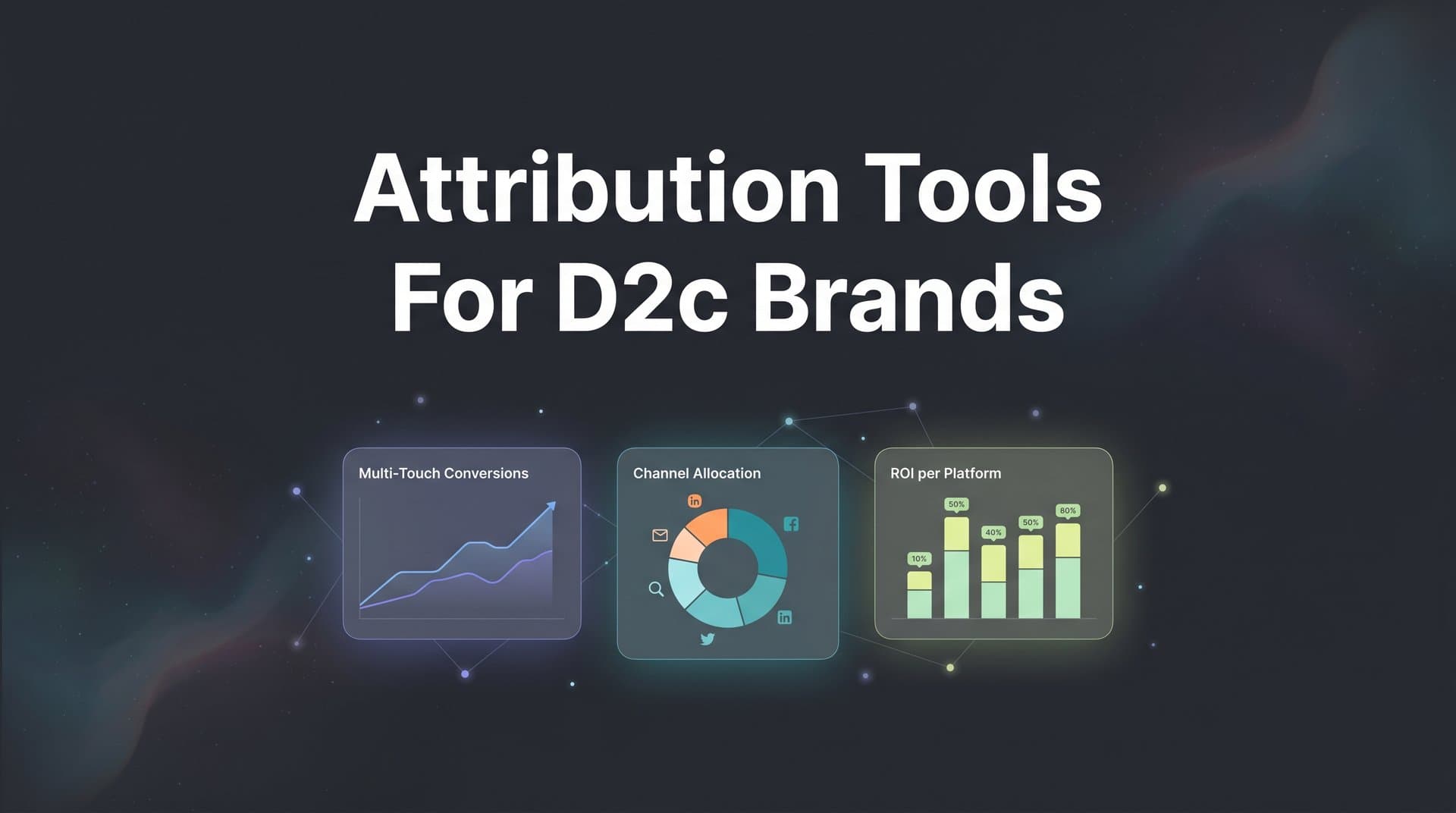
D2C brands live and die by their ad spend. When you are selling directly to consumers across Meta, Google, TikTok, email, and influencer channels, knowing which touchpoints actually drive purchases is not a nice-to-have. It is the difference between scaling profitably and burning budget on channels that look good in platform dashboards but do not move the needle.
The core problem: most D2C marketers still rely on last-click data from individual ad platforms, each one taking credit for the same conversion. The result is inflated ROAS numbers, misallocated budgets, and scaling decisions built on incomplete data.
Attribution tools solve this by stitching together the full customer journey, from first ad impression to final checkout, so you can confidently allocate every dollar. We evaluated dozens of platforms and narrowed the list to the best options purpose-built or well-suited for D2C brands. Our selection criteria included multi-touch attribution capabilities, e-commerce platform integrations, ad platform compatibility, ease of setup, and pricing accessibility for growing brands. Whether you are spending $5K or $500K per month on ads, there is a tool here that fits.
1. Cometly
Best for: D2C brands that need full-journey attribution with AI-powered optimization across all paid channels.
Cometly is an AI-powered marketing attribution platform that tracks the complete customer journey across ad platforms, CRM, and website using server-side tracking and conversion sync capabilities.
 9 Best Attribution Tools for D2C Brands in 2026
Where This Tool Shines
Cometly addresses one of the biggest pain points for D2C brands today: the data loss caused by iOS restrictions, browser privacy settings, and cookie deprecation. By using server-side tracking, Cometly captures conversion events that client-side pixels routinely miss, giving you a far more accurate picture of what is actually driving purchases.
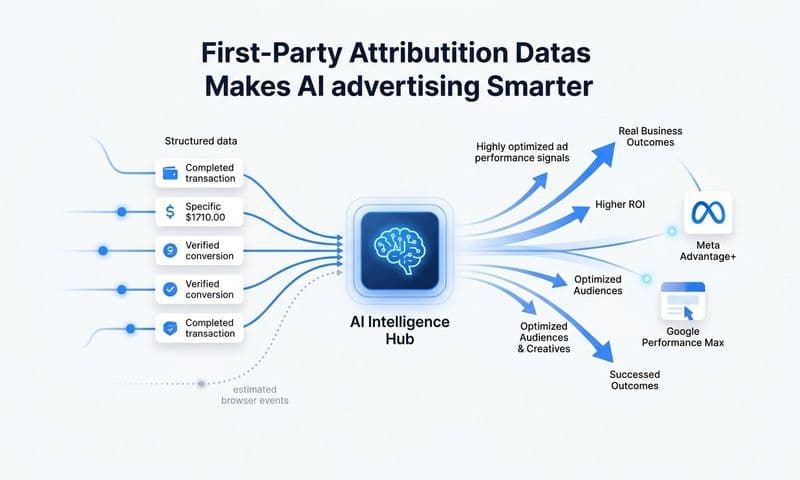
What sets Cometly apart is how it closes the loop. Rather than just showing you attribution data, it feeds enriched conversion signals back to Meta, Google, and other ad platforms through Conversion Sync. This improves the quality of data those platforms use for optimization, which means better targeting and stronger algorithmic performance over time. Layer in AI-powered recommendations and you get a platform that does not just report on what happened but actively helps you decide what to do next.
Key Features
Server-Side Tracking: Captures conversion events accurately even when browser restrictions and iOS privacy changes block client-side pixels.
Multi-Touch Attribution: Tracks every paid touchpoint across Meta, Google, TikTok, and other channels to show the full path to purchase.
AI-Powered Recommendations: Identifies top-performing ads and campaigns across every channel, surfacing scaling opportunities backed by your actual data.
Conversion Sync: Sends enriched, conversion-ready event data back to ad platforms to improve their targeting and optimization algorithms.
AI Chat: Lets you query your marketing data in plain language, making reporting faster and more accessible for the whole team.
Best For
Cometly is a strong fit for D2C brands running paid acquisition across multiple channels who need accurate attribution data and want AI-driven guidance on where to scale. It works well for growth-stage brands that have outgrown platform-reported ROAS and need a single source of truth for ad performance.
Pricing
Custom pricing based on ad spend. A demo is available on request at cometly.com, making it easy to explore fit before committing.
2. Triple Whale
Best for: Shopify-native D2C brands that want a centralized analytics and attribution dashboard with creative insights.
Triple Whale is an e-commerce analytics and attribution platform built around deep Shopify integration and a centralized view of D2C performance metrics.
 7 Best Funnel.io Alternatives for Marketing Data Analytics in 2026
Where This Tool Shines
Triple Whale has become a go-to for Shopify-first D2C brands because the setup is genuinely fast. The native Shopify integration pulls in order data, customer data, and revenue metrics without heavy technical work, which matters a lot for lean marketing teams.
The creative analytics layer is a standout feature. Beyond standard attribution reporting, Triple Whale lets you analyze which ad creatives are driving the most efficient customer acquisition, connecting creative decisions directly to revenue outcomes. The post-purchase survey feature adds a qualitative layer to attribution data, capturing how customers say they found you rather than relying entirely on pixel tracking.
Key Features
Native Shopify Integration: One-click setup that pulls in order, customer, and revenue data directly from your Shopify store.
First-Party Pixel: Tracks user behavior across channels with a pixel that operates independently of platform-reported data.
Creative Analytics: Measures ad creative performance tied to actual revenue, helping teams make smarter creative decisions.
Blended ROAS Dashboards: Surfaces true blended ROAS and customer acquisition cost across all channels in one view.
Post-Purchase Survey Attribution: Collects self-reported attribution data from customers at checkout to supplement pixel-based tracking.
Best For
D2C brands running on Shopify who want fast setup, creative performance data, and a clean centralized dashboard. Particularly useful for teams that want to connect creative testing directly to revenue outcomes.
Pricing
Starts around $100/month for smaller stores and scales with revenue, making it accessible for brands at various growth stages.
3. Northbeam
Best for: Data-driven D2C teams that need customizable multi-touch attribution models and granular channel-level analysis.
Northbeam is a machine learning-powered attribution platform offering flexible attribution models and deep channel and creative-level insights for performance-focused brands.
 9 Best Affordable Marketing Attribution Platforms in 2026
Where This Tool Shines
Northbeam is built for teams that want to go beyond preset attribution models. The platform lets you customize how credit is distributed across touchpoints, choosing from linear, time-decay, position-based, or ML-driven models depending on your buying cycle and business goals. This level of flexibility is rare and genuinely useful for brands with complex multi-channel acquisition strategies.
The media mix modeling capabilities alongside multi-touch attribution give Northbeam a more comprehensive analytical foundation than many competitors. Rather than treating these as separate tools, Northbeam integrates both approaches, which helps brands triangulate their attribution data more confidently.
Key Features
Customizable Attribution Models: Choose from linear, time-decay, position-based, and ML-driven models to match your customer journey.
Flexible Attribution Windows: Adjust lookback windows to reflect different buying cycles and product categories.
Granular Campaign Breakdowns: Drill into creative and campaign-level performance across every channel.
Cross-Device Identity Resolution: Connects touchpoints across devices to build a more complete picture of individual customer journeys.
Media Mix Modeling: Combines MMM with multi-touch attribution for a richer analytical view of channel performance.
Best For
Analytically sophisticated D2C teams, typically spending $50K or more per month on ads, who need granular attribution data and the flexibility to customize models based on their specific business context.
Pricing
Custom pricing; generally suited for brands with significant monthly ad spend. Best to contact Northbeam directly for a quote.
4. Rockerbox
Best for: D2C brands running attribution across both digital and offline channels including influencer, podcast, and direct mail.
Rockerbox is a multi-channel attribution platform with unusually broad channel coverage, extending beyond digital ads to offline, influencer, podcast, and direct mail touchpoints.
 8 Best Tools to Fix Duplicated Conversion Tracking Across Platforms in 2026
Where This Tool Shines
Most attribution tools are built primarily for digital paid media. Rockerbox stands out because it handles offline and non-digital channels with the same rigor. If your D2C brand runs podcast sponsorships, direct mail campaigns, or influencer partnerships alongside paid social and search, Rockerbox gives you a unified view that most competitors cannot match.
The deduplication engine is particularly valuable. Rather than letting every channel claim credit for the same conversion, Rockerbox applies deduplication logic across all touchpoints, giving you a cleaner, more honest view of what is actually driving purchases.
Key Features
Broad Channel Attribution: Covers digital ads, offline campaigns, influencer partnerships, podcasts, and direct mail in one platform.
Deduplicated Conversion Reporting: Removes double-counting across touchpoints for more accurate performance measurement.
Marketing Spend Aggregation: Pulls cost data from across all channels into a unified reporting view.
New Visitor and Prospecting Analysis: Identifies which channels are most effective at reaching net-new customers.
E-Commerce and Ad Platform Integrations: Connects with major platforms to streamline data collection and reporting.
Best For
D2C brands with diversified marketing mixes that include offline and non-digital channels. Especially strong for brands investing in podcast advertising, influencer marketing, or direct mail alongside digital paid acquisition.
Pricing
Custom pricing based on brand size and the number of channels tracked. Contact Rockerbox directly for a tailored quote.
5. Hyros
Best for: D2C brands with high-AOV products, subscription models, or multi-step sales funnels that require long attribution windows.
Hyros is an attribution platform designed for high-ticket products and longer customer journeys, with built-in call tracking and deep ad platform integrations.
 7 Best Northbeam Alternatives for Small Business in 2026
Where This Tool Shines
Standard attribution windows of 7 or 28 days do not work well for every D2C brand. If your product has a longer consideration cycle, if you sell subscriptions, or if customers typically interact with your brand multiple times before converting, Hyros is built to handle that complexity. The longer attribution windows capture touchpoints that shorter-window tools would miss entirely.
The call tracking integration is a meaningful differentiator for brands where phone-based conversions are part of the sales process. Rather than treating phone calls as untracked conversions, Hyros attributes them back to the original ad or campaign that drove the call, giving you a more complete revenue picture.
Key Features
Long Attribution Windows: Tracks customer journeys over extended periods, suited for high-AOV and subscription products.
Built-In Call Tracking: Attributes phone-based conversions back to originating ad campaigns.
AI-Powered Ad Optimization: Surfaces recommendations for improving ad performance based on attribution data.
Deep Ad Platform Integrations: Connects tightly with Meta, Google, and other major ad platforms for accurate data syncing.
Multi-Step Funnel Tracking: Follows users through complex, multi-page sales processes to attribute conversions accurately.
Best For
D2C brands selling higher-priced products, subscriptions, or products with longer consideration cycles where standard attribution windows fall short. Also a strong fit for brands where phone calls are part of the conversion process.
Pricing
Starts around $199/month with higher tiers based on ad spend volume. Pricing scales as your tracking needs grow.
6. Wicked Reports
Best for: Subscription and repeat-purchase D2C brands that need LTV-based attribution and cohort-level profitability analysis.
Wicked Reports is a CRM-integrated attribution platform focused on connecting ad spend to long-term customer revenue rather than just first-purchase conversions.
 7 Best Northbeam Alternatives for Small Business in 2026
Where This Tool Shines
Most attribution tools measure success at the point of first conversion. Wicked Reports takes a longer view, tying ad spend to customer lifetime value so you can see which campaigns are acquiring your most valuable customers, not just your most recent ones. This is a critical distinction for subscription brands or any D2C business where repeat purchases drive profitability.
The CRM and email platform integrations are a core strength. By connecting to tools like HubSpot, Klaviyo, and ActiveCampaign, Wicked Reports can follow a customer through email nurture sequences and attribute downstream purchases back to the original acquisition source, giving you a genuinely closed-loop view of ROI.
Key Features
LTV-Based Attribution: Connects ad spend to long-term customer revenue, not just first-purchase conversions.
Cohort Analysis: Analyzes repeat-purchase behavior by acquisition cohort to identify your highest-value customer segments.
CRM and Email Integrations: Connects with HubSpot, Klaviyo, and ActiveCampaign for closed-loop revenue attribution.
Multi-Touch Attribution Models: Supports first-click, last-click, and linear attribution depending on your reporting needs.
ROI Reporting: Surfaces profitability data at the ad, campaign, and channel level for clear budget decision-making.
Best For
Subscription D2C brands and repeat-purchase businesses where customer lifetime value is the primary metric. Ideal for teams already using CRM or email marketing platforms who want to close the loop between acquisition spend and long-term revenue.
Pricing
Starts around $250/month and scales with features and data volume. Best suited for brands with established email and CRM workflows.
7. Ruler Analytics
Best for: D2C brands that need visitor-level revenue attribution with call tracking and CRM integration for closed-loop reporting.
Ruler Analytics is a revenue attribution platform that connects individual marketing touchpoints to actual revenue, with strong call and form tracking capabilities.
Where This Tool Shines
Ruler Analytics operates at the visitor level, meaning it tracks individual users across their entire journey and ties each one to the revenue they eventually generate. This granularity is valuable for D2C brands that want to understand not just which channels convert, but which channels bring in customers who spend more over time.
The offline conversion tracking support is a practical feature for brands where not every conversion happens online. Whether customers call in, fill out a form, or convert through a non-digital touchpoint, Ruler Analytics can capture and attribute those events back to the originating marketing source.
Key Features
Visitor-Level Tracking: Links individual users to the revenue they generate, providing granular attribution data.
Call and Form Attribution: Tracks phone calls and form submissions back to originating marketing touchpoints.
Multi-Touch Attribution Models: Supports several model options to match different attribution philosophies.
CRM Integrations: Connects with CRM platforms for closed-loop revenue reporting across the full customer lifecycle.
Offline Conversion Tracking: Captures and attributes conversions that happen outside digital channels.
Best For
D2C brands that need individual-level attribution data and want to connect marketing touchpoints directly to revenue in their CRM. A strong choice for brands where calls and form submissions are meaningful conversion events.
Pricing
Starts around $200/month with pricing varying based on feature set and tracking volume. Contact Ruler Analytics for a detailed quote.
8. Segmetrics
Best for: D2C brands using complex funnels and email marketing sequences that need full-funnel attribution from opt-in through purchase.
Segmetrics is a funnel-focused attribution platform that tracks every step from lead capture to purchase, with deep email marketing and payment processor integrations.
Where This Tool Shines
Segmetrics is built for D2C brands whose customer journeys do not go straight from ad click to checkout. If your acquisition strategy involves lead magnets, email sequences, webinars, or multi-step funnels before a purchase, Segmetrics tracks all of it and attributes the eventual conversion back to the original traffic source.
The email marketing attribution is particularly strong. Segmetrics connects individual email interactions, including opens, clicks, and sequence completions, to downstream purchases, so you can see exactly which email campaigns and sequences are generating revenue rather than just engagement metrics.
Key Features
Full-Funnel Attribution: Tracks the complete journey from lead capture through purchase, including all intermediate funnel steps.
Email Marketing Attribution: Connects email sequences and campaigns to revenue outcomes for accurate email ROI measurement.
LTV and Cohort Reporting: Analyzes customer lifetime value and repeat purchase behavior by traffic source.
Platform Integrations: Connects with major email platforms, payment processors, and ad channels for unified data collection.
Tag-Based Segmentation: Enables granular funnel analysis by segmenting users based on behavior and source tags.
Best For
D2C brands with email-heavy acquisition strategies, lead generation funnels, or multi-step sales processes where standard click-to-purchase attribution misses a large portion of the customer journey.
Pricing
Starts at $175/month and scales with the number of contacts and integrations. A practical entry point for brands with established email funnels.
9. Google Analytics 4 (GA4)
Best for: D2C brands at any stage that need a free, flexible analytics foundation with built-in attribution modeling and broad integration support.
Google Analytics 4 is Google's free analytics platform with built-in data-driven attribution modeling, event-based tracking, and integrations across the Google ecosystem and beyond.
Where This Tool Shines
GA4's biggest advantage is obvious: it is free. For D2C brands in early growth stages or those with limited analytics budgets, GA4 provides a solid attribution foundation without any cost barrier. The data-driven attribution model, powered by Google's machine learning, distributes conversion credit across touchpoints based on actual impact rather than arbitrary rules.
The event-based tracking architecture gives GA4 more flexibility than its predecessor. You can define and track virtually any user interaction as a conversion event, which is useful for D2C brands with non-standard funnel structures. The BigQuery integration is a standout feature for data-savvy teams, enabling custom analysis and data modeling beyond what the GA4 interface offers natively.
Key Features
Free to Use: No cost and no minimum ad spend requirements, making it accessible to brands at every stage.
Data-Driven Attribution: ML-powered attribution model that distributes credit based on actual touchpoint impact.
Event-Based Tracking: Flexible conversion setup that can accommodate virtually any user action or funnel structure.
Google Ecosystem Integration: Native connections to Google Ads, BigQuery, and Looker Studio for deeper analysis and reporting.
Cross-Device Tracking: Connects user journeys across devices for a more complete view of the path to purchase.
Best For
D2C brands at any stage that want a free, flexible analytics layer. Particularly valuable as a foundational tool that complements more specialized attribution platforms, or as a starting point before investing in a paid solution.
Pricing
Free for standard use. GA4 360, the enterprise version, is available for high-volume brands that need more data processing capacity and SLA guarantees.
Which Attribution Tool Is Right for Your D2C Brand?
The right attribution tool depends on where your brand is today and where you are trying to go. Here is a quick-reference guide to help you match tool to situation.
Early-stage brands or those new to attribution: Start with GA4 as a free foundation. It gives you data-driven attribution and broad integration support without any cost commitment. As your ad spend grows, layer in a dedicated attribution platform.
Shopify-native brands focused on creative performance: Triple Whale is purpose-built for this use case. The one-click Shopify setup and creative analytics make it a natural fit for teams that want fast time-to-value.
Brands spending meaningfully on paid acquisition across multiple channels: Cometly is built for exactly this scenario. Server-side tracking ensures you are capturing accurate data despite iOS and browser restrictions, multi-touch attribution shows the full path to purchase, and Conversion Sync feeds better data back to your ad platforms to improve their algorithms. The AI-powered recommendations layer on top means you are not just looking at data but acting on it.
Brands with complex channel mixes including offline and influencer: Rockerbox handles the broadest channel coverage on this list, making it the right choice when your marketing mix extends well beyond digital paid media.
Subscription or high-AOV brands with long consideration cycles: Wicked Reports and Hyros are both built for longer customer journeys. Wicked Reports is stronger on LTV and CRM integration; Hyros excels when call tracking and multi-step funnels are involved.
Brands with email-heavy funnels: Segmetrics tracks the full journey from opt-in through purchase, making it the best fit when email sequences are a core part of your acquisition strategy.
Regardless of which tool you choose, the underlying principle is the same: accurate attribution data leads to better budget decisions. When you know which channels are actually driving revenue, not just which ones are claiming credit, you can scale what works and cut what does not.
If you are ready to move beyond platform-reported ROAS and get a complete, accurate view of your customer journey, Cometly is worth a close look. From server-side tracking to AI-powered recommendations and Conversion Sync, it is designed to give D2C brands the data confidence they need to scale. Get your free demo today and start capturing every touchpoint to maximize your conversions.