You've sat through countless software demos where a sales rep clicks through polished slides while you nod along, wondering if this platform will actually solve your tracking mess. Your iOS conversions are invisible, your CRM data lives in a separate universe from your ad platforms, and you're making budget decisions based on incomplete attribution data. Sound familiar?
The difference between a productive attribution tracking demo and a waste of time comes down to preparation. Most marketers show up empty-handed, watch a generic product tour, and leave with more questions than answers. They focus on pretty dashboards instead of asking whether the platform can actually track that complicated customer journey where someone clicks a Facebook ad on mobile, researches on desktop, and converts via a sales call three weeks later.
This guide shows you exactly how to run an attribution tracking demo that delivers real answers. You'll learn how to prepare your scenarios, what questions separate surface-level tools from genuine solutions, and how to evaluate whether a platform truly addresses your cross-platform tracking challenges. Whether you're considering Cometly or comparing multiple attribution solutions, you'll walk away knowing exactly what to look for and how to make a confident decision based on your actual business needs.
Step 1: Define Your Attribution Challenges Before the Demo
The worst thing you can do is show up to a demo without a clear picture of what you're trying to solve. Generic product tours waste everyone's time because they showcase features you might not need while glossing over the capabilities that actually matter for your business.
Start by documenting your current tracking gaps with brutal honesty. Are you flying blind on iOS conversions since Apple's privacy updates? Can you see which touchpoints actually influence deals that close in your CRM, or are you just guessing based on last-click data? Write down every place where your attribution breaks down—these become your non-negotiables for the demo.
Create Your Pain Point Inventory: List every tracking challenge you face daily. Maybe your Google Ads dashboard shows different conversion numbers than your analytics platform. Perhaps you're running campaigns across Meta, Google, LinkedIn, and TikTok but have no unified view of how they work together. Or you're spending thousands on brand awareness campaigns with zero visibility into their downstream impact on conversions.
Next, translate these pain points into specific questions the demo must answer. Don't ask vague questions like "Can this track conversions?" Instead, ask "Can this show me when someone clicks my Meta ad on mobile, browses my site on desktop two days later, and then converts via phone call—and attribute appropriate credit to each touchpoint?" Understanding multi-touch attribution models before your demo helps you ask smarter questions about how platforms handle complex journeys.
Map Your Integration Requirements: Make a complete list of every tool in your marketing stack that needs to connect. This includes all your ad platforms, your CRM (Salesforce, HubSpot, Pipedrive), your website platform, your analytics tools, and any other systems that capture conversion data. If the attribution platform can't integrate with a critical tool in your stack, that's a dealbreaker you need to discover during the demo, not after you've signed a contract.
Finally, define what success looks like. What specific capabilities would make you confident this platform solves your attribution challenges? Maybe it's seeing real-time data from all your ad platforms in one dashboard, or watching how the system handles server-side tracking to capture iOS conversions you're currently missing. Write these success criteria down—they become your evaluation scorecard.
Step 2: Prepare Your Demo Environment and Data
Walking into a demo with real data transforms a sales pitch into a genuine evaluation. The difference between watching someone click through sample data versus seeing your actual campaigns analyzed is night and day.
Gather representative samples of your current campaign performance. Pull reports showing your conversion data from the past 30-60 days across your key channels. You don't need to share sensitive revenue numbers, but having real campaign names, conversion volumes, and channel mix helps the demo presenter show you exactly how your data would appear in their platform.
Document Your Current Setup: Create a one-page overview of your marketing infrastructure. List which ad platforms you're running (Meta, Google Ads, LinkedIn, TikTok, etc.), your website platform and current tracking implementation (Google Analytics, pixel-based tracking, etc.), your CRM system, and any other tools that capture customer data. This helps the demo presenter configure scenarios that match your actual environment rather than showing generic examples that don't apply to your business. If you're using HubSpot, reviewing HubSpot attribution tracking capabilities beforehand helps you understand what questions to ask about CRM integration.
Prepare three to five real scenarios you want to see demonstrated. These should reflect actual customer journeys you need to track, not hypothetical situations. For example: "Show me how your platform tracks when someone clicks our Google search ad, visits three different blog posts over two weeks, downloads a lead magnet, and then books a demo call—and how you attribute value across those touchpoints."
Invite the Right People: Don't make the demo a solo mission. Include whoever will actually use the platform daily—your performance marketers who manage campaigns, your analytics lead who needs to trust the data, and ideally someone technical who can assess implementation complexity. If attribution decisions impact sales or revenue operations, invite stakeholders from those teams too. Everyone needs to see the same demo and ask their questions in real time.
Related reading: our complete guide to can AI generate UGC content.
Send your prepared information to the demo presenter a few days in advance. The best demos happen when the presenter has time to configure examples using your actual platform list, prepare answers to your specific questions, and potentially set up a sandbox environment that mirrors your setup. This advance preparation separates a customized consultation from a generic sales pitch.
Step 3: Evaluate Core Attribution Features During the Demo
This is where you separate marketing attribution platforms that actually work from those that just look good in screenshots. Focus ruthlessly on the capabilities that matter for accurate tracking, not on dashboard aesthetics or nice-to-have features.
Start by asking for a live demonstration of touchpoint tracking across a complete customer journey. Don't accept a pre-recorded video or static screenshots. You need to see how the platform captures and displays real interactions—from initial ad exposure through website visits, content engagement, form submissions, and final conversion. Ask specifically how they track users across devices and sessions, especially for iOS users where traditional cookie-based tracking fails.
Server-Side Tracking Capabilities: This is non-negotiable for modern attribution. Ask the presenter to explain exactly how their server-side tracking works and what data it captures that client-side tracking misses. Request to see how the platform handles first-party data tracking and whether it can track conversions that happen outside your website—like phone calls, in-person meetings, or CRM events. Platforms that rely solely on browser-based tracking will leave massive gaps in your attribution data.
Examine the attribution models available and how they compare. Any serious platform should offer multiple models—first-touch, last-touch, linear, time-decay, and ideally position-based or custom models. But don't just look at the list of models. Ask to see them applied to the same dataset side-by-side so you can understand how model choice impacts which channels get credit. This reveals whether the platform gives you genuine flexibility or just theoretical options that don't translate to actionable insights. Understanding the difference between single source attribution and multi-touch attribution models helps you evaluate which approach fits your business.
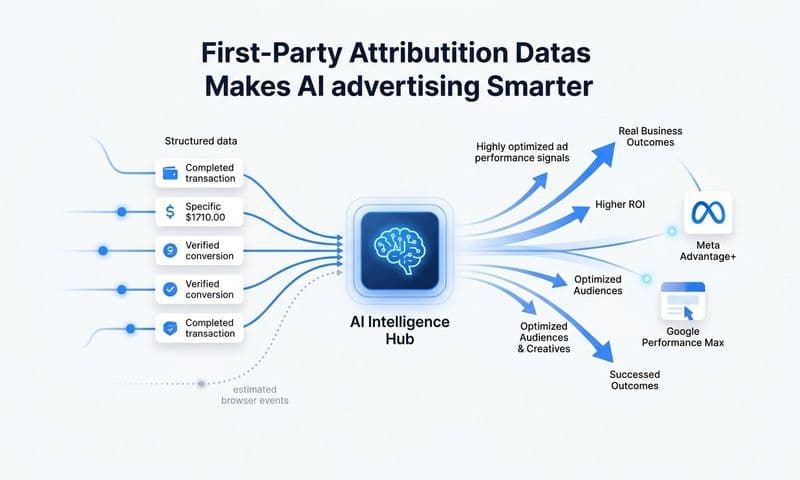
Conversion Sync Functionality: One of the most powerful attribution capabilities is the ability to send enriched conversion data back to your ad platforms. Ask how the platform syncs conversion events to Meta, Google, TikTok, and other channels. This matters because feeding better data back to ad platform algorithms improves their targeting and optimization. Request to see exactly what data gets sent back, how quickly it syncs, and whether you can customize which events trigger syncs.
Test the platform's handling of multiple conversion types. Your business likely tracks various conversion events—form submissions, demo bookings, trial signups, purchases, and potentially offline conversions. Ask how the platform distinguishes between these events, whether you can assign different values to different conversion types, and how it handles partial conversions or multi-step funnels.
Finally, examine the data granularity available in reports. Can you drill down to individual ad level, or are you stuck with channel-level summaries? Can you segment by audience, geographic region, device type, or custom parameters? The ability to slice attribution data multiple ways determines whether you get actionable insights or just high-level vanity metrics.
Step 4: Test Real-World Scenarios and Edge Cases
Generic demos show you the happy path where everything works perfectly. Smart evaluators push on edge cases and complicated scenarios that reflect actual marketing reality.
Ask the presenter to walk through a multi-channel customer journey using your specific platforms. Describe a real customer path from your business—maybe someone who clicks a LinkedIn ad, visits your site but doesn't convert, sees a retargeting ad on Meta three days later, clicks through and reads two blog posts, gets added to an email nurture sequence, clicks an email link a week later, and finally books a sales call. Ask to see exactly how the platform tracks and attributes value across that entire journey.
Delayed Conversions and Long Sales Cycles: If you're in B2B or sell high-consideration products, conversions don't happen instantly. Ask how the platform handles attribution windows beyond the standard seven days. Can it track and attribute conversions that happen 30, 60, or 90 days after the initial touchpoint? How does it maintain accuracy when someone interacts with multiple campaigns over months before converting? Platforms that only handle short conversion windows won't work for complex sales cycles. For B2B companies, understanding B2B revenue attribution in tech SaaS helps you evaluate whether a platform handles your specific sales motion.
Request a demonstration of reporting on specific campaigns or channels relevant to your business. Don't accept generic examples. If you run brand awareness campaigns on YouTube, ask to see how the platform measures their influence on conversions even when they're not the last click. If you use LinkedIn for lead generation, ask to see attribution for leads that convert through sales outreach rather than website forms. The platform needs to handle your actual use cases, not textbook scenarios.
AI-Powered Insights and Recommendations: If the platform claims to offer AI-driven optimization suggestions, ask to see them in action. What specific recommendations does the AI generate? Are they generic advice like "increase your budget" or genuine insights like "Campaign X drives 3x more pipeline than Campaign Y at similar cost—consider reallocating budget"? Request to see how the AI identifies high-performing ads and campaigns across channels, and whether it provides actionable next steps or just surface-level observations.
Test how the platform handles data discrepancies. Every marketer deals with numbers that don't match perfectly between platforms. Ask how their system reconciles differences between ad platform reporting and their attribution data. Do they provide transparency into why numbers might differ, or do they just show their version without explanation? Learning how to fix attribution discrepancies in data beforehand helps you ask better questions about data reconciliation during your demo.
Step 5: Assess Integration Depth and Implementation Requirements
A powerful attribution platform doesn't matter if implementation takes six months or requires a full-time developer. Use the demo to understand exactly what's involved in getting the system running with your stack.
Ask for a detailed walkthrough of the technical setup process. What needs to happen on your end to get tracking implemented? Is it just connecting API credentials, or do you need to install tracking scripts, configure server-side events, and modify your website code? Request a realistic timeline from initial setup to having reliable attribution data flowing. Be skeptical of promises that everything works instantly—proper attribution tracking setup requires thoughtful configuration.
Data Access and Permissions: Clarify exactly what access the platform needs to your various tools. Do they require admin access to your ad accounts, or can they work with analyst-level permissions? What data do they need from your CRM, and how is that data shared? Understanding permission requirements upfront prevents surprises during implementation when you discover you need to involve IT or security teams to grant access.
Discuss ongoing maintenance requirements honestly. Attribution platforms aren't set-it-and-forget-it solutions. Ask what happens when you launch new campaigns, add new ad platforms, or change your conversion tracking. Does the platform automatically pick up new campaigns, or do you need to manually configure tracking for each one? How much ongoing work is required to keep attribution data accurate and complete?
Support and Resources: Find out what support looks like after implementation. Do you get a dedicated account manager who understands your business, or are you directed to a help center when issues arise? Ask about response times for technical problems—if your tracking breaks and attribution data stops flowing, how quickly can you expect help? Request to see their documentation, training materials, and whether they offer onboarding support to help your team get up to speed.
Finally, ask about data accuracy timelines. How long after implementation before you can trust the attribution data for decision-making? Most platforms need time to collect sufficient data and establish baseline patterns. Understanding this ramp-up period helps you set realistic expectations and plan your evaluation timeline.
Step 6: Compare and Document Your Demo Findings
The demo isn't over when the screen sharing stops. The real work happens in how you document and evaluate what you learned.
Create a scoring framework based on the success criteria you defined in Step 1. Rate each platform against your specific requirements—not against generic feature checklists. If server-side tracking is critical for your business, weight that heavily. If you need deep CRM integration, make that a major evaluation factor. Your scoring should reflect what actually matters for your attribution challenges, not what looks impressive in a demo. When comparing marketing attribution software features, focus on capabilities that directly address your documented pain points.
Document Capabilities and Gaps: Write down exactly what you saw demonstrated successfully and where you identified limitations. Be specific: "Platform showed multi-touch attribution across Meta, Google, and LinkedIn with clear visualization of customer journey" is more useful than "good attribution features." Similarly, note gaps clearly: "Cannot track phone call conversions from ads" or "No integration with our CRM system." This documentation becomes invaluable when you're comparing multiple platforms or justifying your decision to stakeholders. If phone tracking is important, review marketing attribution for phone calls to understand what capabilities you should expect.
Gather feedback from everyone who attended the demo. Each person brings different priorities and caught different details. Your performance marketer might focus on campaign-level reporting capabilities while your technical lead evaluates implementation complexity. Collect everyone's observations while they're fresh—waiting a week means people forget critical details.
Follow-Up and Next Steps: Request specific materials based on what you need to make a decision. This might include technical documentation for your development team, case studies from companies in your industry, or access to a trial environment where you can test the platform with your actual data. If you identified gaps during the demo, ask whether those capabilities are on the roadmap and when they might be available.
Consider requesting a follow-up session focused on any areas where you need deeper understanding. Maybe you want a technical deep-dive on the implementation process, or you need to see specific reporting scenarios you didn't have time to cover. The best platforms will accommodate reasonable requests for additional information because they want you to make a confident, informed decision.
Making Your Attribution Decision With Confidence
Running an effective attribution tracking demo transforms how you evaluate platforms. Instead of passively watching a sales presentation, you've tested real scenarios, pushed on edge cases, and gathered concrete evidence about whether a solution truly addresses your tracking challenges.
The preparation work you did upfront—defining your attribution gaps, documenting your stack, creating specific test scenarios—ensures you evaluated capabilities that matter for your business rather than getting distracted by flashy features you'll never use. The questions you asked during the demo revealed whether the platform handles the complexity of modern cross-platform attribution or just looks good in controlled demonstrations.
Your documented findings give you a clear comparison framework if you're evaluating multiple solutions. More importantly, they help you explain your decision to stakeholders who weren't in the demo. You can point to specific capabilities you saw demonstrated, gaps you identified, and how well each platform aligns with your success criteria.
Ready to see how Cometly handles your specific attribution challenges? Our platform captures every touchpoint across your customer journey—from ad clicks to CRM conversions—and uses AI to identify what's actually driving revenue. Get your free demo today and walk through your unique tracking needs with our team. We'll show you real-time attribution in action, demonstrate how server-side tracking captures the iOS conversions you're currently missing, and explain exactly how conversion sync feeds better data back to your ad platforms for improved optimization.