You've run the campaigns, tracked the clicks, and pulled the reports. But when leadership asks which channels are actually driving revenue, you hesitate. Sound familiar? For B2B SaaS marketers, this is one of the most common and frustrating gaps in the entire marketing operation.
The problem isn't effort. It's the nature of the B2B buying journey itself. Prospects don't click one ad and convert. They read a blog post, attend a webinar three weeks later, get retargeted on LinkedIn, join a demo call, loop in two colleagues, and finally sign a contract two months after that first interaction. Somewhere in that journey, multiple platforms each claim full credit for the conversion, your spreadsheet becomes a mess of conflicting numbers, and confident budget decisions feel impossible.
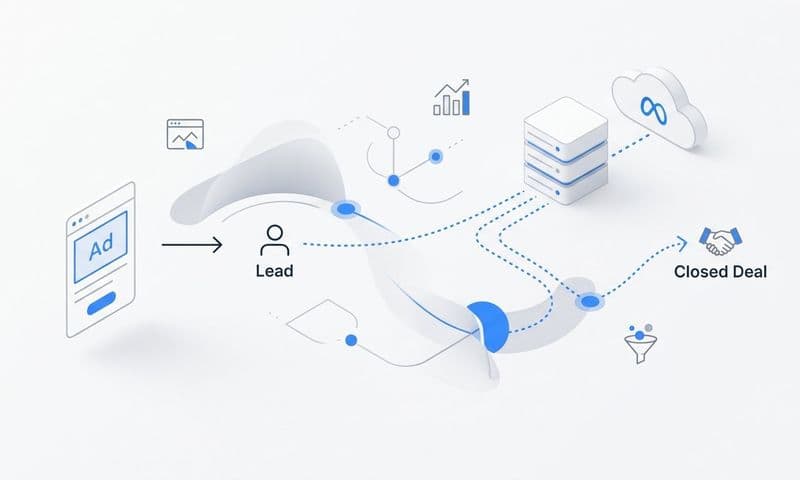
This is exactly the problem that B2B SaaS attribution reporting is designed to solve. At its core, it's the practice of connecting every marketing touchpoint across the full customer journey to pipeline and revenue outcomes. Not just form fills. Not just clicks. Actual closed deals, tied back to the channels, campaigns, and content that made them happen.
In this article, we'll break down why B2B SaaS attribution is uniquely challenging, which attribution models actually fit long sales cycles, which metrics to prioritize in your reports, how to build a reporting stack that works, and how to turn attribution data into smarter decisions. Let's get into it.
Why B2B SaaS Sales Cycles Break Traditional Reporting
Traditional attribution tools were largely built with e-commerce in mind. A shopper sees an ad, clicks, and buys within hours. The conversion path is short, the data is clean, and last-click attribution does a reasonable job of capturing what happened. B2B SaaS is a completely different world.
In B2B SaaS, a typical sales cycle can span anywhere from 30 days to well over 90 days. During that time, multiple stakeholders are involved: a marketing manager who discovers your tool, a director who evaluates it, a finance lead who approves the budget, and an IT contact who reviews security. Each of these people may interact with your brand through different channels, on different devices, at different times. No single touchpoint tells the full story.
This is where last-click attribution breaks down completely. If your CRM shows that a deal closed after the prospect clicked a Google Search ad, last-click gives Google 100% of the credit. But what about the LinkedIn thought leadership post that first introduced your brand? The retargeting ad that brought them back after a two-week gap? The email nurture sequence that kept them engaged? All of that goes invisible in a last-click world. Understanding why attribution data doesn't match across platforms is the first step toward solving this problem.
Then there's the double-counting problem. Google Ads, Meta, and LinkedIn each run their own attribution models, and they each claim credit for the same conversion using their own lookback windows and methodologies. When you add up the reported conversions across platforms, the total often exceeds your actual number of closed deals by a wide margin. Marketers who rely on platform-native reporting without an independent attribution layer often end up significantly overestimating the performance of every channel simultaneously.
Privacy changes have added another layer of complexity. Safari and Firefox have blocked third-party cookies for years, and Chrome has been moving in the same direction. iOS privacy updates have made mobile tracking increasingly unreliable. Cross-device behavior, where a prospect sees your ad on their phone but converts on their desktop at work, creates additional gaps that client-side pixels simply cannot bridge.
This is why server-side tracking and first-party data collection have become essential for accurate B2B SaaS attribution. Server-side tracking sends conversion data directly from your server to ad platforms and analytics tools, bypassing browser-level restrictions that block or limit client-side pixels. It captures conversions that would otherwise be lost and gives your attribution data a much stronger foundation to build on. Teams navigating these complexities should explore the most common SaaS marketing attribution challenges to understand what they're up against.
The bottom line: B2B SaaS attribution requires a fundamentally different approach than what most out-of-the-box reporting tools provide. The sales cycle is longer, the buyer is more complex, and the data environment is noisier. Getting this right starts with choosing the right attribution model.
Attribution Models That Actually Work for B2B SaaS
Not all attribution models are created equal, and for B2B SaaS teams, the choice of model has a direct impact on which channels get budget and which get cut. Here's a breakdown of the most relevant models and what each one reveals.
First-Touch Attribution: Gives 100% of the credit to the first interaction a prospect had with your brand. This is useful for understanding which channels are best at generating awareness and bringing new prospects into your funnel. The limitation is that it ignores everything that happened after that first touchpoint, which in a long B2B sales cycle, is often where the real work of converting a prospect occurs.
Last-Touch Attribution: Gives 100% of the credit to the final interaction before conversion. This is the default for many platforms and CRMs. It's useful for understanding what closes deals, but it systematically undervalues the awareness and nurture touchpoints that got the prospect to that final step.
Linear Attribution: Distributes credit equally across every touchpoint in the journey. It's a more balanced view than first or last touch, and it's easy to explain to stakeholders. The downside is that it treats a casual blog visit the same as a product demo, which doesn't reflect how influence actually works in a buying decision.
Time-Decay Attribution: Gives more credit to touchpoints that occurred closer to the conversion date. This makes intuitive sense in some ways, as recent interactions often reflect higher buyer intent. However, it can undervalue the awareness-stage content that first educated the prospect and set the foundation for the eventual sale.
U-Shaped (Position-Based) Attribution: Assigns the most credit to the first and last touchpoints, typically 40% each, with the remaining 20% distributed across the middle interactions. This model recognizes both the importance of initial discovery and the final conversion moment, making it a solid fit for B2B teams that care about both top-of-funnel and bottom-of-funnel performance.
W-Shaped Attribution: Extends the U-shaped model by adding a third major credit point at the lead creation stage, typically when a prospect becomes an MQL or SQL. This is particularly well-suited to B2B SaaS because it acknowledges the importance of the mid-funnel moment when a prospect raises their hand and enters your pipeline as a qualified opportunity.
So which model should you use? The honest answer is that no single model gives you the complete picture. Each one is a lens that highlights different parts of the buyer journey. For a deeper dive into how these approaches compare, read about the difference between single source and multi-touch attribution models.
But the real power comes from comparing models side by side. When you run first-touch and W-shaped attribution simultaneously and look at where the results diverge, you start to see which channels are great at awareness but weak at closing, and which channels consistently show up across the entire journey. That comparative view is far more actionable than picking one model and treating it as the definitive source of truth.
The Metrics That Matter in B2B SaaS Attribution Reports
Once you have the right attribution model in place, the next question is: what should you actually be measuring? The temptation is to default to the metrics that ad platforms surface most prominently: impressions, clicks, click-through rate, and cost per click. These numbers are easy to pull and easy to report, but they tell you almost nothing about revenue impact.
For B2B SaaS attribution reporting, the metrics that matter are pipeline metrics. Here are the ones that should anchor your reports.
Cost Per Qualified Lead: Not all leads are equal. A form fill from someone who downloaded a generic checklist is very different from a form fill from a director of marketing at a 200-person company who attended your webinar. Cost per qualified lead filters out the noise and shows you what it actually costs to bring a genuinely sales-ready prospect into your funnel.
Cost Per Opportunity: This metric connects your marketing spend to actual sales pipeline. When you know how much it costs to generate a sales opportunity by channel, you can make much more informed decisions about where to invest. A channel that looks expensive on a cost-per-click basis might be highly efficient on a cost-per-opportunity basis if it consistently attracts high-intent buyers. Understanding essential metrics every SaaS company should track helps ensure you're focused on the right numbers.
Customer Acquisition Cost (CAC) by Channel: CAC is the gold standard for understanding marketing efficiency. When you can attribute CAC to specific channels and campaigns, you can identify where your budget is working hardest and where it's being wasted.
Attributed Revenue Per Channel: This is the metric that connects attribution reporting directly to business outcomes. Which channels are generating the most actual revenue, not just the most leads? This requires integrating your attribution data with your CRM so that closed-won deals can be traced back to their originating touchpoints. For a comprehensive framework, explore how revenue attribution for B2B SaaS companies connects marketing spend to closed deals.
That CRM integration is the critical piece. When your attribution platform connects directly to your CRM pipeline stages, such as MQL, SQL, opportunity, and closed-won, you can measure marketing's impact at every stage of the funnel, not just at the top. You can see which channels generate leads that actually become customers versus channels that generate volume but poor downstream conversion rates.
Two additional metrics deserve attention in B2B SaaS contexts: time-to-conversion and assisted conversions. Time-to-conversion tells you how long it typically takes for a prospect from a given channel to move through your funnel and close. This matters because a channel with a 90-day average conversion cycle requires very different budget planning than one with a 30-day cycle. Assisted conversions reveal which channels regularly appear in the journey without being the first or last touch, helping you identify the nurture channels that keep deals moving forward even if they rarely get direct attribution credit.
Building Your Attribution Reporting Stack
Understanding the right models and metrics is one thing. Actually building a reporting stack that delivers reliable data is another challenge entirely. Here's what an effective B2B SaaS attribution reporting stack needs to include.
Ad Platform Connections: Your attribution system needs to pull data from every platform where you're running paid campaigns: Google Ads, Meta, LinkedIn, and any others. This gives you a unified view of spend and performance across channels rather than forcing you to toggle between platform dashboards that each tell a different story. Evaluating the right SaaS marketing attribution tools is critical to getting this foundation right.
CRM Integration: This is non-negotiable for B2B SaaS attribution. Without connecting your attribution data to your CRM, you can only measure lead generation, not pipeline and revenue. A direct integration with tools like HubSpot or Salesforce allows you to map marketing touchpoints to deal stages and closed-won revenue, which is where attribution reporting becomes genuinely powerful.
Server-Side Tracking: As discussed earlier, client-side pixels are increasingly unreliable due to browser privacy restrictions and ad blockers. Server-side tracking captures conversion events at the server level, bypassing these limitations and ensuring that your attribution data reflects what's actually happening rather than what's visible through a browser. For B2B SaaS teams with long sales cycles and multiple touchpoints, every missed conversion event represents a gap in your data that compounds over time.
A Centralized Attribution Dashboard: All of this data needs to come together in one place. A centralized dashboard that unifies your ad platform data, CRM pipeline data, and tracking data gives your team a single source of truth. This eliminates the need to manually reconcile numbers across different tools and reduces the risk of decisions being made on conflicting data. Teams looking for purpose-built options should review the best attribution reporting software available today.
Conversion Sync: One of the most powerful and underutilized components of a modern attribution stack is conversion sync, which means feeding enriched conversion data back to your ad platforms. When Meta or Google receives signals not just about form fills but about which leads actually became customers, their algorithms can optimize toward finding more prospects who look like your best customers. This creates a meaningful improvement in ad targeting over time, and it starts with having accurate, CRM-connected attribution data to send back.
The goal of building this stack is to move from fragmented, platform-reported data to a unified, accurate view of how every marketing dollar contributes to pipeline and revenue. When that infrastructure is in place, attribution reporting stops being a reporting exercise and starts being a decision-making engine.
From Reports to Revenue: Turning Attribution Data Into Action
Attribution data is only valuable if it changes how you make decisions. Here's where many teams fall short: they build solid attribution reporting, pull the numbers, and then continue allocating budget the same way they always have. The data becomes a reporting artifact rather than a strategic tool.
The most immediate application of attribution reporting is budget reallocation. When you can see, with confidence, which channels are driving qualified pipeline and closed revenue versus which channels are generating top-of-funnel volume that never converts, the budget decisions become much clearer. A channel that generates a high volume of leads but a poor cost-per-opportunity might deserve less investment. A channel with lower volume but a strong record of contributing to closed deals might deserve more. Building a strong SaaS marketing attribution strategy ensures these decisions are systematic rather than ad hoc.
This kind of reallocation is difficult to make with confidence when you're relying on platform-reported data alone. It requires an independent attribution layer that shows you deduplicated, CRM-connected results across all channels simultaneously. When you have that view, moving budget from underperforming channels to high-performing ones becomes a data-backed decision rather than a gut call.
Here's where it gets interesting: AI-powered analytics can surface patterns in your attribution data that would be nearly impossible to identify manually. Across thousands of touchpoints and hundreds of conversion paths, AI can identify which ad creatives consistently appear in the journeys of your highest-value customers, which audience segments have the shortest time-to-close, and which campaign combinations drive the strongest pipeline contribution. These insights go well beyond what a human analyst can reasonably extract from a spreadsheet.
There's also a compounding feedback loop worth understanding. Better attribution data leads to better conversion signals being sent to ad platforms. Better conversion signals help platform algorithms optimize toward higher-quality prospects. Better targeting generates more accurate data about which touchpoints drive conversions. And more accurate conversion data improves your attribution tracking further. Each improvement reinforces the next, creating a compounding advantage over time for teams that invest in getting this infrastructure right.
The practical implication is that B2B SaaS teams who build strong attribution reporting don't just make better decisions today. They build a data asset that gets more valuable over time, as their ad platforms learn from better signals and their attribution models become more refined with more historical data to draw from.
Attribution Reporting Mistakes That Quietly Drain Your Budget
Even teams with good intentions make attribution mistakes that skew their data and lead to poor decisions. Here are the most common ones to watch for.
Relying Solely on Platform-Reported Data: Every ad platform has an incentive to show you strong results. Their attribution windows, methodologies, and definitions of "conversion" are designed to maximize the credit they claim. When you add up the conversions reported by Google, Meta, and LinkedIn independently, the total almost always exceeds your actual number of new customers. Without an independent attribution layer that deduplicates and reconciles these numbers, you're making budget decisions based on inflated data.
Ignoring Offline and CRM-Stage Conversions: Many B2B SaaS deals close through a sales call, a product demo, or a contract signing that happens entirely offline. If your attribution model only captures online conversion events like form fills or trial sign-ups, you're missing a significant portion of the actual revenue journey. Channels that excel at driving high-intent prospects who convert through sales interactions will be systematically undervalued in your reports. Connecting your attribution platform to your CRM and tracking pipeline progression, not just online conversions, is the fix. Following proven SaaS marketing attribution best practices can help you avoid these blind spots.
Setting Up Attribution Once and Never Revisiting It: Attribution is not a one-time configuration. B2B SaaS funnels evolve. You launch new campaigns, enter new markets, add new channels, and adjust your sales process. Each of these changes can affect how touchpoints map to conversions and how your attribution model should be weighted. Teams that set up attribution reporting and treat it as permanent infrastructure often find that their data drifts out of alignment with reality over time. Regular audits of your tracking setup, your model configuration, and your CRM integration are essential to keeping your attribution data accurate and trustworthy.
Avoiding these mistakes doesn't require a complete overhaul of your reporting setup. It requires treating attribution as an ongoing practice rather than a one-time project, and investing in the right tools to give you an independent, unified view of your marketing performance.
The Bottom Line on B2B SaaS Attribution
B2B SaaS attribution reporting is not a nice-to-have for teams that want to grow efficiently. It's a competitive necessity. Teams that can connect every marketing touchpoint to pipeline and revenue outcomes make smarter budget decisions, scale winning campaigns faster, and prove marketing's value to leadership with confidence rather than approximation.
The challenge is real: long sales cycles, multiple stakeholders, platform double-counting, and privacy-driven data gaps all work against clean attribution. But the solution is achievable. It requires the right models, the right metrics, a properly built reporting stack, and a commitment to using the data to drive actual decisions.
This is exactly what Cometly is built for. Cometly brings together multi-touch attribution, server-side tracking, CRM integration, and AI-powered recommendations into a single platform designed for B2B SaaS teams who need full visibility into what drives revenue. From capturing every touchpoint across the customer journey to feeding enriched conversion data back to Meta and Google to improve targeting, Cometly gives you the infrastructure to make attribution reporting a genuine competitive advantage.
If your team is ready to move beyond platform-reported numbers and start connecting your marketing spend to real pipeline and revenue, Get your free demo and see how Cometly can give you the clarity to invest with confidence.