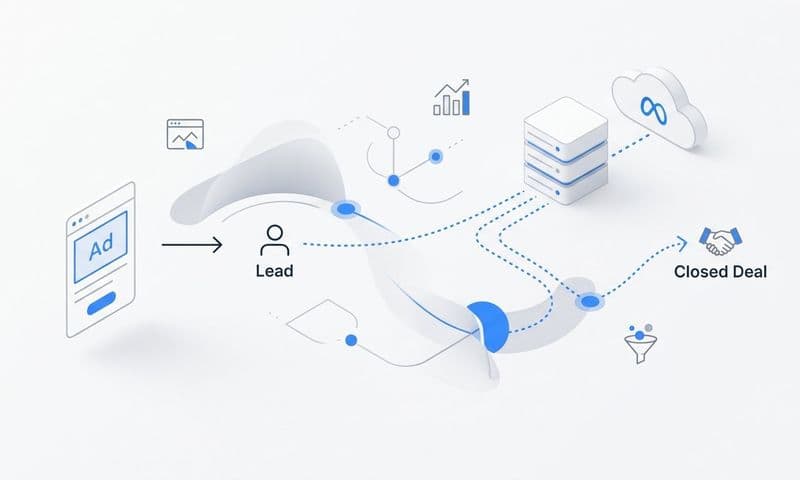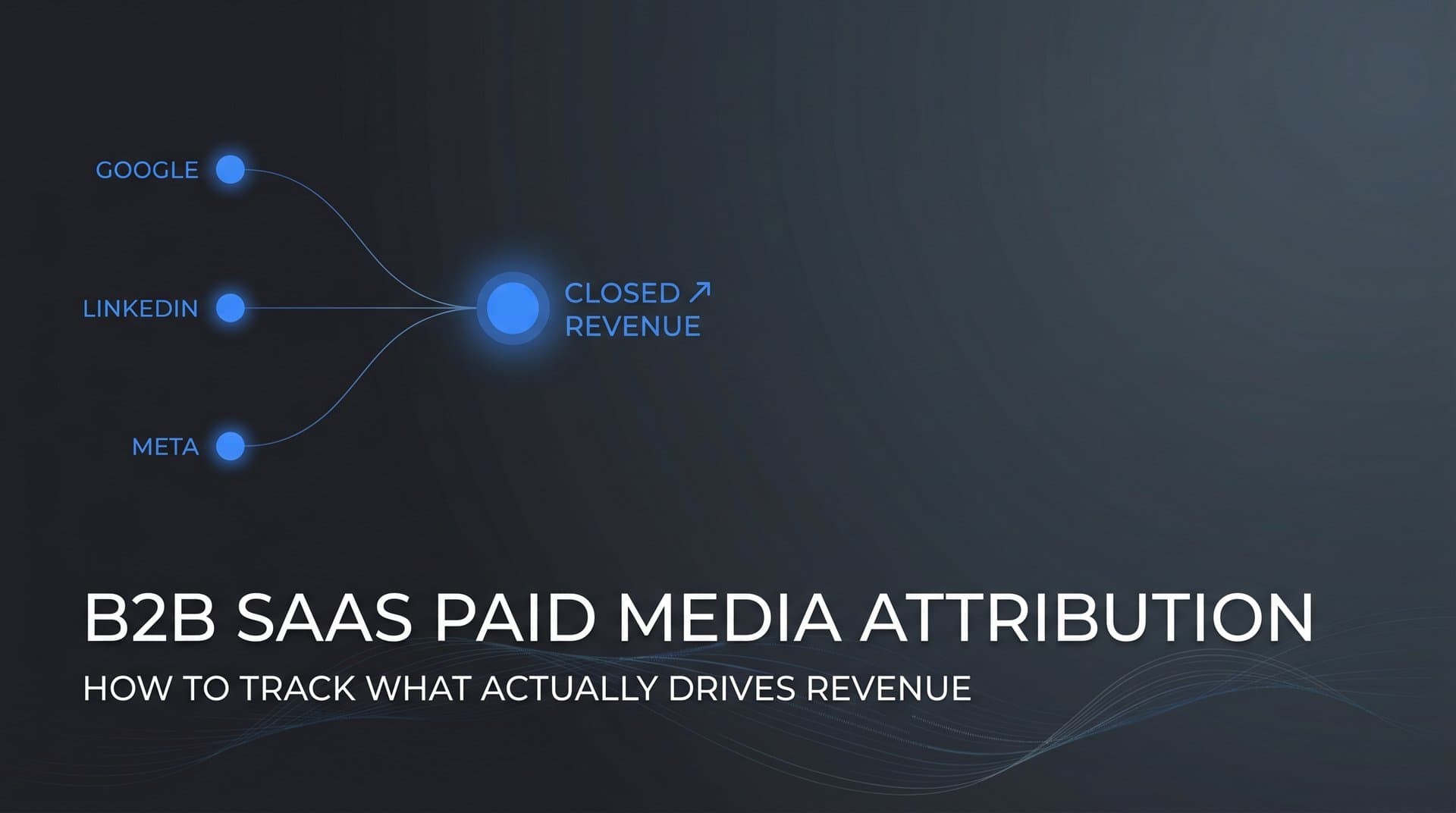
You're spending real money across Google Ads, LinkedIn, and Meta. Campaigns are running, leads are coming in, and the dashboards look active. But when the CFO asks which channels are actually driving closed deals, you hesitate. The honest answer is: you're not entirely sure.
This is the defining frustration of B2B SaaS marketing. Unlike ecommerce, where someone clicks an ad and buys a product within minutes, B2B SaaS deals unfold over weeks or months. Multiple stakeholders weigh in. Prospects bounce between channels, consume content, attend demos, and eventually sign a contract long after that first ad impression. Connecting the beginning of that journey to the end is genuinely difficult.
B2B SaaS paid media attribution is the discipline that bridges this gap. Done well, it connects your ad spend to pipeline stages and closed revenue, not just clicks or form submissions. It tells you which campaigns generate deals that actually close, which channels influence buyers at critical moments, and where your budget is working hardest. The result is not just better reporting. It is a strategic edge that lets you scale what works and cut what does not.
This article breaks down why attribution is uniquely challenging in B2B SaaS, which models fit the complexity of long sales cycles, how to connect ad data to real revenue, and what it takes to build an attribution stack that scales with your growth.
Why Paid Media Attribution Gets Complicated in B2B SaaS
Attribution in ecommerce is relatively straightforward. A shopper clicks an ad, lands on a product page, and buys. The conversion happens quickly, and the chain of credit is short. B2B SaaS operates in an entirely different reality, and understanding why attribution breaks down here is the first step toward fixing it.
Long sales cycles stretch the data gap: B2B SaaS deals often take 30 to 90 days to close, and enterprise deals can stretch well beyond that. When a prospect clicks a LinkedIn ad today but does not sign a contract for three months, most ad platforms will never connect those two events. Platform attribution windows are typically set to 7 or 28 days, which means the ad that started the journey gets zero credit for the deal it helped create. Your reporting ends up systematically undervaluing top-of-funnel campaigns that genuinely work. Understanding these marketing attribution challenges is essential for any B2B team.
Multiple decision-makers create a web of touchpoints: In B2B SaaS, you are rarely influencing one person. A typical deal might involve a champion who found you through a Google search, a manager who saw a retargeting ad on LinkedIn, and a VP who attended a webinar before approving the purchase. Single-touch attribution models, which assign all credit to either the first or last interaction, completely miss this dynamic. They reward one touchpoint while ignoring everyone else who shaped the decision. The result is a distorted view of which channels and campaigns actually matter.
Platform-reported data is unreliable by design: Each ad platform measures its own performance using its own rules. Google Ads counts a conversion when someone clicks your ad and later submits a form, even if they found your site organically in between. Meta does the same. LinkedIn does the same. When you add up the conversions each platform claims, the total frequently exceeds the number of actual leads in your CRM. This overlap happens because every platform applies its own attribution window, uses view-through conversions differently, and has a natural incentive to show favorable results. This is precisely why attribution data doesn't match across your tools.
The practical consequence is that marketers end up making budget decisions based on numbers that do not reflect reality. A channel that looks like a strong performer in its own dashboard might be claiming credit for deals that were driven by a completely different source. Without an independent attribution layer that sits above all your platforms and connects to your CRM, you are essentially trusting each platform to grade its own homework.
Privacy changes have added another layer of complexity. Apple's App Tracking Transparency framework and the ongoing deprecation of third-party cookies have made browser-based pixel tracking increasingly unreliable. Pixels miss conversions. Data gets blocked. The gap between what platforms report and what actually happened grows wider. This is not a temporary problem. It is the new normal, and it makes a robust attribution strategy more important, not less.
Attribution Models That Fit the B2B Buyer Journey
Not all attribution models are built for the complexity of B2B SaaS. Understanding how each one works, and where each one falls short, helps you choose the right framework for your team's specific questions.
First-touch attribution gives 100 percent of the credit to the very first interaction a prospect had with your brand. This is useful when you want to understand which channels are best at generating awareness and bringing new prospects into your funnel. The downside is obvious: it ignores everything that happened after that first click, including the nurture sequences, retargeting ads, and content pieces that moved the deal forward.
Last-touch attribution does the opposite. It assigns all credit to the final touchpoint before conversion. This is popular because it is easy to implement and easy to explain. But in B2B SaaS, it consistently over-credits bottom-of-funnel channels like branded search or demo request pages while ignoring the campaigns that created demand in the first place. For a deeper comparison, explore the difference between single-source and multi-touch attribution models.
Linear attribution distributes credit equally across every touchpoint in the journey. If a prospect had five interactions before closing, each one gets 20 percent of the credit. It is more balanced than single-touch models, but it treats every interaction as equally important, which rarely reflects reality.
Time-decay attribution gives more credit to touchpoints that occurred closer to the conversion event. This makes intuitive sense for B2B SaaS because the interactions that happen late in the sales cycle, like a product demo or a pricing page visit, often reflect higher intent. The trade-off is that it can undervalue the early-stage campaigns that first created awareness.
Position-based attribution (also called U-shaped) assigns the most credit to the first and last touchpoints, typically 40 percent each, and distributes the remaining 20 percent across everything in between. This model acknowledges that both discovery and conversion moments matter, making it a reasonable fit for many B2B teams.
Data-driven attribution uses machine learning to assign credit based on actual conversion patterns in your data. It requires a meaningful volume of conversions to function accurately, but when you have the data to support it, it tends to be the most accurate reflection of how your channels truly perform together. To understand which approach dominates the industry, read about which attribution model is mainly used in marketing.
For most B2B SaaS teams, multi-touch attribution is the right direction. The buyer journey involves too many meaningful interactions for any single-touch model to capture fairly. The specific model you choose should reflect your sales cycle length, the number of channels you run, and the questions your team most needs to answer. A startup with a short sales cycle and two or three channels might do well with position-based attribution. An enterprise-focused team with complex, multi-stakeholder deals might benefit from running linear and time-decay models side by side and comparing what each reveals.
The most important insight here is that no single model is perfect. The real value comes from using attribution as a lens to compare, question, and refine your understanding of the buyer journey, rather than treating any one model's output as the definitive truth.
Connecting Ad Clicks to Pipeline and Revenue
Attribution data only becomes meaningful when it connects to what actually happens in your CRM. Knowing that a LinkedIn campaign generated 50 leads is useful. Knowing that those 50 leads produced eight qualified opportunities, three of which closed into paying customers worth a specific amount of revenue, is the insight that drives real decisions.
CRM integration is the foundation: Without connecting your attribution platform to HubSpot, Salesforce, or whatever CRM your team uses, you are measuring marketing activity rather than marketing outcomes. The integration allows you to map ad touchpoints to pipeline stages, track which campaigns influence deals at each stage of the funnel, and ultimately connect media spend to closed-won revenue. This is what separates surface-level reporting from genuine revenue attribution for B2B SaaS companies.
When your attribution platform can see both the first ad click and the closed deal, you can calculate true cost per acquisition, compare channel efficiency at the revenue level, and identify which campaigns are generating high-quality pipeline rather than just high lead volume. These are the numbers that hold up in a CFO conversation.
Server-side tracking fills the data gaps pixels leave behind: Browser-based pixel tracking has become increasingly unreliable. Ad blockers, browser privacy settings, and the effects of Apple's App Tracking Transparency framework all reduce the number of conversions that pixels can capture. When pixels miss events, your attribution data becomes incomplete, and incomplete data leads to poor decisions.
Server-side tracking addresses this by processing conversion events on your server rather than in the user's browser. The data is more complete, more accurate, and far less susceptible to the privacy restrictions that are eroding pixel-based measurement. For B2B SaaS teams running significant paid media budgets, investing in reliable tracking software for paid ads is no longer a nice-to-have. It is the infrastructure that makes everything else work.
Conversion syncing closes the loop with ad platforms: Once you have accurate, revenue-connected conversion data, you can send it back to the ad platforms through conversion syncing. This matters because platforms like Google and Meta rely on the conversion signals you send them to optimize their algorithms. If you are only sending form-fill events, the algorithm optimizes for form fills. If you send enriched events that indicate which leads became paying customers, the algorithm learns to find more people like your best customers.
This is one of the highest-leverage moves available to B2B SaaS marketers. Feeding better data into platform algorithms improves targeting, reduces wasted spend, and compounds over time as the algorithms get smarter about who to reach and when.
Attribution Mistakes That Quietly Burn Your Budget
Even teams that understand attribution conceptually often fall into patterns that undermine their results. These mistakes are common, and they are expensive.
Trusting platform-reported metrics as the source of truth is the most widespread mistake in paid media. Google Ads says it drove 100 leads. Meta says it drove 80. LinkedIn claims another 60. But your CRM shows 120 total leads for the month. The math does not add up because every platform is counting the same conversions through its own lens, applying its own attribution window, and taking credit for overlap. When you make budget decisions based on these numbers without reconciling them against your CRM, you systematically over-invest in channels that look productive but are actually double-counting shared credit. Implementing a proper marketing attribution strategy helps you avoid this trap.
Optimizing for lead volume instead of lead quality is the natural consequence of surface-level attribution. When your measurement system only sees form fills, you optimize for form fills. Campaigns that generate high volumes of leads that never progress past the first sales call look great in your dashboard and terrible in your revenue data. The fix is to push pipeline and revenue data back into your attribution layer so you can evaluate campaigns by the quality of the opportunities they create, not just the quantity.
You should be tracking essential SaaS metrics that go beyond vanity numbers and reflect actual business outcomes.
Ignoring the dark funnel leads to systematic misinterpretation of your data. The dark funnel refers to the buying signals that happen in places you cannot track: private Slack communities where your product gets recommended, podcast episodes where your brand gets mentioned, peer reviews on G2 or Capterra, and word-of-mouth conversations between colleagues. These interactions influence buying decisions, but they never appear in your attribution reports.
You cannot fully measure the dark funnel, but you can account for it. When your attribution data shows a channel performing below expectations, ask whether dark funnel activity might be contributing to deals that your tracking attributes elsewhere. Building this awareness into how you interpret attribution data leads to more realistic and more useful conclusions.
Building an Attribution Stack That Scales With You
Getting B2B SaaS paid media attribution right requires more than choosing a model. It requires the right infrastructure, consistent processes, and the right tools working together.
UTM governance is where most attribution stacks break down: UTM parameters are the tags you append to your ad URLs to identify the source, medium, campaign, and other dimensions of each click. When UTMs are inconsistently applied, misspelled, or missing entirely, your attribution data becomes fragmented and unreliable. Establishing a clear naming convention and enforcing it across every campaign and every channel is foundational work that pays dividends in data quality. For a deeper look at how tagging compares to dedicated tools, explore UTM tracking vs attribution software.
The essential components of a scalable attribution stack include:
A dedicated attribution platform: Your ad platforms cannot objectively attribute their own performance. You need an independent layer that sits above all your channels, ingests data from each, and provides a unified view of the customer journey.
CRM integration: As discussed, connecting your attribution data to pipeline stages and closed revenue is what transforms reporting from descriptive to actionable.
Server-side event tracking: The infrastructure that ensures conversion events are captured accurately, regardless of browser restrictions or privacy settings.
Conversion syncing: The mechanism that sends enriched, revenue-connected signals back to ad platforms to improve algorithmic optimization.
AI-powered recommendations accelerate the value: Once your attribution stack is capturing accurate data across all channels, AI can surface insights that would take a human analyst hours to find. Which campaigns are generating the highest revenue per dollar spent? Which channels are driving pipeline that closes fastest? Where should budget shift to improve overall return? AI-driven recommendations remove much of the guesswork from these decisions and help teams act on data faster. Evaluating the best marketing attribution tools for B2B SaaS is a critical step in building this stack.
Getting started does not require perfection from day one: Begin with an audit of your current tracking setup. Identify where UTMs are missing or inconsistent. Check whether your pixels are firing correctly and whether server-side tracking is in place. Connect your ad platforms and CRM to an attribution tool. Define the model that best fits your sales cycle and business questions. Then begin comparing attributed revenue against what each platform reports on its own.
The gap between those two numbers is where the real insight lives. Over time, as your attribution data matures and your team builds confidence in the numbers, you will make progressively better decisions about where to invest, where to pull back, and how to scale the campaigns that genuinely drive revenue.
Putting It All Together
B2B SaaS paid media attribution is not a reporting exercise. It is a strategic capability that determines whether your marketing budget builds a real revenue engine or disappears into a collection of vanity metrics and platform-inflated numbers.
The marketers who get this right share a few things in common. They do not trust any single platform to tell the whole story. They connect ad data to CRM outcomes. They use multi-touch models that reflect the complexity of real buyer journeys. And they invest in the infrastructure, server-side tracking, CRM integration, and conversion syncing, that makes accurate measurement possible even as the privacy landscape continues to shift.
The gap between what ad platforms claim and what your CRM confirms is not just a data discrepancy. It is a signal that budget is being misallocated. Closing that gap is how marketing teams earn the trust of their CFOs, scale the campaigns that actually work, and build a sustainable growth engine.
Cometly is built exactly for this challenge. It connects your ad platforms, CRM, and the full customer journey into a single attribution view, giving B2B SaaS marketing teams the clarity to see what is actually driving revenue and the confidence to act on it. From server-side tracking and multi-touch attribution to AI-powered recommendations and conversion syncing, Cometly provides everything you need to move beyond platform-reported data and start making decisions grounded in real outcomes.
Ready to see which campaigns are truly driving your pipeline? Get your free demo and start capturing every touchpoint to maximize your conversions.