You are spending thousands on ads across Meta, Google, TikTok, and other platforms, but when you look at your conversion data, nothing adds up. Meta says it drove 50 conversions. Google claims 40. Your CRM only shows 60 total sales. Sound familiar?
If you can't track ad conversions accurately, you are not alone. The tracking landscape has shifted dramatically in recent years. Browser privacy updates, iOS restrictions, cookie deprecation, and cross-device journeys have made it harder than ever to know which ads actually drive revenue.
The result? Marketers waste budget on underperforming campaigns, kill ads that are actually working, and lose confidence in their data. It is a frustrating cycle. You are flying blind at exactly the moment when precision matters most.
Here is the context worth understanding: since Apple's iOS 14.5 App Tracking Transparency rollout, privacy-focused changes have continued to accelerate across every major browser and platform. Google has been phasing out third-party cookies in Chrome, while Safari and Firefox have blocked them for years. These shifts mean traditional pixel-based tracking misses a meaningful portion of conversions, particularly on mobile devices. Each ad platform also uses self-attributing models that tend to give themselves generous credit, which is why your numbers rarely reconcile.
The core frustration is simple: you cannot confidently answer the question "which ads are actually making us money?" That uncertainty leads to misallocated budgets and makes it nearly impossible to scale with confidence.
But here is the good news: inaccurate conversion tracking is a solvable problem. It requires a systematic approach rather than a single quick fix. In this guide, you will walk through seven concrete steps to diagnose why your conversion tracking is broken, fix the root causes, and build a reliable attribution system that gives you confidence in every dollar you spend.
Whether you are running campaigns for your own brand or managing ad spend for clients, these steps will help you move from guessing to knowing what is actually driving results. Let's get into it.
Step 1: Audit Your Current Tracking Setup for Gaps and Errors
Before you can fix broken tracking, you need to understand exactly what is broken. Most marketers skip this step and jump straight to adding more pixels or installing new tools. That approach often makes things worse. Start with a thorough audit of everything you currently have in place.
Begin by inventorying every tracking element across your ad platforms. List out your Meta Pixel, Google Tag, TikTok Pixel, LinkedIn Insight Tag, and any other platform-specific tracking scripts. Document where each one is installed, which pages they fire on, and what conversion events they are configured to track. This inventory alone often reveals surprises, like pixels installed on some pages but not others, or conversion events that were set up years ago and never updated to match your current funnel.
Check for duplicate firing events. This is one of the most common issues. If you have a pixel installed both directly in your site code and through Google Tag Manager, you may be firing the same event twice. Duplicate events inflate your reported conversions and confuse ad platform algorithms. Use browser developer tools like Chrome DevTools or tag debugging extensions like Meta Pixel Helper and Google Tag Assistant to inspect exactly what fires on your key pages.
Verify events on your highest-value pages. Your thank you pages, checkout confirmation screens, and lead form submissions are where conversions actually get recorded. Load each of these pages and use your debugging tools to confirm the right events fire exactly once. If a purchase event fires on your order confirmation page but also on your cart page, you are counting conversions that never happened.
Look for misconfigured conversion actions. In Google Ads, check whether your conversion actions are set to the right category, attribution window, and counting method. In Meta, review whether your events match the actual actions users are taking. A common misconfiguration is tracking "Add to Cart" as a purchase, which dramatically overstates revenue performance. If you are wondering why your conversion tracking numbers are wrong, misconfigured events are often the primary culprit.
Compare platform numbers against your source of truth. Pull a week or month of conversion data from each ad platform and set it next to your CRM or backend records for the same period. Document the discrepancies. Are the platforms over-reporting or under-reporting? Is one platform wildly off while another is close? These patterns will tell you where the biggest gaps are.
By the end of this step, you should have a documented list of every tracking issue you found, ranked by how much each one affects your data accuracy. That list becomes your repair roadmap for the steps ahead.
Step 2: Implement Server-Side Tracking to Close the Browser Gap
Once you know where your tracking is broken, the next step is addressing the most fundamental limitation in modern ad measurement: browser-based tracking simply cannot do the job alone anymore.
Traditional client-side tracking works by dropping a cookie or firing a pixel in the user's browser when they complete an action. The problem is that this approach is increasingly blocked. Ad blockers prevent pixels from loading. iOS App Tracking Transparency stops apps from sharing identifiers. Safari's Intelligent Tracking Prevention limits how long cookies persist. Privacy-focused browsers block third-party cookies entirely. The result is that a meaningful portion of your actual conversions never get recorded by your ad platforms at all. Understanding the differences between server-side tracking vs pixel tracking is essential for solving this problem.
Server-side tracking solves this by moving the data collection off the user's browser and onto your own server. Instead of relying on a pixel to fire in someone's browser, your server captures the conversion event and sends it directly to the ad platform's API. Because this happens server-to-server, it bypasses browser restrictions entirely.
How to set it up in practice. Each major ad platform now offers a server-side API for this purpose. Meta has the Conversions API (CAPI). Google has Enhanced Conversions. TikTok has its Events API. To implement these, you need your server to capture conversion events, enrich them with customer data like hashed email addresses and phone numbers, and then send them to the platform's endpoint. This typically requires some development work, but the investment pays off in significantly improved data accuracy.
The deduplication requirement you cannot skip. If you implement server-side tracking while still running your browser-based pixels, you will be sending the same conversion events through two channels. Without deduplication, your platforms will count each conversion twice. Every major platform API supports deduplication through event IDs. You assign a unique ID to each conversion event, and the platform uses that ID to recognize and discard duplicates. Setting this up correctly is non-negotiable.
Where platforms like Cometly come in. Setting up server-side connections to multiple ad platform APIs simultaneously is technically demanding. Cometly handles this infrastructure for you, connecting your website or app backend to Meta's Conversions API, Google's Enhanced Conversions, and other platform APIs without requiring a dedicated engineering team. This means you get the data accuracy benefits of server-side tracking that is more accurate without building and maintaining the pipeline yourself.
Once server-side tracking is in place and properly deduplicated, you will typically see your reported conversion volumes increase as events that were previously blocked by browsers now get captured and transmitted reliably.
Step 3: Connect Your CRM and Revenue Data to Your Ad Platforms
Most tracking setups stop at the click or lead level. Someone clicks your ad, fills out a form, and that gets recorded as a conversion. But did that lead actually become a customer? Did they generate revenue? Without connecting your CRM to your attribution system, you have no idea.
This gap is more costly than it sounds. If you optimize your campaigns toward leads rather than revenue, you will scale the campaigns that generate the most leads, not the campaigns that generate the most valuable customers. These are often very different things. A campaign that generates a high volume of low-quality leads can look like a winner in your ad platform dashboard while actually dragging down your overall return on investment. This is a common reason ads show conversions but no sales in your actual revenue reports.
Map your full funnel stages. Start by defining the key stages in your customer journey: lead, marketing qualified lead, sales qualified lead, opportunity, and closed-won. Each of these stages should be tracked in your CRM. The goal is to connect each stage back to the original ad click so you can track your marketing funnel accurately and see which campaigns drive deals all the way to revenue, not just to the top of the funnel.
Integrate your CRM with your attribution system. Tools like HubSpot, Salesforce, and other CRMs can be connected to your attribution platform so that when a deal closes, that information flows back and gets associated with the original ad interaction. This typically works through API integrations or native connectors. The technical approach varies depending on your CRM and attribution tool, but the principle is consistent: downstream conversion data needs to flow upstream to where your ad decisions are made.
Why this changes your optimization decisions. Once you have CRM data connected, you can compare the revenue generated per campaign, not just the lead volume. You might discover that your highest-volume lead campaign generates customers with a low average deal value, while a lower-volume campaign drives customers who spend significantly more. Without CRM integration, that insight is invisible.
The success indicator here is straightforward: you should be able to open your attribution dashboard and see which specific ad, campaign, and channel drove each closed deal or purchase. If you can see that, your CRM connection is working.
Step 4: Adopt Multi-Touch Attribution Instead of Relying on Platform Defaults
Here is a truth that every ad platform would rather you not think about too hard: each platform's native reporting is designed to make itself look as good as possible. Meta credits itself for conversions. Google credits itself for conversions. If a customer interacted with both before buying, you will see that conversion claimed by both platforms simultaneously. This is why your total reported conversions often exceed your actual sales.
The fix is moving to a unified attribution model that accounts for the entire customer journey across all channels, rather than trusting each platform to grade its own homework. Learning how to effectively handle tracking conversions across multiple touchpoints is the foundation of accurate attribution.
Understanding the main attribution models. First-touch attribution gives all credit to the first interaction a customer had with your brand, which is useful for understanding which channels generate awareness. Last-touch attribution gives all credit to the final interaction before conversion, which favors bottom-of-funnel channels like branded search. Linear attribution splits credit equally across all touchpoints. Time-decay attribution gives more credit to touchpoints closer to the conversion. Data-driven attribution uses machine learning to assign credit based on which touchpoints actually correlate with conversion outcomes.
Choosing the right model for your situation. There is no single correct answer. If you are trying to understand which channels introduce customers to your brand, first-touch tells an important story. If you want to optimize for closing conversions, last-touch or time-decay may be more actionable. For most businesses, comparing multiple models side by side reveals the most complete picture.
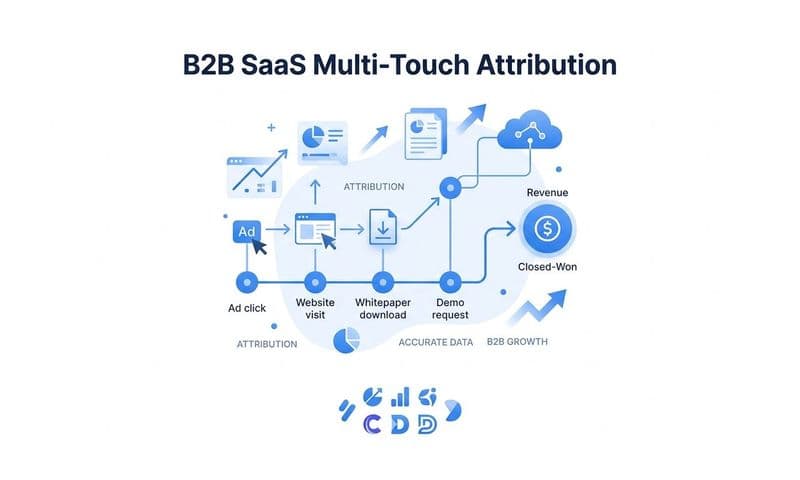
A practical example of why this matters. Imagine a prospect sees your Meta ad on Monday, does nothing. On Wednesday, they search for your brand on Google and click a paid search ad. On Friday, they receive a retargeting email and click through to purchase. In Meta's reporting, that is a Meta conversion. In Google's reporting, that is a Google conversion. In your email platform's reporting, that is an email conversion. In reality, all three touchpoints contributed. Only a multi-touch attribution model shows you the true picture.
Cometly provides multi-touch attribution across all channels in a single dashboard, letting you compare models and see the complete customer journey. This replaces the fragmented view of looking at each platform's reporting in isolation with a unified, channel-agnostic perspective that reflects what actually happened.
Step 5: Feed Accurate Conversion Data Back to Ad Platform Algorithms
Fixing your tracking is not just about improving your own reports. It also directly affects how well Meta, Google, and TikTok optimize your campaigns. These platforms rely on the conversion signals you send them to train their algorithms. When your conversion data is inaccurate or incomplete, the algorithms optimize toward the wrong outcomes.
Think about what happens when Meta only receives conversion data for half of your actual purchases because browser-based tracking missed the rest. The algorithm learns from an incomplete picture of who your buyers are. It targets audiences that resemble the partial dataset, not your full customer base. Your campaign performance suffers not because the algorithm is bad, but because you are feeding it bad data. This is precisely why so many marketers end up with wasted ad budget on untracked conversions.
The impact of clean signals on performance. When you send enriched, verified conversion events back to ad platforms, their algorithms have a more accurate picture of your actual buyers. This typically leads to improved targeting over time as the algorithm recalibrates toward audiences that genuinely convert. The improvement is not instant, but as the platforms accumulate better signal data, you generally see the quality of traffic improve.
How to implement conversion sync in practice. Each platform has a mechanism for receiving enriched conversion data. Meta's Conversions API accepts hashed customer data alongside conversion events, which helps match conversions to users even when browser-based tracking would have missed them. Google's Enhanced Conversions works similarly. The key is sending not just the event itself but also enriched data like hashed email addresses that allow the platform to match the conversion to a specific user in their system.
How Cometly automates this process. Cometly's Conversion Sync feature handles this automatically. It takes the verified conversion data from your attribution system and sends enriched conversion events back to Meta, Google, and other platforms in real time. This means your ad platforms are constantly receiving accurate, complete conversion signals without you having to manually manage API connections for each platform separately.
The success indicator to watch for: over a two to four week period after implementing clean conversion sync, monitor your cost per acquisition and return on ad spend. As the platform algorithms receive better data, you should see optimization quality improve as they refine their targeting toward your actual buyers.
Step 6: Validate Your Data With Cross-Platform Reconciliation
Even after implementing server-side tracking, CRM integration, and multi-touch attribution, you need a regular process to verify that everything is working correctly. Data validation is not a one-time task. It is an ongoing discipline that catches issues before they compound into major budget waste.
Cross-platform reconciliation means comparing your conversion numbers across every system: your ad platforms, your attribution tool, your CRM, and your payment processor. If these numbers are roughly aligned, your tracking is healthy. If they diverge significantly, something is wrong and you need to find out what. This is especially critical when you are tracking conversions across multiple ad platforms simultaneously.
Build a simple weekly reconciliation process. Set aside time each week or every two weeks to pull conversion totals from each source for the same date range. Line them up in a simple spreadsheet. Look for major discrepancies. A small variance is normal and expected due to differences in attribution windows, timezone handling, and data processing delays. A large, unexplained gap signals a tracking problem that needs investigation.
Common causes of discrepancies to investigate. Attribution windows are a frequent culprit: if Meta reports conversions using a 7-day click window and your CRM records the date the deal closed, you may be comparing different time periods. Timezone mismatches between platforms cause similar confusion. Delayed conversions, where someone clicks an ad but converts days later, can shift numbers across reporting periods. Refunds and cancellations that are recorded in your payment processor but not reflected in your ad platform data also create gaps.
Set acceptable variance thresholds. Decide in advance what level of discrepancy you consider acceptable. If your attribution data and CRM data are within a small margin consistently, your tracking is performing well. If the gap is larger and inconsistent, that is a signal to dig deeper. Having a defined threshold removes the guesswork from deciding whether a discrepancy is a problem worth investigating or normal variance.
The goal of this step is consistent alignment between your attribution data and your actual business outcomes, with no major unexplained gaps that would cause you to make the wrong campaign decisions.
Step 7: Build an Ongoing Monitoring System to Catch Tracking Breaks Early
Here is something that surprises many marketers: tracking breaks all the time. A website update removes a tag. A new campaign uses a landing page that was never properly tagged. A platform policy change deprecates a tracking method. A developer edits the tag manager container and accidentally removes a conversion event. Any of these can silently break your tracking, and if you are not monitoring for it, you may not notice until you have spent weeks optimizing based on corrupted data.
Treating tracking as a set-it-and-forget-it task is one of the most expensive mistakes in paid advertising. Building an ongoing monitoring system is what separates teams that maintain accurate data from teams that are constantly chasing unexplained drops in performance. If you have ever asked yourself why your conversions are not tracking, the answer is often a silent break that went undetected for weeks.
Set up automated alerts for anomalies. Most analytics platforms and tag management systems allow you to configure alerts for unusual data patterns. Set up alerts for sudden drops in conversion volume, zero-event days on key conversion actions, and unusual spikes that might indicate double-counting. If your daily purchase event count drops to zero overnight, you want to know immediately, not a week later when you are reviewing reports.
Create a monthly tracking health checklist. Once a month, run through a structured review: verify that pixels are firing correctly on all key pages, confirm that server-side events are being received by each platform, check that your CRM sync is active and current, and review whether your attribution model is still reflecting your actual customer journey accurately. As your campaigns and website evolve, your tracking setup needs to evolve with them. Investing in proper ad tracking management software makes this ongoing maintenance far more manageable.
Assign clear ownership. Tracking health needs a named owner. Whether that is a marketing operations manager, a dedicated analyst, or an agency partner, someone specific needs to be responsible for catching and resolving tracking issues. When tracking is everyone's responsibility, it tends to become no one's responsibility.
Cometly's real-time dashboard and AI-powered insights are designed to surface anomalies as they happen. Instead of waiting for your monthly review to discover that a conversion event stopped firing two weeks ago, you get visibility into your tracking health continuously, so problems get caught and resolved before they cost you meaningful budget.
Your Conversion Tracking Repair Checklist
You now have a complete framework for diagnosing and fixing your conversion tracking. Before you close this guide, here is a quick-reference checklist to keep your progress organized as you work through each step.
Step 1: Audit your tracking setup. Inventory all pixels and tags, check for duplicate events, verify firing on key conversion pages, and document discrepancies between platform data and your CRM.
Step 2: Implement server-side tracking. Set up Meta Conversions API, Google Enhanced Conversions, and other platform APIs. Enable deduplication with event IDs. Run server-side and client-side tracking together with proper deduplication in place.
Step 3: Connect your CRM. Map your full funnel stages, integrate your CRM with your attribution system, and verify that closed revenue is visible alongside the original ad click in your attribution dashboard.
Step 4: Adopt multi-touch attribution. Move away from relying solely on each platform's native self-attributed reporting. Choose an attribution model that fits your funnel and use a unified view to see the complete customer journey across all channels.
Step 5: Sync conversion data back to ad platforms. Send enriched, verified conversion events back to Meta, Google, and other platforms so their algorithms can optimize toward your actual buyers rather than an incomplete picture.
Step 6: Reconcile your data regularly. Build a weekly or biweekly cross-platform reconciliation process. Set variance thresholds and investigate any discrepancies that fall outside acceptable ranges.
Step 7: Monitor continuously. Set up automated alerts, run monthly tracking health checks, and assign clear ownership so tracking breaks get caught and resolved quickly.
Accurate conversion tracking is not a luxury for large teams with big budgets. It is the foundation that every smart ad decision rests on. When your data is reliable, you can scale what works, cut what does not, and build campaigns with genuine confidence.
If you are ready to stop guessing and start knowing exactly which ads drive revenue, Cometly brings server-side tracking, CRM integration, multi-touch attribution, and conversion sync together in one platform built for marketers who want clear, accurate data across every channel. Get your free demo today and start capturing every touchpoint to maximize your conversions.