You launch your monthly performance review and immediately notice something's off. Google Ads reports 50 conversions from your latest campaign. Meta's dashboard shows 35. But when you check your CRM, there are only 20 new customers from that same period.
Which number is real? Which platform deserves more budget? And why does every dashboard tell a different story?
This isn't a technical glitch you can refresh away. It's a conversion data accuracy issue that's costing marketers millions in misallocated spend every single day. When your metrics don't match reality, every decision becomes a gamble. You might be scaling campaigns that barely break even while cutting budgets from your actual revenue drivers. Your stakeholders lose trust in your reporting. Your ad platform algorithms optimize toward phantom conversions that never materialize as real customers.
The frustrating part? This problem has gotten worse, not better, as digital marketing has evolved. Privacy updates, tracking restrictions, and the fragmentation of customer journeys have turned what used to be straightforward conversion tracking into a maze of conflicting data points.
Here's what we're going to unpack: the real reasons your conversion data doesn't add up, why traditional tracking methods are failing, and the technical solutions that actually solve this problem at its root. By the end, you'll understand exactly why your numbers are wrong and what to do about it.
The Hidden Cost of Unreliable Conversion Tracking
Inaccurate conversion data doesn't just create confusion in your reports. It triggers a cascade of bad decisions that compound over time.
Think about what happens when your tracking shows Campaign A generated 40 conversions while Campaign B only delivered 15. The logical move is to shift budget from B to A, right? But what if Campaign B actually drove higher-value customers who just weren't tracked properly? You've now starved your best performer while feeding a mediocre one.
This scenario plays out constantly. Marketers optimize based on incomplete data, scaling the wrong campaigns and killing tests before they have a chance to prove themselves. The opportunity cost is staggering when you consider that a single misattributed conversion could represent thousands in lifetime customer value.
The trust gap between what platforms report and what actually happens in your business creates another insidious problem. When your CEO asks why ad spend increased 30% but revenue only grew 10%, you're left explaining conversion data discrepancies instead of celebrating wins. Sales teams start questioning marketing's contribution. Finance wants to cut budgets because the numbers don't reconcile.
This erosion of confidence makes it nearly impossible to secure investment for growth initiatives. How do you justify doubling down on paid acquisition when you can't definitively prove what's working?
The problem has intensified dramatically since Apple's iOS 14.5 update in April 2021. App Tracking Transparency gave users the power to opt out of tracking, and most did. Suddenly, ad platforms lost visibility into massive portions of their conversion data. Meta, Google, and others started using modeled conversions to fill the gaps, essentially making educated guesses about results they couldn't directly observe.
Meanwhile, Google's ongoing plans to phase out third-party cookies have added another layer of uncertainty. Browser-based tracking, the foundation of digital advertising for two decades, is becoming increasingly unreliable. Ad blockers filter out pixels. Privacy-focused browsers block tracking by default. Cross-device journeys create attribution blindspots that traditional methods can't bridge.
The result? A marketing landscape where the data you're using to make million-dollar decisions is fundamentally flawed. And if you're still relying solely on platform-native tracking, you're flying blind more often than you realize.
Five Root Causes Behind Conversion Data Discrepancies
Understanding why your numbers don't match requires looking at the technical realities of how conversion tracking actually works. Let's break down the five main culprits.
Browser-Based Tracking Limitations: Traditional conversion pixels rely on cookies and JavaScript that run in the user's browser. Sounds straightforward until you realize how many things can interfere with this process. Ad blockers actively prevent tracking scripts from loading. Privacy-focused browsers like Safari and Firefox restrict third-party cookies by default. Even standard Chrome users might have settings that limit tracking capabilities.
The cross-device problem compounds this issue. A customer might click your ad on their phone during their morning commute, research on their work laptop during lunch, and finally purchase on their tablet that evening. Each device has its own cookies, its own browsing context, and often no way to connect these touchpoints. Your tracking sees three different people instead of one customer journey, creating significant cross-device conversion tracking issues.
Attribution Window Mismatches: Every ad platform uses different lookback windows to determine which conversions to claim. Meta defaults to a 7-day click attribution window and 1-day view window. Google Ads uses 30-day click attribution by default. Your analytics platform might use last-click attribution with no time limit.
Picture this: a user clicks your Meta ad on Monday, clicks a Google ad on Wednesday, and converts on Friday. Meta claims the conversion because it happened within 7 days of their click. Google claims it because it happened within 30 days and was the last click. Both platforms report the same conversion, but when you add up the totals, you've suddenly got more conversions than actual customers.
Duplicate Conversions and Pixel Firing Errors: Technical implementation issues create phantom conversions that inflate your numbers. A conversion pixel that fires twice on a thank-you page doubles your reported conversions. A pixel placed on both the checkout confirmation and the order confirmation email creates duplicates. Users who refresh the thank-you page trigger additional conversion events. Understanding duplicate conversion tracking issues is essential for maintaining data integrity.
These errors are surprisingly common. A single misplaced tag can corrupt your entire dataset, making it impossible to trust your reported numbers without extensive auditing.
Delayed Conversion Reporting and Data Latency: Conversions don't always appear in platform dashboards immediately. Meta might take 24-72 hours to fully report conversions from a campaign. Google Ads updates throughout the day but can show different numbers depending on when you check. Your CRM might batch-process orders overnight.
This timing gap creates scenarios where you're comparing incomplete data sets. You check Google Ads on Friday afternoon and see 20 conversions. You check your CRM on Monday morning and see 15 from that same period. The discrepancy might resolve itself once all systems catch up, but in the moment, it looks like a major tracking failure.
Multi-Touch Journey Complexity: Modern customer journeys rarely follow a simple path. A typical conversion might involve seeing a Meta ad, searching for your brand on Google, reading a blog post from organic search, clicking a retargeting ad, and finally converting through a direct visit days later.
Each platform that touched this journey wants to claim credit for the conversion. Meta says their initial ad created awareness. Google says their search ad captured intent. Your SEO efforts drove the organic visit. The retargeting platform claims they sealed the deal. Everyone's technically right, but when you add up all the attributed conversions, you've got one customer generating four or five reported conversions across platforms.
How Platform Self-Reporting Creates Misleading Metrics
Ad platforms have a fundamental conflict of interest when it comes to conversion reporting. Their business model depends on proving that advertising on their platform drives results. This creates inherent bias in how they attribute conversions.
Consider Meta's perspective. When a user clicks your ad and converts within the attribution window, Meta has every incentive to claim that conversion. Even if the user also clicked a Google ad, searched organically, and received an email before purchasing, Meta's dashboard will show that conversion as theirs. They're not lying, but they're telling the story from their viewpoint, not yours.
The same logic applies to every ad platform. Google wants to prove Google Ads works. TikTok wants to demonstrate TikTok's value. LinkedIn needs to justify their premium CPCs. Each platform optimizes their reporting to highlight their contribution, often at the expense of the complete picture. This is why conversion data not matching reality has become such a widespread problem.
This becomes especially problematic with modeled conversions. When platforms can't directly observe a conversion due to privacy restrictions, they use statistical modeling to estimate what probably happened. These models are sophisticated, but they're still guesses. And those guesses tend to err on the side of attributing more conversions rather than fewer.
The disconnect becomes obvious when you do the math. Let's say you spent money across Meta, Google, and TikTok last month. Meta reports 100 conversions. Google reports 80. TikTok reports 40. That's 220 total conversions across platforms. But your actual sales? 130 customers.
This isn't a hypothetical scenario. It happens constantly because each platform is reporting from their own attribution model, their own tracking limitations, and their own business interests. They're all showing you real data from their perspective, but none of them are showing you the truth about your actual business performance.
The danger is that you start making decisions based on these inflated, overlapping numbers. You calculate a CPA of $50 based on platform-reported conversions when your real CPA is actually $85. You think you're profitable when you're barely breaking even. You scale spend based on false confidence in your unit economics.
Server-Side Tracking: The Foundation for Accurate Data
The fundamental problem with traditional tracking is that it happens in the browser, where countless variables can interfere with data collection. Server-side tracking solves this by moving the tracking logic to your server, where you have complete control.
Here's how it works technically. Instead of relying on JavaScript pixels that fire in the user's browser, your server sends conversion events directly to ad platforms through their APIs. When a customer completes a purchase, your backend system records the transaction and simultaneously sends that conversion data to Meta's Conversion API, Google's server-side tracking, and any other platforms you're using.
This approach bypasses every browser-based limitation that causes tracking failures. Ad blockers can't stop your server from sending data. Cookie restrictions don't matter because you're not using cookies. Privacy-focused browsers have no impact because the tracking happens server-side, not in the browser. This eliminates many of the pixel tracking accuracy issues that plague traditional implementations.
The technical difference is profound. Client-side pixels are passive observers hoping to catch conversions as they happen. They're dependent on the user's browser cooperating, scripts loading correctly, and nothing interfering with the tracking process. Server-side tracking is active and deterministic. Your server knows exactly when a conversion happened because it processed the transaction.
This creates a single source of truth for your conversion data. Instead of reconciling discrepancies between what Meta thinks happened and what Google thinks happened, you're telling both platforms exactly what happened based on your actual business records. The conversion data comes from your CRM, your order management system, your database of record.
The accuracy improvement is immediate and measurable. Companies implementing server-side tracking typically see their tracked conversion counts align much more closely with actual sales. The discrepancies don't disappear entirely because attribution complexity still exists, but the foundational data becomes reliable.
There's another critical benefit that often gets overlooked. When you send conversion data server-side, you can include additional context that browser-based pixels can't capture. Order value, customer lifetime value predictions, product categories, customer segments. This enriched data helps ad platforms optimize more effectively because they understand not just who converted, but who your most valuable converters are.
Building a Unified Attribution System That Reflects Reality
Server-side tracking solves the data collection problem, but you still need a way to make sense of multi-touch customer journeys. This is where unified attribution comes in.
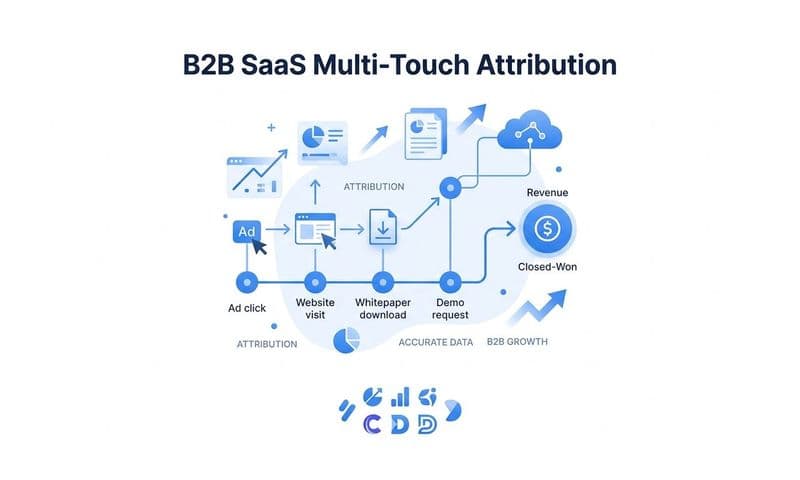
A unified attribution system connects all your marketing touchpoints into a single view. Ad clicks from Meta and Google. Website visits from organic search. Email opens and clicks. CRM interactions. Offline events. Every touchpoint gets tracked and tied to individual customer journeys, giving you a complete picture of how people actually move through your funnel.
The technical implementation involves creating a persistent customer identity that follows users across devices and sessions. When someone clicks your ad on mobile, visits your site on desktop, and converts on tablet, your attribution system recognizes this as one person's journey, not three separate visitors. This cross-device identity resolution is what makes true multi-touch attribution possible and helps resolve attribution modeling accuracy issues.
Multi-touch attribution models then assign credit across all the touchpoints that contributed to a conversion. Instead of giving 100% credit to the last click like most default attribution does, you can see that the initial Meta ad created awareness, the Google search captured intent, and the retargeting email sealed the deal. Each channel gets credit proportional to its actual contribution.
This fundamentally changes how you evaluate channel performance. That Meta campaign that looks mediocre in last-click attribution might be your most important top-of-funnel driver. The Google Ads campaign with a high CPA might actually be capturing demand you already created through other channels. Unified attribution reveals these insights that single-platform reporting obscures.
The real power comes when you feed conversion data back to ad platforms. Meta's algorithm optimizes better when it receives precise signals about which users actually converted and which didn't. Google's machine learning improves when it knows the true value of conversions, not just that they happened. This creates a virtuous cycle where better data leads to better optimization, which leads to better results.
Think about what this means for scaling. When you know with confidence that a campaign is actually profitable, not just appearing profitable based on inflated platform metrics, you can aggressively increase spend. When you understand which touchpoints drive the highest lifetime value customers, you can shift budget strategically. The guesswork disappears.
Your Data Accuracy Action Plan
Fixing conversion data accuracy issues requires both immediate tactical steps and longer-term strategic changes. Here's how to approach it.
Start with an audit of your current tracking setup. Check every conversion pixel and tag on your site. Look for duplicates, confirm pixels are firing only once per conversion, and verify that conversion values are being passed correctly. Use browser developer tools to watch pixels fire in real-time and catch implementation errors. Learning how to fix conversion tracking issues starts with understanding your current state.
Compare conversion counts across all your platforms and your actual sales data. Document the discrepancies. Is Meta consistently over-reporting? Does Google's data align more closely with reality? Understanding your current baseline helps you measure improvement as you implement fixes.
Implement server-side tracking as your next major initiative. This is the foundational change that will have the biggest impact on data accuracy. Start with your highest-volume conversion events and expand from there. Work with your development team or a technical partner to set up the server-side connections between your backend systems and ad platforms.
Don't try to boil the ocean immediately. Begin with purchase conversions, get those working reliably, then add lead submissions, email signups, and other micro-conversions. Each step forward improves your data quality and addresses marketing data accuracy challenges incrementally.
Move toward unified attribution to understand the full customer journey. This is where marketing analytics platforms become essential. You need a system that can track all touchpoints, connect them to individual users, and apply attribution models that reflect business reality. Look for solutions that integrate with your ad platforms, CRM, and analytics tools to create that single source of truth.
The transformation this creates in decision-making is remarkable. Instead of debating which platform's numbers to trust, you're looking at unified data that shows actual customer behavior. Instead of guessing at attribution, you're seeing documented journeys. Instead of scaling based on hope, you're scaling based on confidence in your unit economics.
Accurate data doesn't just make reporting easier. It fundamentally changes your ability to grow profitably. When you know what's actually working, you can double down without fear. When you understand true customer acquisition costs, you can make intelligent tradeoffs between channels. When your metrics reflect reality, every decision gets better.
Taking Control of Your Marketing Data
Conversion data accuracy issues aren't going away on their own. Privacy regulations will continue tightening. Browser-based tracking will keep getting less reliable. Ad platforms will keep reporting from their own perspective. The gap between platform metrics and business reality will widen unless you take deliberate action to fix it.
The solution isn't hoping for better tracking from ad platforms. They're doing the best they can within the constraints of privacy-first browsing and cross-device complexity. The solution is taking ownership of your conversion data through server-side tracking and building a unified view that reflects how customers actually move through your marketing ecosystem.
This shift from fragmented platform reporting to unified attribution represents a fundamental evolution in how sophisticated marketers operate. You're no longer dependent on what Meta or Google tell you happened. You're tracking what actually happened based on your business records, then using that accurate data to optimize across all channels.
The marketers who solve this problem gain a massive competitive advantage. While competitors waste budget on misattributed conversions and make decisions based on incomplete data, you're operating from a position of clarity. You know which campaigns drive real revenue. You understand the true contribution of each channel. You can scale confidently because your metrics actually reflect reality.
Ready to elevate your marketing game with precision and confidence? Discover how Cometly's AI-driven recommendations can transform your ad strategy. Get your free demo today and start capturing every touchpoint to maximize your conversions.