Your customer clicks a Facebook ad on their phone during lunch, researches your product on their work laptop, and finally converts on their tablet at home. Sound familiar? This multi-device journey is now the norm, yet most marketers are only seeing fragments of the story.
Cross-device conversion tracking issues cause attribution gaps that make your best-performing campaigns look like failures and your wasted ad spend look productive. The result? Misallocated budgets, poor optimization decisions, and campaigns that never reach their potential.
Here's the reality: when your tracking can't follow customers across devices, you're essentially flying blind. That mobile ad click that started the journey? Gone. The desktop research session that built trust? Invisible. You're left crediting the final tablet touchpoint while the earlier interactions that did the heavy lifting get zero recognition.
This guide walks you through exactly how to diagnose, troubleshoot, and fix cross-device tracking problems so you can finally see the complete customer journey and make confident, data-driven decisions. We'll tackle this systematically, from identifying where your tracking breaks down to implementing solutions that capture every touchpoint, regardless of which device your customers use.
Step 1: Audit Your Current Tracking Setup for Cross-Device Gaps
Before fixing anything, you need to understand exactly where your tracking is failing. Think of this as diagnosing the problem before prescribing the solution.
Start by examining your conversion path length versus your reported touchpoints. If your sales team tells you customers typically interact with your brand five to seven times before converting, but your analytics only shows one or two touchpoints, you've got a cross-device tracking problem. This gap indicates that touchpoints happening on different devices aren't being connected to the same user journey.
Pull up your analytics platform and look at your traffic sources. Do you see an unusually high percentage of conversions attributed to "direct" traffic? This is a classic red flag. When tracking breaks between devices, the system can't connect the dots, so conversions often get misattributed to direct traffic. In reality, these users likely clicked an ad on one device and returned on another.
Next, review your assisted conversions data. If you're seeing very few assisted conversions relative to last-click conversions, your tracking probably isn't capturing the full multi-device journey. Customers using multiple devices naturally create longer paths with multiple touchpoints, so low assisted conversion numbers suggest you're missing data.
Now for the technical audit. Check your pixel and tag placement across all your properties. Are tracking pixels implemented consistently on every page where conversions might happen? Inconsistent implementation creates blind spots, especially problematic when users switch devices mid-journey.
Examine your cookie settings. Are you using first-party cookies, or relying on third-party cookies that browsers now heavily restrict? Third-party cookies don't persist across devices, which immediately creates cross-device tracking failures. Understanding cross-device tracking challenges helps you identify these fundamental limitations in your current setup.
Check whether you've implemented any user ID tracking. If you're not capturing and passing user identifiers (like email addresses or account IDs) when customers log in or submit forms, you have no mechanism to connect their sessions across devices. This is often the single biggest gap in cross-device tracking.
Compare data across your ad platforms. Pull conversion numbers from Google Ads, Meta Ads, and your analytics platform for the same time period. Significant discrepancies often indicate that different platforms are seeing different pieces of the customer journey without connecting them. When platform data doesn't align, cross-device gaps are usually the culprit.
Document everything you find. Create a list of specific gaps: which touchpoints are invisible, where user identity breaks down, which platforms show mismatched data. This inventory becomes your roadmap for the fixes you'll implement in the following steps.
Step 2: Implement Server-Side Tracking as Your Foundation
Client-side tracking alone simply cannot solve cross-device tracking challenges. Here's why: browser restrictions, ad blockers, cookie limitations, and privacy features all interfere with client-side tracking methods. When a customer switches from their phone to their laptop, client-side tracking sees two completely different users.
Server-side tracking operates fundamentally differently. Instead of relying on browser cookies and pixels that users can block or that browsers can restrict, server-side tracking captures events on your server and sends them directly to your analytics and ad platforms. This approach works regardless of device, browser settings, or ad blockers.
Think of it like this: client-side tracking is like asking each customer to wear a name tag that falls off every time they change clothes. Server-side tracking is like having a central registry that recognizes customers no matter what they're wearing.
Here's how to set up server-side event collection. First, you'll need a server-side tracking infrastructure. This could be a dedicated server-side tracking solution, a tag management system with server-side capabilities, or an attribution platform that handles server-side tracking natively.
Configure your server to capture key events: page views, form submissions, add-to-cart actions, purchases, and any custom events relevant to your conversion funnel. These events should be logged on your server before being sent to your analytics platforms.
Set up event forwarding to send your server-side data to your ad platforms. For Meta, this means implementing the Conversions API. For Google, you'll use the Measurement Protocol or Google Analytics 4's server-side capabilities. These server-side connections ensure conversion data reaches your ad platforms even when browser-based tracking fails.
Include user identifiers in your server-side events. When someone submits a form with their email, logs into an account, or completes a purchase, capture that identifier and include it with every subsequent event. This identifier becomes the thread that connects sessions across devices.
Implement event deduplication to avoid double-counting conversions that fire from both client-side and server-side sources. Use event IDs that remain consistent across both tracking methods, allowing platforms to recognize and merge duplicate events rather than counting them twice.
Now verify everything is working. Check your server logs to confirm events are being captured. Then check your destination platforms (Meta Events Manager, Google Analytics, etc.) to verify those events are arriving. Look for the server-side indicator in your event data—most platforms mark server-side events differently from browser events.
Test the cross-device scenario specifically. Interact with your site on one device, then switch to another device and complete a conversion. Check whether your server-side tracking connected both sessions to the same user. If you've included proper user identifiers, you should see a unified journey rather than two separate users.
Step 3: Establish Unified User Identity Across Devices
Server-side tracking gives you the infrastructure, but unified user identity is what actually connects the dots across devices. Without it, you're still tracking separate anonymous sessions that happen to come from the same person.
The most reliable user identifier is email address. When someone submits a form, creates an account, or logs in, capture their email in a hashed format and associate it with their session. This hashed email becomes the persistent identifier that follows them across devices.
Here's the implementation approach: when a user authenticates or provides their email, hash it using SHA-256 and store it in a first-party cookie. Then include this hashed identifier with every event you send to your analytics and ad platforms. When the same user visits from a different device and logs in again, the same hashed email connects both sessions.
For anonymous sessions before authentication, use a first-party cookie to track the user's behavior. The moment they authenticate, connect that anonymous session history to their identified profile. This retroactive connection ensures you don't lose the early touchpoints that happened before they logged in.
Implement this identity resolution in your server-side tracking layer. When an event comes in with a user identifier, check whether you've seen this identifier before. If you have, merge the current session with the existing user profile. If not, create a new profile and begin tracking their journey. Exploring proven cross-device user tracking methods can help you refine this identity resolution process.
For e-commerce sites, leverage order confirmation pages. When someone completes a purchase, you definitely have their email. Use this moment to connect any previous anonymous sessions from that device to their identified profile, then sync this information across your tracking systems.
Privacy compliance is non-negotiable here. Only collect and use user identifiers with proper consent. Hash all personally identifiable information before storing or transmitting it. Make your privacy policy clear about how you're connecting user activity across devices, and provide opt-out mechanisms where required by law. Implementing privacy-compliant conversion tracking methods ensures you stay within legal boundaries while maintaining accurate data.
Build your identity graph gradually. Start by connecting sessions where users authenticate. As your system matures, you can add probabilistic matching—using signals like IP address, user agent, and timing patterns to suggest when anonymous sessions might belong to the same user. However, always prioritize deterministic matching (based on actual identifiers like email) over probabilistic methods.
Test your identity resolution by creating a test user journey. Visit your site on your phone without logging in. Then switch to your laptop, log in, and complete a conversion. Check your analytics to see if both sessions are now connected to the same user profile. If they are, your identity resolution is working. If you see two separate users, you've got more configuration work to do.
Monitor your identity match rates over time. What percentage of your sessions can you connect to known users? What percentage remain anonymous? Understanding these metrics helps you identify opportunities to capture user identity earlier in the journey, such as through content gates or newsletter signups that happen before purchase consideration.
Step 4: Connect Your CRM and Ad Platforms for Complete Journey Visibility
Your marketing platforms show ad clicks and website visits. Your CRM holds lead stages, sales calls, and revenue data. When these systems don't talk to each other, you're missing the most important part of the cross-device story: what happened after the initial conversion.
Siloed data creates a specific cross-device problem. Someone might click your ad on mobile, submit a lead form on desktop, have a sales call, then close the deal weeks later on their tablet. If your CRM and ad platforms aren't connected, you'll never see this complete journey, and you definitely won't be able to attribute that closed deal back to the original mobile ad click.
Start by integrating your CRM with your attribution system. This connection should flow data in both directions. Send marketing touchpoint data (ad clicks, content engagement, email opens) into your CRM so sales teams can see how leads discovered you. Send CRM events (lead status changes, opportunity stages, closed deals) back to your marketing analytics so you can track conversions beyond the initial form submission.
Use your CRM's native integrations if they exist, or build custom connections through APIs. The key is ensuring that every lead in your CRM is connected to their complete marketing journey, including all the cross-device touchpoints that preceded their conversion.
Implement conversion value tracking. Don't just send a binary "converted" signal—send the actual deal value, product purchased, or customer lifetime value. This enriched data transforms your attribution from counting conversions to measuring actual revenue impact, which completely changes how you evaluate campaign performance.
Set up offline conversion tracking with your ad platforms. Meta's Offline Conversions and Google's offline conversion imports let you send CRM data back to these platforms. When a lead from a Facebook ad closes a deal three weeks later, this data tells Facebook's algorithm that this campaign drives valuable outcomes, even if they happen offline and across multiple devices.
This feedback loop dramatically improves ad platform optimization. When algorithms know which campaigns drive actual revenue (not just clicks or form fills), they optimize toward better outcomes. Your cross-device tracking becomes more valuable because you're now attributing real business results, not just intermediate actions.
Create unified customer profiles that combine all data sources. Each profile should show every touchpoint across every device, every CRM interaction, and the final outcome. Effective customer journey tracking across devices reveals patterns you'd never see in siloed data, like discovering that customers who engage on mobile first but convert on desktop have higher lifetime value than those who stay on a single device throughout.
Automate this data flow. Manual imports create gaps and delays that reduce accuracy. Real-time or near-real-time syncing ensures your attribution data stays current, and your ad platforms receive optimization signals quickly enough to act on them.
Test the complete loop. Create a test lead, move it through your CRM stages, and verify that each stage appears in your attribution data. Then check whether that conversion data made it back to your ad platforms. This end-to-end test confirms your systems are truly connected.
Step 5: Configure Multi-Touch Attribution for Cross-Device Accuracy
Last-click attribution is particularly destructive for cross-device journeys. It gives 100% credit to the final touchpoint before conversion, which almost always happens on the device where the customer finally decided to buy. All those earlier touchpoints on other devices? They get zero recognition.
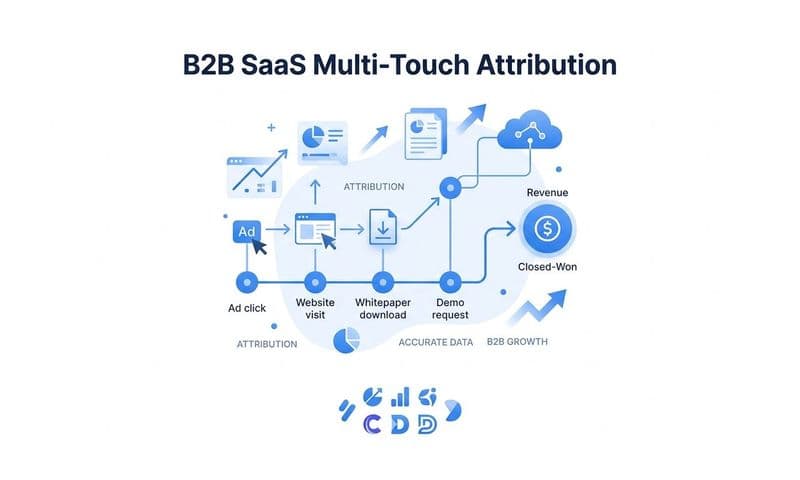
Multi-touch attribution distributes credit across the entire customer journey, which naturally accounts for cross-device behavior. When someone clicks a mobile ad, researches on desktop, and converts on tablet, multi-touch models recognize that all three touchpoints contributed to the outcome.
Start by selecting an attribution model that matches your business reality. Linear attribution gives equal credit to every touchpoint—simple and fair for journeys where each interaction matters equally. Time decay gives more credit to recent touchpoints while still acknowledging earlier ones. Position-based (U-shaped) credits the first and last touchpoints more heavily, recognizing that discovery and conversion moments often matter most.
For most businesses with cross-device customers, time decay or position-based models work well. They acknowledge that the final device touchpoint matters while still crediting the earlier cross-device interactions that built awareness and consideration. Understanding cross-device attribution tracking principles helps you select the right model for your specific customer journeys.
Configure your lookback window appropriately. This determines how far back your attribution model looks when connecting touchpoints to conversions. If your typical sales cycle is two weeks but your lookback window is only seven days, you're missing half the cross-device journey.
Analyze your conversion path length data to set the right lookback window. If most conversions happen within 30 days of first touch, a 30-day window captures the complete journey. For longer sales cycles, extend it to 60 or 90 days. The goal is capturing the full cross-device journey without including touchpoints so old they're no longer relevant.
Set up attribution model comparison reports. Run the same data through last-click, linear, and time-decay models simultaneously. The differences reveal how cross-device behavior impacts attribution. Channels that look weak in last-click but strong in multi-touch are often your best cross-device awareness and consideration drivers.
Pay special attention to device-level attribution. Compare how mobile, desktop, and tablet touchpoints are credited under different models. You'll often discover that mobile drives discovery and initial engagement, desktop drives research and consideration, and conversions happen across all devices. Last-click attribution would miss most of mobile's contribution entirely.
Use these insights to adjust your strategy. If multi-touch attribution reveals that mobile touchpoints early in the journey are crucial for conversions that happen on desktop later, you know to maintain or increase mobile ad spend even if mobile shows weak last-click conversion numbers.
Implement data-driven attribution if you have sufficient conversion volume. Data-driven models use machine learning to determine how much credit each touchpoint deserves based on actual conversion patterns in your data. These models automatically account for cross-device behavior patterns specific to your customers.
Review your attribution reports regularly. Cross-device behavior patterns shift as device usage evolves and as your campaigns change. What worked six months ago might not reflect current reality. Monthly attribution reviews help you stay aligned with how your customers actually move across devices.
Step 6: Validate and Optimize Your Cross-Device Tracking
Implementation is just the beginning. Ongoing validation ensures your cross-device tracking continues working accurately as technology, privacy regulations, and customer behavior evolve.
Create a testing protocol for cross-device conversions. Once a month, simulate a complete customer journey across multiple devices. Click an ad on mobile, visit your site on desktop, and complete a conversion on tablet. Then check whether your tracking system connected all three touchpoints to a single user journey. If it didn't, investigate where the connection broke down.
Set up key reports that surface cross-device issues quickly. A cross-device conversion path report shows how many devices customers use before converting. If this number suddenly drops, your cross-device tracking may have broken. A device category performance report reveals whether certain devices show unusual patterns that might indicate tracking problems.
Monitor your assisted conversion metrics closely. These metrics specifically measure touchpoints that contributed to conversions without being the final click. A sudden drop in assisted conversions often indicates that your cross-device tracking has stopped connecting earlier touchpoints to final conversions. Addressing conversion tracking accuracy issues proactively prevents data quality from degrading over time.
Create alerts for tracking anomalies. Set up notifications for unusual spikes in direct traffic, sudden drops in conversion path length, or significant discrepancies between platform-reported conversions and your analytics data. These signals often indicate that something broke in your cross-device tracking infrastructure.
Compare your attributed conversions to your actual business results regularly. If your tracking shows 100 conversions but your CRM only received 80 leads, you've got a data quality problem. Investigate whether duplicate tracking, bot traffic, or cross-device issues are inflating your numbers.
Use your cross-device insights to optimize campaign strategy. If you discover that mobile ads drive awareness but desktop drives conversions, structure your campaigns accordingly. Run broader targeting on mobile to maximize reach, then use retargeting on desktop to capture users in research mode.
Adjust your budget allocation based on multi-device attribution data. Channels that look expensive on a last-click basis might be highly efficient when you account for their cross-device contribution to conversions. Shift budget toward channels that drive valuable early-stage touchpoints, even if they don't get last-click credit.
Refine your creative strategy by device. If your data shows that mobile users rarely convert immediately but often return on desktop to complete purchases, your mobile creative should focus on building interest rather than pushing immediate conversion. Save the hard sell for desktop retargeting.
Document your cross-device tracking setup thoroughly. When team members change or when you need to troubleshoot issues months later, clear documentation of how your tracking works, what identifiers you're using, and how systems connect saves enormous time and prevents gaps from emerging.
Your Complete Cross-Device Tracking Checklist
You now have a systematic approach to fixing cross-device conversion tracking issues. Let's consolidate this into a quick-reference checklist you can use to ensure nothing gets missed.
Audit Phase: Review conversion path length vs. reported touchpoints, check for high direct traffic attribution, examine assisted conversion rates, verify pixel placement consistency, assess cookie implementation, confirm user ID tracking exists, and compare data across platforms to identify discrepancies.
Server-Side Foundation: Implement server-side tracking infrastructure, configure event capture for all key actions, set up event forwarding to ad platforms, include user identifiers in all events, implement deduplication logic, and verify events are arriving at destination platforms.
User Identity: Capture and hash email addresses at authentication points, store hashed identifiers in first-party cookies, connect anonymous sessions to identified profiles, implement identity resolution in your tracking layer, ensure privacy compliance, and test identity matching across devices. Reviewing cross-device user tracking solutions can help you choose the right approach for your tech stack.
System Integration: Connect CRM to attribution system with bi-directional data flow, implement conversion value tracking, set up offline conversion imports to ad platforms, create unified customer profiles, automate data syncing, and test the complete integration loop.
Attribution Configuration: Select appropriate multi-touch attribution model, set lookback windows based on your sales cycle, create attribution comparison reports, analyze device-level attribution patterns, and review attribution data monthly to catch shifts in customer behavior.
Ongoing Validation: Run monthly cross-device test conversions, monitor assisted conversion metrics, set up alerts for tracking anomalies, compare attributed conversions to business results, and document your complete tracking setup. Following best practices for tracking conversions accurately ensures your data remains reliable over time.
Key success indicators to monitor: increasing number of attributed conversions as previously invisible touchpoints become visible, longer visible conversion paths reflecting the true multi-device journey, consistent conversion data across platforms, and higher assisted conversion rates showing that your tracking is connecting touchpoints properly.
As your campaigns scale, your cross-device tracking needs will evolve. More traffic means more complex journeys to track. More campaigns mean more touchpoints to attribute. More devices and platforms mean more integration points to maintain. Plan to revisit this checklist quarterly, not just as a one-time fix.
The difference between broken and accurate cross-device tracking is the difference between guessing and knowing. When you can see the complete customer journey across every device, every platform, and every touchpoint, you make fundamentally better decisions about where to invest your budget, which campaigns to scale, and how to optimize for actual business results rather than vanity metrics.
Ready to elevate your marketing game with precision and confidence? Discover how Cometly's AI-driven recommendations can transform your ad strategy—Get your free demo today and start capturing every touchpoint to maximize your conversions.