You're tracking conversions. Your pixels are firing. Your analytics dashboard shows numbers climbing. Yet somehow, your ad performance isn't improving the way you expected. The data is there—mountains of it—but it's just sitting in reports, not actually helping your campaigns find better customers or reduce your cost per acquisition.
This is the activation gap, and it's costing marketers millions in wasted ad spend.
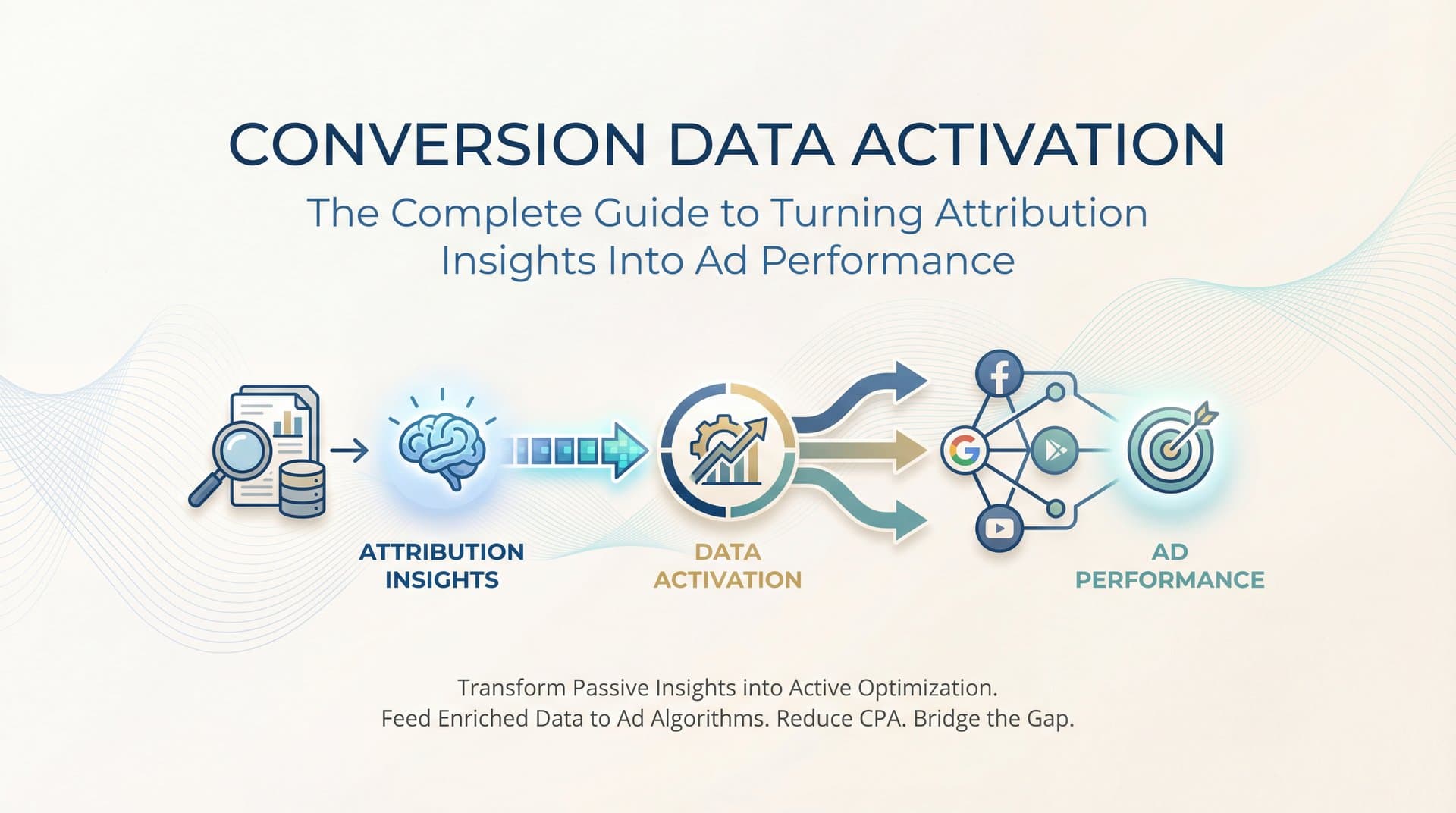
Conversion data activation bridges this gap by transforming your attribution insights from passive reporting into active performance optimization. Instead of just knowing which ads drove conversions, you're feeding that enriched data back to advertising platforms so their algorithms can find more people like your best customers. It's the difference between watching a game film and using those insights to win the next match.
This guide breaks down everything you need to know: what conversion data activation actually means, why ad platforms desperately need better signals, and how to implement an activation strategy that delivers measurable ROI improvements.
Beyond Data Collection: Understanding the Activation Gap
Let's start with a critical distinction that most marketers miss: tracking conversions and activating conversion data are fundamentally different activities.
Conversion data activation is the process of feeding enriched conversion data back to advertising platforms to improve their machine learning models and targeting capabilities. You're not just recording what happened—you're using that information to influence what happens next.
Think of it this way: passive data collection is like taking detailed notes during a meeting but never acting on them. Active data utilization is taking those notes, extracting the key insights, and immediately implementing changes based on what you learned.
Most marketing setups stop at the collection phase. A pixel fires when someone converts. That event gets logged in your analytics. Maybe it shows up in an attribution report. But that's where the journey ends. The valuable context you've gathered—which touchpoints influenced the conversion, what the customer's journey looked like, whether they became a high-value customer—never makes it back to the ad platforms that could use it.
Here's why this matters: ad platforms like Meta and Google don't just need to know that a conversion happened. They need rich, detailed signals to understand what type of person converts, under what circumstances, and with what value to your business. A basic pixel fire tells them almost nothing useful.
When you fire a standard conversion pixel, you're essentially saying "someone did something." When you activate enriched conversion data, you're saying "a person from this specific audience segment, who engaged with these particular ad creatives, completed a high-value action worth $X to our business, after a journey that included these touchpoints."
That's the difference between noise and signal. One tells the algorithm almost nothing useful. The other gives it exactly what it needs to find more valuable customers.
The activation gap exists because most attribution tools were built for reporting, not optimization. They excel at showing you what happened in the past but lack the infrastructure to feed those insights back into your advertising ecosystem in real time.
Why Ad Platforms Are Starving for Better Data
Ad platforms are facing a data crisis, and it's getting worse every quarter.
iOS privacy changes fundamentally broke the tracking model that platforms like Meta relied on for years. When Apple introduced App Tracking Transparency, the percentage of iOS users who opt into tracking dropped dramatically. Suddenly, a massive chunk of conversion data that ad platforms used to see automatically simply vanished.
Cookie deprecation compounds this problem. As browsers phase out third-party cookies, the traditional mechanisms for tracking user behavior across the web are disappearing. Google keeps pushing back the timeline, but the direction is clear: browser-based tracking is dying.
This matters because modern ad platforms are essentially sophisticated machine learning systems. Meta's Advantage+ campaigns, Google's Smart Bidding, TikTok's automated optimization—they all depend on conversion signals to learn which types of users are most likely to take valuable actions.
The algorithm works like this: it shows your ads to various audiences, observes who converts, identifies patterns in those converters, then finds more people who match those patterns. More conversion data means better pattern recognition. Better pattern recognition means more efficient targeting. More efficient targeting means lower costs and higher returns.
But when the algorithm receives incomplete or inaccurate conversion data, this entire system breaks down. It's like trying to navigate with a map that's missing half the streets. You might eventually reach your destination, but you'll waste time and resources taking wrong turns.
The cascading effect looks like this: privacy changes reduce conversion visibility → algorithms receive fewer signals → targeting becomes less precise → cost per acquisition increases → ROAS decreases → marketing budgets deliver less value.
Many marketers notice their campaigns aren't performing like they used to but don't connect it to data quality issues. They assume the platform changed something or their creative got stale. Often, the real problem is that the ad platform's algorithm is making decisions based on incomplete information.
This is where first-party data activation becomes your competitive advantage. While browser-based tracking degrades, server-side connections that you control can still deliver accurate, comprehensive conversion data to ad platforms. The marketers who figure out how to activate their first-party data effectively gain a significant edge over competitors who rely on degraded pixel-based tracking.
Ad platforms are literally starving for better signals. They've built sophisticated APIs specifically designed to receive enriched conversion data from your systems. Meta's Conversions API, Google's Enhanced Conversions, TikTok's Events API—these exist because the platforms know their browser-based tracking is insufficient and they need your help to fill the gaps.
The Mechanics of Effective Conversion Data Activation
Understanding how conversion data activation works technically helps you implement it correctly and troubleshoot when something isn't performing as expected.
The activation flow has three critical stages: capture, enrich, and sync.
First, you need to capture conversion events accurately across your entire marketing ecosystem. This means tracking not just website conversions but also CRM events, offline conversions, and cross-device actions. The goal is creating a complete picture of what actually drives value for your business.
Server-side tracking plays a crucial role here. When browser-based pixels fail due to ad blockers, privacy settings, or technical issues, first-party data tracking maintains data accuracy. Your server communicates directly with ad platforms, bypassing the browser entirely. This approach is increasingly essential as browser-based tracking becomes less reliable.
Second, you enrich those conversion events with attribution context. A basic conversion signal tells the ad platform that someone converted. An enriched signal includes which ads they saw, which channels they engaged with, how many touchpoints occurred before conversion, and the actual revenue value of that conversion.
This enrichment transforms a simple data point into actionable intelligence. Instead of just knowing that 100 people converted, the ad platform learns that 30 of those converters saw your video ad first, engaged with a retargeting campaign, and then converted with an average order value of $150. That's the kind of detailed pattern recognition that powers effective automated targeting.
Third, you sync conversion data to Facebook Ads and other advertising platforms through their conversion APIs. This isn't a one-time setup—it's an ongoing process that happens in near real-time as conversions occur. The faster you sync conversion data back to platforms, the faster their algorithms can learn and optimize.
The technical implementation typically involves middleware that sits between your attribution system and ad platforms. This middleware handles the data formatting, deduplication, and API calls necessary to send conversion events correctly.
Deduplication is particularly important. If your browser pixel fires and your server-side tracking also sends a conversion event, you need logic to ensure the ad platform doesn't count the same conversion twice. Most conversion APIs use event IDs and timestamps to match and deduplicate events automatically.
One common mistake is sending too much data too quickly without proper validation. Ad platforms have rate limits and data quality requirements. Sending poorly formatted events or exceeding API limits can result in data being rejected or delayed, which defeats the purpose of real-time activation.
Another technical consideration is parameter matching. Ad platforms need specific data points to match conversions back to ad interactions—things like click IDs, browser information, and user identifiers. Missing or incorrect matching parameters mean conversions can't be attributed to the right campaigns, rendering the data less useful for optimization.
The beauty of this system is that it works regardless of tracking limitations. Even when iOS users opt out of tracking or browsers block pixels, your server-side connections can still send conversion data to ad platforms using first-party information you've collected legitimately through your website or CRM.
From CRM Events to Ad Platform Signals
The most valuable conversions often happen far from the initial ad click—in your CRM, during sales calls, or months after the first website visit. Activating these downstream events is where conversion data activation delivers its highest ROI.
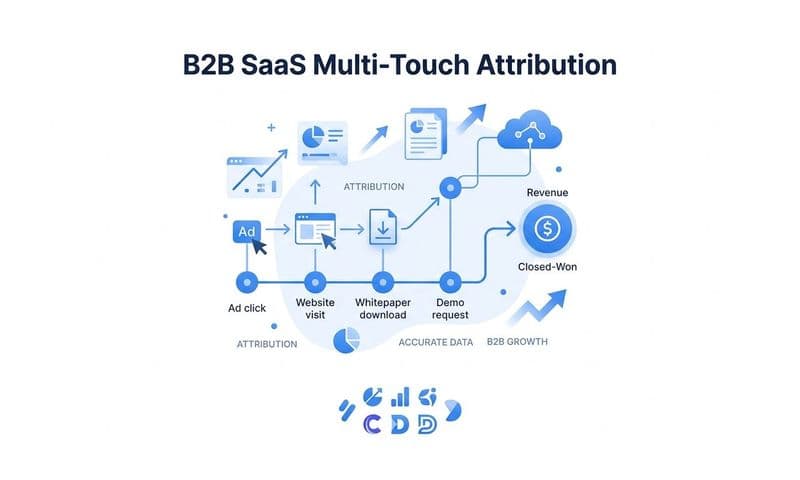
Consider a typical B2B customer journey: someone clicks your LinkedIn ad, downloads a whitepaper, schedules a demo, becomes a qualified lead, closes as a customer, and eventually renews or expands their contract. If you only send the whitepaper download event to LinkedIn's algorithm, you're teaching it to find people who download content—not people who become valuable customers.
Activating CRM events means sending signals when leads qualify, when deals close, and when customers hit key value milestones. This teaches ad platforms to optimize for business outcomes that actually matter, not just top-of-funnel actions.
Revenue data is particularly powerful. Instead of telling Meta that someone converted, you tell Meta that someone converted and generated $5,000 in revenue. The algorithm can then identify patterns among high-value converters and prioritize finding similar prospects. This is fundamentally different from optimizing for conversion volume regardless of value.
Many marketers hesitate to activate CRM data because of the time lag between ad click and final conversion. They worry that sending a conversion signal weeks or months after the initial interaction won't help the algorithm. This concern is misplaced.
Ad platforms use delayed conversion data to refine their models over time. When you send a high-value conversion signal weeks after the click, the algorithm looks back at the characteristics of that user and the ad they engaged with, then adjusts its targeting to find more people with similar profiles. The time lag doesn't diminish the value—it actually provides the algorithm with more sophisticated learning signals about which early indicators predict long-term value.
The key is sending actual revenue values, not arbitrary numbers. If a customer is worth $10,000 to your business, send that actual value. If a qualified lead typically converts at 30% and has a $3,000 average deal size, you might send a conversion value of $900 when someone becomes qualified. This helps the algorithm understand relative value across different conversion events.
Connecting CRM data to ad platforms also solves the data attribution problem that plagues most B2B marketing. Sales teams often claim that leads from paid ads are lower quality than other sources, but this perception frequently stems from incomplete data. When you activate CRM conversion data that shows which ad-generated leads actually closed, you can prove ROI and optimize campaigns based on closed revenue, not just lead volume.
Building Your Activation Strategy: A Practical Framework
Implementing conversion data activation requires three foundational components: unified tracking, attribution modeling, and platform integrations. Getting these right determines whether your activation strategy delivers results or just creates more complexity.
Unified tracking means capturing all conversion events—website actions, CRM updates, offline conversions, cross-device behaviors—in a single system that can connect them to the original marketing touchpoints. Without this foundation, you're trying to activate fragmented data that doesn't tell a complete story.
Your attribution model determines how you assign credit across touchpoints and which conversion events you prioritize for activation. A last-click model might lead you to activate only final conversions, while multi-touch attribution models help you understand and activate the full journey. The right model depends on your sales cycle and customer behavior patterns.
Platform integrations are the technical bridges that send your enriched data back to ad platforms. These need to be reliable, fast, and properly configured. A broken integration means conversion data never reaches the algorithms that need it, rendering your entire activation strategy useless.
Start by identifying which conversion events actually matter for your business. Don't activate everything—focus on actions that correlate with revenue and customer value. For an e-commerce business, this might be purchases above a certain value threshold. For a SaaS company, it could be trial signups that activate key features or convert to paid plans.
Consider your sales cycle when choosing events to activate. If your typical customer takes 90 days to close, activating only immediate conversions ignores the most valuable signals. You need to feed quality data to ad algorithms about which early interactions predict eventual high-value customers.
This is where attribution platforms like Cometly streamline the entire process. Rather than building custom integrations for each ad platform, connecting your CRM, and managing data enrichment separately, Cometly handles the complete activation loop. It captures every touchpoint across your marketing ecosystem, applies sophisticated attribution modeling to understand which interactions drive value, and automatically syncs enriched conversion data back to ad platforms through their conversion APIs.
The platform connects your ad channels, website tracking, and CRM to create a unified view of the customer journey, then activates that data by feeding better signals back to Meta, Google, TikTok, and other advertising platforms. This means their algorithms receive the enriched, accurate conversion data they need to optimize targeting and improve your ROI.
Implementation typically follows this sequence: set up comprehensive tracking, validate data accuracy, configure attribution models, test platform integrations with sample data, gradually scale activation across campaigns, and monitor performance changes. Rushing this process often leads to data quality issues that undermine optimization.
Measuring the Impact of Activated Data
Conversion data activation delivers measurable improvements, but you need to track the right metrics to see the impact clearly.
Start with cost per acquisition changes. As ad platforms receive better conversion signals, their algorithms should find qualified prospects more efficiently, reducing how much you pay for each conversion. Track CPA trends over time, accounting for seasonal factors and other variables that might influence results.
ROAS improvements are often the most visible indicator of successful activation. When algorithms optimize based on actual revenue data rather than just conversion counts, they naturally shift spend toward higher-value opportunities. Monitor ROAS at the campaign level to identify which campaigns benefit most from activated data.
Audience quality shifts reveal whether activation is helping platforms find better prospects. Look at metrics like lead qualification rates, customer lifetime value, and retention rates among customers acquired after implementing data activation. If these metrics improve, your activation strategy is working even if top-line conversion volume stays flat.
Before-and-after comparison requires establishing a baseline before you implement activation. Document your current CPA, ROAS, and quality metrics across key campaigns. Then track how these metrics trend over the 30-60 days after activation begins. Most marketers see initial improvements within 2-3 weeks as algorithms accumulate new signals.
The compounding effect is crucial to understand. Conversion data activation doesn't deliver instant results—it improves performance progressively as ad platforms accumulate more high-quality signals. The first week might show modest improvements. After a month, the algorithm has learned significantly more. After three months, the cumulative learning effect can deliver substantial performance gains.
This compounding nature means patience is essential. Marketers who expect immediate dramatic results often abandon activation strategies before they fully mature. Give the system time to learn and optimize based on the richer data you're providing.
Also monitor data quality metrics within ad platforms. Most conversion APIs provide feedback about event match quality, showing what percentage of your conversion data successfully matches back to ad interactions. Low match rates indicate technical issues that need fixing—you might be missing key parameters or sending data in the wrong format. Understanding best practices for tracking conversions accurately helps prevent these issues from undermining your activation efforts.
Turning Insights Into Competitive Advantage
Conversion data activation transforms marketing analytics from a reporting function into a performance optimization engine. You're no longer just measuring what happened—you're actively using those insights to improve future results.
As tracking becomes harder and privacy regulations tighten, this capability becomes a significant competitive advantage. While competitors struggle with degraded pixel-based tracking and incomplete data, marketers who master activation gain clearer visibility and better-optimized campaigns. Building a comprehensive first-party data strategy positions your organization for long-term success in this evolving landscape.
The difference between collecting data and activating it is the difference between knowing and doing. Every conversion you track contains valuable signals that can help ad platforms find more customers like your best ones. The question is whether you're putting those signals to work or letting them sit unused in reports.
Cometly handles the complete activation loop—from capturing every touchpoint to feeding enriched data back to ad platforms for better targeting and ROI. The platform connects your entire marketing ecosystem, applies AI-driven attribution modeling to understand what's really driving revenue, and automatically syncs those insights back to advertising channels so their algorithms can optimize performance.
Ready to elevate your marketing game with precision and confidence? Discover how Cometly's AI-driven recommendations can transform your ad strategy—Get your free demo today and start capturing every touchpoint to maximize your conversions.