You open your Meta Ads Manager and see 47 conversions. Google Analytics shows 39. Your CRM reports 52 leads came in during the same period. Three dashboards, three different numbers, all supposedly tracking the same campaign.
Sound familiar?
This isn't a glitch in your tracking setup. It's the reality of modern marketing attribution, where campaigns span multiple platforms but each one tells a different story about what's working. You're left staring at conflicting data, wondering which number to trust and where to actually invest your budget.
The stakes are high. Make decisions based on the wrong data, and you'll scale campaigns that look good on paper but drain your budget without delivering real results. Trust the wrong platform's attribution, and you'll starve the channels actually driving revenue while pouring money into ones that just happen to be last in line.
This guide breaks down exactly why your cross-platform attribution data doesn't match, the technical and strategic barriers creating these gaps, and what you can do to build a unified view of what's really driving conversions. Let's turn that dashboard confusion into clarity.
The Data Fragmentation Problem Nobody Warned You About
Every ad platform you use operates as its own independent kingdom. Meta has its pixel. Google has its tag. TikTok has its SDK. Each one tracks user behavior through its own proprietary system, stores that data in its own database, and reports results through its own interface.
This siloed approach made sense when marketing was simpler. Run a Facebook campaign, track Facebook results. Launch Google Ads, measure Google performance. But your customers don't live in silos.
Modern customer journeys weave across platforms in complex patterns. A prospect sees your Instagram ad during their morning scroll, searches your brand name on Google during lunch, clicks a retargeting ad on Facebook that evening, and finally converts through a direct visit the next day. That's four touchpoints across three platforms before a single conversion.
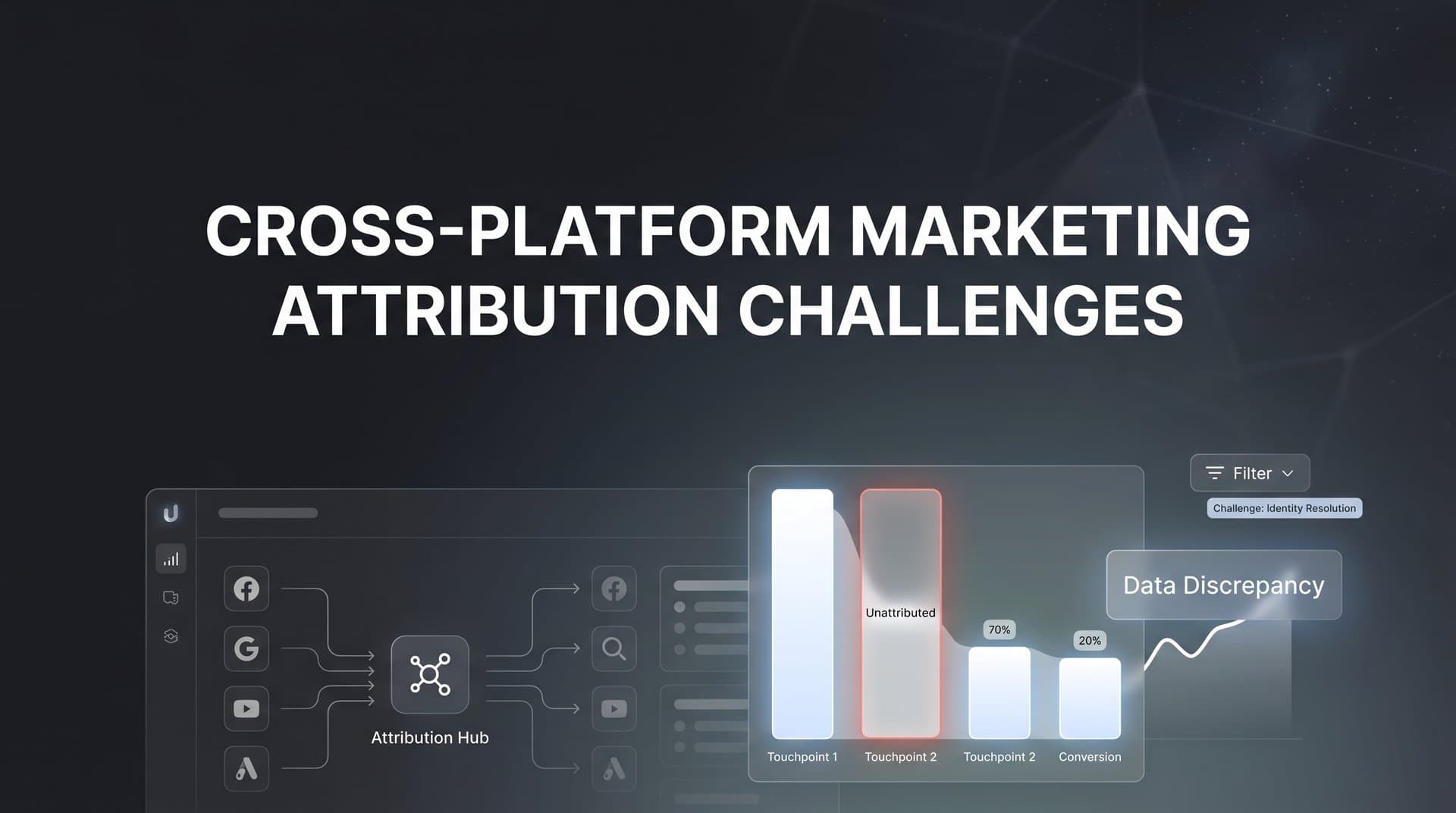
Here's where the fragmentation problem explodes: each platform wants credit for that conversion.
Meta's pixel fires when someone clicks your Facebook retargeting ad, tags them as a converter, and reports the sale. Google sees the branded search click and claims attribution. Your direct traffic in Google Analytics records the final visit as the conversion source. Suddenly, your one actual conversion gets counted three times across three different dashboards.
This isn't just a reporting annoyance. It fundamentally breaks your ability to understand what's working. When you add up all the conversions each platform claims credit for, the total often exceeds your actual number of customers by 50% or more. You're making budget decisions based on inflated, overlapping attribution that makes every channel look more effective than it actually is. Understanding these common attribution challenges in marketing analytics is the first step toward solving them.
The fragmentation goes deeper than just duplicate counting. Each platform captures different data points about the customer journey. Meta knows which creative they clicked. Google knows what they searched. Your website analytics knows how they navigated your site. But none of these systems talk to each other naturally.
You end up with pieces of the puzzle scattered across multiple platforms, unable to see the complete picture of how marketing touchpoints work together to drive conversions. Without that unified view, you're optimizing individual channels in isolation rather than understanding how they function as a system.
Five Technical Barriers Breaking Your Attribution
The attribution challenges you face aren't just philosophical differences between platforms. They're rooted in fundamental technical barriers that have reshaped how tracking works.
Privacy Updates That Broke Traditional Tracking: Apple's App Tracking Transparency framework changed everything when it required apps to ask permission before tracking users across other apps and websites. The opt-in rate? Studies suggest fewer than 25% of iOS users grant tracking permission. For advertisers, this means your Meta pixel and other tracking tools simply cannot see what happens with the majority of iPhone users. You're flying blind on a massive segment of your audience, with conversion data that captures only a fraction of actual results.
Google's gradual phase-out of third-party cookies in Chrome adds another layer of tracking degradation. While timelines have shifted, the direction is clear: browser-based tracking through cookies is becoming less reliable. The pixels and tags you've relied on for years are capturing less data every quarter. These attribution challenges in digital marketing require new approaches to measurement.
Cross-Device Identification Gaps: Your customer sees your ad on their phone during their commute. They research your product on their laptop at work. They complete the purchase on their tablet at home. Three devices, one customer, but your tracking sees three different anonymous users unless you have sophisticated cross-device identification.
Most standard tracking setups cannot connect these dots. The mobile click gets attributed to one user ID, the desktop research session to another, and the tablet conversion to a third. You lose visibility into the complete journey and cannot accurately attribute which touchpoint actually influenced the purchase.
Walled Gardens Preventing Data Sharing: Meta, Google, TikTok, and other major ad platforms intentionally do not share user-level data with each other. They're competitors, and your customer data is valuable. This creates information silos where each platform only sees the interactions that happen within its own ecosystem.
When someone clicks your Meta ad and later converts through a Google search, Meta has no visibility into that search, and Google has no visibility into that initial Meta click. Neither platform can see the full journey, so both apply their attribution models based on incomplete information. The result? Conflicting claims about which channel deserves credit.
Inconsistent Attribution Windows: Meta's default attribution window is seven days for clicks and one day for views. Google Ads uses 30 days for search clicks. Google Analytics uses 90 days for most channels. These different windows mean the same conversion can appear in one platform's reporting but not another's, simply based on timing.
Imagine someone clicks your Meta ad on Monday, clicks your Google ad on the following Monday (eight days later), and converts that same day. Meta won't claim this conversion because it falls outside their seven-day click window. Google will claim it because it's within their 30-day window. Your attribution reports now show different conversion counts not because of actual performance differences, but because of arbitrary window settings.
Server-Side Tracking Gaps: Traditional client-side tracking relies on code that runs in the user's browser. Ad blockers, privacy settings, and browser restrictions can prevent this code from executing or sending data back to your tracking platforms. When that happens, conversions occur but your tracking never sees them.
Without server-side tracking that sends conversion data directly from your servers to ad platforms, you're missing a significant portion of your actual results. These invisible conversions create a gap between what's really happening and what your dashboards report, making it impossible to accurately measure campaign performance.
How Attribution Model Mismatches Skew Your Budget Decisions
Even if you could magically solve all the technical tracking barriers, you'd still face a fundamental problem: different attribution models tell completely different stories about the same data.
Last-click attribution gives 100% credit to the final touchpoint before conversion. First-click gives all credit to the initial interaction. Linear attribution splits credit evenly across all touchpoints. Time-decay gives more credit to recent interactions. Each model produces radically different results from the same customer journey data.
Here's the real issue: each ad platform uses its own default attribution model, typically designed to make that platform look as good as possible. Meta tends to favor models that credit social touchpoints. Google favors models that highlight search. When you compare reports across platforms, you're not just comparing different data, you're comparing different interpretations of how credit should be assigned.
The business impact is massive. Let's say your typical customer journey starts with a Meta ad, includes a Google search, and ends with a direct visit. Under last-click attribution, direct traffic gets all the credit. Your reports suggest you should cut Meta and Google spending because direct traffic is your top converter. But direct traffic isn't a marketing channel you can scale. Those direct visits are happening because Meta and Google created awareness earlier in the journey.
Cut those "underperforming" channels, and your direct conversions will collapse. You've optimized based on an attribution model that fundamentally misrepresented how your marketing actually works. A multi-touch marketing attribution platform can help you understand the complete picture.
Multi-touch attribution models attempt to solve this by distributing credit across touchpoints, but they introduce their own challenges. How much credit should the first touchpoint get versus the last? Should a view-through impression count the same as a click? Different multi-touch models answer these questions differently, and your budget decisions will vary wildly based on which approach you choose.
The bigger problem: most marketers don't actively choose an attribution model. They inherit whatever default their primary reporting platform uses, often without realizing that default is shaping every optimization decision they make. You think you're following the data, but you're actually following one platform's interpretation of how credit should work.
The CRM Connection Gap That Costs You Visibility
Ad platforms excel at tracking the top of your funnel. They know who clicked, who viewed, who engaged. They can tell you how many form submissions or purchases happened. But for many businesses, especially in B2B and high-value B2C, the real question isn't how many leads came in. It's how many of those leads turned into revenue.
This is where the CRM connection gap destroys attribution accuracy. Your ad platforms stop tracking after the lead submits a form or makes an initial purchase. Everything that happens next—the sales calls, the nurture sequences, the upsells, the actual deal closing—lives in your CRM, completely disconnected from your marketing attribution data.
You end up optimizing for lead volume instead of lead quality. Campaign A generates 100 leads at $50 each. Campaign B generates 40 leads at $125 each. Based on ad platform data alone, Campaign A looks more efficient. But when you connect to CRM data, you discover that Campaign A's leads close at 2% while Campaign B's leads close at 15%. Campaign B is actually driving six times more customers despite fewer leads.
Without CRM integration, you'd scale Campaign A and throttle Campaign B, increasing lead volume while decreasing actual revenue. Your attribution data told you to make the exact wrong decision because it only showed part of the story. This is one of the most critical attribution challenges in B2B marketing that companies face.
The gap becomes even more critical for businesses with longer sales cycles. If it takes 60 days from initial contact to closed deal, your ad platform's 30-day attribution window doesn't even capture the full cycle. You're making budget decisions based on which campaigns generated leads this month, with no visibility into which campaigns are actually closing deals.
Revenue attribution requires connecting the entire journey: which ad they clicked, which form they filled out, which sales rep contacted them, which objections came up, and ultimately whether they became a paying customer. Most marketing stacks have these data points scattered across ad platforms, website analytics, and CRM systems with no unified view connecting them.
Building a Unified Attribution Strategy That Actually Works
Solving cross-platform attribution challenges requires moving beyond platform-native tracking to a unified approach that captures the complete customer journey and connects it to actual business outcomes.
Implement Server-Side Tracking: The foundation of accurate modern attribution is server-side tracking that bypasses browser-based limitations. Instead of relying solely on pixels and tags that run in the user's browser (and can be blocked), server-side tracking sends conversion data directly from your servers to ad platforms.
This approach captures conversions that client-side tracking misses due to ad blockers, privacy settings, and browser restrictions. It also gives you more control over what data gets sent and when, allowing you to enrich conversion events with additional context from your backend systems before passing them to ad platforms.
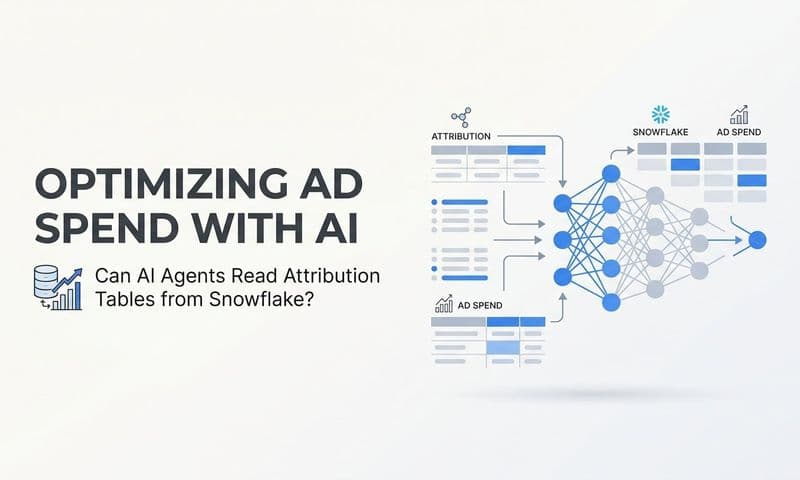
Create a Single Source of Truth: A unified attribution platform sits at the center of your marketing stack, collecting data from all your ad platforms, your website, and your CRM. Instead of logging into five different dashboards with five different conversion numbers, you have one system that shows the complete customer journey across all touchpoints. Implementing cross-channel marketing attribution software is essential for this unified view.
This centralized approach solves the data fragmentation problem by normalizing data from different sources, deduplicating conversions that multiple platforms claim, and applying consistent attribution logic across all channels. You can finally compare Meta performance to Google performance to email performance using the same measurement methodology.
The key is choosing attribution models that align with your actual business goals. If you're optimizing for revenue, use revenue-based attribution that weights touchpoints based on their connection to closed deals, not just lead generation. If you're focused on new customer acquisition, use models that give appropriate credit to top-of-funnel awareness touchpoints that start the journey.
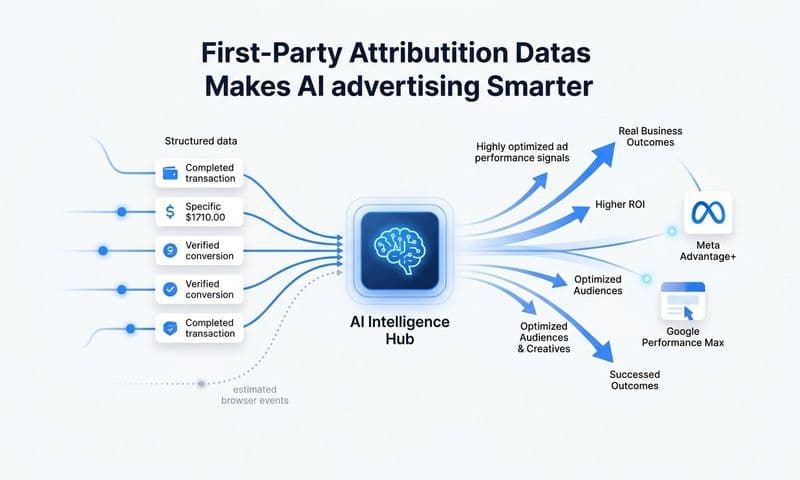
Use Conversion Sync to Improve Ad Platform Optimization: Here's a powerful feedback loop most marketers miss: once you have accurate, unified conversion data, you can send it back to your ad platforms through conversion sync. This feeds the platform algorithms better data about what actually converts, allowing them to optimize more effectively.
When Meta's algorithm only sees conversions that its pixel can track, it optimizes toward an incomplete dataset. When you sync back conversions from your server-side tracking and CRM, including ones the pixel missed, the algorithm gets a more complete picture of what successful conversions look like. This improves targeting, bidding, and creative optimization. Learn more about how marketing attribution platforms enable revenue tracking across your entire funnel.
The same principle applies across Google, TikTok, and other platforms. Better data in means better optimization out. You're not just solving your reporting problem; you're actively improving campaign performance by giving ad platforms the complete conversion data they need to find more of your best customers.
Putting It All Together: From Fragmented Data to Clear Decisions
Cross-platform marketing attribution challenges stem from fundamental mismatches between how marketing actually works and how tracking systems are built. Customers move fluidly across platforms, but tracking systems operate in silos. Privacy restrictions limit what can be tracked, attribution models interpret credit differently, and the gap between marketing touchpoints and revenue outcomes leaves you optimizing for the wrong metrics.
The solution isn't trying to force platform-native tracking to do something it wasn't designed for. It's building a unified attribution system that captures data across all touchpoints, connects marketing activities to actual revenue, and feeds accurate conversion data back to ad platforms for better optimization.
Server-side tracking solves the technical limitations of browser-based pixels. Unified attribution platforms solve the data fragmentation problem. CRM integration solves the revenue visibility gap. Conversion sync solves the platform optimization challenge. Together, these components create an attribution strategy that actually reflects how your marketing drives business results.
The competitive advantage is clear. While other marketers make budget decisions based on incomplete, conflicting data from platform-native dashboards, you're working from a unified view that shows which channels, campaigns, and creatives genuinely drive revenue. You can confidently scale what works and cut what doesn't, based on data that captures the complete customer journey from first touch to closed deal.
This shift from fragmented attribution to unified, revenue-focused measurement transforms how you approach marketing. Instead of celebrating vanity metrics that don't connect to business outcomes, you optimize for the metrics that matter. Instead of arguing about which platform's numbers to trust, you have one source of truth that reconciles data across all channels.
Your Next Steps Toward Attribution Clarity
The attribution challenges you're facing aren't going away on their own. Privacy restrictions will continue tightening. Customer journeys will keep getting more complex. Ad platforms will keep claiming credit using their own self-serving models. Waiting for the problem to solve itself means continuing to make critical budget decisions based on incomplete, conflicting data.
The good news? You don't have to build a unified attribution system from scratch or become a tracking expert to solve these challenges. Modern attribution platforms are designed to handle the technical complexity while giving you clear, actionable insights about what's actually driving conversions and revenue.
Start by auditing your current attribution setup. Compare conversion numbers across your ad platforms, analytics tools, and CRM. Document the discrepancies. Identify which touchpoints in your customer journey are invisible to your current tracking. Understand which attribution models your platforms are using by default and how those models might be skewing your perception of performance.
Then evaluate whether your current approach gives you the visibility you need to make confident budget decisions. If you're seeing conflicting data, missing conversions, or struggling to connect marketing activities to revenue outcomes, it's time to explore unified attribution solutions that can capture the complete picture.
Ready to elevate your marketing game with precision and confidence? Discover how Cometly's AI-driven recommendations can transform your ad strategy. Get your free demo today and start capturing every touchpoint to maximize your conversions.