
Knowing which channels, campaigns, and touchpoints actually bring in customers is the difference between scaling confidently and burning ad budget on guesswork. Customer acquisition tracking software gives marketing and growth teams a clear view of where customers come from, which touchpoints influence conversion, and how much revenue each channel generates.
But not every tool is built the same. Some focus on session-level analytics, others on multi-touch attribution, and a few connect ad spend directly to closed revenue. This list covers the best customer acquisition tracking platforms available in 2026, evaluated on attribution depth, integration ecosystem, ease of use, and fit for B2B SaaS teams.
Whether you are a growth marketer trying to prove ROI or a founder deciding where to double down on spend, these tools give you the data to make that call with confidence.
1. Cometly
Best for: B2B SaaS teams that need full-funnel attribution from first ad click to closed revenue.
Cometly is a marketing attribution and analytics platform built specifically for B2B SaaS companies, connecting ad platforms, CRM data, and Stripe revenue into a single source of truth for customer acquisition tracking.
 9 Best Attribution Platforms for Agencies in 2026
Where This Tool Shines
Most attribution tools stop at the lead. Cometly goes further by connecting every touchpoint in the customer journey to actual closed-won revenue, giving you a clear picture of which campaigns are generating pipeline versus which ones are just generating noise.
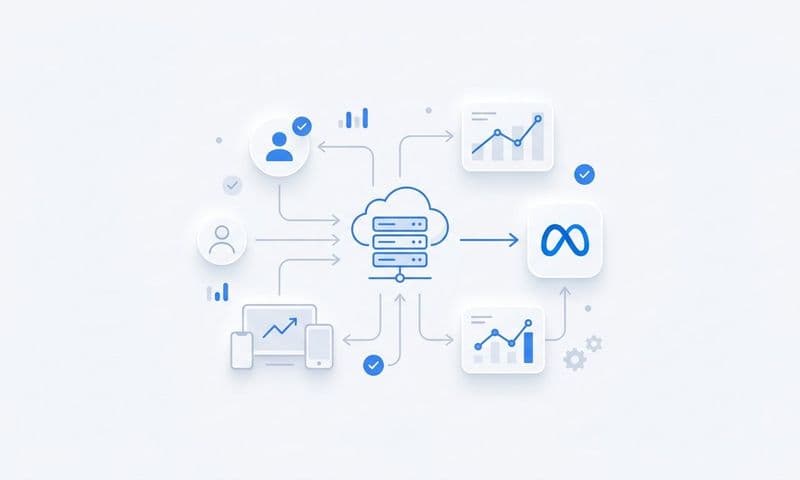
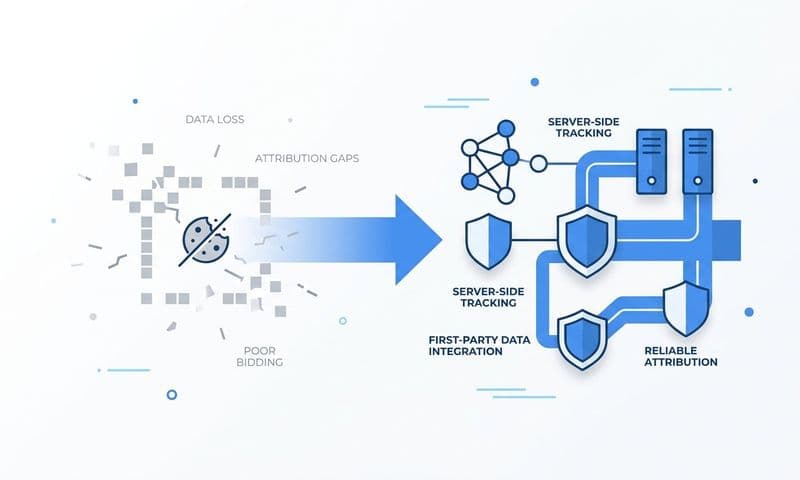
Its server-side tracking and Conversion API integration address one of the biggest pain points in modern marketing: data loss from cookie restrictions. Rather than relying on browser-based pixels that degrade across Safari, Firefox, and increasingly Chrome, Cometly sends enriched conversion events server-side, keeping your attribution data accurate and your ad platform optimization algorithms well-fed.
Key Features
Multi-Touch Attribution: Tracks the full customer journey from first ad click through every touchpoint to closed-won revenue, so no interaction goes unaccounted.
Server-Side Tracking and Conversion API: Bypasses browser limitations to maintain accurate conversion data in a cookieless environment, including integrations with Meta CAPI and Google Enhanced Conversions.
AI Ads Manager: Surfaces high-performing campaigns and recommends where to scale spend, giving marketers actionable direction rather than raw data to interpret alone.
Pipeline and Revenue Attribution: Connects Stripe data directly to ad performance so you can see which campaigns drive actual revenue, not just leads.
70+ Native Integrations: Connects with major ad platforms, CRMs, and analytics tools without requiring custom engineering work.
Customer Journey Analytics: Real-time visibility into every touchpoint across the acquisition funnel, from anonymous visitor to paying customer.
Best For
Cometly is purpose-built for B2B SaaS marketing teams, growth leaders, and performance marketers who need to connect ad spend to pipeline and revenue. It is especially well-suited for teams running paid campaigns across multiple channels who need one reliable source of truth rather than reconciling conflicting numbers from each ad platform.
Pricing
Contact Cometly directly for current pricing details. The platform is designed for B2B SaaS teams that are serious about attribution accuracy and revenue intelligence.
2. HubSpot Marketing Hub
Best for: Teams already using HubSpot CRM who want native acquisition tracking tied directly to deals.
HubSpot Marketing Hub is a CRM-native marketing platform with built-in acquisition source tracking, contact attribution, and campaign reporting tied directly to deals and revenue.
 9 Best Ad Attribution Platforms Compared for B2B SaaS Teams in 2026
Where This Tool Shines
The biggest advantage of HubSpot Marketing Hub is zero friction between marketing data and CRM data. Because everything lives in the same system, you can see which campaigns sourced a contact and follow that contact all the way through the deal lifecycle without any integration work.
For teams that already live inside HubSpot, the attribution reporting feels natural. The contact timeline view gives a complete history of every interaction before conversion, which makes it easy to understand the full acquisition story without switching tools.
Key Features
Native Acquisition Source Tracking: Automatically tags contacts with their original source and ties that data to deals and revenue within the CRM.
Multi-Touch Revenue Attribution: Reports on marketing and sales touchpoints with multiple attribution model options, including first-touch, last-touch, and linear.
Campaign Analytics: Provides cost-per-acquisition visibility when ad accounts are connected, making budget decisions easier to justify.
Ad Platform Integrations: Connects with Google Ads, Facebook Ads, and LinkedIn Ads to pull spend and performance data into a unified view.
Contact Timeline: Shows every interaction a contact had before converting, giving sales and marketing teams shared context.
Best For
HubSpot Marketing Hub is the natural choice for teams already using HubSpot CRM who want attribution without adding another tool. It is less suited for teams that need granular cross-channel ad performance or server-side tracking capabilities.
Pricing
A free tier is available. Paid plans start at approximately $800 per month for Marketing Hub Professional, with enterprise pricing above that.
3. Ruler Analytics
Best for: B2B teams with offline conversions, phone-based sales, or complex multi-channel journeys.
Ruler Analytics is a B2B marketing attribution platform that specializes in connecting online and offline conversion data, including phone call tracking, to multi-touch attribution reporting.
 8 Best Attribution Tools with Onboarding Support in 2026
Where This Tool Shines
Ruler Analytics solves a problem that most attribution tools ignore entirely: what happens when conversions happen offline. If your sales process involves phone calls, in-person meetings, or long email threads outside your CRM, most tools lose the thread. Ruler tracks call conversions back to their original keyword and source, keeping the attribution chain intact.
The platform also integrates with CRMs to pass attributed revenue back into marketing reports, which means you are not just tracking leads but understanding which channels actually close business.
Key Features
Call Tracking with Attribution: Links inbound phone calls to the specific keyword, ad, or channel that drove them, capturing offline conversions that other tools miss.
Multi-Touch Attribution Models: Supports linear, time decay, and data-driven models so teams can compare how different frameworks tell the acquisition story.
CRM Revenue Integration: Passes attributed revenue data back to marketing reports so ROI calculations reflect actual deal values, not just lead counts.
Form and Live Chat Attribution: Tracks conversions across multiple contact methods beyond just clicks and page views.
Marketing Mix Modeling: Helps budget planning by modeling the contribution of each channel to overall acquisition performance.
Best For
Ruler Analytics is a strong fit for B2B companies where a significant portion of conversions happen over the phone or through offline touchpoints. Professional services, agencies, and companies with consultative sales processes will get the most value here.
Pricing
Plans start at approximately $199 per month. Pricing scales based on the number of tracked visitors and calls, so costs increase with traffic volume.
4. Triple Whale
Best for: DTC and ecommerce brands running paid social campaigns that need accurate new customer acquisition data.
Triple Whale is an ecommerce-focused attribution and analytics platform that gives DTC and product brands a unified view of customer acquisition performance across paid social, email, and organic channels.
 9 Best Customer Acquisition Tracking Software Tools in 2026
Where This Tool Shines
Triple Whale was built for the reality that Shopify brands face: ad platform reporting is unreliable, and you need your own first-party data to make sound budget decisions. Its proprietary pixel collects data independently of Meta and Google, giving you a more accurate view of what is actually driving new customer acquisition.
The creative analytics layer is particularly strong. Rather than just reporting on campaign performance, Triple Whale breaks down performance at the ad creative level so you can see which specific images, videos, or copy angles are bringing in new customers versus retargeting existing ones.
Key Features
First-Party Pixel: Collects attribution data independently of ad platforms, reducing discrepancies between what Meta or Google report and what actually drove revenue.
New Customer Acquisition Dashboards: Tracks blended ROAS and new customer acquisition cost in one place, with clear separation between new and returning customer performance.
Creative Analytics: Measures which ad creatives drive new customer acquisition specifically, not just overall conversions.
Post-Purchase Survey Integration: Captures zero-party attribution data directly from customers at the point of purchase, adding a qualitative layer to quantitative tracking.
Cohort Analysis: Tracks customer lifetime value by acquisition cohort so you can evaluate channel quality over time, not just at the first conversion.
Best For
Triple Whale is built for ecommerce and DTC brands on Shopify. It is not designed for B2B SaaS teams or companies with long sales cycles. If you are running a product brand with significant paid social spend, it is one of the strongest tools in this category.
Pricing
Plans start at approximately $129 per month. Pricing scales with Shopify store revenue, so larger brands will pay more.
5. Northbeam
Best for: Performance marketing teams managing large multi-channel ad budgets who need predictive spend guidance.
Northbeam is a media mix modeling and attribution platform designed for performance marketing teams that manage significant ad budgets across multiple channels and need predictive spend recommendations.
 8 Best Hyros Alternatives for Marketing Attribution in 2026
Where This Tool Shines
Northbeam combines multi-touch attribution with media mix modeling, which gives it a layer of forecasting capability that most attribution tools lack. Rather than just telling you what happened, it helps you predict what will happen if you shift budget between channels, which is valuable when you are managing meaningful spend across paid search, paid social, and programmatic.
The new versus returning customer segmentation is a standout feature. Many teams optimize for total conversions without realizing they are mostly re-converting existing customers. Northbeam makes that distinction clear and actionable.
Key Features
Media Mix Modeling: Combines historical channel data with statistical modeling to forecast the impact of budget changes before you make them.
Predictive Spend Recommendations: Suggests how to reallocate budget across channels based on projected acquisition cost and volume outcomes.
Cross-Channel Acquisition Cost Reporting: Normalizes customer acquisition cost across all paid channels into a single comparable view.
Custom Attribution Windows: Allows teams to define and compare different attribution windows and models to understand how time affects channel credit.
New vs. Returning Customer Segmentation: Separates acquisition performance from retention performance so budget decisions are based on the right signal.
Best For
Northbeam is designed for brands and agencies managing substantial monthly ad budgets across multiple channels. It is most valuable for teams where the cost of misallocated spend justifies an enterprise-level analytics investment.
Pricing
Custom enterprise pricing. Northbeam is typically suited to teams with significant monthly ad spend rather than early-stage companies or small budgets.
6. Rockerbox
Best for: Mid-market brands that need to normalize acquisition data across paid, organic, and offline channels.
Rockerbox is a marketing measurement platform that normalizes customer acquisition data across paid, organic, and offline channels into a single unified attribution layer for mid-market brands.
 9 Best Customer Acquisition Tracking Software Tools in 2026
Where This Tool Shines
The core value of Rockerbox is data normalization. When you are running campaigns across paid search, paid social, email, direct mail, and even television, each channel reports conversions differently. Rockerbox pulls all of that data into a standardized format so you can make apples-to-apples comparisons without spending hours in spreadsheets.
Its de-duplicated conversion reporting is particularly useful for teams that have noticed their channel-level conversion totals add up to more than their actual customer count. Rockerbox removes that double-counting and gives you a cleaner picture of true acquisition volume.
Key Features
Unified Data Normalization: Standardizes acquisition data from paid search, paid social, email, direct mail, and TV into a single consistent format.
Configurable Attribution Models: Supports multiple multi-touch attribution frameworks that teams can adjust based on their sales cycle and channel mix.
De-Duplicated Conversion Reporting: Removes cross-channel double-counting so your acquisition numbers reflect actual customers, not inflated platform totals.
Incrementality Testing: Validates whether a channel is genuinely driving incremental acquisition or simply claiming credit for conversions that would have happened anyway.
Ad Platform and CRM Integrations: Connects with major advertising platforms and CRM systems to pull in spend and revenue data for complete ROI reporting.
Best For
Rockerbox suits mid-market brands that advertise across a wide mix of channels, including offline, and need a single layer of measurement that does not require heavy engineering resources to maintain.
Pricing
Custom pricing based on company size and channel volume. Contact Rockerbox directly for a quote.
7. Dreamdata
Best for: B2B companies with long sales cycles, multiple buying stakeholders, and account-based go-to-market motions.
Dreamdata is a B2B revenue attribution platform that maps every marketing and sales touchpoint at the account level, making it well-suited for companies with complex buying processes and multiple decision-makers.
Where This Tool Shines
In B2B, a deal rarely comes from a single person clicking a single ad. Multiple contacts within the same company interact with your content, attend webinars, read case studies, and respond to outreach before anyone signs. Dreamdata attributes at the account level, grouping all of those contacts under one buying entity so the attribution picture reflects how B2B deals actually happen.
The time-to-close and pipeline velocity reporting by channel is a feature that enterprise marketing teams find particularly valuable. Understanding not just which channels drive revenue but which channels drive it fastest helps prioritize budget allocation more intelligently.
Key Features
Account-Level Attribution: Groups all contacts within a buying company so attribution reflects the full account journey rather than isolated individual touchpoints.
Full-Funnel B2B Journey Tracking: Maps every interaction from first anonymous touch through opportunity creation to closed-won revenue.
Attribution Model Comparison: Lets teams compare first-touch, last-touch, linear, and W-shaped models side by side to understand how model choice affects channel credit.
CRM and Ad Platform Integrations: Connects with Salesforce, HubSpot, Google Ads, and LinkedIn Ads to pull in the full picture of marketing and sales activity.
Pipeline Velocity Reporting: Shows how long it takes for each channel to move accounts through the funnel, helping identify which channels accelerate deals versus which ones stall them.
Best For
Dreamdata is built for B2B companies with sales cycles longer than a few weeks, multiple stakeholders in the buying process, and a need to understand attribution at the account level rather than the individual contact level.
Pricing
A free tier is available for small teams. Paid plans start at approximately $999 per month for teams that need full attribution and revenue reporting capabilities.
8. Segment (Twilio)
Best for: Technical teams that want full control over their customer acquisition data infrastructure.
Segment is a customer data platform that collects, cleans, and routes customer acquisition event data to any downstream analytics, attribution, or CRM tool, giving technical teams full control over their data pipeline.
Where This Tool Shines
Segment is not an attribution tool in the traditional sense. It is the data layer that makes attribution tools more reliable. By centralizing event collection from web, mobile, and server sources into one clean stream, Segment ensures that every downstream tool receives consistent, high-quality data rather than fragmented or duplicated signals.
For teams building a serious marketing data infrastructure, Segment acts as the foundation. Instead of each tool implementing its own tracking code independently, you instrument once and route data everywhere. This significantly reduces tracking inconsistencies and makes it easier to add or swap tools without re-engineering your data collection.
Key Features
Centralized Event Collection: Captures customer acquisition events from web, mobile, and server sources in a single standardized format.
Data Routing to 400+ Tools: Sends clean event data to attribution platforms, CRMs, analytics tools, and data warehouses without custom integration work for each destination.
Identity Resolution: Stitches together anonymous visitor behavior with known user profiles to create a unified customer view across sessions and devices.
Real-Time Event Streaming: Makes acquisition data available immediately to downstream tools rather than in delayed batches.
Reverse ETL: Syncs enriched data from your data warehouse back to operational tools, enabling more sophisticated audience segmentation and personalization.
Best For
Segment is best suited for engineering-enabled marketing teams or companies with dedicated data infrastructure resources. It requires technical setup but pays dividends in data quality across every tool in your stack.
Pricing
A free tier is available for up to 1,000 monthly tracked users. Paid plans start at approximately $120 per month, scaling with data volume and team needs.
9. Google Analytics 4
Best for: Teams that need a free baseline for acquisition channel reporting across web and app.
Google Analytics 4 is Google's free web and app analytics platform that provides baseline customer acquisition reporting across organic search, paid search, social, email, and direct channels.
Where This Tool Shines
The obvious advantage of GA4 is that it is free and widely supported. Nearly every website already has it installed, and its default channel grouping reports give any team an immediate view of where traffic and conversions are coming from. For teams just starting to think about acquisition tracking, it is the natural first step.
Its deep integration with Google Ads is a genuine strength for teams running search campaigns. Linking GA4 to Google Ads gives you conversion data, audience insights, and campaign performance in a connected view that is hard to replicate without significant additional tooling. The exploration reports also allow for flexible funnel analysis when you need to go beyond the standard acquisition reports.
Key Features
Default Channel Grouping Reports: Automatically categorizes traffic by acquisition source and medium, giving a quick overview of which channels drive sessions and conversions.
Google Ads Integration: Deep native connection with Google Ads for paid search acquisition tracking, audience sharing, and bidding optimization.
Event-Based Tracking Model: Flexible conversion measurement that can be configured to track almost any user action as a conversion event.
Exploration Reports: Custom funnel and path analysis tools for teams that need to go deeper than the standard acquisition dashboards.
Free with No Volume Limits: Standard GA4 properties have no data volume costs, making it accessible for teams at any stage.
Best For
GA4 is the right starting point for any team that does not yet have a dedicated attribution platform, and a useful complement to more advanced tools for teams that do. Its limitations around B2B revenue attribution and cross-channel multi-touch modeling mean most mature teams will eventually need something more specialized alongside it.
Pricing
Free for standard properties. GA4 360, the enterprise version, starts at approximately $50,000 per year and includes higher data freshness, more data retention, and dedicated support.
Which Tool Is Right for Your Team
The best customer acquisition tracking tool is the one that connects your ad spend to actual revenue, not just sessions or leads. The right choice depends on where your biggest attribution blind spots are right now.
B2B SaaS teams that need full-funnel attribution from ad click to closed revenue should start with Cometly. Its combination of multi-touch attribution, server-side tracking, Stripe integration, and AI-powered spend recommendations makes it the most purpose-built option for SaaS marketing teams trying to close the loop between campaigns and revenue.
Teams already embedded in the HubSpot ecosystem will find HubSpot Marketing Hub the lowest-friction option for tying acquisition data to deals without adding another tool to the stack.
B2B companies with offline conversions or phone-based sales should evaluate Ruler Analytics or Dreamdata. Ruler is stronger on call tracking; Dreamdata is stronger on account-level attribution for complex multi-stakeholder deals.
Ecommerce and DTC brands running heavy paid social will get more from Triple Whale or Northbeam. Triple Whale is better for creative-level analysis and Shopify-native workflows; Northbeam is stronger for large-budget teams that need predictive modeling.
Technical teams that want to own their data pipeline should look at Segment as a foundation layer before choosing an attribution tool on top of it.
Any team that needs a free starting point can layer Google Analytics 4 as a baseline, keeping in mind its limitations for B2B attribution and revenue tracking.
For B2B SaaS teams specifically, the non-negotiables are multi-touch attribution, CRM integration, and server-side tracking that does not break when browsers block cookies. Start by auditing your current blind spots, then match your tool choice to the gaps in your acquisition data.
Ready to see exactly which campaigns are driving revenue? Get your free demo of Cometly and start capturing every touchpoint in your customer acquisition journey.