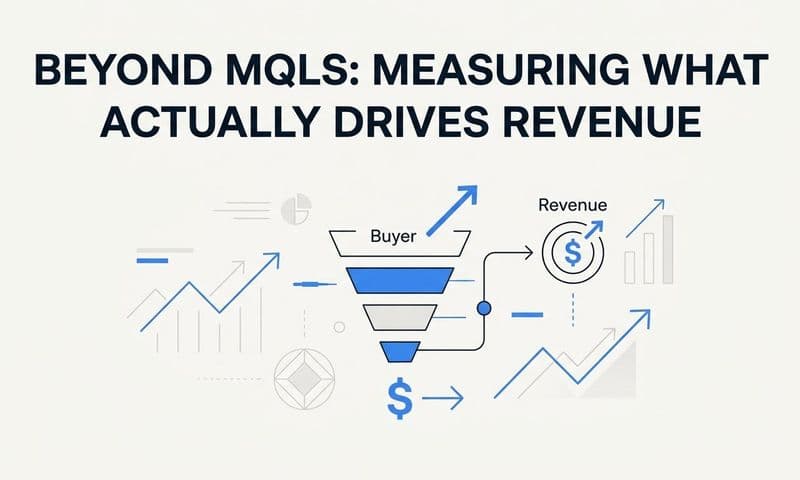
You've seen the reports. Marketing claims their campaigns are performing well. Sales insists the leads are low quality. Finance wants to know why ad spend keeps increasing while revenue growth stays flat. Meanwhile, your team is drowning in data from a dozen different platforms, none of which tell the same story.
This is the reality for most enterprise organizations before implementing proper attribution. You're making million-dollar budget decisions based on incomplete information, crediting the wrong channels, and missing the customer journey insights that could transform your ROI.
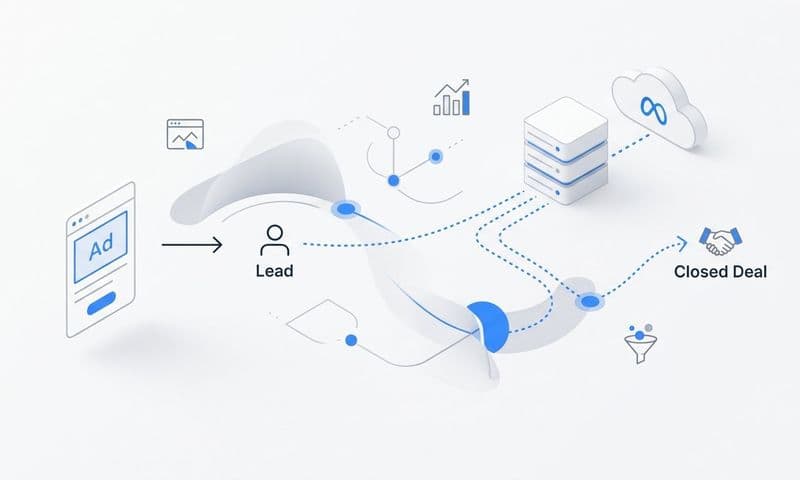
Enterprise attribution implementation changes everything. When done correctly, it connects every marketing touchpoint—from that first anonymous website visit to the closed deal six months later—giving you a complete, accurate picture of what's actually driving revenue.
But here's the challenge: enterprise attribution isn't something you can set up in an afternoon. It requires careful planning, cross-functional coordination, technical implementation across multiple systems, and organizational buy-in from teams that may not naturally collaborate.
The good news? Organizations that successfully implement enterprise attribution gain a decisive competitive advantage. They know exactly which campaigns, channels, and tactics generate revenue. They make confident budget decisions backed by data. They optimize in real-time rather than guessing and hoping.
This guide walks you through the complete implementation process, from initial planning through full deployment. Whether you're replacing a legacy system that no longer meets your needs or building attribution capabilities from scratch, you'll learn how to navigate the technical requirements, organizational challenges, and strategic decisions that separate successful implementations from expensive failures.
Let's get started.
Step 1: Audit Your Current Data Infrastructure and Define Requirements
Before you implement anything, you need to understand what you're working with. Most enterprises discover they have more data sources than they realized—and more gaps than they expected.
Start by mapping every system that touches customer data. Your list will likely include multiple ad platforms (Meta, Google, LinkedIn, maybe programmatic networks), your website analytics, CRM system, marketing automation platform, and potentially offline touchpoints like events or phone calls. Don't forget less obvious sources: chatbots, referral programs, partner channels, or retail locations if you're omnichannel.
Create a spreadsheet documenting each data source, what customer information it captures, how current the data is, and whether it's currently integrated with other systems. This exercise reveals the gaps. Maybe your Google Ads data lives in isolation. Perhaps your CRM tracks opportunity value but can't connect it back to the original marketing touchpoint. These blind spots are where revenue attribution breaks down.
Next, identify your stakeholders and their requirements. Schedule interviews with marketing leadership, sales management, finance, and executive decision-makers. Ask each group: What questions do you need attribution to answer? Marketing might want to know which campaigns drive the most qualified leads. Sales wants to understand which sources close fastest. Finance needs to see customer acquisition costs by channel. Executives want clear ROI metrics for board presentations.
Document these requirements explicitly. Vague goals like "better data" won't guide your implementation. Specific questions like "Which LinkedIn campaigns generate enterprise deals worth over $100K?" or "How many touchpoints occur before a conversion in our typical customer journey?" give you clear targets.
Finally, establish success metrics for the implementation itself. How will you know it's working? Consider metrics like: percentage of conversions with complete journey data, time from lead to attribution visibility, reduction in data discrepancies between platforms, or adoption rate among marketing teams. Understanding how to fix attribution discrepancies in data becomes critical during this phase.
This audit phase typically takes two to four weeks for enterprise organizations. Don't rush it. The clarity you gain here prevents costly mistakes later when you're deep in technical implementation and stakeholders start requesting features you didn't plan for.
Step 2: Select Your Attribution Model and Technology Stack
Attribution models aren't created equal, and the wrong choice can undermine your entire implementation. Enterprise organizations need models that reflect the complexity of their actual customer journeys.
First-touch attribution credits the initial interaction—useful for understanding awareness campaigns but terrible for complex B2B sales cycles where dozens of touchpoints influence the decision. Last-touch attribution does the opposite, crediting only the final interaction before conversion. This overvalues bottom-funnel tactics while ignoring the nurturing that made the conversion possible.
Multi-touch attribution distributes credit across the customer journey. Linear models give equal weight to every touchpoint. Time-decay models give more credit to recent interactions. U-shaped models emphasize first and last touch while acknowledging middle interactions. For most enterprise implementations, multi-touch attribution models provide the nuanced view you need to understand how different channels work together.
Data-driven attribution uses machine learning to assign credit based on actual conversion patterns in your data. This is powerful but requires significant conversion volume—typically thousands of conversions monthly—to produce reliable results. If you have that volume and technical sophistication, data-driven models can reveal insights that rule-based models miss.
Now for the build versus buy decision. Building custom attribution in-house gives you complete control and customization. It also requires dedicated engineering resources, ongoing maintenance, and months of development time. Most enterprises discover that building attribution is like building your own CRM—theoretically possible but strategically questionable when your core business is something else.
Buying an attribution platform accelerates implementation and provides proven technology. Evaluate solutions based on several criteria: Do they handle cross-device tracking as users move from mobile to desktop? How do they address iOS privacy limitations that block traditional tracking? Can they integrate with your specific ad platforms and CRM? Do they offer server-side tracking to capture data that browser-based methods miss? A thorough enterprise attribution platform comparison helps you make the right choice.
Cross-device tracking is non-negotiable for enterprise attribution. Your customers don't live on a single device, and attribution that can't connect their mobile research to their desktop purchase will systematically misattribute conversions. Look for platforms that use deterministic matching (logged-in user data) rather than relying solely on probabilistic methods.
iOS privacy updates have fundamentally changed tracking. Browser-based pixels miss significant data as users opt out of tracking. Your attribution solution needs server-side capabilities to maintain accuracy. This isn't optional—it's the difference between seeing 60% of your customer journey and seeing 95%. Many organizations are now exploring cookieless attribution tracking solutions to address these challenges.
Verify integration capabilities with your specific technology stack. Generic "we integrate with CRMs" promises aren't enough. You need confirmed compatibility with your version of Salesforce, HubSpot, or whatever systems you actually use. Request technical documentation and, if possible, speak with existing customers using similar stacks.
Budget four to six weeks for technology evaluation. Request demos, run proof-of-concept tests with your actual data, and involve your technical teams early. The platform you choose becomes the foundation of your attribution infrastructure—select carefully.
Step 3: Implement Server-Side Tracking Across All Touchpoints
Server-side tracking is where enterprise attribution moves from theory to reality. Browser-based tracking pixels worked fine five years ago. Today, they're increasingly unreliable as privacy features block them, ad blockers remove them, and users opt out of tracking.
Server-side tracking sends data directly from your servers to your attribution platform, bypassing browser limitations entirely. This captures significantly more data—often 30-40% more conversions than browser-based methods alone. For enterprise organizations running substantial ad spend, that difference translates to millions in properly attributed revenue.
Start by configuring tracking for each ad platform. Meta, Google, LinkedIn, and other networks each have specific requirements for server-side event tracking. You'll need to set up API connections, configure event parameters, and verify data is flowing correctly. This isn't a one-size-fits-all process—each platform has unique technical requirements and data formatting expectations.
Implement UTM parameter standards before you start tracking campaigns. UTM parameters (those ?utm_source=facebook&utm_campaign=spring_promo tags in URLs) are how you identify traffic sources in your attribution data. Without consistent standards, you'll end up with "Facebook," "facebook," "FB," and "fb" all appearing as separate sources in your reports.
Create a naming convention document that specifies exactly how to structure UTM parameters. Define acceptable values for source, medium, campaign, content, and term parameters. Make this document accessible to everyone creating campaigns—marketing managers, agencies, regional teams—and enforce it. Inconsistent UTM parameters create data chaos that's expensive to clean up later.
Here's a practical example: utm_source should always be the platform name in lowercase (facebook, google, linkedin). utm_medium should indicate the channel type (cpc, display, email, organic). utm_campaign should follow a structured format like {year}_{quarter}_{campaign-name}. Document these standards and create templates or tools that auto-generate correctly formatted URLs.
Test everything before declaring victory. Send test conversions through each tracking path and verify they appear correctly in your attribution platform. Check that UTM parameters are captured accurately. Confirm that conversion values and user identifiers are passing through properly. Run parallel tracking for a week, comparing your new server-side data against existing tracking to identify discrepancies.
Common issues at this stage include missing conversion events, incorrect parameter mapping, or data delays between platforms. Catch these problems now while you're still in implementation mode. Discovering tracking gaps after you've launched major campaigns and made budget decisions based on incomplete data is considerably more painful. For complex setups, consider an attribution tracking setup service to ensure proper configuration.
Allocate three to five weeks for server-side tracking implementation across an enterprise tech stack. This is technical work that requires coordination between marketing, IT, and potentially external agencies managing your ad accounts.
Step 4: Connect Your CRM and Revenue Data Sources
Attribution without revenue data is just expensive traffic reporting. The real value emerges when you connect marketing touchpoints to actual business outcomes—leads, opportunities, closed deals, and revenue.
Start by mapping the complete customer journey in your business. For B2B enterprises, this typically flows from anonymous website visitor to identified lead to marketing qualified lead to sales accepted lead to opportunity to closed deal. Each stage represents a conversion event you need to track. For e-commerce or subscription businesses, your journey might include product views, cart additions, purchases, and repeat purchases.
Document every conversion event that matters to your business. Don't just track the obvious ones. Consider events like demo requests, pricing page views, high-value content downloads, or sales calls booked. These micro-conversions help you understand which marketing touchpoints contribute to eventual revenue even if they don't directly generate leads. Implementing lead generation attribution tracking ensures you capture the full picture.
Configure bi-directional sync between your attribution platform and CRM. Bi-directional means data flows both ways: marketing touchpoint data enriches CRM records, while CRM conversion and revenue data flows back to your attribution platform. This creates a complete picture where you can see not just which campaign generated a lead, but whether that lead became a customer and how much revenue they generated.
Set up the specific conversion events in your attribution platform. For each event, define what data should be captured: timestamp, user identifier, conversion value, product or service type, and any custom fields relevant to your business. If you're a SaaS company, you might track plan type and contract length. If you're B2B, you might capture company size and industry.
User identification is critical here. Your attribution platform needs to connect anonymous website visitors to identified leads in your CRM. This typically happens when someone fills out a form, creating a CRM record with their email address. That email becomes the key that links all their previous anonymous touchpoints to their CRM record. Effective customer attribution tracking depends on getting this connection right.
Establish data validation checkpoints throughout this process. Create reports that compare conversion counts between your CRM and attribution platform. They should match closely—within 5% is reasonable given timing differences and edge cases. Larger discrepancies indicate integration problems you need to resolve.
Test the complete flow with real data. Create a test lead in your CRM and verify that it appears correctly in your attribution platform with all expected touchpoint data. Move that test lead through your pipeline stages and confirm that each status change is captured. This end-to-end testing catches integration issues before they affect production data.
CRM integration typically requires four to six weeks for enterprise implementations, including time for IT security reviews, API access approval, and thorough testing. Don't underestimate this timeline—CRM integrations touch sensitive customer data and require careful validation.
Step 5: Configure Conversion Sync and Ad Platform Optimization
Now comes the powerful part: feeding your attribution data back to ad platforms to improve their targeting and optimization algorithms. This is conversion sync, and it transforms attribution from a reporting tool into an active optimization engine.
Ad platforms like Meta and Google use conversion signals to optimize campaign delivery. When you tell Meta that a specific user converted, their algorithm learns from that signal and finds more users likely to convert. The problem is that standard tracking often misses conversions or attributes them incorrectly, feeding poor signals to the algorithm.
Your attribution platform has richer, more accurate conversion data because it tracks the complete customer journey and connects it to actual revenue outcomes. Syncing this data back to ad platforms gives their algorithms better information to work with, improving targeting and reducing wasted spend. Understanding channel attribution in digital marketing revenue tracking helps you maximize this optimization.
Set up automated conversion sync for each ad platform you use. This typically involves configuring API connections that send conversion events from your attribution platform back to Meta, Google, LinkedIn, or other networks. You'll specify which conversion events to sync—usually the ones that matter most to your business like purchases, qualified leads, or demo requests.
Configure the sync parameters carefully. You can often send additional data beyond just "a conversion happened"—conversion value, product category, or customer lifetime value predictions. This enriched data helps ad platforms optimize more precisely. For example, sending actual deal values lets Meta optimize for high-value conversions rather than just conversion volume.
Verify data is flowing correctly by checking the conversion reporting in each ad platform. After enabling sync, you should see conversion counts increase as the platform receives data it previously missed. This doesn't mean you're getting more conversions—it means the platform is finally seeing conversions that were always happening but weren't being tracked properly.
Monitor initial performance improvements. Many organizations see meaningful lift in campaign performance within two to four weeks of implementing conversion sync. Ad platform algorithms need time to learn from the new data, but the improvements compound as they optimize delivery toward users who actually convert.
Common improvements include lower cost per acquisition as algorithms get better at finding qualified users, higher conversion rates as targeting becomes more precise, and improved ROAS as platforms optimize toward revenue rather than just clicks or impressions.
One important note: conversion sync works best when you have sufficient conversion volume. Ad platform algorithms need meaningful signal to optimize effectively. If you're only generating a handful of conversions weekly, the impact will be limited. But for enterprise organizations running significant campaigns, conversion sync often delivers the highest ROI of any attribution implementation component.
Step 6: Build Dashboards and Train Your Teams
Attribution data is worthless if nobody uses it. The final implementation step is creating accessible dashboards and training your teams to actually leverage the insights you've worked so hard to capture.
Build role-specific dashboards rather than trying to create one view for everyone. Executives need high-level metrics: total marketing ROI, customer acquisition cost trends, revenue by channel. They don't need campaign-level detail. Marketing managers need campaign performance data, attribution model comparisons, and optimization recommendations. Analysts need raw data access and flexible reporting tools to answer ad-hoc questions.
Create these dashboards in your attribution platform's reporting interface or, if necessary, pull data into your business intelligence tools. The key is making insights accessible without requiring users to build complex reports themselves. Pre-built dashboards that answer common questions drive adoption far better than powerful but complicated reporting tools. Leveraging marketing attribution analytics capabilities ensures your dashboards deliver actionable insights.
Establish reporting cadences that match how your organization makes decisions. Weekly performance reviews for marketing teams. Monthly executive summaries for leadership. Quarterly deep dives for strategic planning. Schedule these reviews in advance and stick to them—regular cadence builds the habit of using attribution data in decision-making.
Train teams on interpreting attribution data correctly. Multi-touch attribution is more nuanced than last-click reporting. Help your teams understand what the data means and, more importantly, what actions to take based on it. If a channel shows strong assisted conversions but weak last-touch conversions, that's not a sign to cut budget—it's a signal that the channel plays an important role in the customer journey.
Create action frameworks that connect insights to decisions. When attribution shows a campaign driving high-value conversions, what's the process for scaling it? When a channel shows declining performance, who makes the decision to adjust or pause? These frameworks prevent analysis paralysis where teams have great data but don't act on it.
Document processes for ongoing maintenance and troubleshooting. Attribution systems require care and feeding—UTM parameters need monitoring, integrations occasionally break, new campaigns need proper setup. Assign ownership for these maintenance tasks and create runbooks that explain how to resolve common issues. Reviewing common attribution challenges in marketing analytics helps teams anticipate and address problems proactively.
Consider appointing attribution champions in each department—people who become expert users and help their colleagues interpret data and solve problems. These champions bridge the gap between technical implementation and business use, dramatically improving adoption.
Training and rollout typically spans three to four weeks, including initial training sessions, follow-up support, and iteration based on user feedback. Don't treat this as a one-time event—plan for ongoing education as teams get more sophisticated in their use of attribution data.
Putting It All Together
You now have a complete roadmap for enterprise attribution implementation. Let's recap what you've accomplished:
✓ Data infrastructure audited and requirements documented across all stakeholders
✓ Attribution model selected based on your specific business needs and customer journey complexity
✓ Server-side tracking deployed across all channels to capture complete, accurate data
✓ CRM integration configured with bi-directional sync connecting marketing touchpoints to revenue
✓ Conversion sync feeding enriched data back to ad platforms for better optimization
✓ Dashboards built and teams trained to leverage attribution insights in daily decisions
Enterprise attribution implementation is a significant undertaking. Most organizations invest three to six months from initial planning through full deployment. But the payoff—knowing exactly which marketing investments drive revenue—fundamentally transforms how your organization makes decisions.
You stop guessing which channels work and start knowing. You shift budget confidently based on data rather than intuition. You prove marketing's impact in language that finance and executives understand. You optimize campaigns in real-time rather than waiting for quarterly reviews to discover what didn't work.
The competitive advantage is real. While your competitors are still arguing about whether their marketing is working, you're scaling what drives revenue and cutting what doesn't. That clarity compounds with every campaign you run.
Start with Step 1 this week. Schedule those stakeholder meetings. Begin your data audit. Map your current systems and identify the gaps. That initial work creates momentum and builds the cross-functional buy-in you'll need for successful implementation.
One final thought: attribution implementation is not a set-it-and-forget-it project. Your marketing evolves, your customer journey changes, new platforms emerge, and your business grows. Treat attribution as an ongoing capability that requires regular attention and optimization. The organizations that get the most value from attribution are the ones that continuously refine their approach based on what they learn.
Ready to elevate your marketing game with precision and confidence? Discover how Cometly's AI-driven recommendations can transform your ad strategy—Get your free demo today and start capturing every touchpoint to maximize your conversions.