Your Meta ads dashboard shows 50 conversions. Your CRM shows 75 sales. Google Analytics reports something entirely different. Which number is real? If you're relying on third-party cookies and pixel-based tracking, the honest answer is: none of them are completely accurate. With Safari and Firefox blocking third-party cookies by default and Chrome following suit, marketers are losing visibility into 30-40% of their customer journeys. iOS users disappear after clicking your ads. Cross-device conversions vanish. Attribution becomes guesswork.
First-party tracking changes everything. Instead of depending on browser cookies that get blocked, you collect data directly on your own domain and send it server-side to your ad platforms. The result? You see the complete customer journey—from first click to final purchase—regardless of browser restrictions or privacy settings.
This isn't just about better numbers. It's about making confident decisions with your ad budget. When you know exactly which campaigns drive revenue, you can scale what works and cut what doesn't. You feed better data back to ad platform algorithms, improving targeting and optimization. You build a tracking foundation that's privacy-compliant and future-proof.
This guide walks you through the complete first-party tracking implementation process. You'll learn how to audit your current setup, build server-side infrastructure, capture visitor data with first-party cookies, connect your CRM conversions, and sync enriched events back to your ad platforms. Whether you're starting from scratch or upgrading an existing system, these six steps will give you the accurate attribution data you need to grow profitably.
Step 1: Audit Your Current Tracking Setup and Identify Gaps
Before you build anything new, you need to understand what you're working with. Most marketing teams have accumulated a patchwork of tracking pixels, analytics scripts, and conversion tags over time. Some work. Some don't. Some conflict with each other. Your first step is creating a complete inventory.
Start by mapping every tracking element across your website and landing pages. Open your site's source code or use a tag management audit tool to identify all pixels and scripts. Document each one: What platform does it serve? What events does it track? Is it firing correctly? Create a spreadsheet with columns for tracking element, platform, purpose, and current status.
Pay special attention to how data flows through your funnel. When someone clicks your Facebook ad, does your site capture the fbclid parameter? When they fill out a form, does that conversion fire back to Meta? When they become a customer in your CRM, does that revenue event reach your ad platforms? Map the complete journey and identify where the chain breaks.
Next, test your tracking under real-world conditions. Use Safari with tracking prevention enabled. Test on iOS devices. Try different browsers. Use ad blocker extensions. You'll quickly discover where your tracking fails. Many marketers are shocked to learn that 40-50% of their traffic sees broken or incomplete tracking due to browser restrictions.
Document your third-party cookie dependencies. Which tracking elements rely on cookies set by external domains? These are your highest-risk components because browsers increasingly block them by default. Understanding the first-party vs third-party cookies difference is essential for identifying what needs to change in your setup.
Create a prioritized gap list based on business impact. Which tracking failures affect your highest-value conversion paths? Where are you losing visibility into your best-performing campaigns? Focus your implementation efforts on closing the gaps that matter most to revenue.
Your success indicator: a complete inventory showing exactly what data you're capturing, what you're missing, and where the biggest attribution blind spots exist. This document becomes your implementation roadmap. You'll know precisely which tracking elements need to be rebuilt with first-party methods and which can stay as-is.
Step 2: Set Up Server-Side Tracking Infrastructure
Server-side tracking is the foundation of accurate first-party data collection. Instead of relying on browser-based pixels that get blocked, you send data directly from your server to ad platforms. This bypasses browser restrictions and dramatically improves data capture rates.
You have two main infrastructure options: self-hosted server containers or managed tracking solutions. Self-hosted gives you complete control but requires technical resources. You'll need to set up Google Tag Manager Server-Side or a custom tracking server, configure cloud hosting, and maintain the infrastructure. This works well for companies with strong development teams.
Managed solutions handle the technical complexity for you. Platforms like Cometly provide server-side tracking implementation service out of the box, along with built-in connections to major ad platforms. You get the benefits of server-side tracking without managing servers, APIs, or complex configurations. For most marketing teams, this is the faster path to implementation.
Whichever route you choose, your server-side endpoint needs to receive tracking events from your website and process them correctly. Configure your endpoint URL—this is where your website will send visitor data. Set up authentication to ensure only your legitimate traffic reaches the server. Implement rate limiting to prevent abuse.
Establish secure data transmission between your website and tracking server. Use HTTPS for all connections. Implement proper error handling so failed events don't get lost. Set up request queuing for high-traffic periods when your server might be temporarily overwhelmed.
Build fallback mechanisms for when client-side tracking fails. If a visitor's browser blocks your tracking script, your server should still capture whatever data reaches it through form submissions or page loads. Configure your system to gracefully handle partial data rather than failing completely.
Test your server-side setup with simple events first. Send a test page view from your website to your tracking server. Verify the event arrives with all expected parameters: timestamp, page URL, visitor identifier. Check your server logs to confirm proper receipt and processing. For a comprehensive walkthrough, refer to our server-side tracking implementation guide.
Set up monitoring and alerting for your tracking infrastructure. You need to know immediately if your server goes down or stops receiving events. Configure uptime monitoring, error rate alerts, and data volume tracking. Your attribution depends on this infrastructure running reliably 24/7.
Your success indicator: your server consistently receives and logs test events from your website with all parameters intact. The connection is secure, fast, and reliable. You've verified that data flows correctly even when browser-based tracking fails. With this foundation in place, you're ready to implement first-party data collection.
Step 3: Implement First-Party Cookie and Data Collection
First-party cookies are your key to identifying visitors across multiple sessions. Unlike third-party cookies that browsers block, first-party cookies are set on your own domain and work reliably across all browsers. They let you recognize returning visitors and connect their journey from first touch to final conversion.
Create a first-party cookie when visitors land on your site. This cookie should contain a unique visitor identifier—a random string that you'll use to track this person across sessions. Set the cookie with your domain name, not a third-party domain. This is crucial: a cookie set on "yourdomain.com" works everywhere, while one set on "tracking-service.com" gets blocked.
Choose appropriate cookie expiration periods. Too short and you lose the ability to track returning visitors. Too long and you risk privacy concerns. Most marketers use 30-90 day expiration for visitor identification cookies. Balance tracking duration with privacy best practices and regulatory requirements in your region.
Capture campaign parameters the moment visitors arrive. When someone clicks your ad, the URL contains critical attribution data: UTM parameters, click IDs (fbclid, gclid, etc.), and referrer information. Extract these parameters immediately on page load and store them with the visitor's profile. This data tells you exactly which ad brought this person to your site.
Store this data in your first-party database, not just in cookies. Cookies can be deleted by users or expire over time. Your database becomes the source of truth for visitor journey data. Create a visitor record that includes: unique identifier, first touch source, all subsequent touchpoints, and timestamps for each interaction. Implementing effective first-party data collection strategies ensures you capture comprehensive visitor information.
Implement proper cookie consent mechanisms if you operate in regions with strict privacy laws like GDPR. Show a consent banner before setting tracking cookies. Respect user choices—if someone opts out, don't set tracking cookies. Build your system to handle both consented and non-consented visitors appropriately.
Handle cross-subdomain tracking if your conversion funnel spans multiple subdomains. If visitors move from "blog.yourdomain.com" to "app.yourdomain.com," your first-party cookie needs to persist across that journey. Set your cookie at the root domain level so it's accessible everywhere.
Test visitor identification thoroughly. Clear your cookies, visit your site, leave, and return. Verify that your system recognizes you as a returning visitor. Test across different browsers and devices. Check that your visitor identifier persists correctly and that journey data accumulates over time.
Your success indicator: visitors are consistently identified across multiple sessions, even days apart. Campaign attribution data is captured at first touch and stored reliably. Your system handles cookie consent properly and works across your entire domain. You now have a solid foundation for connecting visitor behavior to eventual conversions.
Step 4: Connect Your CRM and Conversion Events
The real value of first-party tracking emerges when you connect visitor behavior to actual business outcomes. Your CRM contains the truth about which visitors became leads, qualified prospects, and paying customers. Connecting this conversion data back to your tracking system completes the attribution picture.
Start by mapping your conversion funnel stages to trackable events. Define exactly what constitutes each stage: form submission equals lead, demo request equals MQL, sales call equals SQL, payment equals customer. Create a standardized event taxonomy so your tracking system knows what each conversion means. Our conversion funnel tracking guide provides detailed frameworks for this process.
Build the data pipeline from your CRM back to your tracking system. When someone converts in your CRM, that event needs to flow back with the visitor identifier you created in Step 3. Most modern CRMs offer webhooks or API integrations that can push conversion events in real-time. Configure these connections to send conversion data the moment it happens.
Ensure visitor IDs persist from first touch through final conversion. When someone fills out a form on your website, capture their email address along with their visitor ID. When that email appears in your CRM as a new lead, match it back to the visitor ID. This connection lets you attribute the CRM conversion to the original ad click that brought them to your site.
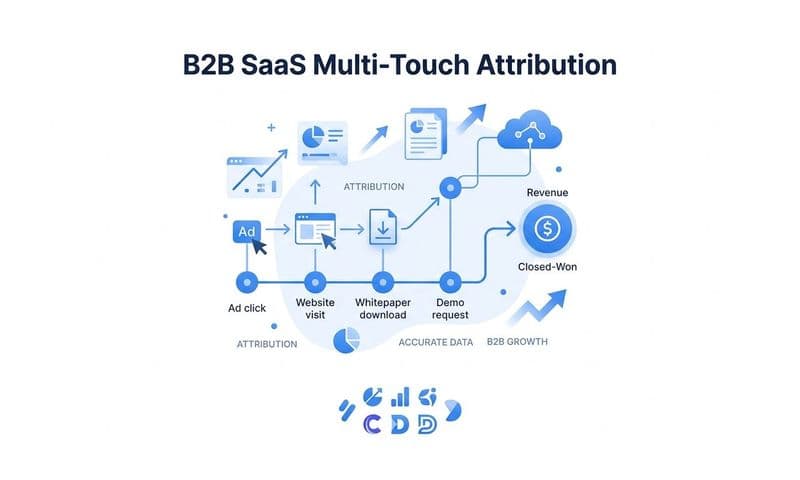
Handle the common challenge of multi-session conversions. Someone might click your ad today, return directly three days later, and convert a week after that. Your system needs to maintain the connection between that first ad click and the eventual conversion, even across multiple sessions and traffic sources. Store the complete journey in your database, not just the last touch.
Set up real-time or near-real-time event syncing for timely attribution. The faster conversion data reaches your tracking system, the sooner you can optimize campaigns. Configure your CRM integration to push conversion events within minutes, not hours or days. This enables same-day attribution reporting and faster decision-making.
Test the complete flow with real conversions. Submit a test form on your website. Watch that lead appear in your CRM. Verify that the conversion event flows back to your tracking system with the correct visitor ID and attribution data. Check that the full journey—from first ad click to CRM conversion—is captured accurately.
Your success indicator: CRM conversions appear in your tracking system with complete journey data attached. You can see exactly which ad, campaign, and channel drove each lead and customer. The connection between marketing touchpoints and business outcomes is clear and reliable. Now you're ready to close the loop by sending this enriched data back to your ad platforms.
Step 5: Configure Conversion Sync to Ad Platforms
The final piece of first-party tracking is sending your accurate conversion data back to ad platforms. This is where server-side tracking delivers massive value. By feeding enriched, first-party conversion events to Meta, Google, and other platforms, you improve their algorithms' ability to optimize campaigns and find better customers.
Set up server-side API connections to your ad platforms. For Meta, this means implementing the Conversions API (CAPI). For Google Ads, configure the Enhanced Conversions API or server-side Google Tag Manager. Each platform has specific API requirements and authentication methods. Follow their documentation to establish secure API connections from your tracking server.
Configure your conversion events with proper event matching parameters. Ad platforms need to match your server-side conversion events to the original ad clicks. Send multiple identifiers when available: email (hashed), phone number (hashed), IP address, user agent, fbclid or gclid. The more matching parameters you provide, the higher your match rate and attribution accuracy.
Implement deduplication to prevent double-counting conversions. If you're sending conversions through both pixel-based tracking and server-side APIs, you need to deduplicate so platforms don't count the same conversion twice. Use event IDs to identify unique conversions. Most platforms automatically deduplicate events with matching event names, event IDs, and timestamps.
Send enriched conversion data that includes revenue values and custom parameters. Don't just tell Meta someone converted—tell them the purchase value, product category, and customer lifetime value if available. This enriched data helps ad algorithms optimize for high-value conversions, not just conversion volume.
Configure conversion windows appropriately for your business. If your sales cycle is 30 days, set your attribution window to capture conversions that happen weeks after the initial ad click. Server-side tracking makes this possible because you're not relying on browser cookies that expire quickly.
Test conversion delivery thoroughly. Make a test purchase on your website. Verify that the conversion event appears in your ad platform's events manager within minutes. Check that all parameters are transmitted correctly: conversion value, event time, matching parameters. Confirm that the event attributes back to the correct campaign.
Monitor your match rates in each ad platform. Meta and Google provide metrics showing what percentage of your server-side events successfully matched to ad clicks. High match rates (80%+) indicate your implementation is working well. Low match rates suggest issues with your matching parameters or event timing. For managing attribution tracking for multiple campaigns, consistent monitoring becomes even more critical.
Your success indicator: ad platforms receive accurate conversion data that improves targeting and optimization. Your match rates are high. Conversions attribute correctly to campaigns. Ad algorithms have the signal they need to find more customers like your best converters. You've closed the attribution loop from ad click to conversion and back to ad optimization.
Step 6: Validate Data Accuracy and Troubleshoot Issues
Implementation is only valuable if your data is accurate. The final step is rigorous validation to ensure your first-party tracking captures reality, not just events. This is where you catch issues before they corrupt your attribution and campaign decisions.
Run end-to-end tests simulating complete customer journeys. Click one of your ads. Land on your website. Browse multiple pages. Fill out a form. Complete a purchase. Then trace that entire journey through your tracking system. Verify every touchpoint was captured: the ad click, page views, form submission, and final conversion. Check that all data points connect to the same visitor ID.
Compare your first-party data against ad platform reported conversions. Some variance is normal—ad platforms use different attribution models and windows. But major discrepancies indicate problems. If your first-party system shows 100 conversions and Meta reports 50, investigate why half your conversions aren't matching back to ads. Understanding common attribution challenges in marketing analytics helps you diagnose these issues faster.
Test across multiple devices and browsers. Complete a journey that starts on mobile and converts on desktop. Verify your system connects these cross-device conversions. Test in Safari with tracking prevention enabled. Try Firefox with strict privacy settings. Your first-party tracking should work reliably across all major browsers and devices. Our cross-platform tracking guide covers additional considerations for multi-device scenarios.
Identify and resolve common issues systematically. Missing click IDs? Check that your landing pages capture URL parameters correctly. Broken cookie persistence? Verify your cookie settings and domain configuration. API errors when sending to ad platforms? Review your authentication and event formatting. Document each issue and its solution for future reference.
Set up monitoring alerts for tracking failures. Configure notifications when: conversion volume drops unexpectedly, your tracking server stops responding, API connections to ad platforms fail, or match rates decline significantly. Catching issues within hours instead of days prevents attribution gaps from corrupting your data.
Validate revenue matching between your tracking system and actual sales. Your first-party tracking should report revenue numbers that align closely with your payment processor or accounting system. If there's a major gap, you're either missing conversions or double-counting them. Investigate discrepancies until the numbers reconcile. Learn how to improve ad tracking accuracy with systematic validation processes.
Your success indicator: first-party data matches within acceptable variance of actual sales. Your tracking works reliably across browsers and devices. Issues are caught quickly through monitoring alerts. You have confidence that the attribution data driving your marketing decisions reflects reality. Your first-party tracking implementation is complete and trustworthy.
Putting It All Together
You've now built a complete first-party tracking system that captures the full customer journey—from first ad click to final conversion and back to ad platform optimization. Your implementation checklist is complete: ✓ Current tracking audited and gaps identified ✓ Server-side infrastructure operational ✓ First-party cookies collecting visitor data ✓ CRM events flowing to your tracking system ✓ Conversion sync feeding data back to ad platforms ✓ Validation complete with monitoring in place.
This foundation changes how you approach marketing. You're no longer guessing which campaigns drive revenue based on incomplete pixel data. You see the complete picture: which ads generate leads, which channels produce customers, and which campaigns deliver the highest ROI. You can confidently scale what works and cut what doesn't.
The real power comes from what you do with this data. First-party tracking gives you accurate attribution, but turning that into better marketing decisions requires analysis and optimization. You need to compare attribution models, identify your highest-performing campaigns, and understand which touchpoints matter most in your customer journey.
This is where platforms like Cometly excel. With your first-party tracking feeding accurate data, Cometly's AI can analyze multi-touch attribution across all your channels. You'll see which combinations of touchpoints drive conversions. AI-powered recommendations show you exactly where to shift budget for maximum impact. You're not just tracking—you're optimizing based on complete, accurate data.
Your ad platforms benefit too. By feeding enriched conversion data back through server-side APIs, you improve their algorithms' ability to find customers like your best converters. Meta's algorithm learns which audiences actually buy. Google's smart bidding optimizes toward real revenue, not just clicks. Your targeting gets sharper and your cost per acquisition improves.
Maintain your implementation over time. As you add new marketing channels, integrate them into your first-party tracking. When you launch new products, create corresponding conversion events. As privacy regulations evolve, ensure your tracking remains compliant. First-party tracking isn't a one-time project—it's an ongoing system that powers your marketing intelligence.
Ready to elevate your marketing game with precision and confidence? Discover how Cometly's AI-driven recommendations can transform your ad strategy—Get your free demo today and start capturing every touchpoint to maximize your conversions.