Inaccurate conversion tracking is one of the most frustrating problems digital marketers face. You launch a campaign, see promising click metrics, but the conversion data tells a completely different story than your actual sales. Maybe Meta reports 50 conversions while your CRM shows only 20 closed deals. Or Google Ads takes credit for sales that clearly came from email campaigns.
This disconnect is not just annoying. It actively sabotages your ability to optimize campaigns and allocate budget effectively.
When you cannot trust your conversion data, every decision becomes a guess. You scale campaigns that look successful but actually lose money. You cut budgets from channels that quietly drive your best customers. You optimize toward vanity metrics while real revenue slips through the cracks.
The root causes vary. Browser privacy restrictions block tracking pixels. Pixels fire at the wrong moments or send incorrect data. Different platforms use conflicting attribution models. Cross-device journeys create gaps in your data. Each issue compounds the others until your conversion reports bear little resemblance to reality.
This guide walks you through a systematic process to identify exactly where your tracking breaks down and how to fix each issue. You will learn to diagnose pixel problems, address cross-device gaps, resolve attribution conflicts, and implement server-side solutions that survive browser restrictions. By the end, you will have a clear action plan to restore accuracy to your conversion tracking and finally see which campaigns actually drive revenue.
Step 1: Audit Your Current Tracking Setup for Gaps
Before you can fix tracking problems, you need to know exactly where they occur. Start by mapping every conversion point across your funnel from the moment someone clicks your ad to the final sale or lead submission.
Open a spreadsheet and list each step: ad click, landing page view, form submission, thank you page, email confirmation, purchase completion, CRM entry. For each step, document which tracking mechanisms should fire. Does your Meta pixel trigger on the landing page? Does Google Ads conversion tracking capture the form submission? Does your analytics platform record the purchase?
Now comes the detective work. Use browser developer tools to verify what actually happens at each step. In Chrome, right-click anywhere on your page and select "Inspect," then navigate to the "Network" tab. Filter by "XHR" or search for your pixel domains like "facebook.com/tr" or "google-analytics.com/collect." Click through your conversion funnel while watching which tracking calls fire.
You will likely discover gaps immediately. A pixel that should fire on your thank you page never triggers. A conversion event sends the wrong value. A tag fires twice, inflating your conversion counts. Understanding how to identify conversion tracking gaps is essential for this diagnostic process.
Document every discrepancy you find. Compare what each platform reports against your actual transaction records. Pull conversion data from Meta Ads Manager, Google Ads, your analytics platform, and your CRM or payment processor. Create a simple comparison table with columns for each source and rows for each day or week.
The patterns will reveal where problems concentrate. If Meta reports significantly more conversions than your CRM, you likely have duplicate firing or incorrect event definitions. If multiple platforms claim credit for the same conversions, you face attribution conflicts. If all platforms underreport compared to actual sales, browser restrictions or implementation gaps are blocking your tracking.
Pay special attention to high-value conversion events. A small tracking error on a $5,000 purchase matters far more than missing a newsletter signup. Prioritize fixing the gaps that affect your revenue-driving events first.
This audit creates your diagnostic baseline. You now know exactly which tracking mechanisms fail and where data loss occurs. Every fix you implement in the following steps should directly address a gap you identified here.
Step 2: Diagnose Browser and Privacy-Related Tracking Loss
Browser privacy changes have fundamentally altered how conversion tracking works. Understanding exactly how much data you lose to these restrictions helps you prioritize solutions and set realistic expectations.
iOS App Tracking Transparency represents the most significant shift. When users choose not to allow tracking in iOS apps, the Facebook and Instagram apps cannot pass data back to Meta's servers with the same precision. Learning how to fix iOS tracking issues has become essential for marketers dealing with this challenge. This affects both conversion attribution and your ability to build custom audiences. Similar restrictions apply across other platforms.
Third-party cookie deprecation compounds the problem. Safari and Firefox already block third-party cookies by default. Chrome continues moving toward similar restrictions. When browsers block these cookies, your tracking pixels lose the ability to follow users across websites and match them to previous sessions.
Test your tracking across different scenarios to quantify the impact. Use an iPhone with tracking disabled and click through your conversion funnel. Check whether conversions still appear in your ad platforms. Try the same process with Safari's privacy features enabled, with ad blockers installed, and in private browsing mode.
Compare conversion rates between different traffic sources. iOS traffic typically shows lower tracked conversion rates than Android traffic, even when actual purchase rates remain similar. This gap represents data loss, not performance differences.
Look at your analytics platform to see which browsers and devices your customers use. If 60% of your traffic comes from iOS devices, browser restrictions likely affect the majority of your conversions. This makes server-side tracking essential rather than optional. Many marketers struggle with iOS 14 tracking limitations that require specific workarounds.
Check your pixel health dashboards in each ad platform. Meta's Events Manager shows a "Connection Quality" score that indicates how much data browser restrictions block. Google Ads provides similar diagnostics in the conversion tracking section. These tools help you understand the scope of your data loss.
Document which conversion events suffer the most. Complex funnels with multiple steps typically experience higher data loss because each step introduces another opportunity for tracking to break. Single-page conversions like newsletter signups often track more reliably than multi-step purchases.
This diagnosis reveals the extent of browser-related tracking loss and helps you understand which solutions will have the biggest impact. If privacy restrictions block a significant portion of your conversions, implementing server-side tracking becomes your highest priority fix.
Step 3: Resolve Pixel Firing and Event Configuration Issues
Even when browsers allow tracking, incorrect pixel implementation creates data accuracy problems. Pixels that fire at the wrong time, send incorrect parameters, or trigger multiple times for the same conversion all distort your data.
Start by verifying that pixels fire at the correct moments in the customer journey. Your conversion pixel should trigger only after a successful transaction, not when someone simply views a checkout page. Use your browser's developer tools to watch the exact moment each pixel fires as you complete a test conversion.
Check for duplicate event firing, one of the most common tracking errors. This happens when you install the same pixel multiple times through different methods like a tag manager, theme code, and a plugin. Each installation fires separately, making one conversion appear as two or three in your reports. Understanding duplicated conversion tracking across platforms helps you identify and eliminate these errors.
Search your website code for multiple instances of the same tracking code. Look in your theme files, header and footer sections, tag manager containers, and plugin settings. Remove redundant installations, keeping only one method of pixel deployment. Tag managers like Google Tag Manager typically provide the cleanest implementation because they centralize all tracking code.
Verify that conversion values and parameters pass correctly to each platform. Your purchase event should send the actual transaction value, not a static number. Custom parameters like product IDs, categories, and customer information should match your data structure exactly.
Test parameter passing by completing a test purchase and examining the pixel call in your developer tools. Look for the parameter values in the network request. If you see a conversion value of "0" or "undefined," your parameter configuration needs fixing. For Facebook-specific issues, review our guide on how to fix Facebook pixel tracking issues.
Fix common event naming errors. Meta requires specific standard event names like "Purchase," "Lead," or "AddToCart" with exact capitalization. Custom event names should follow a consistent naming convention across your entire tracking setup. Inconsistent naming prevents proper reporting and optimization.
Address timing issues where pixels fire before the page fully loads or before necessary data becomes available. Use event listeners or callbacks to ensure pixels fire only after the required information exists on the page. For single-page applications, implement proper tracking for route changes and dynamic content updates.
Validate email and phone number hashing if you send customer data to ad platforms. Conversion APIs require properly formatted and hashed personal information. Incorrect hashing prevents platforms from matching conversions to users, reducing your attribution accuracy and custom audience quality.
After fixing configuration issues, run test conversions and verify that each platform receives clean, accurate data with correct values and parameters. This step eliminates self-inflicted tracking errors before you tackle more complex attribution and cross-device challenges.
Step 4: Implement Server-Side Tracking for Reliable Data
Server-side tracking represents the most significant advancement in conversion tracking reliability. Instead of relying on browser pixels that privacy restrictions can block, server-side tracking sends conversion data directly from your server to ad platforms.
The fundamental difference matters. Client-side pixels run in the user's browser, making them vulnerable to ad blockers, cookie restrictions, and privacy settings. Server-side tracking runs on your backend, completely bypassing these limitations. When a conversion occurs, your server sends the event data directly to the ad platform's API. Understanding the server-side conversion tracking benefits helps justify the implementation investment.
Start with Meta's Conversions API, which has become essential for accurate Facebook and Instagram tracking. The Conversions API receives conversion events directly from your server, providing a backup data stream when browser pixels fail and improving overall tracking accuracy even when pixels work.
Implementation requires connecting your backend systems to Meta's API. If you use an e-commerce platform like Shopify or WooCommerce, plugins and integrations handle much of the technical work. For custom setups, you will need to add API calls to your checkout process that send conversion events to Meta's servers.
Each conversion event needs specific parameters: event name, event time, user information (hashed email and phone), conversion value, and event source URL. You also need to include the Facebook Browser ID and Click ID when available to help Meta match server events with browser activity.
Google Ads offers similar server-side conversion tracking through enhanced conversions and the Google Ads API. Enhanced conversions send hashed customer data from your website to Google, helping match conversions even when cookies are unavailable. The Google Ads API allows direct server-to-server conversion uploads for complete tracking control. If you encounter issues, our guide on Google Ads conversion tracking problems provides specific solutions.
Set up TikTok Events API, Pinterest API, and Snapchat Conversions API if you advertise on these platforms. Each follows a similar pattern: your server sends conversion data directly to the platform's API endpoint with proper authentication and required parameters.
The key to successful server-side implementation is sending both client-side and server-side events. Browser pixels still provide valuable data like browsing behavior and on-site engagement. Server-side tracking fills the gaps when browser tracking fails. Together, they create redundancy that maximizes data capture.
Configure event matching to prevent duplicate counting. Platforms use matching parameters like event ID, timestamp, and user information to identify when a client-side pixel and server-side API send data about the same conversion. Proper deduplication ensures you count each conversion once while benefiting from both data sources.
Verify your server-side implementation using each platform's testing tools. Meta's Events Manager shows both pixel and API events with match quality scores. Google provides conversion diagnostics that indicate whether enhanced conversions work correctly. Run test conversions and confirm that server events appear with high match quality.
Server-side tracking requires more technical setup than simple pixel installation, but it provides conversion data that survives privacy restrictions and gives ad platform algorithms better information for optimization. This investment in reliable tracking infrastructure pays dividends across all your campaigns.
Step 5: Align Attribution Models Across All Platforms
Different platforms use different attribution models, creating confusion when you try to understand which campaigns actually drive conversions. Meta might claim 100 conversions using seven-day click attribution while Google Ads reports 80 conversions using last-click attribution. Both platforms show these conversions for the same time period, but your actual sales total only 90.
This happens because each platform takes credit for conversions based on its own rules. Meta counts any conversion that happens within seven days of someone clicking your ad, even if they also clicked Google Ads. Google Ads credits the last ad clicked before conversion. Your analytics platform might use a different attribution window entirely.
Start by documenting each platform's default attribution settings. Check Meta Ads Manager's attribution window, which you can find in the attribution settings of your reporting interface. Review Google Ads attribution models in the conversions section. Note your analytics platform's attribution configuration.
Choose a consistent attribution window for comparison purposes. Seven-day click and one-day view attribution provides a reasonable standard that most platforms support. Apply this same window across all platforms when pulling reports so you compare similar timeframes.
Understand that platform-reported conversions will always overlap because multiple touchpoints influence most purchases. Someone might click a Facebook ad, then search your brand on Google, then return directly to purchase. Facebook, Google, and direct traffic all played a role, but last-click attribution gives Google all the credit while multi-touch attribution distributes credit across all three. Implementing a cross-platform conversion tracking solution helps reconcile these differences.
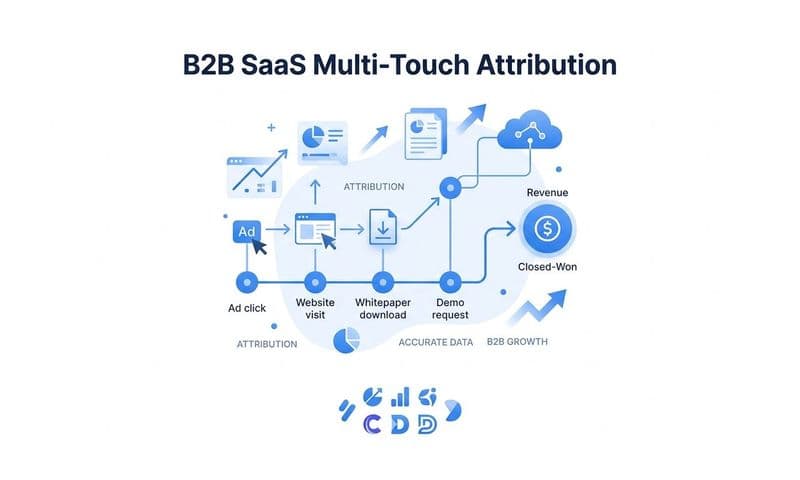
Connect your CRM data to see the complete customer journey. Most customers interact with multiple marketing channels before converting. Your CRM or customer data platform should track every touchpoint: which ads they clicked, which emails they opened, which pages they visited, and ultimately which source preceded their purchase.
Tools that aggregate data across platforms help reconcile conflicting reports. Rather than trusting any single platform's attribution claims, look at the complete picture of how customers move through your funnel. This reveals patterns like Facebook driving awareness that leads to Google brand searches that convert, or email nurturing leads that initially came from LinkedIn ads.
Create a single source of truth by implementing a consistent attribution model across your reporting. First-touch attribution shows which channels start customer relationships. Last-touch attribution reveals which channels close sales. Multi-touch attribution distributes credit based on each touchpoint's influence. Choose the model that best reflects your business goals.
For most businesses, multi-touch attribution provides the clearest picture because it acknowledges that customers interact with multiple channels before purchasing. This prevents you from over-investing in last-click channels while neglecting the awareness and consideration channels that start the customer journey.
Document how you calculate attribution so your team understands why platform numbers differ from your internal reports. Make it clear that platform-reported conversions measure ad exposure and interaction, while your attribution model measures actual revenue influence. This distinction helps everyone interpret data correctly and make better optimization decisions.
Set up a regular reporting cadence that compares platform data against your source of truth. Weekly or monthly reviews help you spot discrepancies early and identify when tracking issues emerge. Consistent attribution methodology transforms confusing platform reports into actionable insights about which channels truly drive your business forward.
Step 6: Validate Fixes and Establish Ongoing Monitoring
After implementing tracking fixes, validation ensures your changes actually improved accuracy. Without testing, you might assume problems are solved while new issues quietly emerge.
Run controlled test conversions across different scenarios. Complete purchases using different devices, browsers, and traffic sources. Use iOS with tracking disabled, Android with tracking enabled, desktop browsers with and without ad blockers. Track whether each conversion appears correctly in all your platforms. Addressing cross-device conversion tracking challenges requires testing across multiple device types.
Compare platform-reported conversions against actual revenue in your systems. Pull conversion data from Meta, Google, and other ad platforms for a specific date range. Match this against your actual transactions from your payment processor or CRM. Calculate the percentage difference between reported and actual conversions.
If the gap has narrowed significantly, your fixes worked. If platform reports now match actual transactions within 10-15%, you have achieved realistic tracking accuracy. Perfect matching rarely happens due to legitimate factors like returns, cancellations, and attribution window differences, but substantial improvement indicates successful implementation.
Set up alerts for sudden drops in conversion tracking that signal new issues. Most ad platforms allow you to create automated rules that send notifications when conversion volume drops below a threshold. Configure these alerts to catch problems within hours rather than discovering them weeks later during monthly reporting.
Monitor your pixel health dashboards regularly. Meta's Events Manager shows connection quality and identifies when browser restrictions increase. Google Ads conversion tracking diagnostics flag implementation issues. Check these dashboards weekly to spot emerging problems early. Following best practices for tracking conversions accurately helps maintain data quality over time.
Create a monthly audit schedule to catch problems before they compound. Block time each month to review tracking implementation, compare platform data against actual revenue, and verify that all pixels and APIs function correctly. Regular audits prevent small issues from growing into major data quality problems.
Document your tracking setup and fixes so future team members understand how everything works. Create a tracking specification document that lists every pixel, tag, and API integration with implementation details and troubleshooting steps. This documentation saves hours of detective work when questions arise.
Test tracking after any website changes, platform updates, or new campaign launches. Theme updates, plugin installations, and checkout process modifications can break tracking. Make testing part of your standard deployment process rather than waiting for conversion reports to reveal problems.
Stay informed about platform updates that affect tracking. Subscribe to developer blogs and change logs for Meta, Google, and other platforms you use. Privacy regulations and browser updates continue evolving, requiring ongoing adaptation of your tracking strategy.
Ongoing monitoring transforms tracking from a one-time fix into a maintained system. Regular validation catches issues early, protects data quality, and ensures you can trust your conversion reports when making optimization decisions.
Putting It All Together
Fixing inaccurate conversion tracking requires a systematic approach, but the payoff is substantial. With accurate data, you can confidently scale winning campaigns and cut spending on channels that look good on paper but fail to drive real revenue.
Use this checklist to verify your fixes: tracking audit completed with all gaps documented, privacy-related data loss quantified and addressed, pixel configuration errors resolved and duplicate firing eliminated, server-side tracking implemented for major platforms, attribution models aligned across reporting systems, and ongoing monitoring established with alerts and regular audits.
Each step builds on the previous one. Auditing reveals where problems occur. Diagnosing browser restrictions shows how much data you lose. Fixing pixel configuration eliminates self-inflicted errors. Implementing server-side tracking bypasses browser limitations. Aligning attribution models creates clarity across platforms. Ongoing monitoring maintains accuracy over time.
The work is technical, but the business impact is clear. Accurate conversion tracking means better optimization decisions, more efficient budget allocation, and faster identification of winning strategies. You stop guessing which campaigns work and start knowing with confidence.
For marketers managing campaigns across multiple platforms, tools like Cometly can streamline this entire process by connecting your ad platforms, CRM, and website to track the complete customer journey with server-side accuracy. The platform captures every touchpoint from ad clicks to CRM events, providing AI-powered recommendations that help you identify high-performing campaigns and scale with confidence.
Ready to elevate your marketing game with precision and confidence? Discover how Cometly's AI-driven recommendations can transform your ad strategy. Get your free demo today and start capturing every touchpoint to maximize your conversions.
The goal is simple: know exactly which ads drive revenue so you can optimize with confidence. Accurate tracking makes this possible. Start with step one, work through each diagnostic and fix systematically, and you will transform unreliable conversion data into the foundation for scalable, profitable growth.