You launch a campaign. It performs well. You scale it. Then, overnight, your Facebook Ads Manager shows half the conversions your CRM recorded. Your retargeting audiences that once numbered in the thousands now barely reach the hundreds. Your ROAS calculations don't match reality anymore.
Welcome to the post-iOS 14 world.
Since Apple rolled out App Tracking Transparency, marketers have been navigating a landscape where traditional pixel-based tracking simply doesn't capture the full picture. When users decline tracking permission—and most do—ad platforms lose visibility into conversions, making optimization feel like guesswork.
But here's the thing: these limitations aren't permanent roadblocks. They're challenges with technical solutions.
This guide walks you through six concrete steps to restore accurate tracking and rebuild confidence in your marketing data. You'll learn how to implement server-side tracking that bypasses browser restrictions, configure conversion APIs that send data directly to ad platforms, build first-party data strategies that don't rely on third-party cookies, and use attribution platforms that connect the full customer journey.
By the end, you'll have a clear action plan to fix your tracking gaps and make data-driven decisions again. Let's get started.
Step 1: Audit Your Current Tracking Setup and Identify Gaps
Before you fix anything, you need to understand exactly what's broken. Many marketers know something feels off with their tracking, but they haven't quantified the actual gap.
Start by comparing your ad platform reporting against your source of truth—your CRM, payment processor, or order management system. Pull conversion data from Facebook Ads Manager for the past 30 days. Then pull actual sales or lead data from your backend for the same period. Calculate the difference.
If Facebook reports 100 conversions but your CRM shows 150, you're missing 33% of your conversions in ad reporting. That's a significant blind spot affecting your optimization decisions.
Next, check which pixel events are still firing correctly. Use Facebook's Events Manager to review your pixel activity. Look for events that show declining volumes or inconsistent firing patterns. The purchase event might be working fine, but add-to-cart events could be dropping off significantly. Understanding what a tracking pixel is and how it works helps you diagnose these issues more effectively.
Document which campaigns and audiences are most affected. iOS users typically make up 40-60% of mobile traffic for most businesses, but the impact varies by campaign type. Retargeting campaigns often suffer the most because they rely heavily on pixel data to build audiences.
Pull a traffic breakdown by device and operating system. If 55% of your traffic comes from iOS devices, you know that's where your tracking gaps are concentrated. This helps you prioritize which fixes will have the biggest impact.
Create a simple spreadsheet documenting your findings: conversion gap percentage, which events are underreporting, which campaigns are most affected, and what portion of your traffic comes from iOS. This baseline becomes your measurement tool for improvement as you implement the following steps.
The audit might reveal uncomfortable truths about your data quality, but it's essential. You can't fix what you haven't measured.
Step 2: Implement Server-Side Tracking to Bypass Browser Restrictions
Here's why server-side tracking changes everything: iOS privacy restrictions primarily affect browser-based pixels that rely on cookies and JavaScript. When a user declines tracking permission, the pixel can't fire, and the conversion goes unreported.
Server-side tracking works differently. Instead of relying on the user's browser to send data, your server captures conversion events and sends them directly to ad platforms. The user's privacy settings don't block this because the data transmission happens server-to-server, not through their device.
Think of it like this: browser pixels are like trying to track someone by following them with a camera. If they say "don't follow me," you can't track them. Server-side tracking is like receiving a report from the destination after they arrive—the journey tracking happens through infrastructure they're not blocking.
To implement server-side tracking, you need a system that captures events from your website and backend, then sends them to ad platforms via their APIs. This typically involves three components: event collection on your website, a server or platform to process those events, and API connections to your ad platforms. For a detailed walkthrough, check out our guide on how to set up server-side tracking.
Start by identifying the key conversion events you need to track: page views, add to cart, initiate checkout, purchase, lead submissions. Your tracking system needs to capture these events with relevant customer identifiers—email addresses, phone numbers, or user IDs from your database.
When someone completes a purchase, your server should capture the transaction details: order ID, product information, purchase value, customer email, and any other relevant data. This information gets packaged into an event that's sent directly to Meta's Conversions API, Google's conversion tracking, and any other platforms you're using.
The implementation process varies depending on your tech stack. E-commerce platforms like Shopify often have apps that handle server-side tracking setup. Custom websites might require developer work to integrate tracking into your backend code. Attribution platforms like Cometly provide server-side tracking as part of their infrastructure, capturing events from your website and CRM, then sending them to ad platforms automatically.
Test your server-side implementation by completing test conversions and verifying they appear in your ad platform's event manager. Check that the events include proper customer data parameters and match the actual conversion values from your backend. If test purchases show up correctly with accurate values and customer information, your server-side tracking is working.
Server-side tracking becomes your foundation for everything else in this guide. It's the infrastructure that makes accurate tracking possible in a privacy-first world.
Step 3: Configure Conversion APIs for Meta, Google, and Other Platforms
Server-side tracking captures your conversion data, but you need to send it to ad platforms in the format they expect. That's where conversion APIs come in.
Meta's Conversions API (CAPI) is the most critical for most marketers. It allows you to send conversion events directly from your server to Facebook, bypassing the browser-based pixel entirely. When configured correctly, CAPI events provide more complete data than pixel events alone. If you're experiencing issues, learn how to fix Facebook Conversion API problems.
To set up Meta's Conversions API, you'll need your pixel ID and an access token from your Facebook Business Manager. Your server sends events to Meta's API endpoint with specific parameters: event name, event time, customer information (email, phone, IP address), and event data like purchase value or product details.
The quality of your CAPI implementation depends heavily on the customer data you include. Meta uses this information to match events to user profiles. Include as many identifiers as possible: hashed email addresses, hashed phone numbers, client IP address, user agent, and Facebook click ID (fbp and fbc cookies) if available.
Google's Enhanced Conversions works similarly. It allows you to send first-party customer data—email addresses, phone numbers, names, and addresses—along with your conversion tracking. Google hashes this information and matches it to signed-in Google users, improving conversion accuracy even when cookies are blocked.
Set up Enhanced Conversions through Google Tag Manager or directly via the Google Ads API. When someone converts, send their hashed email and phone number along with the conversion event. This helps Google attribute conversions that would otherwise be lost due to cookie restrictions. For Shopify stores, we've created a specific guide on Google Ads conversion tracking for Shopify.
Here's a critical step many marketers miss: event deduplication. When you're running both pixel tracking and conversion API tracking, you risk counting the same conversion twice—once from the pixel and once from the API. This inflates your conversion numbers and makes your ROAS calculations inaccurate.
Implement deduplication by assigning a unique event ID to each conversion. When your pixel fires and your server sends the API event, they both include the same event ID. Meta recognizes they're the same conversion and counts it only once. Use order IDs or transaction IDs as your event IDs to ensure uniqueness.
Monitor your event quality scores in Meta's Events Manager. These scores indicate how well your events are being matched to users. Higher quality scores mean better attribution and more effective campaign optimization. Improve your scores by including more customer data parameters with each event.
If you're advertising on other platforms—TikTok, Pinterest, Snapchat—check if they offer conversion APIs and implement them using the same principles. More platforms are rolling out server-side tracking options as the industry adapts to privacy restrictions.
Step 4: Build a First-Party Data Strategy That Doesn't Rely on Cookies
Third-party cookies are dying. iOS restrictions are just the beginning—browsers like Safari and Firefox already block them by default, and Chrome will phase them out entirely. Your tracking strategy needs to work without them.
First-party data is information you collect directly from your customers through owned channels: email addresses, phone numbers, account information, purchase history. This data isn't affected by privacy restrictions because customers are voluntarily sharing it with you. Understanding first-party data tracking setup is essential for modern marketers.
The key is capturing customer identifiers at every meaningful touchpoint. Add email capture forms to high-value content, offer lead magnets in exchange for contact information, implement account creation for repeat customers, and use checkout processes that require email addresses.
Create value exchanges that make sharing information worthwhile. A 10% discount for email signup, early access to new products for account holders, or exclusive content for subscribers. When customers see clear value, they're more willing to share their information.
Use UTM parameters consistently across all your campaigns. These first-party tracking parameters append to your URLs and track where traffic comes from without relying on cookies. When someone clicks an ad and lands on your site, the UTM parameters tell you which campaign, ad set, and creative drove that visit. Learn more about UTM tracking and how it can help your marketing.
When that visitor later converts and provides their email address, you can connect their UTM parameters to their customer profile in your CRM. Now you have first-party data linking their email to the specific ad that brought them to your site—no third-party cookies required.
Implement first-party cookies on your own domain to track user behavior across sessions. Unlike third-party cookies, these aren't blocked by iOS restrictions. They allow you to recognize returning visitors and build a more complete picture of their journey before conversion.
Store all this first-party data in your CRM or customer database. Organize it so you can easily connect customer identifiers to marketing touchpoints. When someone makes a purchase, your system should be able to look up their email and see every ad click, email open, and website visit that preceded that conversion.
This first-party data becomes the foundation for accurate attribution. Instead of relying on ad platform pixels to track the customer journey, you're using customer identifiers you've collected directly. The more comprehensive your first-party data collection, the more accurate your attribution becomes.
Step 5: Use Multi-Touch Attribution to Connect the Full Customer Journey
Last-click attribution was already misleading before iOS 14. Now it's practically useless. When pixels can't track the full journey, last-click attribution credits whichever touchpoint happened to fire a trackable event, not the touchpoint that actually drove the conversion.
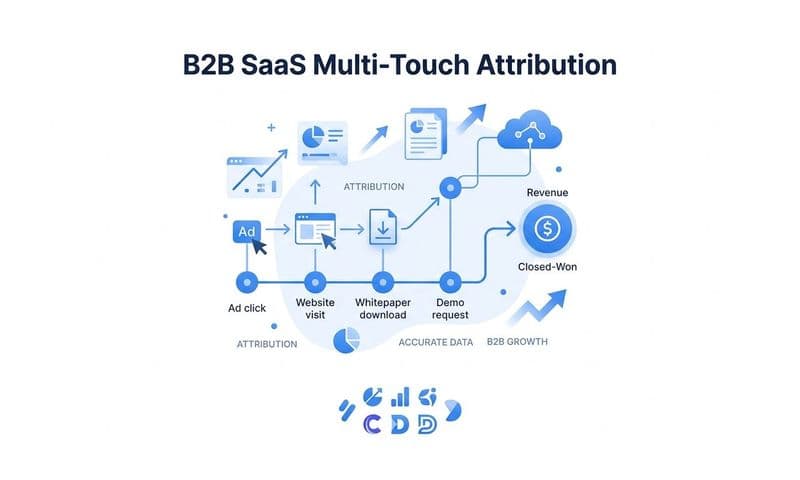
Multi-touch attribution solves this by tracking every touchpoint in the customer journey and assigning appropriate credit to each. Someone might see a Facebook ad, click a Google search ad, receive an email, and then convert. Multi-touch attribution shows you all four touchpoints and helps you understand how they worked together. Our attribution marketing tracking complete guide covers these concepts in depth.
The key to making this work in a post-iOS 14 world is using customer identifiers instead of relying solely on pixel tracking. When someone clicks your Facebook ad, capture their click ID and any available parameters. When they later provide their email address, connect that email to the earlier ad click. When they convert, you can trace the full journey using the email as the connecting thread.
This requires a platform that can ingest data from multiple sources—ad platforms, your website, your CRM, your email marketing tool—and connect them using customer identifiers. The platform needs to recognize that the Facebook ad click, the email signup, and the purchase three days later all belong to the same person. Explore different attribution tracking methods to find what works best for your business.
Compare different attribution models to understand channel performance from multiple angles. First-click attribution shows which channels are best at introducing new customers. Last-click shows which channels close deals. Linear attribution spreads credit evenly across all touchpoints. Time-decay gives more credit to touchpoints closer to conversion.
No single model is "correct"—they each reveal different insights. A channel might look weak in last-click attribution but strong in first-click, indicating it's great for awareness but not for closing. Understanding these nuances helps you allocate budget more effectively.
The real power comes from connecting ad clicks to actual revenue, not just pixel-reported conversions. Track which ads drove customers who eventually made purchases, even if the purchase happened days later through a different channel. This shows true customer acquisition cost and lifetime value by source.
When you can see that Facebook ads bring in customers who spend an average of $500 over six months, while Google ads bring customers who spend $300, you can make smarter budget allocation decisions—even if the immediate conversion metrics look similar.
Step 6: Feed Better Data Back to Ad Platforms for Improved Optimization
Here's where everything comes together. You've implemented server-side tracking, configured conversion APIs, built first-party data collection, and set up multi-touch attribution. Now you use that enriched data to improve how ad platforms optimize your campaigns.
Send conversion events back to Meta, Google, and other platforms with as much customer and value data as possible. Instead of just reporting "purchase," send "purchase of $150 by customer with email address and phone number who previously visited the site twice." The more information you provide, the better platforms can optimize.
Include customer value data in your conversion events. If you're running e-commerce, send the actual purchase value with each conversion. If you're generating leads, assign value scores based on lead quality or historical close rates. This helps ad platforms optimize for revenue, not just conversion volume. Learn how to improve ROAS with better tracking to maximize your ad spend efficiency.
When Meta's algorithm knows that some conversions are worth $50 and others are worth $500, it can optimize to find more high-value conversions. This is far more effective than treating all conversions equally.
Improve match rates by including multiple customer identifiers with each conversion event. Send hashed email addresses, hashed phone numbers, customer names, and any other available data. Higher match rates mean ad platforms can more accurately attribute conversions to specific ads and optimize accordingly.
Monitor how improved data quality affects campaign performance over time. Track your event quality scores in Meta's Events Manager—they should improve as you send more complete data. Watch for increases in attributed conversions as server-side tracking captures events that pixels missed.
Look for improvements in campaign efficiency. When ad platforms receive better data, their algorithms can optimize more effectively. You might see cost per conversion decrease or conversion rates increase as the platforms learn which audiences and creatives drive the best results. Discover how ad tracking tools can help you scale ads using accurate data.
Create custom audiences and lookalike audiences based on high-value customers identified through your attribution platform. Instead of building audiences from pixel data alone, use your enriched first-party data to create segments of customers who made repeat purchases or have high lifetime value. Lookalikes based on these segments often perform significantly better.
The feedback loop becomes self-reinforcing. Better data leads to better optimization, which leads to better results, which provides more data to improve optimization further. Marketers who implement this complete system gain a significant competitive advantage over those still relying on broken pixel tracking.
Your Path to Accurate Tracking in a Privacy-First World
Fixing iOS 14 tracking limitations isn't a single task—it's a systematic rebuild of your marketing data infrastructure. But unlike many marketing challenges, this one has clear technical solutions.
Start with your audit to quantify exactly what you're missing. Implement server-side tracking as your foundation—this is the infrastructure that makes everything else possible. Configure conversion APIs for each ad platform you use, and don't forget event deduplication to keep your numbers accurate.
Build first-party data collection into every step of your funnel. The more customer identifiers you capture, the better your attribution becomes. Use multi-touch attribution to connect touchpoints across devices and sessions, revealing the true customer journey that pixel tracking can no longer see.
Finally, feed that enriched data back to ad platforms so their algorithms can optimize effectively. Better data in means better performance out.
Here's your quick implementation checklist: Have you completed your tracking audit and documented the gaps? Is server-side tracking implemented and verified? Are conversion APIs configured for Meta, Google, and other platforms you use? Have you set up event deduplication? Is your first-party data strategy capturing customer identifiers at key touchpoints? Does your attribution platform connect the full customer journey to actual revenue?
The marketers who adapt to this privacy-first landscape will have a significant advantage. While competitors struggle with incomplete reporting and make decisions based on partial data, you'll have accurate visibility into what's actually driving results.
Ready to elevate your marketing game with precision and confidence? Discover how Cometly's AI-driven recommendations can transform your ad strategy—Get your free demo today and start capturing every touchpoint to maximize your conversions.