Third-party cookies have been the backbone of digital advertising measurement for over two decades, but that era is ending. Safari and Firefox already block third-party cookies by default, and Google Chrome has introduced user-level controls that significantly limit cookie-based tracking. For marketers running paid campaigns across Meta, Google, TikTok, and other platforms, this shift creates a real problem: your attribution data becomes incomplete, your retargeting audiences shrink, and the conversion signals feeding ad platform algorithms degrade over time.
The frustrating part is that most marketers do not realize how much data they are already losing. You see conversions reported in Meta Ads Manager and assume things look fine. But when you cross-reference those numbers against your CRM or payment processor, the gap becomes obvious. Cookie restrictions are quietly eroding the accuracy of every metric you rely on to make budget decisions.
The good news is that cookieless tracking is not only possible but often more accurate than cookie-based methods ever were. Server-side tracking, first-party data strategies, and AI-powered attribution platforms can capture the full customer journey without relying on browser cookies that get blocked, expire, or disappear when users switch devices.
This guide walks you through the practical steps to transition your marketing measurement stack to a cookieless approach. You will learn how to audit your current tracking vulnerabilities, implement server-side solutions, build a first-party data foundation, connect your CRM and ad platforms for closed-loop reporting, and validate that your new setup is delivering reliable data.
Whether you manage campaigns in-house or run an agency, this guide to cookieless tracking will help you maintain accurate attribution and keep your ad platform algorithms well-fed with quality conversion data. Let's get into it.
Step 1: Audit Your Current Tracking Setup for Cookie Dependencies
Before you can fix anything, you need to know exactly what you are working with. Most marketing stacks have accumulated layers of tracking tags over time: ad pixels, analytics scripts, retargeting codes, and conversion snippets. Many of these rely on third-party cookies without anyone having consciously made that choice.
Start by opening your site in Safari or Firefox and using the browser's developer tools to inspect network requests and storage. These browsers block third-party cookies by default, so what you see here is essentially what a large portion of your audience experiences every day. You may find that conversion pixels are firing but failing to set cookies, retargeting audiences are not being populated, and analytics sessions are fragmenting across page loads.
Next, pull up your tag management system (Google Tag Manager or equivalent) and document every tag that fires across your site. For each tag, note the following:
What it tracks: Is it a conversion event, a page view, a retargeting pixel, or an analytics hit?
Which platform it belongs to: Meta, Google Ads, TikTok, LinkedIn, or a third-party analytics tool?
How it sets and reads identifiers: Does it rely on a third-party cookie, a first-party cookie, or does it use another method like a URL parameter?
Once you have your tag inventory, compare conversion counts between your ad platforms and your backend. Pull 30 days of reported conversions from Meta Ads Manager and Google Ads, then compare those numbers to the actual leads and purchases recorded in your CRM or payment processor. The gap you find is a direct measure of how much data cookie restrictions are already costing you. Understanding why conversion tracking numbers are wrong is essential before moving to the next step.
This comparison is often eye-opening. It is common to find that ad platforms are underreporting conversions because browser restrictions are preventing pixels from firing correctly, or that the same conversion is being counted differently across platforms due to inconsistent event tracking.
The deliverable from this step is a clear spreadsheet with every tracking element listed, its cookie dependency noted, and an estimated data gap based on your platform-to-CRM comparison. If you want to dig deeper into why discrepancies occur, explore the reasons your ad tracking may be inaccurate across platforms.
Success indicator: You have a complete inventory of your tracking stack with cookie dependencies identified and a quantified data gap between ad platform reporting and backend records.
Step 2: Implement Server-Side Tracking as Your New Foundation
Server-side tracking is the most important technical change you can make in a cookieless world. Here is the core concept: instead of relying on a browser pixel to fire and set a cookie, your website sends event data to your own server, which then forwards that data directly to ad platform APIs. The browser never enters the equation for the critical conversion data.
This approach bypasses every browser-level restriction. It does not matter whether a user is on Safari, Firefox, or a Chrome instance with cookie controls enabled. The conversion data travels server to server, completely independent of what the browser allows or blocks. For a deeper dive into the technical differences, read our comparison of server-side tracking vs pixel tracking.
The major ad platforms all support this model. Meta calls it the Conversions API (CAPI). Google has enhanced conversions and the Google Ads API. TikTok offers the Events API. Each of these accepts server-side event data and uses it for attribution, optimization, and audience building.
The architecture works like this: when a user completes a purchase on your site, your server captures the event details (what was purchased, the value, and any available user identifiers like a hashed email address). Your server then sends that event to Meta CAPI, Google's enhanced conversions endpoint, and any other platform APIs you use. The platforms receive clean, reliable conversion data regardless of browser behavior.
For implementation, you have two practical paths. The first is building custom API connections for each platform individually. This gives you full control but requires developer resources and ongoing maintenance for each platform's API specifications. The second is using a platform like Cometly, which handles server-side connections to multiple ad platforms from a single integration. You connect once, and Cometly manages the data forwarding to Meta, Google, TikTok, and others simultaneously. Our server-side tracking setup guide walks through the technical details.
There is one critical pitfall to avoid: running server-side and client-side tracking simultaneously without deduplication. If your browser pixel fires a purchase event and your server-side connection sends the same purchase event, both ad platforms will count two conversions from one transaction. This inflates your reported results and corrupts your optimization signals.
The solution is event deduplication using event IDs. Every conversion event you send should include a unique event ID. When both the browser pixel and server-side connection send the same event, the ad platform recognizes the matching event ID and counts it only once. Set this up from day one of your server-side implementation.
Success indicator: Conversion events are being received by your ad platforms via server-side connections, confirmed in each platform's event manager (Meta Events Manager, Google's conversion tracking diagnostics), and deduplication is active so you are not seeing inflated conversion counts.
Step 3: Build Your First-Party Data Collection Strategy
Server-side tracking solves the delivery problem, but first-party data solves the identity problem. Without third-party cookies to recognize returning users across sessions, you need a different way to tie conversions back to ad interactions. First-party data is the answer.
First-party data is information users provide directly to you: email addresses, phone numbers, form submissions, purchase records, and account data. When a user clicks an ad and later converts by submitting a form with their email, that email address becomes a durable identifier that can match the conversion back to the original ad click, regardless of cookies. Our guide on what first-party data tracking is covers the foundational concepts in detail.
Start by mapping every point in your funnel where you can collect first-party data with user consent. Think beyond just your checkout flow. Lead capture forms, gated content downloads, webinar registrations, email newsletter signups, account creation flows, and live chat interactions are all opportunities. The goal is to have multiple touchpoints where known user data is captured throughout the customer journey.
Once you have those collection points identified, enable enhanced conversions on Google Ads and advanced matching on Meta. These features take the first-party data you collect (like an email address at form submission) and hash it using SHA-256 before sending it to the platform. The platform then attempts to match that hashed identifier to a logged-in user account, allowing it to attribute the conversion back to an ad click even when cookies are absent.
Setting up enhanced conversions in Google Ads involves configuring your conversion action to include customer data fields. Advanced matching in Meta is configured through the Events Manager and can be implemented via the browser pixel, the Conversions API, or both. Both setups are well-documented in each platform's help center, and the lift is manageable even without heavy developer involvement.
The next layer is integrating your downstream tools. Connect your email marketing platform (such as Klaviyo or Mailchimp) and your CRM to your attribution tool. This ensures that events happening after the initial conversion, such as email engagement, repeat purchases, subscription renewals, and upsells, are also captured as first-party conversion data and attributed to the right marketing touchpoints. Businesses focused on lead generation should also explore tracking attribution for lead generation to maximize downstream value.
Success indicator: You have at least three to five first-party data collection points active across your funnel, hashed matching is enabled on your primary ad platforms, and downstream CRM and email events are flowing into your attribution system.
Step 4: Connect Your CRM and Ad Platforms for Closed-Loop Attribution
Most marketers track leads. Fewer track what happens to those leads after they enter the CRM. This gap is where cookieless tracking becomes genuinely powerful, because when you close the loop between your CRM and your ad platforms, you stop optimizing for form fills and start optimizing for revenue.
CRM integration is essential for cookieless tracking because it lets you tie actual business outcomes back to the original ad click using first-party identifiers. Instead of relying on a cookie that may have been set weeks ago and may have since been deleted, you are working with durable data: the email address or phone number the lead provided when they first engaged with your brand.
Start by connecting your CRM to your attribution platform. Whether you use HubSpot, Salesforce, Pipedrive, or another tool, the goal is the same: every pipeline stage and revenue event in your CRM should be mapped to a marketing touchpoint. When a lead moves from "new contact" to "qualified opportunity" to "closed deal," each of those transitions should be visible in your attribution dashboard alongside the ad campaign that drove the original click. Choosing the right revenue attribution tracking tools makes this process significantly easier.
For e-commerce businesses, the same principle applies with your payment processor. Connect Stripe, Shopify, or your payment platform so that every transaction is attributed to the marketing source that drove it. This gives you revenue-based attribution rather than event-based attribution, which is a fundamentally more accurate picture of what your campaigns are actually producing.
The next step is conversion sync. Once your CRM and payment data is flowing into your attribution platform, you can send enriched, revenue-verified conversion events back to Meta, Google, TikTok, and other ad platforms. This is where the real optimization advantage comes in. Instead of feeding ad platform algorithms a signal that says "someone filled out a form," you are feeding them a signal that says "someone became a paying customer worth this specific revenue amount." Understanding the ultimate guide to revenue attribution will help you maximize this approach.
Ad platform algorithms optimize toward the signals you give them. If you only send top-of-funnel events like form fills, the algorithm will find more people who fill out forms, including many who will never buy. When you push deeper funnel events, qualified leads, closed deals, and actual payments, the algorithm learns to find people who look like your real buyers. This is one of the most impactful things you can do for campaign performance, and it is entirely dependent on having CRM integration in place.
Success indicator: You can see revenue attributed to specific ads and campaigns in your attribution dashboard, and your ad platforms are receiving downstream conversion events that reflect actual business outcomes, not just top-of-funnel interactions.
Step 5: Configure Multi-Touch Attribution to Replace Cookie-Based Models
Cookie-based attribution has always had a structural problem beyond just cookie blocking: it typically defaults to last-click models. Last-click attribution gives 100% of the credit for a conversion to the final touchpoint before the purchase. This means the awareness ad that first introduced someone to your brand gets zero credit, and the retargeting ad they clicked right before converting gets all of it. That is a distorted picture of what actually drove the sale.
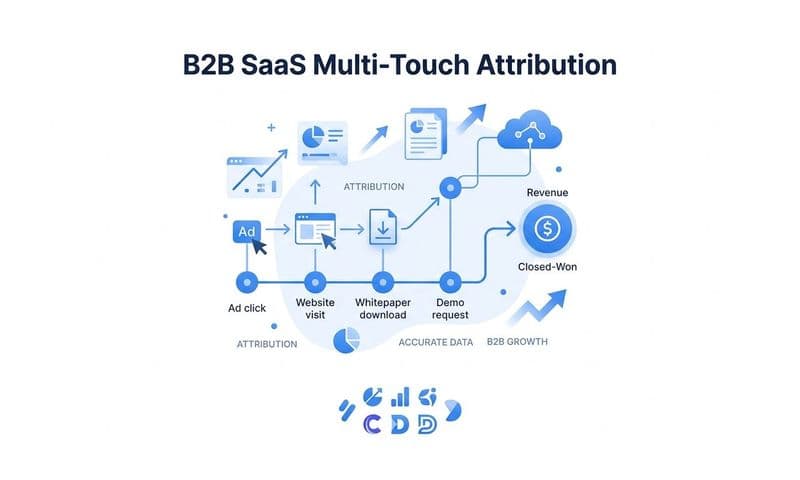
Multi-touch attribution solves this by distributing credit across every touchpoint in the customer journey. And in a cookieless environment, multi-touch attribution built on first-party identifiers and server-side data is actually more reliable than cookie-based multi-touch ever was, because the underlying data is more durable and consistent. For a comprehensive breakdown of how different models work, read the ultimate guide to attribution models.
The first decision is choosing your attribution model. Each model has a different use case:
Linear attribution: Distributes credit equally across all touchpoints. Useful when you want to understand the full journey without making assumptions about which touchpoints matter most.
Time-decay attribution: Gives more credit to touchpoints closer to the conversion. Works well for shorter sales cycles where recent interactions are genuinely more influential.
Position-based attribution: Gives the most credit to the first and last touchpoints, with the middle interactions sharing the remainder. A good fit for businesses where brand discovery and final decision moments are both critical.
Data-driven attribution: Uses machine learning to assign credit based on the actual patterns in your conversion data. This is the most sophisticated option and works best when you have sufficient conversion volume for the model to learn from.
Once you have chosen your model, configure cross-channel attribution that stitches together touchpoints from Google, Meta, TikTok, email, and organic search using first-party identifiers. This is where a platform like Cometly becomes particularly valuable, because it aggregates data across all your channels in one place and applies your chosen attribution model consistently, rather than each ad platform applying its own self-serving attribution logic. Exploring touchpoint attribution tracking can help you understand how each interaction contributes to the final conversion.
Use AI-powered recommendations to identify which ads and campaigns are genuinely driving revenue across the full funnel. When you can see that a top-of-funnel YouTube campaign is consistently appearing in the journeys of your highest-value customers, even if it rarely gets last-click credit, you can make a confident case for maintaining or increasing that budget.
Success indicator: You can view the full customer journey across channels in a single dashboard, compare how different attribution models credit each touchpoint, and use those insights to make budget allocation decisions based on full-funnel performance rather than last-click assumptions.
Step 6: Validate Your Cookieless Tracking Accuracy
Setting up cookieless tracking is one thing. Confirming it actually works is another. Before you retire your legacy cookie-based tags, run a validation period to make sure your new setup is capturing data accurately.
The most reliable validation method is a parallel tracking test. Keep your existing cookie-based setup running alongside your new server-side and first-party setup for two to four weeks. During this period, compare the conversion counts from both systems against your CRM and payment processor records. Your new cookieless setup should be capturing at least as many conversions as the old system, and ideally more, since it is not subject to browser restrictions.
Cross-reference your attribution platform's reported conversions against three sources: your CRM's actual closed deals, your payment processor's transaction records, and your ad platform event managers. All three should tell a reasonably consistent story. If they do not, you have a discrepancy worth investigating.
Watch for these common issues during validation:
Duplicate events: If deduplication is not working correctly, you will see inflated conversion counts. Check that event IDs are being passed consistently from both browser and server-side sources.
Missing UTM parameters: If your server-side events are arriving without campaign attribution data, they cannot be connected to specific ads. Verify that UTM parameters are being captured and passed through your event pipeline. Our guide on UTM parameter tracking best practices covers how to set these up correctly.
Timezone mismatches: If your attribution platform, CRM, and ad platforms are reporting in different timezones, daily conversion counts will appear inconsistent. Standardize on a single timezone across all systems.
Events firing incorrectly: Confirm that conversion events fire on actual user actions (form submission confirmed, payment processed) rather than on page load, which would cause over-reporting.
Use Meta Events Manager and Google Tag Assistant to verify that server-side events are arriving with correct parameters and are being matched to users at a healthy rate. Both tools show you event quality scores and match rate percentages that indicate how effectively your first-party data is being used for attribution.
Success indicator: Your cookieless tracking data matches your backend revenue records within a reasonable margin, event quality scores in your ad platform managers are strong, and you are confident enough in the new setup to sunset your legacy cookie-dependent tags.
Your Cookieless Tracking Checklist and Next Steps
Transitioning to cookieless tracking is not a single afternoon project, but by working through these six steps, you move from a fragile, cookie-dependent measurement system to one built on server-side data, first-party identifiers, and closed-loop CRM attribution. The result is more accurate data, better-fed ad platform algorithms, and marketing decisions grounded in what actually drives revenue.
Here is a quick checklist to confirm you are set up for success:
1. You have audited your current tracking and identified every cookie dependency with a quantified data gap.
2. Server-side tracking is live and sending deduplicated conversion events directly to your ad platforms.
3. First-party data collection points are active across your funnel with enhanced matching enabled on your primary ad platforms.
4. Your CRM is connected to your attribution platform, and revenue events are syncing back to ad platforms for better algorithm optimization.
5. Multi-touch attribution is configured so you can see the full customer journey and compare model performance across channels.
6. You have validated accuracy by cross-referencing attribution data against CRM and payment records, and legacy cookie-dependent tags have been retired or are scheduled for retirement.
Cometly is built to handle this entire workflow from a single platform. Server-side tracking, CRM integration, multi-touch attribution, and conversion sync all work together so you get a complete, accurate picture of what is driving your revenue without stitching together a dozen separate tools.
If you are ready to stop losing data to cookie restrictions and start making confident budget decisions based on what actually converts, Get your free demo today and see how Cometly can bring clarity to your entire marketing attribution stack.