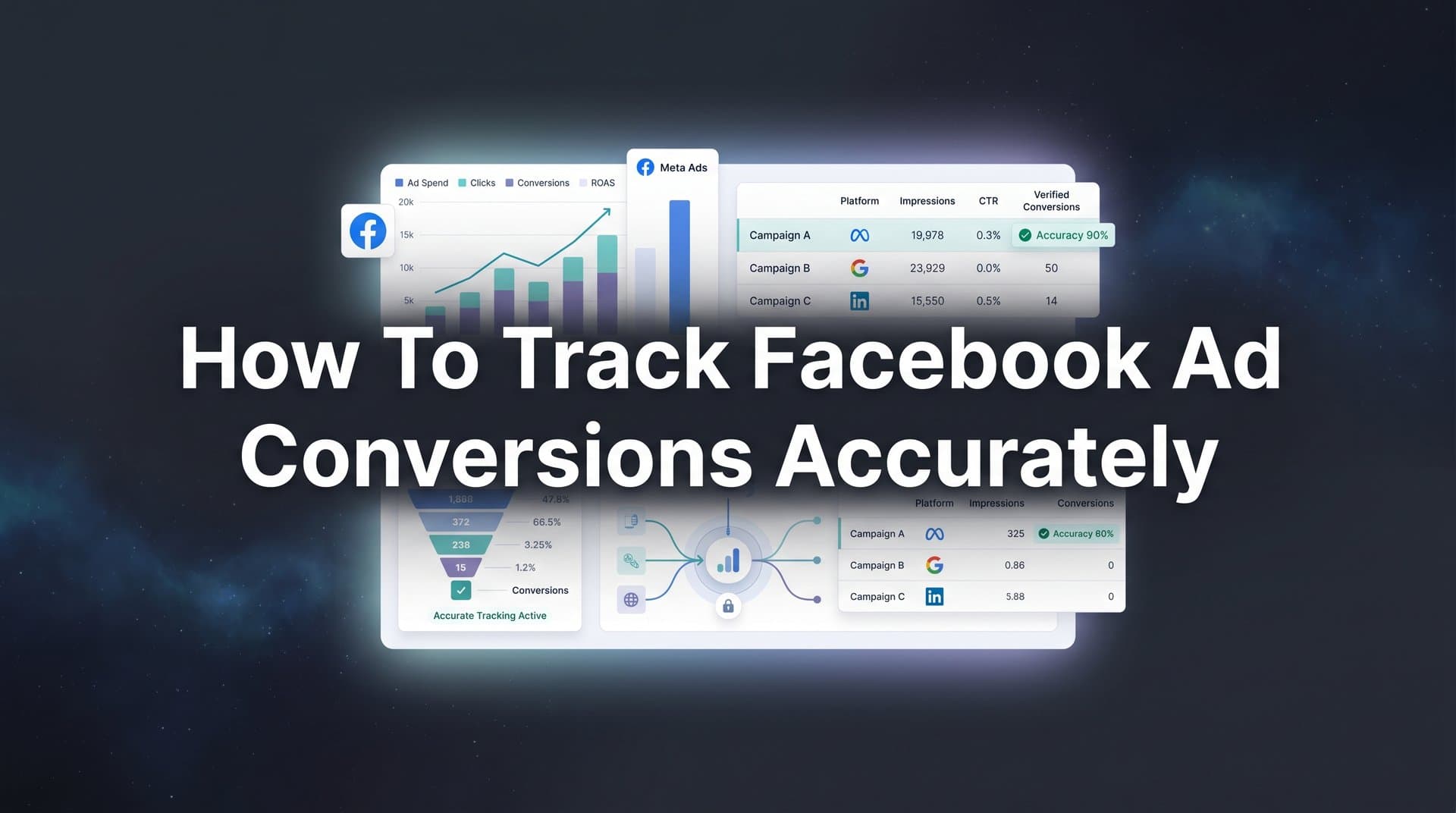
You have spent thousands on Facebook ads this month. Your Ads Manager dashboard shows decent click-through rates and what looks like solid conversion numbers. But when you check your actual revenue in your CRM, the math does not add up. Some of your "best performing" campaigns according to Facebook have not generated a single paying customer. Meanwhile, campaigns Facebook marked as underperformers are bringing in qualified leads.
This disconnect is not your fault. Facebook ad conversion tracking has become increasingly challenging in recent years. iOS privacy updates now require users to opt in before apps can track them across platforms. Browser-based tracking gets blocked by ad blockers and privacy-focused browsers. Customers research on mobile, convert on desktop, and Facebook only sees half the journey.
The result? The data in your Ads Manager often tells an incomplete story. You are making budget decisions based on numbers that miss significant portions of your actual customer journeys. You are potentially cutting campaigns that drive revenue while scaling ones that look good on paper but do not convert.
This guide walks you through a practical, step-by-step process to set up accurate Facebook ad conversion tracking. You will learn how to configure Meta's native tools properly, implement server-side tracking for better data capture, and connect your conversion data to your CRM for true revenue attribution.
By the end, you will have a tracking system that shows which ads actually drive leads and sales, not just which ones get clicks. Let's fix your tracking foundation so you can make confident decisions about where to invest your ad budget.
Step 1: Audit Your Current Facebook Pixel Setup
Before you add new tracking layers, you need to understand what you are working with right now. Many tracking issues stem from foundational pixel problems that have been quietly breaking your data for months.
Start by opening your Facebook Events Manager. Navigate to Data Sources and select your pixel. Look at the Overview tab to see which events are firing and how frequently. If you see events firing that you do not recognize, or if expected events are missing entirely, you have identified your first problem.
Check your domain verification status next. Unverified domains limit your tracking capabilities and prevent you from prioritizing conversion events properly. If your domain shows as unverified, you will need to add a meta tag to your website header or upload an HTML file to prove ownership.
Now comes the detective work. Install the Meta Pixel Helper browser extension and visit your website. Click through your conversion funnel as a customer would. The Pixel Helper shows you exactly which events fire on each page, what parameters they include, and whether any errors occur.
Common issues you might discover: duplicate pixels from old implementations still firing alongside your current one, creating double-counted conversions. Missing events on critical pages like checkout confirmation or thank you pages. Incorrect event names that do not match Facebook's standard events, making them useless for optimization. If your Facebook pixel is not tracking all conversions, these foundational issues are often the culprit.
Document everything you find. Create a simple spreadsheet listing each conversion event you currently track, which pages trigger it, and whether it is working correctly. Then add a column for the conversion events that actually matter for your business revenue. This gap between what you track and what you should track reveals your roadmap.
Pay special attention to your conversion values. If you are tracking purchases but not passing the actual transaction amount, Facebook cannot optimize for revenue. If you are tracking lead events but treating a newsletter signup the same as a demo request, your optimization will be confused.
This audit typically reveals that most businesses are tracking too many meaningless events while missing the ones that predict revenue. Once you know where you stand, you can move forward with confidence.
Step 2: Configure the Conversions API for Server-Side Tracking
Your Facebook Pixel lives in the browser. That means it depends entirely on what the browser allows it to see and do. When someone uses an ad blocker, browses in privacy mode, or opts out of tracking on iOS, your pixel goes blind. It cannot fire, cannot capture data, and cannot report conversions back to Facebook.
This is where the Conversions API changes everything. Instead of relying on browser-based tracking, CAPI sends conversion data directly from your server to Facebook. No browser restrictions. No ad blockers. No iOS tracking limitations preventing the data flow.
Setting up CAPI varies depending on your platform, but the core process remains consistent. In Events Manager, navigate to your pixel and select the Conversions API option. Facebook will guide you through connecting your platform. If you use Shopify, WordPress, or another major platform, you will likely find a partner integration that handles most of the technical setup automatically.
The critical piece is event matching. For CAPI to work effectively, Facebook needs to match your server events to actual users. This requires passing customer information parameters like email addresses, phone numbers, and IP addresses with each conversion event. The more parameters you include, the higher your Event Match Quality score, and the more accurate your attribution becomes.
Here is what matters most for strong event matching. Hash customer email addresses and phone numbers before sending them to protect privacy while still enabling matching. Include the Facebook click ID parameter that gets appended to your URLs when someone clicks an ad. Send the user agent string and IP address from the conversion event. Include external IDs like customer database IDs to create additional matching points.
Once configured, test your implementation thoroughly. Events Manager includes a Test Events tool that shows you exactly what data your server is sending. Trigger a test conversion on your website and verify that the event appears in the Test Events feed with all the expected parameters.
Check your Event Match Quality score in Events Manager. Scores above 6.0 indicate good matching. Scores below 4.0 mean you are missing critical parameters that would improve attribution accuracy. If your score is low, review which parameters you are sending and add the missing ones. For detailed guidance, learn how to fix Facebook Conversion API issues.
One crucial technical detail: deduplication. When you run both pixel and CAPI, some conversions will be captured by both systems. Without deduplication, Facebook counts them twice, inflating your conversion numbers and confusing your optimization. Assign each conversion event a unique event ID and pass it through both pixel and CAPI. Facebook will automatically deduplicate events with matching IDs, ensuring accurate counts.
Step 3: Define and Prioritize Your Conversion Events
iOS privacy changes introduced Aggregated Event Measurement, which limits you to eight prioritized conversion events per domain for iOS users. This constraint forces a valuable discipline: identifying which conversions actually matter for your business.
Start by mapping your customer journey from ad click to revenue. What actions do people take that indicate buying intent? For an e-commerce business, this might include viewing a product, adding to cart, initiating checkout, and completing purchase. For a SaaS company, it could be visiting pricing, starting a trial, booking a demo, and becoming a paying customer.
List every conversion event you could potentially track. Then rank them by business value. Which event most strongly predicts revenue? That becomes your top priority. Which events are vanity metrics that look good but do not correlate with actual sales? Those get cut entirely.
In Events Manager, navigate to Aggregated Event Measurement under your domain settings. Here you will configure your eight priority events in order of importance. Facebook uses this ranking to determine which conversions to attribute when it can only track one event per user due to privacy restrictions.
Your highest priority event should almost always be the one closest to revenue. For most businesses, this is the Purchase event. Second priority typically goes to the conversion action immediately before purchase, like initiating checkout or submitting a lead form. Continue down the funnel, with lower-priority events capturing earlier-stage actions.
Configure conversion values for each event. This is critical for optimization. When you tell Facebook that one purchase is worth one hundred dollars and another is worth five hundred dollars, the algorithm can optimize for revenue instead of just conversion counts. Without values, Facebook treats all conversions equally and might drive you cheap, low-value customers while missing high-value opportunities. Following best practices for tracking conversions accurately ensures your data reflects true business impact.
For lead generation businesses, assign estimated values based on your average customer lifetime value and conversion rates. If 10 percent of demo requests become customers worth five thousand dollars each, assign demo requests a value of five hundred dollars. This helps Facebook optimize toward leads that are more likely to convert to revenue.
Custom conversions give you additional flexibility for tracking specific funnel stages. Maybe you want to track people who view your pricing page three times, or users who watch more than 50 percent of your product demo video. Create custom conversions in Events Manager by defining URL rules or event parameters that identify these valuable behaviors.
The key is strategic simplicity. Track enough to understand your funnel, but not so much that you drown in meaningless data. Every event you track should inform a decision about budget allocation or creative optimization.
Step 4: Connect Your CRM to Close the Attribution Loop
Facebook's native attribution stops at the moment someone clicks your ad or submits a form. For many businesses, that is just the beginning of the customer journey. The lead might nurture for weeks before booking a sales call. The trial user might explore features for days before upgrading to paid. The initial purchase might be small, but the customer lifetime value could be substantial.
Without connecting your CRM to your ad tracking, you are flying blind on actual revenue attribution. You might be cutting campaigns that drive your highest-value customers because Facebook only sees the initial low-value conversion.
The simplest approach is offline conversion imports. Export conversion data from your CRM including the customer email, phone number, conversion event name, conversion value, and conversion time. Format this data according to Facebook's requirements and upload it through Events Manager. Facebook matches these conversions back to the original ad clicks, showing you which campaigns drove actual closed deals. Understanding how to track offline conversions closes the attribution gap between marketing spend and revenue.
This works well for businesses with longer sales cycles or offline conversions. When a lead from Facebook converts to a customer three weeks later through a phone call, the offline conversion import connects that revenue back to the original ad that started the journey.
For more automated tracking, many CRMs offer native Facebook integration. Platforms like HubSpot, Salesforce, and others can automatically send conversion events to Facebook when deals close or opportunities reach certain stages. Configure these integrations to pass the original UTM parameters or click IDs that identify which Facebook campaign sourced each lead.
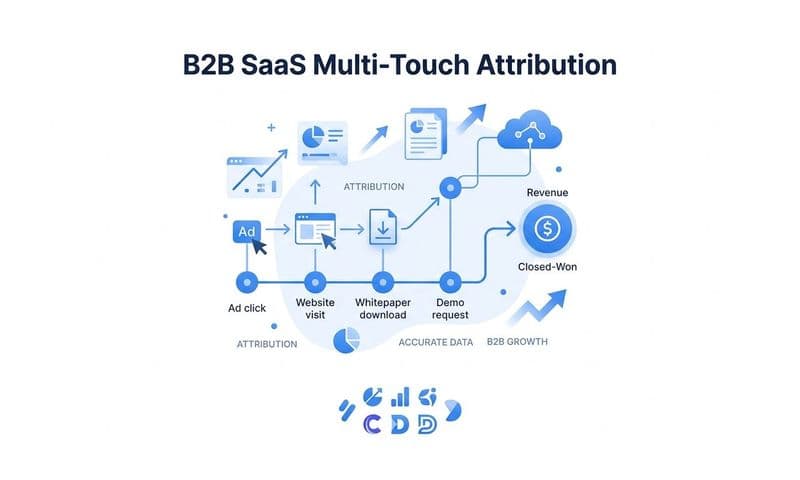
Attribution platforms like Cometly take this connection further by automatically tracking the entire customer journey from ad click through CRM revenue. Instead of manually uploading conversions or configuring complex integrations, Cometly captures every touchpoint and connects it to your CRM data in real time. You can see which specific Facebook ads drove which customers, what their lifetime value is, and how they moved through your funnel.
This level of attribution reveals insights that Facebook's native tracking cannot provide. You might discover that certain ad creatives drive leads that close at twice the rate of others, even though both have similar cost per lead in Ads Manager. Or you might find that campaigns targeting one audience segment produce customers with 3x higher lifetime value, making them worth scaling despite higher upfront costs. Learning how to track marketing ROI accurately transforms how you allocate budget.
The technical requirement is consistent: pass identifying information with every conversion so it can be matched back to the ad click. Email addresses and phone numbers work best for matching. Facebook click IDs captured in URL parameters provide direct connection. External customer IDs from your CRM create additional matching points.
Step 5: Implement UTM Parameters for Cross-Platform Visibility
UTM parameters are the breadcrumbs that follow users from your Facebook ad through your website and into your CRM. Without them, you lose visibility into which specific campaigns, ad sets, and ads drove each conversion.
Create a consistent UTM naming convention before launching any campaigns. Decide how you will structure your campaign names, source tags, and medium tags. Consistency matters because inconsistent naming creates fragmented data that is impossible to analyze. If one campaign uses "facebook" as the source and another uses "Facebook" or "fb", your reporting splits them into separate channels.
For Facebook ads, your UTM structure should capture campaign hierarchy. Use utm_source=facebook for all campaigns. Set utm_medium based on campaign objective, like "paid_social" or "conversion". Use utm_campaign to identify the specific campaign name, matching exactly what you named it in Ads Manager.
Dynamic parameters save massive time and reduce errors. Instead of manually adding UTM tags to every ad, Facebook allows you to use variables that automatically populate with campaign details. Add these to your URL parameters: utm_campaign={{campaign.name}}, utm_content={{ad.name}}, utm_term={{adset.name}}. Facebook fills in the actual values when someone clicks.
The Facebook click ID parameter is crucial for attribution. Add fbclid to your URLs, and Facebook automatically appends a unique identifier to each click. This click ID enables precise matching between ad clicks and conversions, even when other parameters get stripped or modified. Mastering how to track cross-platform conversions ensures you maintain visibility across every touchpoint.
Ensure your UTM data flows everywhere it needs to go. Your analytics platform should capture and store UTM parameters with each session. Your CRM should save UTM values when leads are created, preserving the source information throughout the customer lifecycle. Your attribution platform needs access to these parameters to connect conversions back to specific ads.
Common mistakes break tracking and waste the effort. Avoid using spaces in UTM values, they get encoded into ugly %20 strings that fragment your data. Do not change your naming convention mid-campaign, it makes historical comparison impossible. Never use UTM parameters on internal links, they override the original source and corrupt your attribution. Always test your URLs with UTM parameters before launching campaigns to verify they work correctly.
Document your UTM strategy in a shared resource that everyone on your team can access. When new team members launch campaigns or agencies create ads on your behalf, they need to follow the same conventions to maintain clean data.
Step 6: Validate Your Tracking with Test Conversions
Your tracking setup looks perfect in theory. Events Manager shows green checkmarks. Your CAPI integration reports healthy event matching. Your UTM parameters follow a clean convention. But does it actually work when a real customer clicks an ad and converts?
The only way to know is testing end to end. Become your own customer. Click one of your Facebook ads, go through your entire conversion funnel, and complete a purchase or lead form. Use a real email address you can track, not a test account that might get filtered out.
Watch what happens to that conversion. Check Events Manager to see if the pixel fired correctly. Look for the CAPI event in your server logs or Events Manager test feed. Verify that the conversion appeared in your CRM with the correct UTM parameters attached. Compare the timestamp across all systems to ensure they are tracking the same event.
Discrepancies reveal problems. If the pixel shows the conversion but CAPI does not, your server-side implementation is not working. If Events Manager shows the conversion but your CRM does not, the integration between systems is broken. If the conversion appears everywhere but with different values, your value passing logic has errors. When you encounter these issues, knowing how to fix Facebook ads tracking issues becomes essential.
Run tests across different scenarios. Test on mobile and desktop. Try different browsers. Use an ad blocker to see what happens when pixel tracking fails. Click from iOS and Android devices to verify cross-platform tracking works. Each scenario might reveal edge cases where your tracking breaks down.
The Test Events tool in Events Manager becomes your debugging companion. It shows you exactly what data Facebook receives from each event, including all parameters and matching information. When something is not working, Test Events tells you what is missing or malformed.
Compare your Facebook data against your source of truth regularly. Export conversion data from Ads Manager and match it against your CRM or analytics platform. The numbers will never match perfectly due to attribution windows and methodology differences, but they should be reasonably close. If Facebook reports 100 conversions and your CRM shows 45, something is fundamentally broken. This underreporting of conversions in Facebook ads is a common challenge that proper validation helps identify.
Set up ongoing monitoring to catch tracking breaks before they impact decisions. Create a simple weekly check: review Events Manager for any sudden drops in event volume, check your Event Match Quality scores for degradation, verify that your top conversion events are still firing consistently, and spot-check a few recent conversions to ensure they appear across all systems.
Tracking breaks happen. Developers push website updates that remove your pixel code. Platform updates change how events fire. Integrations break when APIs change. Regular validation catches these issues quickly instead of letting them corrupt weeks of data and waste thousands in ad spend.
Your Tracking Foundation Is Now Built for Accuracy
Accurate Facebook ad conversion tracking requires multiple layers working together. Your pixel captures browser-based events when possible. The Conversions API fills gaps when browser tracking fails. Prioritized conversion events focus optimization on what matters. CRM integration connects ad clicks to actual revenue. UTM parameters maintain visibility across platforms. Regular validation ensures everything keeps working.
Use this checklist to verify your setup is complete. Confirm your pixel is installed and firing correctly on all conversion pages. Ensure CAPI is configured with strong event matching parameters. Check that conversion events are prioritized in Aggregated Event Measurement based on business value. Verify your CRM is connected for revenue attribution through offline conversions or platform integration. Validate that UTM parameters are capturing campaign details consistently. Schedule regular validation tests to catch tracking issues early.
With these pieces in place, you can finally trust your Facebook ad data. You will know which campaigns drive real revenue, not just clicks and form fills. You can confidently scale winners and cut losers based on complete attribution, not partial snapshots. Your optimization decisions will be grounded in data that reflects actual customer journeys.
The difference shows up in results. Marketers with accurate tracking make better budget decisions, optimize toward higher-value customers, and achieve stronger return on ad spend. Those flying blind waste money on campaigns that look good in Ads Manager but do not drive business outcomes.
Ready to elevate your marketing game with precision and confidence? Discover how Cometly's AI-driven recommendations can transform your ad strategy. Get your free demo today and start capturing every touchpoint to maximize your conversions.