You're running marketing campaigns across email, social, paid ads, and content. Your HubSpot dashboard shows numbers everywhere. Traffic is up. Clicks are happening. Forms are converting. But here's the question that keeps you up at night: which of these efforts actually drives revenue?
This is the paradox of modern marketing. We have more data than ever before, yet many teams struggle to answer the most fundamental question: what's working? You can see that 5,000 people visited your website last month, but can you confidently tell your CEO which specific campaigns created the deals that closed?
HubSpot Marketing Analytics exists to solve this problem. As a native analytics solution built directly into the HubSpot ecosystem, it gives you visibility into campaign performance, traffic sources, and customer journeys—all connected to your CRM data. For teams already invested in HubSpot, it's a natural starting point for understanding marketing performance. But as your campaigns grow more sophisticated and span multiple platforms, you'll need to understand both what HubSpot does exceptionally well and where you might need additional tools to complete the picture.
What You'll Find Inside HubSpot's Analytics Arsenal
HubSpot's analytics dashboard is where your marketing data comes to life. Unlike standalone analytics tools that exist in isolation, HubSpot's reporting sits at the intersection of your marketing activities and your CRM, creating a unified view of how campaigns translate into business outcomes.
Traffic Analytics: At its foundation, HubSpot tracks every visitor to your website and tells you exactly where they came from. You'll see breakdowns by source (organic search, social media, direct traffic, referrals, paid ads), which gives you a bird's-eye view of your acquisition channels. The platform automatically categorizes traffic and lets you drill down into specific sources—so you can see not just that social media drove 1,200 visits, but that LinkedIn specifically brought in 800 of those visitors.
This source tracking extends beyond simple referral data. HubSpot captures the original source that brought each contact into your database, then tracks every subsequent interaction. This means you can see that a contact first discovered you through an organic blog post, returned via email, and finally converted after clicking a LinkedIn ad.
Campaign Performance Metrics: For email marketers, HubSpot's campaign analytics are comprehensive. You'll see open rates, click-through rates, and conversion rates for every email send. But it goes deeper than vanity metrics. HubSpot connects email performance to downstream actions—showing you which emails led to form submissions, which ones influenced deals, and which subject lines actually drive engagement rather than just opens.
Landing page analytics follow the same pattern. You can track views, submission rates, and bounce rates for every page. More importantly, you can see which landing pages contribute to your pipeline and which ones generate contacts that never progress.
Contact Attribution Reporting: This is where HubSpot's CRM integration creates real value. Because your marketing data and contact records live in the same system, you can trace the entire journey from anonymous visitor to closed customer. Contact attribution reports show you which marketing assets influenced contact creation, which campaigns contributed to deal creation, and ultimately, which efforts drove revenue.
For B2B marketers focused on pipeline generation, this contact-level visibility is powerful. You're not just measuring clicks and impressions—you're measuring business impact. Understanding what data analytics in marketing truly means helps you leverage these capabilities more effectively.
Building Your Analytics Foundation: First Reports That Matter
Out of the box, HubSpot provides dozens of pre-built reports. But the real power comes from creating custom dashboards tailored to your specific goals and stakeholders. Here's how to build analytics that actually get used.
Start With Your Dashboard Strategy: Before you start dragging widgets around, ask yourself who will use this dashboard and what decisions they need to make. Your CEO doesn't need to see email open rates—she needs to know marketing's contribution to pipeline. Your campaign manager doesn't need executive-level revenue attribution—he needs to know which ad creatives are converting and which landing pages are underperforming.
Create role-specific dashboards. Build an executive dashboard focused on pipeline contribution, revenue attribution, and high-level channel performance. Create a campaigns dashboard that shows granular metrics like cost per lead by source, conversion rates by landing page, and engagement trends over time. Your content team might need a separate dashboard tracking blog performance, SEO rankings, and content-influenced conversions. Exploring data visualization tools for marketing analytics can help you design more impactful dashboards.
Configure Your Tracking Infrastructure: Accurate reporting starts with proper tracking setup. UTM parameters are your foundation here. These are the tags you add to your campaign URLs that tell HubSpot exactly where traffic came from. When you share a blog post on LinkedIn, your URL might look like: yoursite.com/blog-post?utm_source=linkedin&utm_medium=social&utm_campaign=content-promotion.
HubSpot will automatically parse these parameters and categorize the traffic accordingly. The key is consistency. Establish naming conventions for your UTM parameters and stick to them religiously. Use lowercase, avoid spaces, and document your standards so everyone on your team follows the same system.
For paid advertising, you'll also want to ensure your ad platform integrations are properly configured. Connect your Google Ads, Facebook Ads, and LinkedIn Campaign Manager accounts directly to HubSpot. This allows the platform to automatically pull in ad spend data and match it with conversion data, giving you visibility into cost per lead and return on ad spend within your HubSpot reports.
Build Reports That Drive Action: The best reports answer specific questions. Instead of creating a generic "marketing performance" report, build reports like "Which blog posts drive the most qualified leads?" or "What's our cost per SQL by channel?" These focused reports make it obvious what action to take based on the data. Learning marketing analytics and reporting best practices will help you create reports that actually influence decisions.
Understanding How HubSpot Connects Marketing Touches to Revenue
Attribution is where analytics gets complicated—and where many marketing teams struggle. HubSpot offers several attribution models, each with different strengths and use cases. Understanding these models helps you interpret your data correctly and avoid making decisions based on incomplete pictures.
First-Touch Attribution: This model gives 100% credit to the first interaction a contact had with your brand. If someone discovered you through an organic blog post, then engaged with five emails, clicked three ads, and finally converted through a webinar—first-touch attribution credits that original blog post with the conversion.
This model is useful for understanding top-of-funnel performance. It tells you which channels are best at generating awareness and bringing new contacts into your ecosystem. Content marketers often favor first-touch attribution because it highlights the value of educational content and SEO efforts that might not directly drive conversions but play a crucial role in customer acquisition.
Last-Touch Attribution: The opposite approach. Last-touch gives 100% credit to the final interaction before conversion. In the scenario above, the webinar would receive full credit. This model is valuable for understanding what closes deals and drives immediate action. Demand generation teams running conversion-focused campaigns often use last-touch attribution to measure the direct impact of their efforts.
The limitation of both single-touch models is obvious: they ignore the complexity of real customer journeys. Modern buyers interact with brands multiple times across multiple channels before making decisions. Single-touch attribution oversimplifies this reality. To dive deeper into this topic, explore our guide on HubSpot marketing attribution models.
Multi-Touch Attribution Models: HubSpot's Professional and Enterprise tiers offer more sophisticated attribution options. The U-shaped model, for example, gives 40% credit to the first touch, 40% to the last touch, and distributes the remaining 20% across middle interactions. This acknowledges that both discovery and conversion moments matter, while still recognizing the touches in between.
Time decay attribution weights recent interactions more heavily than older ones, operating on the assumption that touches closer to conversion have more influence. Linear attribution distributes credit evenly across all touchpoints, giving equal weight to every interaction.
The Attribution Gap in Paid Advertising: Here's where things get tricky. HubSpot's attribution works beautifully within its own ecosystem—tracking email clicks, landing page visits, blog engagement, and CRM activities. But when you're running paid campaigns across multiple platforms, especially post-iOS 14.5, attribution becomes significantly more challenging.
iOS privacy changes have disrupted traditional pixel-based tracking. When users opt out of tracking, HubSpot (like other platforms) loses visibility into their cross-device journeys. A user might click your Facebook ad on their iPhone, research your product on their laptop, and convert on their tablet—and your attribution data will show gaps in that journey. Understanding the attribution challenges in marketing analytics helps you navigate these complexities.
Additionally, HubSpot's native attribution focuses on contact-level data within its own platform. If you're running campaigns across Google Ads, Facebook, TikTok, and LinkedIn simultaneously, understanding which platform truly drives the best results requires tracking capabilities beyond what lives inside HubSpot alone.
Bridging HubSpot With Your Broader Advertising Strategy
Most marketing teams don't operate exclusively within HubSpot. You're running paid campaigns across multiple platforms, each with its own reporting dashboard and its own version of the truth. Connecting these disparate systems is essential for accurate performance measurement.
Native Ad Platform Integrations: HubSpot offers direct integrations with major advertising platforms. Connect your Google Ads account, and HubSpot will automatically import campaign data, ad spend, and clicks. You can then match this data with your conversion data to calculate metrics like cost per lead and return on ad spend without manually exporting and combining data from multiple sources.
The same applies to Facebook Ads and LinkedIn Campaign Manager. These integrations are valuable because they centralize your reporting. Instead of logging into five different platforms to check campaign performance, you can see everything in one place. Building a cross-platform marketing analytics dashboard streamlines this process significantly.
The Cross-Platform Attribution Challenge: But here's the reality: native integrations have limitations. When a user clicks your Facebook ad, visits your site, leaves without converting, then returns three days later via a Google search and converts—which platform deserves credit? Facebook drove the initial awareness. Google captured the intent. Your attribution model will give different answers depending on which platform you're looking at.
Facebook's Ads Manager will claim credit using its attribution window. Google Ads will claim credit based on its last-click model. HubSpot will attribute based on your selected model within its ecosystem. None of them are necessarily wrong—they're just measuring different things with different methodologies.
This creates a common scenario where the sum of attributed conversions across all your platforms exceeds your actual total conversions. Each platform is taking credit for the same conversion using different attribution logic.
When to Supplement With Dedicated Attribution: For teams spending significant budgets on paid acquisition—typically $50,000+ monthly across multiple platforms—HubSpot's native analytics often provide an incomplete picture. This is where dedicated attribution platforms become valuable.
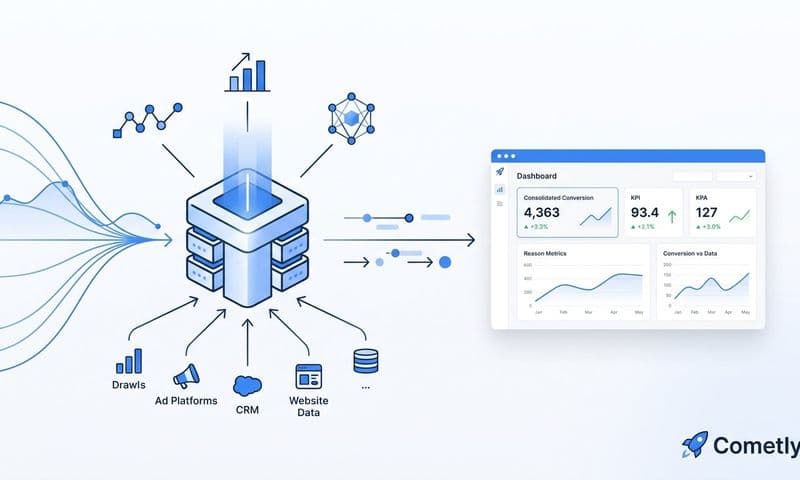
These specialized tools use server-side tracking to capture data that client-side pixels miss. They track the complete customer journey across devices and platforms, providing a unified view of how your marketing channels work together. They feed enriched conversion data back to your ad platforms, improving their algorithmic optimization. Reviewing marketing attribution analytics solutions can help you identify the right tool for your needs.
The decision to supplement HubSpot with additional attribution capabilities depends on your advertising complexity and budget. If you're spending $5,000 monthly on Google Ads and using HubSpot primarily for email marketing and content, the native analytics are probably sufficient. If you're spending six figures monthly across five ad platforms and need to optimize budget allocation based on true incremental ROAS, you'll want more sophisticated tracking.
From Data to Decisions: Making Your Analytics Actionable
Analytics are worthless unless they change what you do. The goal isn't to generate beautiful reports—it's to identify what's working, kill what's not, and double down on your winners. Here's how to turn HubSpot data into revenue-driving actions.
Identify Your Revenue-Generating Content and Channels: Use HubSpot's contact attribution reports to see which blog posts, landing pages, and campaigns actually create pipeline. Sort your content by "contacts created" or "deals influenced" rather than just page views. You'll often discover that your most-viewed content isn't your most valuable content.
This insight should reshape your content strategy. If your in-depth product comparison guides generate 10x more qualified leads than your general industry news posts, create more comparison content. If webinars consistently influence deals while social media generates awareness but rarely converts, adjust your resource allocation accordingly. Understanding how data analytics can improve marketing strategy provides a framework for these optimizations.
Optimize Budget Allocation Based on True Performance: Many marketing teams allocate budget based on gut feeling or historical patterns rather than current performance data. HubSpot's campaign analytics, combined with ad spend data from your platform integrations, let you calculate cost per lead and cost per customer by channel.
Compare these metrics against your customer lifetime value. If your average customer is worth $10,000 and you're acquiring customers from Google Ads at $500 each while LinkedIn customers cost $2,000 each, you have a clear signal about where to invest more aggressively. But dig deeper—look at conversion rates, deal sizes, and sales cycle length by source. Sometimes higher-cost leads convert faster or buy more, making them more valuable despite higher acquisition costs.
Create Closed-Loop Reporting That Connects Marketing to Revenue: The most powerful capability in HubSpot's analytics is its ability to close the loop between marketing activities and sales outcomes. Because marketing and sales data live in the same CRM, you can track not just which campaigns generate leads, but which campaigns generate leads that actually close. Implementing marketing analytics software with revenue tracking capabilities ensures you capture this complete picture.
Build reports that show deal creation and revenue by original source. Share these with your sales team. When sales can see that leads from webinars convert at 15% while leads from cold outreach convert at 2%, they'll prioritize follow-up accordingly. When your CEO can see that content marketing contributed $500,000 in closed revenue last quarter, budget conversations become much easier.
Set up automated reporting that delivers key metrics to stakeholders on a regular schedule. Your executive team might receive a monthly pipeline attribution report. Your campaign managers might get weekly performance digests. Your content team could receive monthly reports on content-influenced revenue. Automation ensures insights reach the right people at the right time without manual work.
Putting Your Analytics Strategy Into Action
HubSpot Marketing Analytics provides a solid foundation for understanding your marketing performance, especially if your strategy centers on content marketing, email campaigns, and owned media. The platform's tight integration with its CRM creates valuable visibility into how marketing activities translate into contacts, opportunities, and revenue. For teams operating primarily within the HubSpot ecosystem, the native analytics capabilities are comprehensive and actionable.
But modern marketing rarely stays within a single platform. As your paid advertising efforts expand across Google, Facebook, LinkedIn, TikTok, and other channels—and as you invest more heavily in multi-touch campaigns that span weeks or months—you'll likely encounter the limitations of any single-platform analytics solution. Cross-device tracking challenges, platform-specific attribution methodologies, and post-iOS data gaps can create blind spots in your reporting.
The most sophisticated marketing teams use HubSpot's analytics for what it does best—tracking owned media performance, measuring email and content effectiveness, and connecting marketing activities to CRM outcomes—while supplementing with specialized attribution tools for complete visibility into paid media performance across platforms. This hybrid approach gives you both the CRM-connected insights that HubSpot excels at and the cross-platform attribution accuracy that dedicated solutions provide.
Your analytics strategy should evolve with your marketing complexity. Start with HubSpot's native capabilities. Build your dashboards. Establish your reporting rhythms. Use the data to optimize your campaigns. As your advertising budget grows and your channel mix becomes more sophisticated, evaluate whether you need additional tools to capture the complete picture of what's truly driving your revenue.
Ready to elevate your marketing game with precision and confidence? Discover how Cometly's AI-driven recommendations can transform your ad strategy—Get your free demo today and start capturing every touchpoint to maximize your conversions.