You open your dashboard Monday morning with coffee in hand, ready to review last week's campaign performance. Google Ads shows 47 conversions. Meta reports 62. Your CRM says 38 deals closed. Same campaign, same week, three completely different stories.
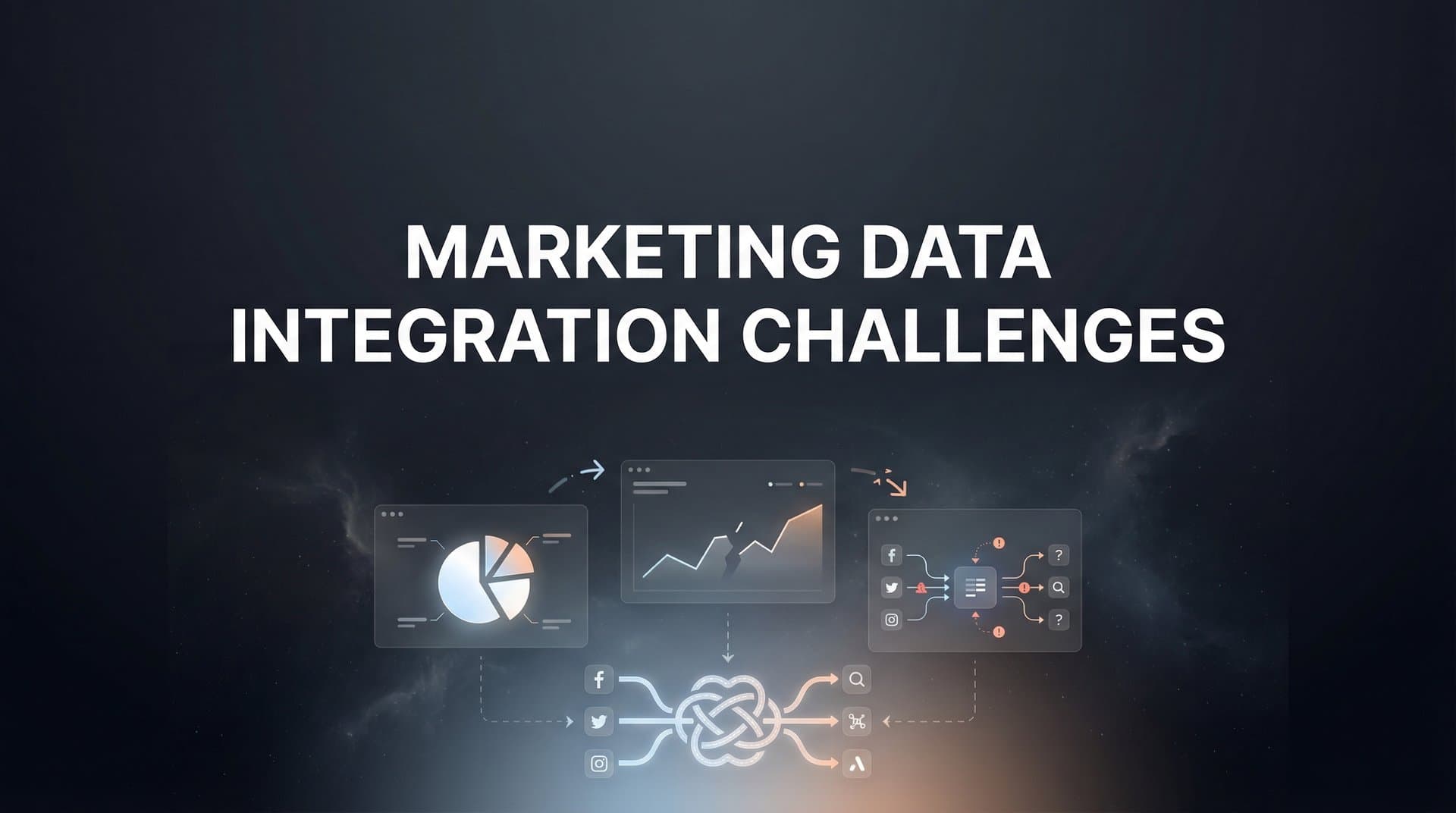
You're not alone in this frustration. Modern marketing teams juggle campaigns across multiple platforms simultaneously—paid search, social ads, email, display, retargeting—each generating its own version of the truth. The promise was simple: more platforms mean more reach and better results. The reality? A fragmented mess of conflicting data that makes it nearly impossible to know what's actually working.
This isn't just an annoying reporting problem. When you can't trust your data, you can't make confident decisions about where to invest your budget. You can't optimize effectively. You can't scale with certainty. The very tools designed to help you grow are creating blind spots that cost you revenue.
This guide breaks down exactly why marketing data integration is so challenging, what's really at stake when your data stays disconnected, and the practical solutions that let you finally see the complete picture of your customer journey.
The Fragmented Reality of Modern Marketing Data
The average marketing team now operates across multiple platforms daily. You're running Google Ads and Meta campaigns. You're tracking website behavior in Google Analytics. Your leads flow into HubSpot or Salesforce. Email campaigns run through Klaviyo or Mailchimp. Retargeting pixels fire from three different networks.
Each platform was built independently, optimized for its own ecosystem, with its own tracking methodology. Google defines a conversion one way. Meta uses a different attribution window. Your CRM timestamps deals based on when sales closes them, not when the customer first clicked an ad.
This fragmentation was manageable when marketing was simpler. But the landscape shifted dramatically starting in 2021 with iOS 14.5, which required apps to ask users for permission to track their activity across other apps and websites. Most users declined. Overnight, platforms like Meta lost visibility into a significant portion of their conversion data.
Cookie deprecation continues to erode cross-platform tracking capabilities throughout 2025 and 2026. Browsers increasingly block third-party cookies by default. Privacy regulations tighten. The tracking infrastructure that marketers relied on for years is fundamentally changing.
The result? Your data isn't just siloed—it's increasingly incomplete within each silo. A customer might click your Meta ad on their iPhone, research on their laptop, and convert on their tablet. Without third-party cookies and cross-app tracking, that looks like three different people to your tracking systems. This marketing data silos problem affects teams of every size.
You're left trying to piece together a customer journey from fragments, like assembling a puzzle when half the pieces are missing and the remaining pieces come from different boxes.
Five Core Integration Challenges Every Marketing Team Faces
Data Format Inconsistencies: Every platform defines success differently. Google Ads counts a conversion when someone completes your defined action within their attribution window—typically 30 days for clicks. Meta might attribute the same conversion to an ad viewed 7 days ago. Your CRM records the deal based on when it closed, possibly weeks after the initial touchpoint. These aren't errors—they're different methodologies measuring different things. But when you're trying to calculate ROI or compare channel performance, these inconsistencies make apples-to-apples comparisons nearly impossible.
Timing and Latency Gaps: Ad platforms report data in near real-time. You can see clicks and conversions within minutes. Your CRM updates when sales manually enters deal information—maybe daily, maybe weekly. This timing mismatch creates reporting windows that never align. When you pull a weekly report, your ad data is complete but your CRM data lags behind. By the time the CRM catches up, your ad data has changed as platforms apply attribution adjustments. You're constantly chasing a moving target.
Identity Resolution Breakdown: The fundamental challenge is connecting the same person across devices, browsers, and sessions. Someone clicks your ad on mobile during their commute. They research on their work laptop during lunch. They convert on their home desktop that evening. Without third-party cookies and cross-device tracking, these appear as three separate users in your analytics. You're counting one customer as three people, inflating your traffic numbers while deflating your conversion rates.
Volume and Scalability: When you're spending a few thousand dollars monthly across two platforms, manual reconciliation is tedious but manageable. When you scale to six figures across eight platforms, it becomes impossible. You're pulling data from multiple APIs, exporting CSVs, matching records in spreadsheets, and trying to deduplicate conversions that multiple platforms are claiming credit for. The time required grows exponentially with scale, and the margin for error increases with every manual step.
API Limitations and Rate Limits: Platform APIs weren't designed for heavy integration use. They have rate limits that restrict how frequently you can pull data and how much you can retrieve per request. Google Ads limits API calls per developer token per day. Meta's Marketing API has similar restrictions. When you're trying to build automated reporting or real-time dashboards, you constantly hit these walls. The platforms want you using their native interfaces, not building custom integrations.
These challenges compound. Identity resolution problems make your data format inconsistencies worse because you're not just comparing different definitions—you're comparing different people. Timing gaps mean your identity matching happens on stale data. API limitations prevent you from pulling data frequently enough to overcome latency issues. Understanding these marketing data challenges is the first step toward solving them.
The Hidden Revenue Impact of Disconnected Data
Here's what actually happens when your marketing data stays fragmented. You're looking at your dashboard and Meta shows a strong return. Google Ads looks mediocre. Based on these numbers, you shift budget from Google to Meta. Logical decision, right?
But what you can't see is that many of your Google conversions are happening offline or through phone calls that Meta's pixel can't track. Those "mediocre" Google campaigns are actually driving qualified leads that close at higher values. Meanwhile, Meta is taking credit for conversions that would have happened anyway because the customer had already engaged with your Google ads days earlier.
This is budget misallocation in action. Without unified data showing the complete customer journey, you're making decisions based on incomplete information. You're optimizing for what you can measure easily rather than what actually drives revenue. Following best practices for using data in marketing decisions can help you avoid these costly mistakes.
The optimization blind spots cut even deeper. Ad platform algorithms have become remarkably sophisticated. Meta's Advantage+ and Google's Performance Max can optimize campaigns automatically—but only when they receive accurate, complete conversion data. When your conversion tracking is fragmented, these algorithms optimize based on partial information. They can't distinguish between high-value and low-value conversions if you're only sending basic conversion events. They can't optimize for revenue if they only see clicks.
Feed these algorithms incomplete data and they'll confidently optimize toward the wrong outcomes. They'll target lookalike audiences based on people who clicked but never converted. They'll bid aggressively on placements that generate cheap conversions that never turn into revenue.
Then there's the time cost. Marketing teams report spending hours weekly reconciling data across platforms. That's hours not spent on strategy, creative testing, audience research, or competitive analysis. When your most experienced marketers are stuck in spreadsheets trying to figure out which platform's numbers to trust, you're wasting your most valuable resource.
The compound effect of these hidden costs is significant. You're simultaneously over-investing in channels that don't perform, under-investing in channels that do, feeding your optimization algorithms bad data, and burning team capacity on manual reconciliation. Each of these problems alone would hurt your results. Together, they create a systematic drag on performance that gets worse as you scale.
Server-Side Tracking: The Foundation for Better Integration
Traditional tracking relies on pixels and cookies in the user's browser. When someone clicks your ad and lands on your site, a JavaScript pixel fires, drops a cookie, and reports back to the ad platform. This worked well for years, but it's increasingly unreliable.
Ad blockers strip out tracking pixels. iOS restrictions prevent cross-site tracking. Privacy-focused browsers block third-party cookies by default. Safari's Intelligent Tracking Prevention limits cookie lifespans to seven days. The infrastructure that client-side tracking depends on is crumbling.
Server-side tracking takes a fundamentally different approach. Instead of relying on browser-based pixels, your server sends conversion data directly to ad platforms through their APIs. When someone converts on your site, your server—not their browser—communicates with Meta, Google, and other platforms to report the conversion.
This bypasses all the browser-level restrictions. Ad blockers can't block server-to-server communication. iOS restrictions don't apply. Cookie limitations become irrelevant because you're not depending on cookies to track conversions—you're matching conversions based on data you control.
The data accuracy improvement is substantial. Client-side pixels might miss conversions when users have ad blockers enabled, when JavaScript fails to load, or when users navigate away before pixels fire. Server-side tracking captures these conversions reliably because the tracking happens on your infrastructure, not in the user's browser.
But here's where it gets really powerful. When you control the conversion data flow, you can enrich it before sending it to ad platforms. Instead of just telling Meta "a conversion happened," you can send detailed information: this was a $500 purchase from a repeat customer in your target geographic market. This enriched data gives ad platform algorithms much better signals to optimize against.
Meta's algorithm can now distinguish between high-value and low-value conversions. It can build lookalike audiences based on your best customers, not just anyone who converted. Google's Smart Bidding can optimize for actual revenue, not just conversion volume. You're giving these powerful machine learning systems the quality input they need to deliver quality output.
Server-side tracking also solves the timing problem. Your server can batch events and send them reliably, even if there's a delay between the user action and when your CRM updates. You can send conversion value updates when deals close, giving platforms feedback on which clicks actually drove revenue.
Building a Unified View of the Customer Journey
Server-side tracking solves the technical challenge of capturing reliable data. But you still need to connect the dots across platforms to understand the complete customer journey. This is where multi-touch attribution becomes essential.
Think about how customers actually buy from you. They don't see one ad and immediately convert. They might discover you through a Google search. See your retargeting ad on Meta. Read a blog post. Receive an email. See another ad. Then finally convert. Each of these touchpoints played a role, but traditional last-click attribution gives 100% credit to whichever touchpoint happened last.
Multi-touch attribution models attempt to solve this by distributing credit across the customer journey. First-touch gives credit to the initial discovery. Linear splits credit equally. Time-decay gives more weight to recent touchpoints. Position-based credits both first and last touch heavily. Each model tells a different story about what's working. Understanding these attribution challenges in digital marketing helps you choose the right approach.
But here's the critical requirement: these models only work when you have unified data. If your Google Ads data lives in one system, your Meta data in another, and your CRM in a third, you can't build a multi-touch attribution model because you can't see the complete journey. You're trying to attribute credit across touchpoints you can't even connect.
Connecting your ad platforms directly to your CRM changes everything. Now you can see that the customer who converted today first clicked a Google ad three weeks ago, engaged with two Meta ads last week, and received an email yesterday. You can track that this lead became a deal worth $5,000. Suddenly you're not just measuring clicks and conversions—you're measuring actual revenue by source.
This reveals which campaigns drive revenue, not just activity. You might discover that your awareness campaigns on Meta rarely get last-click credit but are essential for filling the top of your funnel. Your branded search campaigns get lots of last-click credit but are mostly capturing demand that already exists. Your mid-funnel content campaigns are the hidden heroes driving qualified leads that close at high values.
Here's how to start building this unified view practically. Begin with your highest-spend channels. If you're investing heavily in Google and Meta, prioritize connecting those first. Ensure you're using consistent UTM parameters across all campaigns so you can track sources accurately. Set up server-side tracking to capture reliable conversion data. Connect your ad platforms to your CRM so you can see which leads turn into revenue.
Use a central attribution platform as your source of truth. Instead of trying to reconcile reports from five different platforms, designate one system as the place where all your data comes together. A marketing data warehouse solution becomes your decision-making dashboard. When reports conflict—and they will—you trust the unified view that shows the complete customer journey.
The goal isn't perfect attribution. That's impossible. The goal is consistent, reliable attribution that helps you make better decisions. When you can see which campaigns contribute to revenue across the full customer journey, you can confidently invest in channels that work and cut spending on channels that don't.
Putting It All Together: From Data Chaos to Clarity
Marketing data integration challenges stem from a fragmented ecosystem where platforms don't naturally communicate, tracking methodologies conflict, and privacy changes continue to erode traditional tracking capabilities. The five core challenges—data format inconsistencies, timing gaps, identity resolution breakdown, volume scalability, and API limitations—compound to create a situation where your data becomes less reliable as you scale.
The revenue impact is real and measurable. Budget misallocation, optimization blind spots, and wasted team time create systematic drag on performance. You're making decisions based on incomplete information, feeding algorithms partial data, and spending valuable hours on manual reconciliation instead of strategy.
The solution starts with server-side tracking as your technical foundation. By moving tracking from browsers to servers, you bypass the restrictions that make client-side tracking unreliable. You capture more complete data and can enrich it before sending to ad platforms, dramatically improving algorithm performance. Following marketing data integration best practices accelerates this transformation.
Building a unified view through multi-touch attribution connects your touchpoints into complete customer journeys. When you can see which campaigns actually drive revenue—not just clicks—you can make confident decisions about budget allocation and optimization strategy.
Solving data integration isn't just a technical fix. It's a competitive advantage. While your competitors are still reconciling spreadsheets and making decisions based on fragmented data, you're operating with clarity. You know which ads drive revenue. You can scale confidently because your data is reliable. Your optimization algorithms work better because they're fed complete, accurate information.
This is the difference between hoping your marketing works and knowing it works. Between guessing at budget allocation and investing strategically. Between slow, cautious scaling and aggressive, confident growth. Implementing data driven marketing strategies becomes possible only when your data foundation is solid.
Your Next Steps Toward Data Clarity
Marketing data integration challenges are solvable when you have the right approach and tools. The marketers who win in 2026 and beyond are those who unify their data, see complete customer journeys, and make decisions based on revenue—not vanity metrics.
You don't need to accept conflicting reports and data chaos as the cost of running multi-channel campaigns. You can capture every touchpoint, connect your full customer journey, and know with confidence which campaigns actually drive results.
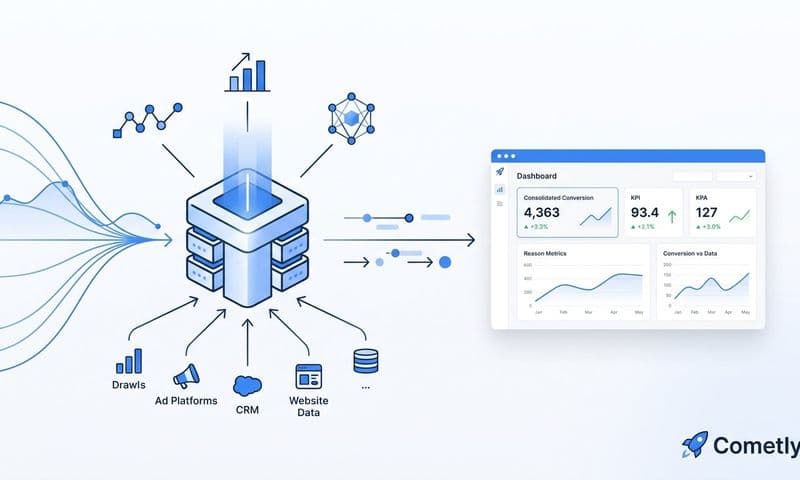
Cometly connects your ad platforms, CRM, and website tracking into a single unified view. Server-side tracking captures reliable conversion data that bypasses browser limitations. Multi-touch attribution shows you which touchpoints drive revenue across the complete customer journey. AI-powered recommendations identify your highest-performing campaigns so you can scale with confidence.
Stop wasting time reconciling spreadsheets. Stop making budget decisions based on incomplete data. Stop feeding your ad platform algorithms partial information that leads to suboptimal targeting.
Ready to elevate your marketing game with precision and confidence? Discover how Cometly's AI-driven recommendations can transform your ad strategy—Get your free demo today and start capturing every touchpoint to maximize your conversions.