You're running campaigns across Meta, Google, TikTok, and LinkedIn. Conversions are happening. Revenue is coming in. But when you pull reports to understand which campaigns actually drove those results, the numbers don't add up.
Meta claims credit for 150 conversions. Google Ads says it drove 120. Your analytics platform shows 100 total conversions. Each platform tells a different story about the same customer actions, and you're left wondering which data to trust when making budget decisions.
This isn't a technical glitch—it's the reality of modern marketing attribution. Customer journeys have become increasingly complex, spanning multiple devices, platforms, and sessions over days or weeks. Yet most attribution approaches were designed for a simpler era when buyers followed more linear paths to purchase. The result is systematic blind spots in your marketing data that make it nearly impossible to know what's actually working.
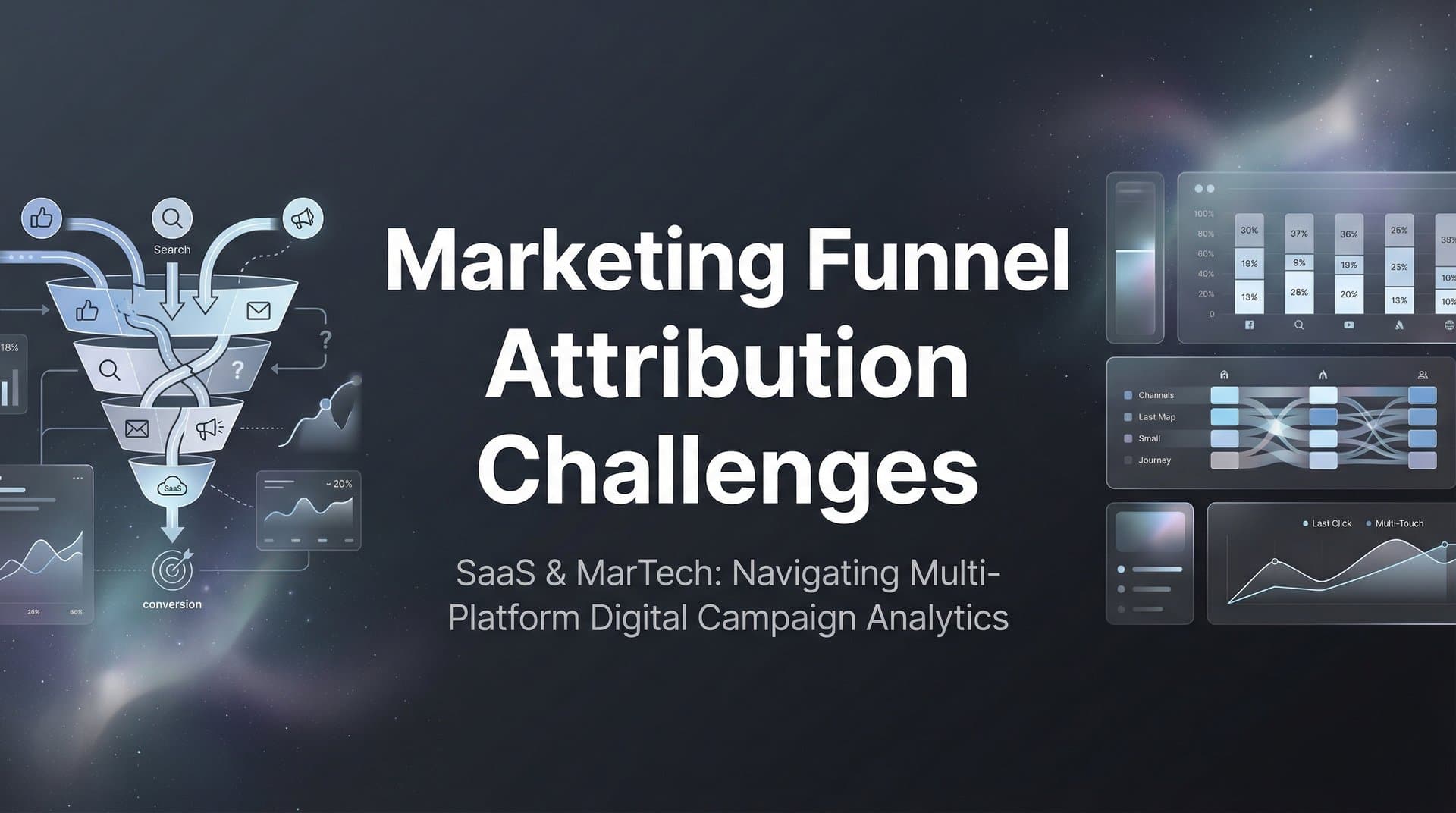
Understanding why attribution breaks down at each stage of the funnel—and what you can do about it—is critical for making confident marketing decisions. Let's break down where attribution fails and how to fix it.
The Disconnect Between Customer Journeys and Attribution Models
Modern buyers don't follow neat, linear paths to conversion. They discover your brand through a social ad, research you via organic search, read reviews on third-party sites, click a retargeting ad, visit directly days later, and finally convert after receiving an email. That's six touchpoints across multiple platforms and devices—and it's a relatively simple journey.
Traditional attribution models weren't built for this reality. First-touch attribution gives all credit to that initial social ad, ignoring everything that happened afterward. Last-touch attribution rewards only the final email, as if the previous five touchpoints didn't matter. Both approaches systematically misrepresent which marketing activities actually drive conversions.
Multi-touch attribution models attempt to solve this by distributing credit across multiple touchpoints. Linear models split credit evenly. Time-decay models give more weight to recent interactions. Position-based models emphasize first and last touches while acknowledging the middle. These approaches are more sophisticated, but they still struggle with a fundamental problem: they can only attribute credit to touchpoints they can actually track.
And that's where the real breakdown happens. When a customer switches from their phone to their laptop, most tracking breaks. When they use different browsers, the connection is lost. When they clear cookies, interact through an app, or use privacy features, touchpoints disappear from the attribution chain. The customer journey continues, but your ability to track it doesn't.
This creates systematic blind spots that skew your understanding of campaign performance. Awareness campaigns that introduce customers to your brand often get zero credit because the conversion happens weeks later through a different channel. Mid-funnel nurture efforts that move prospects closer to purchase remain invisible if they don't result in immediate clicks. Bottom-funnel tactics like branded search and retargeting appear exceptionally effective because they're the last trackable touchpoint before conversion—even though they're capturing demand created by earlier campaigns.
The gap between how customers actually behave and how attribution tools track them isn't just a minor data quality issue. It fundamentally distorts your understanding of marketing effectiveness, leading to budget allocation decisions that starve effective campaigns while over-investing in tactics that simply harvest demand created elsewhere. Understanding what a marketing attribution model is helps clarify why these disconnects occur.
Top-of-Funnel Tracking: Where Awareness Campaigns Get Lost
Brand awareness campaigns face a unique attribution challenge: they work, but their impact is nearly impossible to measure with traditional tracking. When you run YouTube video ads, display campaigns, or social media brand awareness placements, you're introducing your company to potential customers who may not convert for weeks or months. By the time they do convert, the connection to that initial awareness touchpoint has often been lost.
Consider a typical scenario. A potential customer sees your YouTube ad while researching solutions in their industry. They don't click—they're not ready to buy yet. Two weeks later, they search for your brand name on Google, click your ad, and convert. Last-click attribution gives all credit to that branded search ad. But the YouTube campaign created the awareness that made them search for you in the first place.
This problem has intensified dramatically with privacy changes. Apple's App Tracking Transparency framework prevents cross-app tracking on iOS unless users explicitly opt in—and most don't. When someone sees your Instagram ad on their iPhone but converts later on their laptop, that connection is lost. Browser-based tracking faces similar challenges with cookie restrictions and privacy features that block tracking pixels.
The result is that top-of-funnel campaigns appear far less effective than they actually are. Your awareness campaigns might be driving significant downstream conversions, but if those conversions are attributed to direct traffic, branded search, or other last-touch channels, you'll never know. Many marketers have cut successful awareness spend because the data showed poor performance—not realizing they were eliminating the campaigns that filled their pipeline.
Cross-device behavior compounds this issue. Buyers discover brands on mobile devices where they're scrolling social media, but often convert on desktop where they can properly evaluate solutions and complete purchase processes. Without proper cross-device tracking, the mobile awareness touchpoint that started the journey remains invisible in attribution reports.
This creates a dangerous cycle. Awareness campaigns get cut because they don't show direct conversions. Pipeline shrinks. Bottom-funnel campaigns that previously converted awareness-generated demand now have fewer prospects to convert. Overall performance declines, but the root cause—cutting effective awareness spend—remains hidden because the attribution data never showed its true value. These are among the most common attribution challenges in marketing that teams face today.
Mid-Funnel Complexity: The Attribution Black Hole
The consideration phase is where attribution breaks down most completely. This is when prospects are actively evaluating solutions, engaging with multiple touchpoints, and moving closer to a decision. It's also where tracking becomes most fragmented and attribution most unreliable.
Think about what happens during consideration. A prospect clicks your retargeting ad and visits your pricing page. They don't convert, but they sign up for your email list. Over the next week, they receive three nurture emails, clicking through to read case studies and feature comparisons. They see another retargeting ad. They visit your site directly to watch a product demo. Finally, they convert after clicking a promotional email.
How should credit be distributed across those touchpoints? Traditional multi-touch models attempt to answer this, but they face a fundamental problem: they can only attribute credit to interactions they can track. If the prospect cleared cookies between visits, used different devices, or interacted through channels that don't share data, many of those touchpoints won't appear in your attribution reports.
Platform-specific attribution creates additional confusion during this phase. Meta's attribution window might show that prospect as a conversion driven by retargeting ads. Google Analytics might attribute the conversion to email. Your email platform claims credit for the promotional email that drove the final click. Each platform is technically correct within its own tracking methodology, but none of them show the complete picture.
This fragmentation makes it nearly impossible to understand true mid-funnel performance. Which touchpoints actually moved prospects closer to conversion? Which campaigns are effective at nurturing consideration? You can't answer these questions when your data is split across platforms that don't communicate with each other. A proper multi-touch marketing attribution platform can help unify this fragmented data.
B2B companies face even greater mid-funnel attribution challenges. Sales cycles often span weeks or months. Multiple stakeholders get involved, each researching independently across different devices and channels. A marketing manager might discover your solution through a LinkedIn ad, but the VP who ultimately approves the purchase might research you entirely through organic search and direct visits. Traditional attribution tools struggle to connect these separate research paths to a single account-level conversion. This is why understanding common attribution challenges in B2B marketing is essential for enterprise teams.
The long time lag between mid-funnel touchpoints and final conversion creates additional problems. Attribution windows—the period during which platforms track and credit touchpoints—often don't extend long enough to capture early consideration activities. A prospect who engages with your content marketing in January but doesn't convert until March may fall outside standard attribution windows, making that early engagement invisible in your reports.
Bottom-of-Funnel Distortions: When Last-Click Steals the Credit
Last-click attribution creates a systematic bias that over-rewards bottom-funnel tactics while undervaluing the campaigns that actually create demand. This distortion is particularly dangerous because it appears to show clear cause and effect: someone clicked an ad and converted, therefore that ad drove the conversion. But this logic ignores everything that happened before that final click.
Branded search campaigns are the perfect example. When someone searches for your company name and clicks your ad, that's typically the last touchpoint before conversion. Last-click attribution gives full credit to that branded search ad. But people don't spontaneously search for brands they've never heard of—they search for you because earlier campaigns created awareness and interest.
The same pattern applies to retargeting campaigns. When you show ads to people who have already visited your site, conversion rates are naturally higher than cold prospecting. But retargeting doesn't create demand—it captures demand created by earlier touchpoints. Last-click attribution makes retargeting appear exceptionally effective while the awareness and consideration campaigns that filled the retargeting audience get no credit.
This creates a dangerous feedback loop. Marketers see strong performance from branded search and retargeting, so they shift budget toward these tactics. Awareness and mid-funnel campaigns get cut or reduced. Initially, performance might stay steady because you're still harvesting demand created by previous awareness spending. But over time, the pipeline dries up. Fewer new prospects enter the funnel, retargeting audiences shrink, and branded search volume declines because fewer people know about you.
By the time overall performance drops, the connection to the budget cuts made months earlier isn't obvious. Many marketers respond by doubling down on bottom-funnel tactics—after all, that's where the data shows conversions happening. This accelerates the decline, creating a downward spiral that's difficult to reverse. Conducting thorough marketing funnel attribution analysis helps identify these distortions before they damage performance.
Understanding true bottom-funnel performance requires connecting conversion data back to revenue outcomes and original touchpoints. A conversion attributed to branded search might come from a high-value customer whose lifetime value justifies significant acquisition costs. Or it might be a low-value customer who would have converted anyway through organic search. Without connecting conversions to actual business outcomes, you're optimizing for volume rather than value.
CRM integration becomes critical here. When you can track which conversions turn into qualified leads, which leads become customers, and which customers generate meaningful revenue, you can work backward to understand which campaigns actually drive business results. A campaign that shows modest conversion numbers in Google Analytics might be your top revenue driver when you connect it to closed deals in your CRM. Effective channel attribution in digital marketing revenue tracking requires this level of integration.
Technical Barriers That Break Attribution Accuracy
Even the best attribution model can't work without accurate tracking data. And modern privacy changes have degraded client-side tracking significantly, creating technical barriers that break attribution at its foundation.
Browser-based tracking relies on cookies and pixels that fire when users visit your site or interact with your ads. This approach worked reasonably well when browsers allowed unrestricted third-party cookies and tracking scripts. But that era is ending. Safari blocks third-party cookies by default. Firefox does the same. Chrome has announced plans to phase out third-party cookies, though implementation timelines have shifted.
Ad blockers compound these challenges. A significant percentage of internet users run browser extensions that prevent tracking pixels from firing. When someone visits your site with an ad blocker enabled, your analytics tools may not record the visit at all. They certainly won't capture which ad campaign drove that visit. That person might convert, but the conversion appears as direct traffic with no attribution to the marketing touchpoint that actually drove it.
Mobile app tracking faces even more severe restrictions. Apple's App Tracking Transparency requires apps to request permission before tracking users across apps and websites. Most users decline. This means that if someone sees your ad in a mobile app like Instagram or TikTok, then later converts on your website, the connection between that ad impression and the conversion is lost unless you've implemented more sophisticated tracking approaches.
Server-side tracking offers a more reliable alternative. Instead of relying on browser-based pixels that can be blocked or restricted, server-side tracking captures events directly from your server when users interact with your site. This approach bypasses many browser restrictions and ad blockers because the tracking happens on the backend rather than the client side. Understanding attribution challenges in digital marketing helps teams prioritize which technical solutions to implement first.
But implementing server-side tracking requires technical infrastructure that many companies lack. You need to set up server-side tracking containers, configure event forwarding, and ensure your server can handle the additional processing load. The setup is more complex than dropping a pixel on your site, which is why many marketers still rely on client-side tracking despite its limitations.
Data silos create another major technical barrier. Your ad platforms, analytics tools, CRM, and email marketing system all collect data about customer interactions. But they don't automatically share that data with each other. Meta knows which ads someone clicked. Google Analytics knows which pages they visited. Your CRM knows which leads converted to customers. But without integration between these systems, you can't connect the dots to understand the complete customer journey.
Building these integrations is technically challenging and time-consuming. Each platform has different APIs, data formats, and rate limits. Maintaining these connections as platforms update their systems requires ongoing technical resources. Many companies struggle to achieve the unified data view necessary for accurate attribution simply because the technical barriers to integration are so high.
Building an Attribution Approach That Actually Works
Solving attribution challenges requires both technical infrastructure and strategic thinking. You need proper tracking to capture touchpoints accurately, but you also need the right attribution models and analytical approaches to interpret that data correctly.
Start with server-side tracking implementation. This addresses the most fundamental technical barrier—the degradation of browser-based tracking. Server-side tracking captures events that client-side pixels miss, providing a more complete view of customer interactions. While setup is more complex than traditional pixel-based tracking, the improvement in data accuracy justifies the investment. Focus on tracking critical conversion events first, then expand to capture the full customer journey as your implementation matures.
Connect your ad platform data with CRM and revenue outcomes. This is where attribution moves from tracking clicks to measuring business impact. When you can see which campaigns drive qualified leads that turn into paying customers, you can make budget allocation decisions based on actual ROI rather than surface-level metrics like click-through rates or cost per conversion. For B2B companies especially, this connection is critical because the gap between ad click and closed deal can span months. The best marketing attribution tools for B2B SaaS companies prioritize this CRM integration.
Implement multi-touch attribution models that reflect your actual customer journey. If your sales cycle is short and customers typically convert quickly, a time-decay model that emphasizes recent touchpoints might work well. If you have a longer consideration phase with multiple stakeholders, a position-based model that credits both first and last touches while acknowledging the middle might be more appropriate. The key is choosing a model that aligns with how your customers actually buy, not just defaulting to last-click because it's the simplest option.
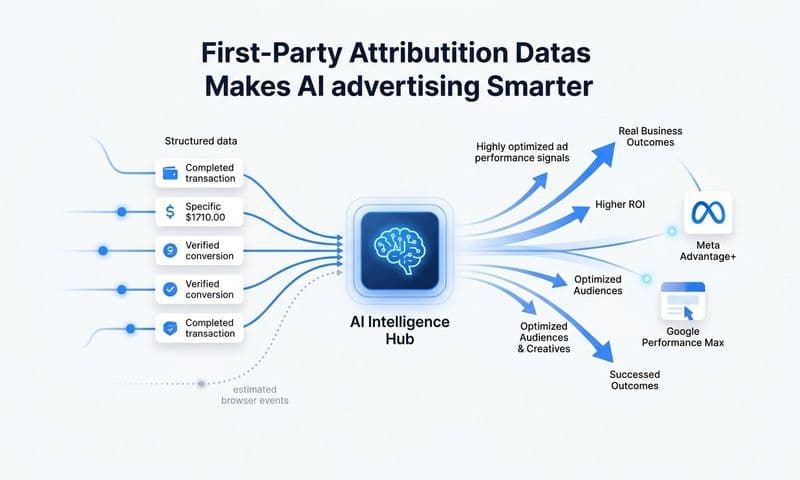
Feed enriched conversion data back to ad platforms. Modern ad platforms use machine learning to optimize campaigns, but they can only optimize based on the conversion data you send them. When you connect CRM data and send back information about which conversions became qualified leads or paying customers, you give ad platforms better signals to optimize toward. This improves both attribution accuracy and campaign performance—platforms learn which audiences and creative approaches drive valuable conversions, not just any conversions.
Use platform-agnostic analytics tools that unify data across channels. Rather than trying to reconcile conflicting reports from Meta, Google, and other platforms, implement a centralized attribution system that tracks touchpoints across all channels using consistent methodology. This doesn't mean platform-specific reporting becomes useless—it's still valuable for optimization within each platform—but you need a unified view for strategic budget allocation decisions. Exploring the best AI-powered marketing attribution tools can help automate this unification process.
Platforms like Cometly address these challenges by connecting ad platforms, CRM, and website tracking to capture the complete customer journey. Server-side tracking ensures touchpoints aren't lost to browser restrictions. Multi-touch attribution models show which campaigns actually drive revenue. And conversion sync feeds enriched data back to ad platforms, improving their optimization algorithms while giving you clearer visibility into what's working.
Moving Forward: The Future of Attribution
Perfect attribution may not exist. Customer journeys are simply too complex, involving too many touchpoints across too many channels and devices, for any system to track with complete accuracy. But dramatically better attribution is absolutely achievable—and it's essential for making confident marketing decisions in an increasingly complex digital landscape.
The attribution challenges we've explored—from top-of-funnel awareness campaigns that get lost, to mid-funnel complexity that creates data black holes, to bottom-funnel distortions that over-reward last-click tactics—all stem from the same root causes. Technical tracking limitations prevent you from seeing the complete customer journey. Data silos keep critical information locked in separate platforms. And outdated attribution models fail to reflect how modern buyers actually make decisions.
Solving these challenges requires investment in both infrastructure and strategy. You need technical solutions like server-side tracking and platform integrations to capture accurate data. You need strategic approaches like multi-touch attribution and CRM connection to interpret that data correctly. And you need analytical discipline to look beyond surface-level metrics and understand true business impact.
The good news is that AI-powered attribution tools are making this increasingly accessible. What once required massive technical resources and data science expertise can now be achieved through platforms that automatically unify data, apply sophisticated attribution models, and surface actionable insights. These tools analyze complex customer journeys that would be impossible to parse manually, identifying patterns and opportunities that remain hidden in fragmented platform reports.
As privacy regulations continue to evolve and tracking becomes more challenging, the companies that invest in proper attribution infrastructure will gain significant competitive advantage. They'll know which campaigns actually drive revenue, allowing them to scale what works while cutting what doesn't. They'll avoid the dangerous feedback loops that result from over-investing in bottom-funnel tactics while starving the awareness campaigns that fill the pipeline. And they'll make budget allocation decisions with confidence rather than guesswork.
Ready to elevate your marketing game with precision and confidence? Discover how Cometly's AI-driven recommendations can transform your ad strategy—Get your free demo today and start capturing every touchpoint to maximize your conversions.