
Most healthcare marketers are flying blind. You're spending thousands on Google Ads and Meta campaigns, watching form submissions roll in, and assuming your marketing is working. Then you dig deeper and realize half those leads never answer their phone. A quarter never show up for their scheduled appointments. And you have absolutely no idea which ad campaign brought in your highest-value patients.
This isn't just frustrating—it's expensive. Without proper tracking, you're making budget decisions based on incomplete data. That Facebook campaign that generated 50 leads last month? It might have produced zero actual appointments. Meanwhile, the Google Ads campaign you nearly cut could be driving your most valuable patient conversions.
The healthcare marketing landscape makes tracking particularly challenging. Patient journeys span weeks or months, not hours. Conversions happen across multiple channels—online forms, phone calls, walk-ins, and appointment booking systems that rarely talk to each other. Privacy regulations add another layer of complexity, making traditional browser-based tracking less reliable than ever.
This guide shows you how to build a marketing tracking system that captures the complete picture. You'll learn to connect your ad platforms, website, CRM, and appointment systems into a unified view of marketing performance. By the end, you'll know exactly which campaigns drive real revenue, not just vanity metrics.
Step 1: Map Your Patient or Client Journey Before Touching Any Tools
The biggest mistake healthcare marketers make is jumping straight into tool setup without understanding their actual patient journey. You need to map the entire path from first ad impression to revenue-generating action before configuring a single tracking pixel.
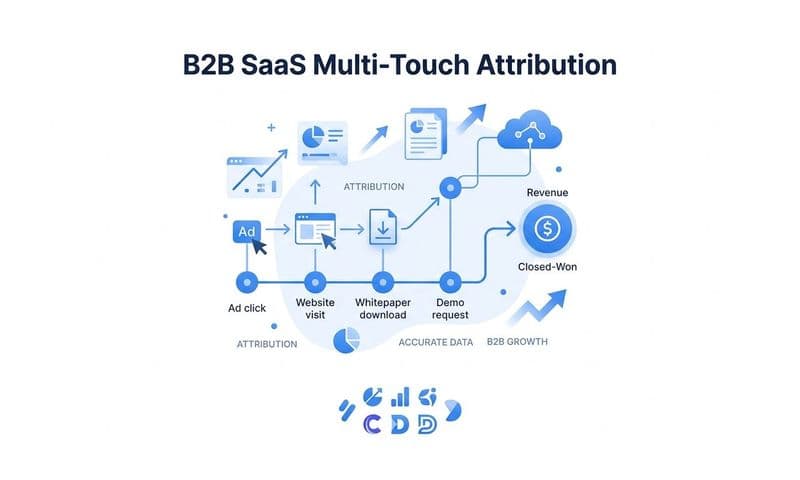
Start by identifying every touchpoint a potential patient encounters. This typically includes ad impressions across Meta and Google, website visits, content downloads, form submissions, phone calls, email sequences, appointment bookings, and the actual appointment or purchase. Write down each step in sequence.
Document the typical timeline for your specific healthcare service. Elective procedures like cosmetic treatments might see conversions within days, while complex medical decisions can take 60 to 90 days from first research to booking. Understanding this timeline prevents you from prematurely cutting campaigns that haven't had time to generate results.
Next, list every platform currently involved in your marketing and sales process. This usually includes ad platforms like Meta Ads and Google Ads, your website analytics, landing page builders, form tools, phone systems, appointment scheduling software, CRM platforms, and any email marketing tools. Each represents a potential data silo.
Create a simple flowchart showing where data currently gets lost. In most healthcare marketing setups, the breakdown happens between online and offline conversions. Someone clicks your ad, visits your website, then calls to book an appointment—and your ad platform never learns that conversion happened. Or a patient fills out a form but never shows up for their appointment, yet your reporting counts them as a successful conversion.
Identify your most valuable conversion actions. For healthcare organizations, this might be scheduled appointments, completed consultations, procedures booked, or new patient intake forms. Rank these by actual revenue value, not just by how easy they are to track. A phone call that leads to a high-value procedure is worth far more than ten form submissions that never convert. Understanding marketing attribution for phone calls is essential for capturing this data.
This mapping exercise reveals the gaps in your current tracking. You might discover that your CRM captures appointment data but never connects it back to the original ad source. Or that phone calls—potentially your highest-value conversion channel—aren't tracked at all. Understanding these gaps guides your entire tracking implementation strategy.
Step 2: Connect Your Ad Platforms to a Central Tracking Hub
Browser-based tracking pixels are becoming less reliable as privacy restrictions tighten. iOS updates have severely limited Meta's pixel accuracy, and cookie restrictions continue to erode traditional tracking methods. Server-side tracking solves this by capturing conversion data directly from your server, bypassing browser limitations entirely.
Set up server-side tracking as your foundation. This technology captures conversion events from your website or CRM and sends them directly to your ad platforms through server-to-server connections. The data is more accurate, more complete, and unaffected by ad blockers or privacy settings that block browser pixels.
Connect each of your active ad platforms to your attribution system. This typically includes Meta Ads, Google Ads, and potentially LinkedIn Ads or other healthcare-focused platforms. The goal is to create a unified data layer where every ad click, impression, and conversion flows into a central system that can track the complete patient journey.
Configure UTM parameters consistently across all campaigns. Create a standardized naming convention that identifies the source, medium, campaign name, and specific ad or creative. For healthcare marketing, you might structure it as: utm_source=facebook, utm_medium=paid_social, utm_campaign=knee_replacement_awareness, utm_content=video_testimonial_v1. Consistency here is critical—inconsistent UTM parameters create data chaos that makes analysis impossible.
Test your tracking setup before launching any campaigns. Create test conversions by clicking through your ads, filling out forms, and triggering conversion events. Verify that each action appears correctly in your attribution system with the right source attribution. Check that conversion data is flowing back to your ad platforms so their algorithms can optimize properly.
Pay special attention to cross-device tracking. Healthcare research often starts on mobile during a commute or lunch break, then continues on desktop at home. Your tracking system needs to connect these sessions to the same user journey, or you'll systematically undervalue mobile advertising that starts patient journeys even when desktop completes them. Implementing cross platform marketing performance tracking ensures you capture these multi-device journeys.
Configure conversion windows that match healthcare decision timelines. A seven-day click window might work for e-commerce, but healthcare often requires 30 to 90 days from first touch to appointment. Set your attribution windows to capture the full consideration cycle, or you'll miss the campaigns that plant seeds early in the patient journey.
Verify that your tracking captures both online and offline conversions. If patients can call to book appointments, those phone conversions need to flow into your tracking system just like form submissions. Otherwise, you're only seeing half the picture and making decisions on incomplete data.
Step 3: Integrate Your CRM and Appointment Systems
Your CRM holds the data that matters most—which leads actually become patients and generate revenue. Without connecting it to your marketing tracking, you're optimizing for lead volume instead of lead quality. That's a recipe for wasted ad spend on channels that generate junk traffic.
Connect your CRM to your attribution system so conversion data flows both directions. When someone fills out a form on your website, that lead should instantly appear in your CRM with full attribution data showing which ad, campaign, and channel brought them in. When that lead books an appointment or becomes a patient, that conversion should flow back to your attribution system and ad platforms.
Set up conversion events for every meaningful action in your patient journey. This includes form submissions, phone calls, appointment bookings, appointment completions, follow-up visits, and procedures scheduled. Each represents a different level of intent and value, and your tracking should capture all of them. A robust marketing performance tracking system makes this integration seamless.
Map CRM stages to marketing touchpoints so you can analyze conversion quality by source. Create fields in your CRM that capture the original ad source, campaign, and creative for every lead. Then track how leads from different sources progress through your funnel. You might discover that Google Ads leads book appointments at twice the rate of Meta leads, even if Meta generates higher lead volume.
Configure revenue tracking if you have access to patient or client lifetime value data. Some healthcare organizations can track actual revenue per patient in their CRM or practice management systems. Connecting this data to your marketing attribution transforms your optimization from "which campaigns generate leads" to "which campaigns generate profitable patients." That's a game-changing shift.
Set up automated lead scoring based on conversion likelihood. Your CRM can assign scores based on how leads from different sources historically convert. Leads from high-converting campaigns get higher scores and more aggressive follow-up, while low-quality sources get deprioritized. This ensures your team focuses energy where it matters most.
Create feedback loops between your marketing and patient intake teams. Your front desk staff know which leads are serious versus which are tire-kickers. Capture that qualitative feedback in your CRM and connect it back to ad sources. Platforms focused on revenue tracking help you tie this feedback directly to campaign performance.
Step 4: Implement Multi-Touch Attribution Across Channels
Last-click attribution is killing your healthcare marketing ROI. It gives 100% credit to the final touchpoint before conversion, completely ignoring the awareness and consideration campaigns that made that conversion possible. For healthcare services with 30 to 90 day consideration cycles, this systematically undervalues your top-of-funnel marketing.
Choose an attribution model that reflects healthcare's longer decision journey. Time decay attribution gives more credit to recent touchpoints while still valuing earlier interactions. Position-based attribution splits credit between first and last touch, recognizing both the campaign that started the journey and the one that closed it. Linear attribution distributes credit evenly across all touchpoints. Our multi-touch marketing attribution platform guide breaks down each model in detail.
Set up tracking for the full funnel, not just bottom-funnel conversions. Capture awareness-stage actions like content downloads and video views, consideration-stage actions like multiple page visits and comparison tool usage, and decision-stage actions like appointment requests and phone calls. Understanding the complete journey reveals which campaigns move patients through each stage.
Compare how different attribution models value your channels. Run reports showing the same campaigns under last-click, first-click, linear, and time decay models. You'll often discover that awareness campaigns look terrible under last-click but show strong performance under first-click or linear models. This reveals hidden value in channels you might otherwise cut.
Identify which touchpoints consistently appear in high-value conversion paths. Look for patterns—do your best patients typically watch a video ad, visit your blog, then book a consultation? Or do they click a search ad and convert immediately? These patterns inform both your attribution model and your campaign strategy.
Pay attention to assist conversions, not just last-click conversions. A campaign might rarely get credit for the final click but appear in 70% of conversion paths as an earlier touchpoint. That campaign is valuable even if last-click attribution makes it look worthless. Multi-touch attribution surfaces these hidden contributors. Learn more about attribution tracking for multiple campaigns to maximize this insight.
Adjust your model as you gather data. Start with a conservative approach like time decay, then refine based on what you learn about your actual patient journeys. The right attribution model matches how your patients actually make decisions, not some theoretical framework.
Step 5: Feed Better Data Back to Your Ad Platforms
Your ad platforms use machine learning to optimize campaign performance, but they can only optimize for the data they receive. If you're only sending them form submissions without telling them which leads actually became patients, their algorithms optimize for junk traffic. Feeding back quality conversion data transforms campaign performance.
Set up conversion sync to send enriched data back to Meta, Google, and other platforms. When someone books an appointment or becomes a patient, send that conversion event back to the ad platform that brought them in. Include the conversion value if possible, so algorithms can optimize for revenue instead of just conversion volume. Understanding first party data tracking for ads is critical for this process.
Configure offline conversion imports for phone calls and in-person appointments. These conversions happen outside the browser, but they're often your most valuable actions. Use your attribution system to match phone calls and appointments back to their original ad source, then import those conversions into your ad platforms. This completes the feedback loop.
Help ad platform algorithms optimize for actual revenue, not just clicks or form fills. When Meta's algorithm knows that leads from a specific ad creative convert to appointments at twice the rate of other creatives, it can automatically show that creative to more high-intent users. This compounds over time as the algorithm learns what works.
Send conversion events with appropriate time delays to match your sales cycle. If it takes 30 days on average from first click to booked appointment, configure your conversion sync to send those delayed conversions back to ad platforms. This trains the algorithm on the full timeline, not just immediate actions.
Monitor how improved data quality affects your campaign performance over time. You should see cost per acquisition decrease and conversion rates improve as ad platforms learn to target better prospects. Track these metrics week over week to quantify the impact of feeding back quality conversion data. Mastering tracking ROI for performance marketing helps you measure these improvements accurately.
Use conversion value optimization when possible. If you can assign dollar values to different conversion types—a consultation worth $200, a procedure booking worth $3,000—send those values to your ad platforms. This enables value-based bidding strategies that maximize revenue instead of just conversion volume.
Step 6: Build Dashboards That Show Real Marketing ROI
All this tracking means nothing if you can't easily analyze the data and make decisions. Build dashboards that connect ad spend directly to revenue-generating actions, not vanity metrics that make you feel good but don't drive business results.
Create views that show cost per acquisition at each funnel stage. Track cost per form submission, cost per scheduled appointment, cost per completed appointment, and cost per new patient. This reveals where your funnel leaks and which channels deliver quality at each stage. A channel with high cost per lead might have low cost per actual patient if lead quality is exceptional. The right marketing performance tracking software makes building these views straightforward.
Set up automated reporting for weekly and monthly performance reviews. Configure dashboards to email summaries showing spend by channel, conversions by type, cost per acquisition trends, and revenue attribution. Make data review a regular habit instead of something you do quarterly when budgets are due.
Track performance across multiple attribution models simultaneously. Build dashboard views showing the same campaigns under last-click, first-click, and your chosen multi-touch model. This prevents over-reliance on any single perspective and helps you understand the full value of each channel.
Use AI-powered insights to identify optimization opportunities across channels. Modern attribution platforms can automatically surface patterns like "Video ads on Meta assist 60% of Google Search conversions" or "Phone calls from this campaign convert at 3x the average rate." These insights reveal optimization opportunities you'd never spot manually. Explore the best data visualization tools for marketing analytics to surface these patterns effectively.
Compare performance across patient types or service lines if you offer multiple healthcare services. Your tracking should segment conversions by service type so you can see which channels work best for cosmetic procedures versus medical treatments, or new patient acquisition versus existing patient retention.
Build alerts for significant performance changes. Configure notifications when cost per acquisition spikes above acceptable thresholds, when conversion rates drop significantly, or when high-performing campaigns hit budget caps. This enables proactive optimization instead of reactive damage control.
Putting It All Together: Your Marketing Tracking Checklist
With these six steps complete, you now have a tracking system that shows the true ROI of your healthcare marketing efforts. No more guessing which campaigns drive real patients. No more wasting budget on channels that generate leads but not revenue.
Here's your quick checklist to verify your setup is complete:
Patient journey mapped with all touchpoints identified from first ad impression through revenue-generating action.
Ad platforms connected with server-side tracking active, bypassing browser limitations and privacy restrictions.
CRM integrated with conversion events at each funnel stage, from form submission through appointment completion.
Multi-touch attribution configured for your consideration cycle, revealing the full value of awareness and consideration campaigns.
Conversion sync feeding quality data back to ad platforms, training their algorithms to find your best patients.
Dashboards showing cost per acquisition and revenue by channel, making optimization decisions obvious.
The next step is to let your system collect data for two to four weeks, then analyze which channels and campaigns drive your highest-value conversions. Look for patterns in conversion paths. Identify which touchpoints consistently appear before appointments. Compare attribution models to understand the full value of each channel.
From there, you can confidently scale winning campaigns and reallocate budget from underperformers. You'll know with certainty which creative messages resonate, which audiences convert, and which channels deserve more investment. That confidence transforms your marketing from educated guessing into data-driven growth.
Ready to elevate your marketing game with precision and confidence? Discover how Cometly's AI-driven recommendations can transform your ad strategy. Get your free demo today and start capturing every touchpoint to maximize your conversions.