You launch a Facebook campaign. The metrics look decent—clicks are coming in, engagement is solid. But conversions? Barely a trickle. You start second-guessing the creative, the targeting, maybe even the product itself.
Then you check your CRM three weeks later and discover something infuriating: dozens of new customers who saw that exact ad before walking into your store or calling your sales team. Revenue is flowing. Real revenue. But your ad platform? It shows nothing. Zero credit. Zero conversions.
This isn't a tracking glitch. It's a fundamental blind spot in how most businesses measure marketing performance. When customer journeys blend digital and physical touchpoints—and they almost always do—traditional attribution falls apart. The result? You're making budget decisions based on incomplete data, potentially cutting campaigns that are actually driving your most valuable customers.
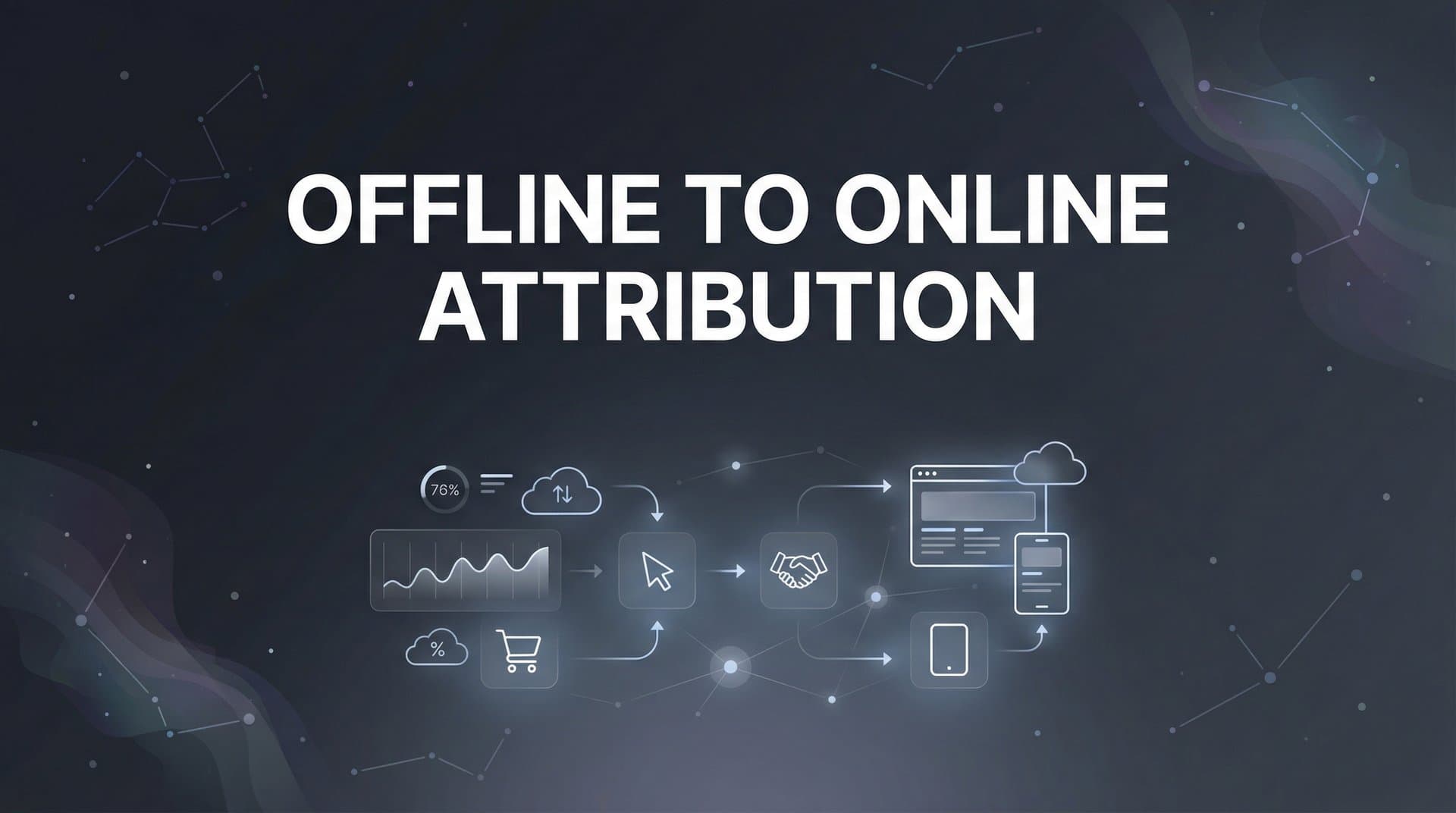
Offline to online attribution solves this disconnect. It's the system that connects what happens in the real world—store purchases, phone orders, sales meetings—back to the digital touchpoints that influenced them. As customer behavior becomes increasingly omnichannel, this capability has shifted from "nice to have" to absolutely essential for accurate performance measurement.
The Hidden Revenue Gap in Your Marketing Data
Offline to online attribution is the process of connecting offline conversions—in-store purchases, phone orders, sales rep closes, appointment bookings—back to the digital marketing touchpoints that influenced those actions. It answers the question: which ads, emails, or website visits led to this real-world transaction?
Without this connection, your attribution system only sees part of the story. Someone clicks your Google ad, researches your product, then drives to your physical location to make a purchase. From your ad platform's perspective, that click went nowhere. It looks like a failed touchpoint when it actually started a journey that ended in revenue.
Traditional digital attribution operates in a closed loop. It tracks clicks, page views, form fills, and online purchases—actions that happen entirely within the digital ecosystem where tracking pixels and cookies can follow every move. The moment a customer steps offline, that tracking breaks. Your attribution system loses the thread.
The business impact of this gap is significant. Campaigns that appear to underperform may actually be driving substantial offline revenue. You might be cutting budgets on Facebook ads that are filling your appointment calendar, or reducing spend on Google campaigns that are driving store traffic. Meanwhile, campaigns that look successful based on online metrics might be generating low-quality leads that never convert offline.
This creates a dangerous cycle. You optimize for what you can measure—online conversions—while the real revenue drivers go unrecognized. Budget flows toward campaigns with visible digital conversions, even if those conversions are lower-value than the offline sales you're missing. Over time, your entire marketing strategy skews toward a partial view of customer behavior.
The challenge intensifies as customer journeys become more complex. A typical path might include seeing a social ad, visiting your website twice, reading email content, then finally calling your sales team or visiting a location. Without offline attribution, you only capture the digital portion of this journey. The final, revenue-generating action—the one that actually matters—remains invisible to your marketing attribution analytics.
How Customer Identity Connects Digital Clicks to Physical Purchases
The technical foundation of offline to online attribution is customer identity matching. You need a way to connect anonymous website visitors to the known customers who later make offline purchases. This matching process is what allows you to draw a line from digital touchpoint to offline conversion.
Think of it like connecting dots across two separate systems. Your marketing platform knows that someone with a specific cookie ID clicked your ad and visited your website. Your CRM or point-of-sale system knows that a customer named Sarah Johnson made a purchase in your store. Offline attribution connects these two pieces of information by finding a common identifier—email address, phone number, loyalty card ID—that exists in both systems.
The matching process typically works through several data points. When someone fills out a form on your website, subscribes to your email list, or creates an account, they provide identifying information. Your attribution platform captures this data and links it to their anonymous browsing history—all those ad clicks and page views that happened before they identified themselves.
Later, when that same person makes an offline purchase, your CRM records their identifying information along with the transaction details. Your attribution system can now match the CRM record to the earlier digital activity, completing the connection between online touchpoint and offline conversion.
CRM integration is where this matching becomes automated and scalable. Instead of manually connecting individual customers, your attribution platform continuously syncs with your CRM or POS system. When new offline transactions flow into your CRM, the attribution system automatically searches for matching digital activity and attributes the conversion to the appropriate touchpoints.
Server-side tracking enhances this process by capturing more reliable data. Rather than relying solely on browser-based tracking that can be blocked by ad blockers or privacy settings, server-side tracking records events directly from your server. When a customer completes an offline action, your server sends that conversion event to your attribution platform along with identifying information, creating a more complete and accurate picture.
Time windows play a crucial role in attribution accuracy. You need to define how far back the system should look when connecting offline conversions to digital touchpoints. A customer who clicked your ad six months ago and just now made a purchase probably wasn't influenced by that ancient click. But someone who engaged with your content last week and bought yesterday? That's a clear connection.
Most attribution systems use lookback windows—typically ranging from 7 to 90 days—to determine which touchpoints get credit for a conversion. The appropriate window depends on your sales cycle. B2B companies with long decision processes might use 90-day windows, while retail businesses might use 14 or 30 days. Setting these windows correctly ensures you're attributing conversions to genuinely influential touchpoints, not coincidental interactions.
Practical Methods for Capturing Offline Conversions
The simplest approach to offline attribution is manual CRM uploads. You export offline sales data from your CRM or POS system—typically as a CSV file containing customer identifiers and transaction details—then import this data into your ad platforms or attribution tool. The platform matches the offline conversions to existing customer profiles and attributes them to prior digital touchpoints.
This method works well for businesses with lower transaction volumes or those just starting with offline attribution. The process is straightforward and doesn't require complex technical integration. However, it's time-intensive and creates lag between when conversions happen and when they appear in your attribution data. You're always looking at slightly outdated information, which limits your ability to optimize campaigns in real time.
Server-side tracking and API connections provide automated, real-time syncing between your CRM or POS system and your marketing platforms. Through direct API integrations, offline conversion data flows automatically from your sales system to your attribution platform as transactions occur. No manual exports, no delays, no risk of forgetting to upload a file.
This approach requires more initial setup—you need technical resources to configure the API connections and ensure data flows correctly. But once implemented, it creates a seamless attribution system that updates continuously. When a customer makes an in-store purchase at 2 PM, that conversion can appear in your attribution platform minutes later, attributed to the Facebook ad they clicked three days earlier.
Unique identifiers and promotional codes offer a direct tracking method that doesn't require sophisticated identity matching. You assign specific codes to different campaigns—"FACEBOOK20" for your Facebook campaign, "GOOGLE15" for Google ads—and ask customers to provide these codes at purchase. When someone uses a code, you know exactly which campaign drove that sale.
This method is particularly effective for phone orders and in-person transactions where you can ask customers how they heard about you. Train your sales team or store staff to capture this information consistently. The attribution is explicit and undeniable—no matching algorithms required.
The limitation is that it relies on customer compliance. Not everyone remembers to mention a code, and some customers might have seen multiple campaigns before purchasing. You're capturing direct-response conversions clearly, but you might miss the influence of earlier touchpoints in the customer journey.
Many businesses use a combination of these methods. Promotional codes capture obvious direct-response conversions. Automated CRM syncing catches conversions where customers don't mention a code but can be matched through email or phone number. Manual uploads fill gaps for edge cases or special transaction types. The goal is comprehensive coverage—capturing as many offline conversions as possible and connecting them to their digital origins.
Where Offline Attribution Delivers Maximum Impact
Retail businesses with physical locations face the classic offline attribution challenge. A customer sees your Instagram ad showcasing new arrivals, visits your website to check inventory, then drives to your store to try items on and make a purchase. Your digital analytics show the ad engagement and website visit, but the actual sale—the conversion that matters—happens offline.
For these businesses, offline attribution reveals which digital campaigns are actually driving foot traffic and in-store revenue. You might discover that certain ad creative drives more store visits than online purchases, or that specific geographic targeting brings customers to particular locations. This intelligence allows you to optimize campaigns for in-store performance rather than just online metrics.
B2B companies and SaaS businesses with sales teams operate in a world where marketing generates leads but sales teams close deals. A prospect might download your whitepaper, attend a webinar, and engage with multiple email campaigns before finally scheduling a demo with your sales team. Weeks later, your sales rep closes a five-figure contract.
Without offline attribution, marketing only gets credit for the lead generation—the form fill or demo request. The actual revenue, the closed deal, lives in your CRM but isn't connected back to the marketing touchpoints that nurtured that prospect. Offline attribution bridges this gap, showing which campaigns and content pieces contribute to closed revenue, not just generated leads. Understanding lead generation attribution tracking becomes essential for demonstrating marketing's true impact.
This visibility transforms how B2B marketing teams demonstrate value. Instead of reporting on leads and MQLs, you can show actual revenue attribution. You can prove that your content marketing program influenced $500K in closed deals, or that your paid search campaigns contributed to 30% of this quarter's revenue. This shifts the conversation from marketing as a cost center to marketing as a revenue driver.
Service businesses with phone or in-person bookings—dental practices, law firms, home service companies, consultants—face a similar challenge. Digital marketing drives awareness and interest, but conversions happen through phone calls or appointment bookings that occur outside your digital tracking ecosystem.
A potential patient sees your dental practice's Facebook ad, visits your website to learn about services, then calls your office to book an appointment. That phone call is a conversion, but your ad platform doesn't know about it. Implementing marketing attribution for phone calls captures these conversions and connects them to the digital touchpoints that prompted the call.
Call tracking systems enhance this process by assigning unique phone numbers to different campaigns. When someone calls the number from your Google ad, you know that campaign drove the call. Combined with CRM integration that tracks which calls convert to booked appointments and completed services, you get complete attribution from ad click to revenue.
Building Your Offline Attribution Infrastructure
Setting up offline attribution starts with identifying what data you need to capture at the point of offline conversion. At minimum, you need customer identifying information—email address, phone number, or customer ID—that can be matched to digital activity. You also need transaction details: purchase amount, date, product or service purchased, and any relevant metadata like location or sales rep.
Your CRM or POS system needs to consistently capture these identifiers. If your store staff doesn't routinely collect email addresses or phone numbers at checkout, your matching rate will suffer. If your sales team doesn't log complete information in your CRM, you'll have offline conversions that can't be attributed. The data quality at this stage determines your attribution accuracy.
Train your team to understand why this data matters. A store associate who sees collecting email addresses as annoying busywork is less likely to do it consistently. But when they understand that this information helps the company optimize marketing and ultimately drives more customers to the store, they become partners in the attribution process.
Integration setup connects your offline data sources to your attribution platform. This typically involves API connections between your CRM or POS system and your marketing attribution tool. The specific integration method depends on your technology stack—some platforms offer native integrations, while others require custom API development.
For businesses using platforms like Salesforce, HubSpot, or Shopify POS, many attribution tools offer pre-built integrations that simplify setup. You authenticate the connection, map relevant data fields, and configure sync settings. Companies using HubSpot can explore HubSpot attribution tracking capabilities to streamline this process. For custom CRMs or proprietary systems, you may need developer resources to build the integration.
Server-side tracking implementation enhances your attribution by capturing conversions that browser-based tracking might miss. This involves adding tracking code to your server that sends conversion events directly to your attribution platform when offline sales are recorded. The technical complexity varies, but the payoff is more complete and accurate conversion data.
Testing and validation ensure your offline attribution system is working correctly before you start making decisions based on the data. Start by creating test transactions with known digital touchpoints. Click a specific ad, visit your website, then make an offline purchase using identifiable information. Check whether the conversion appears in your attribution platform and whether it's correctly attributed to the ad click.
Compare your attribution data against your source systems. The total offline revenue in your attribution platform should match the total in your CRM or POS system. If there are significant discrepancies, investigate the matching rate—what percentage of offline conversions are successfully matched to digital activity? Low matching rates indicate data quality issues or integration problems that need resolution. Learning how to fix attribution discrepancies becomes critical for maintaining data integrity.
Monitor the system continuously during the first few weeks. Check daily to ensure conversions are flowing correctly, matching accurately, and attributing to reasonable touchpoints. Look for anomalies—conversions attributed to touchpoints that happened months ago, or obvious purchases that aren't being captured. Early detection of issues prevents bad data from influencing your optimization decisions.
Transforming Attribution Data Into Campaign Performance
Once you're capturing offline conversions, the strategic value comes from feeding this data back to your ad platforms. Facebook, Google, and other advertising systems use conversion data to train their machine learning algorithms. When you only report online conversions, these algorithms optimize for the wrong outcomes. When you feed them complete conversion data including offline sales, they learn to find customers who actually buy from you.
Conversion APIs enable this data flow. Instead of relying on browser pixels that may be blocked or incomplete, you send conversion events directly from your server to the ad platform. When someone makes an offline purchase, your attribution system sends that conversion event to Facebook or Google along with the associated ad click information. The platform's algorithm now knows that this particular ad, targeting, and creative led to a real purchase.
This feedback loop improves targeting over time. The algorithm learns patterns: people who engage with certain content types are more likely to make offline purchases, or specific demographics convert better in-store than online. As the algorithm processes more offline conversion data, it gets better at finding similar high-value prospects, improving your campaign performance without you manually adjusting targeting.
Budget reallocation becomes data-driven rather than guesswork. You might discover that your Google Shopping campaigns drive primarily online sales while your Facebook campaigns drive in-store purchases. Without offline attribution, you'd see Google outperforming Facebook and might shift budget accordingly. With complete data, you realize both channels are valuable—they just drive different conversion types. Understanding Facebook ads attribution vs Google ads attribution helps you evaluate each platform's true contribution.
The reallocation decisions become more nuanced. You're not just looking at cost per conversion; you're evaluating cost per total conversion including offline sales. A campaign with a $50 cost per online conversion might have a $30 cost per total conversion when offline sales are included. That changes your optimization strategy entirely.
Multi-touch attribution reveals the full customer journey from first digital interaction to final offline purchase. You can see how multiple touchpoints work together: a customer discovers you through a Facebook ad, researches on your website, receives an email reminder, then makes an in-store purchase. Each touchpoint played a role, and multi-touch attribution models distribute credit accordingly.
This comprehensive view helps you understand which touchpoints initiate journeys, which ones nurture consideration, and which ones drive final conversions. You might find that display ads rarely get last-click credit but frequently appear early in high-value customer journeys. Without multi-touch attribution including offline conversions, you'd undervalue these awareness-building campaigns.
Use this journey data to optimize your marketing mix. If you see that customers who engage with both paid search and social ads are more likely to convert offline, you can create campaigns that deliberately guide prospects through this path. If certain content types consistently appear in the journeys of high-value offline customers, you can produce more of that content.
Closing the Attribution Loop
Offline to online attribution isn't a luxury feature for businesses with sophisticated marketing teams. It's a fundamental requirement for any company where meaningful conversions happen outside the digital ecosystem. Without it, you're optimizing campaigns based on partial data, potentially cutting your most effective marketing while scaling campaigns that only look good on screen.
The technical implementation has become increasingly accessible. What once required custom development and data engineering teams can now be accomplished through platform integrations and API connections that many attribution tools support natively. The barrier isn't technical complexity—it's recognizing that the gap exists and committing to close it.
Start by auditing your current attribution setup. What percentage of your total revenue happens offline? How many of those offline conversions are currently being connected back to your digital marketing? If you're like most businesses, the answer is probably "very few" or "none." That's your opportunity.
Identify the quick wins. Maybe you can implement promotional codes immediately to start capturing direct-response offline conversions. Perhaps your CRM already collects email addresses, and you just need to set up a weekly upload process. Small steps toward complete attribution deliver immediate value by revealing performance you couldn't see before.
The strategic advantage of offline attribution extends beyond reporting accuracy. When you feed complete conversion data back to ad platforms, you're not just measuring better—you're actively improving campaign performance. The algorithms learn from real outcomes, targeting gets sharper, and your marketing efficiency improves over time.
Ready to elevate your marketing game with precision and confidence? Discover how Cometly's AI-driven recommendations can transform your ad strategy—Get your free demo today and start capturing every touchpoint to maximize your conversions.