You just launched a new Facebook campaign. The numbers look incredible—Facebook's dashboard shows 50 conversions in the first week. You're ready to scale. Then you check your CRM. Only 30 actual sales. Your Stripe account confirms it: 30 transactions, not 50.
What just happened?
This isn't a glitch. It's the new reality of digital advertising. Pixel tracking accuracy problems have become one of the most expensive blind spots in modern marketing. The data you're using to make budget decisions, optimize campaigns, and prove ROI is increasingly unreliable. And most marketers don't realize how deep the problem goes until they've already wasted thousands of dollars scaling campaigns that never actually worked.
The stakes are higher than inflated dashboards and vanity metrics. Inaccurate tracking leads to budget misallocation, degraded ad platform performance, and strategic decisions built on fiction instead of facts. When your pixels lie, your entire marketing strategy suffers. You scale the wrong campaigns. You cut the wrong budgets. You feed incomplete data to ad algorithms that desperately need accurate conversion signals to optimize effectively.
Here's the truth: the tracking infrastructure that powered digital advertising for the past decade is breaking down. Browser-based pixels were built for a different internet—one without privacy restrictions, ad blockers, or cross-device customer journeys. That world no longer exists.
This article will show you exactly why pixel tracking accuracy has collapsed, what it's costing your business, and how modern marketers are solving the problem with server-side tracking and comprehensive attribution. Let's start by understanding what's really happening to your marketing data.
The Hidden Crisis in Your Marketing Data
Pixel tracking seemed simple when it first revolutionized digital advertising. You drop a small JavaScript snippet on your website. When someone completes an action—makes a purchase, submits a form, downloads a resource—the pixel fires. It sends a signal back to your ad platform: "This person converted." The platform records the conversion, attributes it to the ad that drove the click, and uses that data to optimize future campaigns.
For years, this system worked remarkably well. Marketers could track user behavior across their entire website, measure campaign performance with precision, and let ad algorithms learn from conversion data to improve targeting. Understanding what a tracking pixel is and how it works was essential knowledge for every digital marketer.
But that foundation was always more fragile than it appeared. Browser-based tracking relies on a chain of events that all need to work perfectly: the page needs to load completely, JavaScript needs to execute without errors, the user's browser needs to allow the tracking request, and the network connection needs to remain stable long enough for the pixel to fire and send data back to the platform.
Today, that chain breaks constantly. The internet has changed. Privacy regulations have tightened. Browsers have implemented tracking protections. Users have installed ad blockers. And the customer journey has become infinitely more complex than a single click leading to a single conversion.
The result? Four fundamental accuracy problems that plague nearly every marketing campaign:
Duplicate Conversions: Pixels fire multiple times for the same event, inflating your conversion counts and making campaigns appear more successful than they actually are.
Missed Events: Conversions happen, but pixels fail to fire—due to slow page loads, JavaScript errors, or users leaving before tracking completes. Your dashboard shows nothing while real revenue flows in.
Cross-Device Blind Spots: A customer clicks your ad on mobile, researches on tablet, and purchases on desktop. Browser-based pixels see three different anonymous users, not one customer journey.
Attribution Gaps: The conversion gets recorded, but the attribution to the original ad source gets lost in redirect chains, cross-domain tracking failures, or expired cookies.
These aren't edge cases. They're happening to your campaigns right now. And the problem is getting worse.
Why Browser Pixels Are Failing Modern Marketers
The collapse of pixel tracking accuracy didn't happen overnight. It's the result of three converging forces that have fundamentally changed how browsers handle tracking data.
Start with privacy changes. When Apple launched iOS 14.5 in 2021, App Tracking Transparency flipped the script on mobile advertising. Instead of tracking by default, apps now need explicit user permission. The opt-in rates tell the story: the vast majority of iOS users decline tracking when asked. That single change eliminated tracking for millions of potential customers.
But iOS changes were just the beginning. Safari's Intelligent Tracking Prevention restricts third-party cookies and limits first-party cookie lifespans to seven days. Firefox Enhanced Tracking Protection blocks cross-site tracking by default. Google Chrome continues moving toward third-party cookie deprecation, even after multiple delays. Each browser update tightens restrictions further. These cookie-based tracking problems affect every advertiser relying on traditional pixels.
The impact is straightforward: pixels that rely on cookies to identify and track users simply stop working. The user clicks your ad, lands on your site, and completes a conversion—but your pixel can't connect that conversion back to the original ad click because the cookie that stored the click ID has been blocked or deleted.
Then there's the technical failure layer. Ad blockers have become mainstream. Browser extensions like uBlock Origin and AdBlock Plus don't just block ads—they intercept and prevent tracking pixels from firing. Your conversion happens. Your pixel tries to fire. The ad blocker kills it. Your dashboard shows nothing.
Page performance creates another failure point. Modern websites are heavy. They load dozens of scripts, images, and third-party resources. If your tracking pixel sits at the bottom of that load queue and the user completes a conversion before the page fully loads, the pixel never fires. You lose the conversion data entirely. These client-side tracking accuracy problems are becoming increasingly common.
Redirect chains compound the problem. A user clicks your ad, gets redirected through your ad platform's tracking URL, lands on your website, and completes a purchase. Each redirect is an opportunity for tracking to break. Parameters get dropped. Cookies get blocked. Attribution data disappears into the redirect maze.
And then there's the attribution window problem that's quietly destroying campaign performance. Meta reduced its default attribution window from 28 days to 7 days. Google followed suit with similar restrictions. The logic makes sense from a privacy perspective—shorter windows mean less long-term tracking. But it creates a massive blind spot for businesses with longer sales cycles.
Think about B2B marketing. A prospect clicks your ad on Monday. They research your solution throughout the week. They discuss it with their team. They request a demo the following Monday. They convert two weeks later. With a 7-day attribution window, that conversion appears as "direct" or "organic" traffic. Your ad campaign that started the entire journey gets zero credit. You see poor performance data and cut the budget on a campaign that's actually driving revenue.
The brutal reality? Every one of these issues is getting worse, not better. Privacy regulations continue tightening. Browsers keep adding restrictions. Users install more ad blockers. And marketers keep making decisions based on increasingly incomplete data.
The Real Cost of Inaccurate Tracking Data
Inaccurate tracking isn't just an analytics headache. It's a profit killer that manifests in three devastating ways.
First, budget misallocation. You're looking at campaign performance data that shows Campaign A generated 100 conversions at $50 cost per acquisition. Campaign B shows 40 conversions at $75 CPA. The decision seems obvious: scale Campaign A, cut Campaign B. You triple Campaign A's budget.
But what if Campaign A's pixel was double-counting conversions while Campaign B's pixel was missing 30% of events due to ad blocker interference? The real numbers might show Campaign A at $100 CPA and Campaign B at $52 CPA. You just tripled your investment in the worse-performing campaign while cutting the budget on your best performer. These marketing data accuracy problems directly impact your bottom line.
This happens constantly. Marketers optimize toward phantom conversions while starving campaigns that actually drive revenue. The financial impact compounds quickly. A 20% tracking error on a $100,000 monthly ad budget means $20,000 in misallocated spend every single month.
Second, algorithm degradation. Modern ad platforms rely on conversion data to optimize targeting. When you launch a campaign, the algorithm tests different audience segments, creative variations, and placement options. It learns from conversion signals: which combinations drive results and which don't. Over time, the algorithm gets smarter and performance improves.
But this optimization engine only works if it receives accurate conversion data. Feed it incomplete signals and the learning process breaks down. The algorithm thinks certain audiences convert when they don't. It optimizes toward placements that appear successful but actually lose money. It misidentifies high-value customer patterns because it's working with corrupted data.
The result is campaigns that never reach their potential. You're paying for sophisticated AI-driven optimization, but you're feeding the AI lies. Performance plateaus. Costs creep up. Conversion rates decline. And you have no idea why because your dashboard shows everything looks fine.
Third, strategic blindness. Accurate attribution isn't just about measuring individual campaign performance. It's about understanding your entire marketing ecosystem. Which channels work together? What's the typical customer journey from awareness to conversion? Where should you invest for maximum impact? When you're dealing with marketing attribution accuracy problems, these questions become impossible to answer.
Companies make massive strategic errors based on this blindness. They abandon channels that actually work because the tracking doesn't show their contribution. They double down on channels that appear successful but deliver poor real-world results. They miss opportunities to optimize the customer journey because they can't see the complete path from first touch to final conversion.
The cost isn't just wasted ad spend. It's lost competitive advantage. While you're making decisions based on incomplete data, competitors with accurate tracking are optimizing faster, scaling smarter, and capturing market share.
Server-Side Tracking: The Accuracy Solution
Server-side tracking represents a fundamental shift in how conversion data flows from your business to your ad platforms. Instead of relying on browser-based pixels that can be blocked, interrupted, or fail to fire, server-side tracking sends conversion data directly from your server to ad platforms.
Here's how it works differently. When a customer completes a conversion on your website or in your CRM, your server captures that event. It then sends the conversion data to your ad platforms through secure server-to-server connections. The user's browser never touches the tracking process. There's no JavaScript to execute, no pixel to fire, no cookie to block. Understanding the difference between server-side tracking vs pixel tracking is crucial for modern marketers.
This architectural change solves the core accuracy problems plaguing browser-based tracking. Ad blockers can't intercept server-side requests because they only operate in the browser. Privacy restrictions that limit cookie lifespans don't apply because you're not relying on browser cookies for attribution. Slow page loads can't prevent pixels from firing because there are no browser-based pixels to fire.
The advantages extend beyond just avoiding browser limitations. Server-side tracking captures events that browser pixels fundamentally cannot see. When a customer calls your sales team and converts over the phone, browser pixels have no way to track that conversion. When someone fills out a form on your website but completes the purchase through your CRM three weeks later, browser-based attribution loses the connection. When a customer interacts with your business across multiple devices and platforms, browser pixels see fragmented data points instead of a unified journey.
Server-side tracking connects all of it. Your CRM records a sale. Your server sends that conversion data to your ad platforms with complete attribution information: which ad campaign started the journey, which touchpoints contributed along the way, and what the final conversion value was. The ad platform receives accurate, complete conversion signals that reflect actual business outcomes.
Data integrity improves dramatically. You're no longer dealing with duplicate conversions from pixels firing multiple times. You're not missing conversions because users left the page before tracking completed. You're not losing attribution data in redirect chains. Every conversion that happens in your business gets tracked accurately and attributed correctly.
Implementation requires connecting your entire marketing stack through a unified data layer. Your website needs to send event data to your server. Your CRM needs to communicate with your tracking infrastructure. Your server needs secure connections to each ad platform's conversion API. Tools like Cometly handle this complexity by providing a central hub that connects your data sources and distributes conversion events to all your ad platforms automatically.
The technical lift is real, but the payoff is transformative. You move from hoping your pixels fire correctly to knowing with certainty that every conversion is tracked. You shift from partial visibility into your customer journey to complete transparency across every touchpoint. You go from feeding ad algorithms incomplete signals to providing the accurate conversion data they need to optimize effectively.
Building a Complete Customer Journey View
Accurate tracking is only half the solution. The other half is understanding how multiple touchpoints work together to drive conversions. This is where multi-touch attribution transforms your marketing intelligence.
Traditional last-click attribution gives 100% credit to the final touchpoint before conversion. A customer clicks your Facebook ad, visits your site, leaves, sees your Google ad two weeks later, clicks it, and purchases. Last-click attribution credits Google with the entire conversion. Facebook gets nothing, even though it introduced the customer to your brand.
Multi-touch attribution distributes credit across every touchpoint in the customer journey. You can see that Facebook drove awareness, an email campaign re-engaged the prospect, and Google captured the final conversion. Each channel gets appropriate credit for its role. You understand the complete path to purchase instead of just the last step. Solving multiple touchpoint tracking problems is essential for accurate attribution.
This visibility changes how you allocate budgets and optimize campaigns. Instead of cutting Facebook because it shows poor last-click conversions, you recognize its value in starting customer journeys that other channels finish. Instead of over-investing in Google because it captures bottom-funnel demand, you balance your spend across the full funnel based on each channel's actual contribution.
The power multiplies when you connect offline and online data. Modern customer journeys don't stay in the browser. Someone clicks your ad, calls your sales team, schedules a demo, and converts three weeks later through a proposal sent via email. Browser-based tracking sees the initial click and nothing else. The conversion appears as a random direct sale with no attribution.
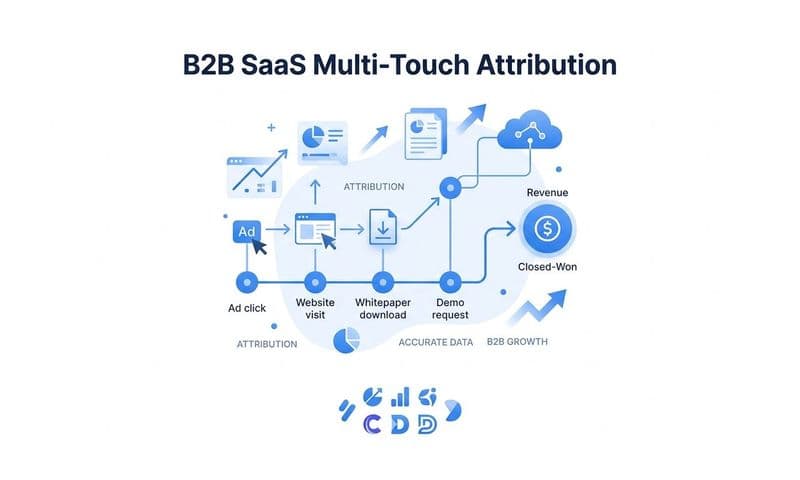
Comprehensive tracking connects these dots. Your phone system logs the call and links it to the original ad click. Your CRM tracks the demo and proposal stages. When the conversion happens, your attribution platform sees the complete journey: paid ad click → phone call → demo → proposal → closed sale. You know exactly which marketing touchpoint started the process and which activities moved it forward. Addressing cross-device conversion tracking problems is key to this unified view.
This complete view extends to in-person conversions too. A customer sees your ad, visits your retail location, and makes a purchase. Point-of-sale data flows into your tracking system and connects back to the original ad exposure. You can measure the offline impact of online advertising with accuracy that was impossible with browser-based tracking alone.
But the most powerful benefit is what you can do with this accurate data: feed it back to ad platform algorithms. When you send complete, enriched conversion data to Meta, Google, and other platforms, their optimization engines get dramatically better signals to work with.
Instead of just knowing "a conversion happened," the algorithm learns that this specific ad creative drove a high-value customer who purchased $500 worth of products and called your sales team twice. That enriched signal helps the algorithm find more customers who match that valuable profile. Targeting improves. Cost per acquisition drops. Campaign performance scales sustainably.
The feedback loop becomes self-reinforcing. Better data leads to better optimization, which drives better results, which provides more accurate data to further improve optimization. You move from fighting against degraded tracking to leveraging a complete view of your marketing performance.
Putting Accurate Tracking Into Practice
Start by auditing your current setup. The signs of inaccurate pixel data are often hiding in plain sight. Compare your ad platform conversion counts to your actual revenue data. If there's a consistent discrepancy of more than 10%, you have a tracking accuracy problem. Check whether conversions from mobile users are significantly lower than desktop—this often indicates iOS tracking restrictions are affecting your data.
Look at your attribution windows. Are you using 7-day click windows for products with 30-day sales cycles? You're missing conversions. Review your conversion paths. If most conversions show as single-touch direct traffic with no attribution to your ad campaigns, your tracking is failing to capture the customer journey. Our guide on how to improve ad tracking accuracy covers these diagnostic steps in detail.
Run a simple test: make a test purchase using different devices and browsers. Use Safari with tracking protections enabled. Use Chrome with an ad blocker installed. Check whether all your test conversions appear correctly in your ad platforms. If they don't, real customer conversions are being lost too.
Once you've confirmed the problem, evaluate server-side solutions that connect your full marketing stack. Look for platforms that integrate with your website, CRM, and all your ad channels. The goal is unified tracking that captures every conversion regardless of where it happens and feeds accurate data back to every platform that needs it. Many marketers are exploring conversion tracking alternatives to pixels for this exact reason.
Cometly provides this exact infrastructure. It connects your ad platforms, CRM, and website to track the complete customer journey in real time. Server-side tracking captures events that browser pixels miss. Multi-touch attribution shows which channels actually drive revenue. AI-powered recommendations identify high-performing campaigns across every ad channel. And conversion sync feeds enriched data back to Meta, Google, and other platforms to improve their targeting and optimization.
Set up proper attribution models that reflect your actual business. If you have a long sales cycle, use attribution windows that capture it. If multiple touchpoints contribute to conversions, implement multi-touch attribution that distributes credit appropriately. If phone calls and CRM events matter to your business, ensure they're tracked and attributed alongside digital conversions.
The implementation process requires some technical work, but the alternative is continuing to make marketing decisions based on lies. Every day you operate with inaccurate tracking is another day of wasted ad spend, degraded algorithm performance, and missed opportunities.
Your Path to Marketing Data You Can Trust
Pixel tracking accuracy problems are not a minor technical inconvenience. They're a fundamental threat to marketing ROI that's costing businesses millions in wasted ad spend and missed opportunities. The browser-based tracking infrastructure that powered digital advertising for the past decade is breaking down under the weight of privacy restrictions, technical limitations, and increasingly complex customer journeys.
The marketers who win in this new environment are the ones who recognize that accurate tracking is not optional. It's the foundation of every marketing decision you make. Without it, you're optimizing campaigns based on fiction, feeding incomplete data to ad algorithms, and making strategic choices in the dark.
The path forward is clear: move beyond browser-based pixels to server-side tracking and comprehensive attribution. Connect your entire marketing stack so every conversion gets tracked accurately, regardless of where it happens. Implement multi-touch attribution to understand how channels work together. Feed enriched conversion data back to ad platforms so their algorithms can optimize effectively.
This isn't just about fixing broken tracking. It's about building a marketing infrastructure that gives you complete visibility into what's working, what's not, and where to invest for maximum impact. It's about restoring confidence in your marketing data so you can scale campaigns knowing the numbers are real.
The technology exists. The solutions are proven. The only question is how much longer you'll operate with inaccurate data before making the shift to tracking you can trust.
Ready to elevate your marketing game with precision and confidence? Discover how Cometly's AI-driven recommendations can transform your ad strategy. Get your free demo today and start capturing every touchpoint to maximize your conversions.