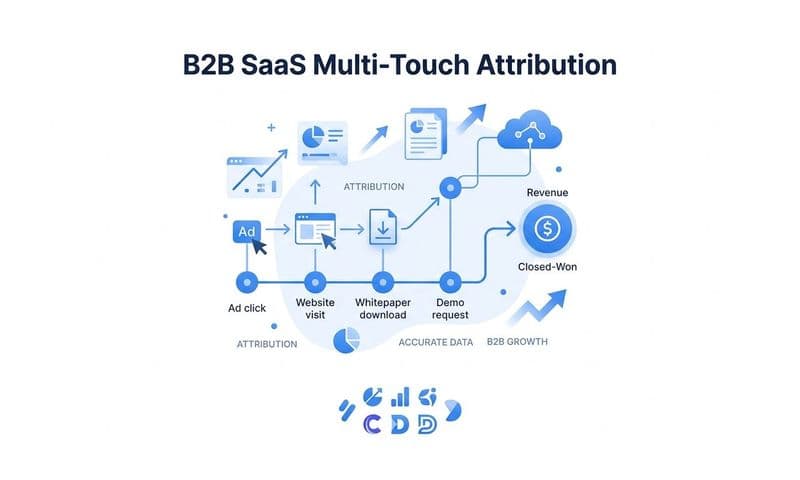
Your customer sees a Facebook ad on their phone during lunch, researches your product on a tablet that evening, and finally converts on their laptop the next morning. If your tracking only credits that last laptop click, you are missing the full picture and likely wasting budget on channels that look underperforming but actually drive awareness and consideration.
Cross-device conversion tracking solves this by connecting user interactions across phones, tablets, and desktops into a single, unified customer journey. Without it, marketers often over-invest in bottom-funnel touchpoints while starving the top-of-funnel campaigns that actually initiate conversions.
The challenge has grown more complex in recent years. Privacy changes from Apple's App Tracking Transparency, third-party cookie restrictions across major browsers, and ad blockers have all degraded the accuracy of traditional pixel-based tracking. What used to work reasonably well now leaves significant gaps, especially when users switch devices mid-journey.
In this guide, you will learn exactly how to track conversions across devices in six actionable steps. We will cover how to audit your current tracking gaps, implement server-side tracking for reliable data collection, unify user identities across devices, connect your ad platforms and CRM for end-to-end visibility, choose the right attribution model, and then use your cross-device data to optimize campaigns.
Whether you are running ads on Meta, Google, TikTok, or multiple platforms at once, these steps will help you build a tracking setup that captures every meaningful touchpoint and ties it back to real revenue. Let's get into it.
Step 1: Audit Your Current Tracking Setup for Cross-Device Gaps
Before you can fix cross-device tracking, you need to know exactly where it is breaking. Most marketers assume their tracking is working because conversions are being recorded. The real question is whether those conversions are being attributed to the right sources across the right devices.
Start by reviewing your existing pixel and tag configurations across every ad platform you run. Pull up your Meta Events Manager, Google Tag Manager, and any TikTok or LinkedIn pixel setups. For each platform, check whether conversion events are firing correctly on both mobile and desktop. Look for discrepancies in event counts between platforms and compare them against your actual sales or lead data from your CRM.
Common gaps to look for: Are conversions only attributed to the last device that touched the sale? Are mobile sessions completely disconnected from desktop completions? Are iOS privacy restrictions causing a noticeable drop in reported conversions from iPhone users? These are the most frequent signs of broken cross-device tracking. For a deeper dive into iOS-related issues, see our guide on how to track conversions after iOS update.
Next, pull reports from Google Analytics and your ad platforms and look for patterns that suggest attribution problems. Unusually high direct traffic percentages often indicate that referral data is being lost between sessions. A large volume of untracked conversions is another red flag. If your reports show that a significant portion of revenue has no clear source, cross-device gaps are likely to blame.
Build a simple tracking audit checklist to work through systematically. Confirm that pixels are firing correctly on all key pages. Verify that your cookie consent configuration is not blocking tracking for a large portion of users. Check that UTM parameters are consistent and being passed correctly through your funnel. Confirm that CRM events are connected to your ad platform data.
One thing to check specifically: Are your conversion windows long enough to capture multi-device journeys? If a user clicks an ad on mobile but does not convert until three days later on desktop, a short conversion window may miss that attribution entirely.
The goal of this step is not to fix everything yet. It is to document exactly where your tracking breaks down and which platforms or devices are underrepresented in your data. That list becomes your roadmap for the steps that follow.
Success indicator: You have a clear, written list of tracking gaps, including which ad platforms have incomplete data, which devices show disconnected sessions, and where unattributed conversions are appearing in your reports.
Step 2: Implement Server-Side Tracking for Reliable Data Collection
Once you know where your tracking breaks, the next step is building a more reliable foundation. Browser-based tracking alone cannot handle the complexity of modern cross-device attribution. Here is why.
Client-side tracking relies on JavaScript pixels running in the user's browser. When a user has an ad blocker installed, the pixel is blocked. When Apple's App Tracking Transparency prompts users to opt out of tracking, the pixel loses visibility. When third-party cookies expire or are restricted by browsers like Safari and Firefox, sessions cannot be stitched together across visits. All of these factors combine to create data loss that is especially severe for multi-device journeys. Understanding the differences between server-side tracking vs pixel tracking is essential before choosing your approach.
Server-side tracking addresses this by sending conversion events from your server rather than from the user's browser. Because the event originates server-to-server, it bypasses most client-side limitations. Ad blockers cannot block it. Browser privacy settings do not interfere. The data arrives at the ad platform with higher fidelity and better match rates.
Here is how the implementation process works at a high level:
1. Set up a server-side endpoint that can receive event data from your website or application. This is typically a cloud function, a dedicated server, or a tag management server like Google Tag Manager Server-Side.
2. Configure your website or app to send key conversion events to your server endpoint in addition to or instead of firing client-side pixels. Events like form submissions, purchases, and account creations are the highest priority.
3. From your server, relay those events to each ad platform using their respective Conversions APIs. Meta has the Conversions API (CAPI), Google has the Google Ads API, TikTok has its Events API, and so on. Each platform uses this server-to-server data to improve attribution accuracy.
This process can require meaningful developer resources if built from scratch. Platforms like Cometly simplify this significantly with built-in server-side tracking that connects directly to your ad platforms and CRM without requiring heavy custom development work. You can also explore how tracking conversions without cookies fits into a modern server-side strategy.
One critical pitfall to avoid: If you run server-side events alongside existing client-side pixels without configuring deduplication, you will count the same conversion twice. Every major ad platform supports event deduplication using a unique event ID. Always assign a consistent event ID to each conversion and pass it through both your client-side and server-side events so the platform knows to count them only once.
After implementation, check your ad platform dashboards for match rate improvements. Meta's Events Manager shows a match quality score for your Conversions API events. Google's diagnostics show coverage and match rates for enhanced conversions. Improvement in these scores confirms that your server-side setup is working correctly.
Success indicator: Server-side events are firing reliably, deduplication is configured, and you see improved event match rates in your ad platform dashboards compared to your client-side-only baseline.
Step 3: Unify User Identities Across Devices and Sessions
Server-side tracking improves data collection, but it does not automatically connect a user's mobile session to their desktop session. That requires identity resolution: the process of linking anonymous device-level interactions into a single, known user profile.
There are two primary methods for doing this, and understanding the difference matters for your strategy.
Deterministic matching uses known identifiers that a user explicitly provides, such as an email address, phone number, or customer ID. When a user logs into your platform on their phone and again on their desktop, both sessions are tied to the same identifier. This is the most accurate form of cross-device identity resolution because it relies on hard data rather than inference. Learn more about the broader strategy of tracking users across multiple devices to see how deterministic matching fits into the bigger picture.
Probabilistic matching uses signals like IP addresses, device characteristics, and behavioral patterns to infer that two sessions likely belong to the same user. It is less precise but can extend coverage to anonymous users who never log in or provide contact information.
For most marketers, the priority should be increasing deterministic match rates. The more users you can identify with a known identifier across devices, the more accurate your cross-device attribution becomes. Practical strategies for improving deterministic match rates include email capture forms placed early in the user journey, account creation incentives like discounts or saved preferences, loyalty programs that encourage login across devices, and gated content like webinars, guides, or tools that prompt users to register before accessing.
CRM integration plays a critical role here. When a lead fills out a form on their mobile device and later completes a purchase on their desktop, your CRM record ties those two events together through the shared contact record. That linkage is what allows your attribution platform to see the full journey rather than two disconnected sessions. This is closely related to the challenge of tracking customers across multiple touchpoints throughout the funnel.
This is exactly where Cometly's approach to identity resolution adds value. It captures every touchpoint from initial ad clicks through CRM events and stitches them into a unified customer journey. By giving the AI a complete, enriched view of each user across devices, it becomes possible to see not just that a conversion happened, but which sequence of cross-device interactions actually drove it.
Think of it like assembling a puzzle. Each device interaction is a puzzle piece. Identity resolution is what tells you which pieces belong to the same picture. Without it, you are looking at fragments. With it, you see the complete customer journey.
Success indicator: You can view a single user's journey across multiple devices within your attribution platform, rather than seeing a collection of fragmented, anonymous sessions with no clear connection between them.
Step 4: Connect Your Ad Platforms, CRM, and Analytics Into One System
Here is the core problem with how most marketing stacks are set up: each platform only sees its own slice of the data. Meta sees the clicks it drove. Google sees the searches it influenced. Your CRM holds the revenue data. Your analytics tool has session information. None of them talk to each other by default, and no single view tells the complete truth.
This siloed data structure is the enemy of accurate cross-device tracking. Even if you have server-side tracking running and identity resolution in place, the insights are only as good as the system connecting all the data together. If you are running campaigns on multiple networks, our guide on tracking conversions across multiple ad platforms covers the specific integration challenges you will face.
The solution is to route all of your ad platform data, CRM data, and analytics data into a centralized attribution platform. This means connecting Meta, Google, TikTok, LinkedIn, and any other ad channels you run so that all click and impression data flows into one place. From there, you can see the full sequence of touchpoints across devices rather than isolated platform-level reports.
CRM connection is equally important. When you link your CRM, downstream events like qualified leads, closed deals, and actual revenue get tied back to the original ad interactions that started the journey. This is what transforms attribution from a traffic measurement exercise into a revenue tracking exercise. You stop optimizing for clicks and start optimizing for customers.
Conversion syncing is the next layer. Once your centralized platform has accurate, enriched conversion data including cross-device events, it feeds that data back to each ad platform's algorithm. When Meta and Google receive better conversion signals, their machine learning can optimize toward your actual revenue outcomes rather than surface-level pixel fires. This creates a feedback loop where better data leads to better targeting, which leads to better results.
Cometly is built specifically for this kind of centralized integration. It connects with major ad platforms, CRMs, payment processors, and website builders to pull the full customer journey into one place. Then it syncs enriched conversion events back to each platform so their AI targeting improves over time. The result is a single dashboard where you can see ad spend, touchpoints across every device, and revenue data from all platforms simultaneously.
When you reach this point in your setup, reporting becomes dramatically cleaner. Instead of toggling between five different platform dashboards and trying to reconcile conflicting numbers, you have one source of truth.
Success indicator: You have a unified dashboard showing ad spend, multi-device touchpoints, and revenue data from all connected platforms, with conversion events flowing back to ad platform algorithms to improve their optimization.
Step 5: Choose the Right Multi-Touch Attribution Model for Your Business
With your data unified and your cross-device tracking in place, you now need to decide how to interpret that data. Attribution models determine how credit for a conversion is distributed across the touchpoints in a customer's journey. Choosing the wrong model can lead to the same budget misallocation you were trying to fix in the first place.
Here is a quick breakdown of the main models and what they mean in practice.
First-touch attribution gives all credit to the very first interaction a user had with your brand. It is useful for understanding what drives awareness but completely ignores everything that happened between that first touch and the conversion.
Last-touch attribution gives all credit to the final interaction before conversion. This is the default in most ad platforms and is the model most responsible for over-investing in bottom-funnel channels while undervaluing the campaigns that started the journey on mobile or other devices.
Linear attribution distributes credit equally across all touchpoints in the journey. It is more balanced than first or last touch, but it treats a brand awareness impression the same as a high-intent retargeting click, which may not reflect reality.
Time-decay attribution gives more credit to touchpoints that occurred closer to the conversion. This makes intuitive sense for shorter sales cycles but can still undervalue early-stage mobile interactions that initiated the journey days or weeks before the final conversion.
Data-driven or AI-powered attribution analyzes your actual historical conversion paths to assign credit based on which touchpoints statistically influenced outcomes. Rather than applying a fixed rule, it learns from your data. For multi-device journeys with multiple touchpoints, this is the most accurate and actionable model available. Learning how to track assisted conversions accurately is a key part of making multi-touch models work effectively.
The most valuable exercise you can do right now is to compare models side by side using the same data. Look specifically for campaigns that appear weak under last-click but show meaningful credit under multi-touch models. These are your hidden winners: campaigns that initiate journeys on mobile or drive consideration, but never get credit because they are not the final click before conversion.
Cometly supports this kind of model comparison directly, letting you analyze how credit shifts across devices and channels depending on the model you apply. Its AI recommendations layer on top of this to identify high-performing ads and campaigns that you might be underfunding based on incomplete attribution.
Success indicator: You have selected an attribution model appropriate for your sales cycle and business type, and you can clearly see how credit shifts across devices and channels when you compare models. You have identified at least a few campaigns that deserve reconsideration based on multi-touch data.
Step 6: Optimize Campaigns Using Your Cross-Device Conversion Data
Setup is done. Now comes the part that actually moves the needle: using your cross-device data to make smarter decisions.
The first and most impactful change is budget reallocation based on true multi-device attribution. If your cross-device data shows that a mobile awareness campaign consistently initiates journeys that convert on desktop three days later, that campaign deserves more budget than last-click data would suggest. Conversely, if a retargeting campaign is only closing deals that were already going to convert regardless, its attributed value may be inflated.
Cross-device insights also improve your creative strategy in ways that are easy to overlook. If your data shows that users typically research on mobile but complete purchases on desktop, that tells you something important about how to approach each device. Mobile creative should focus on capturing attention and building interest: awareness-stage messaging, strong visuals, and content that encourages exploration. Desktop retargeting should focus on closing: clear offers, social proof, and direct calls to action. Matching your creative strategy to device behavior is one of the fastest ways to improve campaign efficiency.
Feeding better data back to ad platform algorithms is equally important. When Meta and Google receive accurate, enriched conversion signals that include cross-device conversions, they can optimize their targeting toward users who are more likely to complete multi-step journeys. This reduces cost per acquisition over time because the algorithm is learning from your real revenue events rather than incomplete pixel data. To understand why this matters, explore the common reasons behind inaccurate ad tracking and how better data fixes the problem.
Set up ongoing monitoring as part of your regular reporting routine. Cross-device tracking is not a one-time setup. Privacy regulations evolve, browsers update their tracking restrictions, new devices and operating systems change user behavior patterns, and ad platforms modify how they process conversion data. Tracking drift is real: a setup that works well today may develop gaps six months from now without anyone noticing until budget has been misallocated for weeks.
Build a monthly tracking health check into your workflow. Verify that server-side events are still firing correctly. Check match rates in your ad platform dashboards. Confirm that CRM data is syncing as expected. Look for any new spikes in unattributed conversions that might signal a new gap.
The payoff for all of this work shows up in a few key places. Your reported ROAS becomes more accurate because it reflects complete journeys rather than just last-click credit. Your cost-per-acquisition numbers stabilize because you are no longer misattributing spend. And your budget decisions become genuinely confident because they are backed by data that captures the full picture of how your customers actually behave across devices.
Success indicator: You see improved ROAS, more accurate cost-per-acquisition numbers, and you are making budget decisions with confidence because your cross-device data reflects complete customer journeys rather than fragmented, device-level snapshots.
Putting It All Together
Cross-device conversion tracking is not a luxury feature. It is a requirement for any marketer spending across multiple platforms in a world where customers routinely use several devices before converting. Without it, you are making budget decisions based on an incomplete version of reality.
Here is your quick-reference checklist to keep this process on track:
1. Audit your current tracking setup to identify cross-device gaps and unattributed conversions.
2. Implement server-side tracking to overcome browser limitations, ad blockers, and iOS restrictions.
3. Unify user identities using deterministic matching and CRM data to connect device-level sessions into complete journeys.
4. Connect all ad platforms, your CRM, and analytics into one centralized system with conversion syncing flowing back to each platform.
5. Choose and compare multi-touch attribution models to find the campaigns that are driving real value but going unrecognized under last-click reporting.
6. Optimize campaigns continuously using your cross-device data, and build a monthly tracking health check into your routine.
Platforms like Cometly are built to handle steps two through six in a unified solution. It connects your ad platforms, CRM, and website to track the entire customer journey in real time, feeds enriched conversion data back to ad platform AI for improved targeting, and gives you the attribution clarity you need to scale with confidence.
The sooner you close the cross-device gap, the sooner you stop wasting budget on incomplete data and start scaling the campaigns that truly drive revenue. Get your free demo today and start capturing every touchpoint to maximize your conversions.